


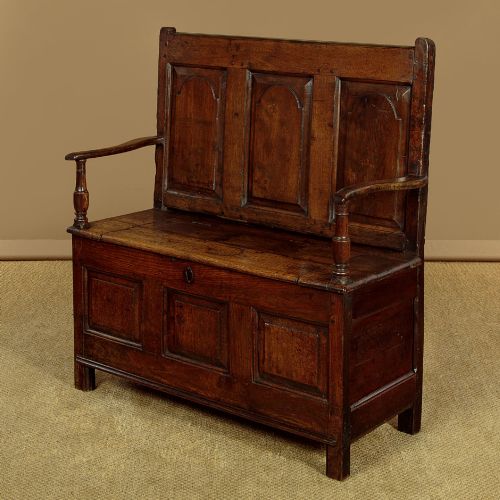
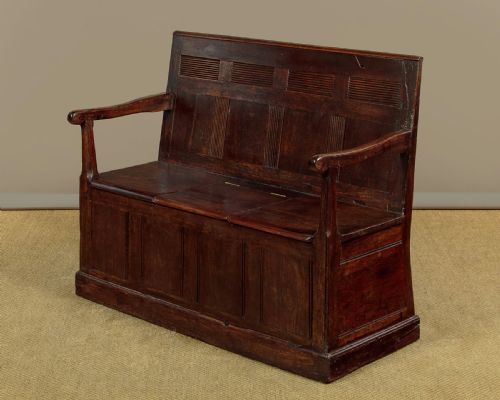


Welsh Country Coffer
A Welsh country antique coffer is a solid domestic storage chest built by regional makers, offering honest vernacular utility and enduring character.
Welsh Country Coffer
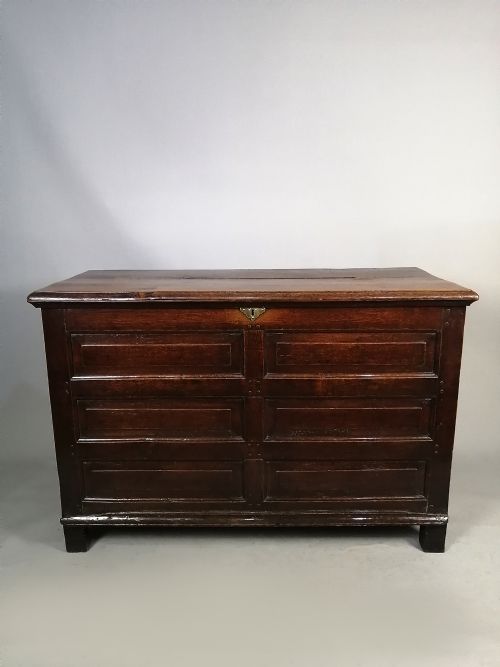
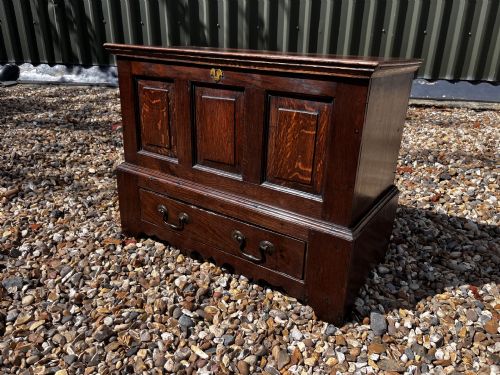
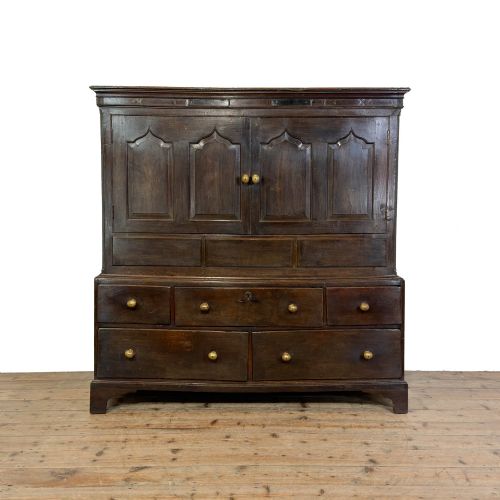
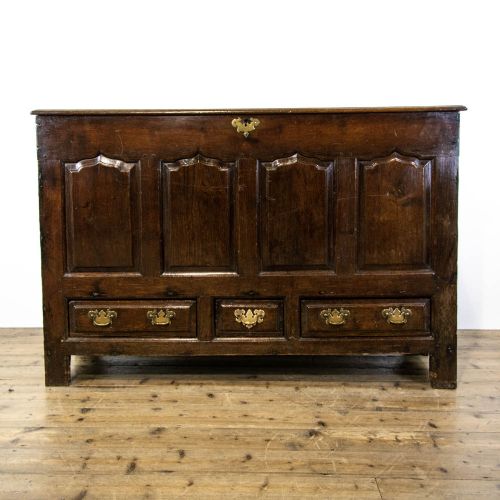
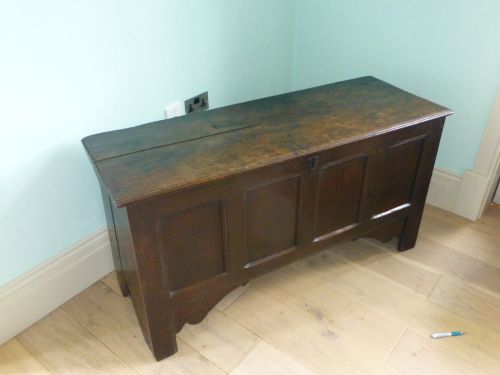
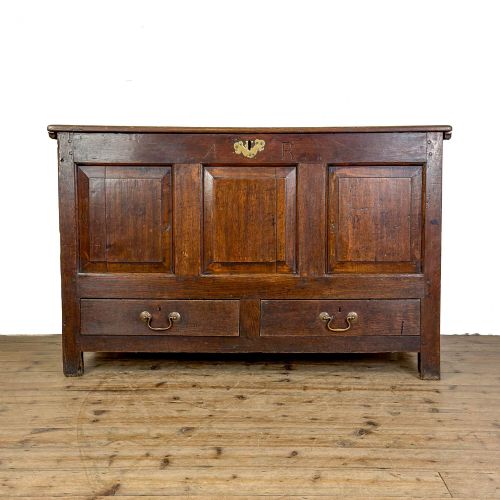
A welsh country antique coffer is a traditional storage chest originating from domestic interiors, frequently built in oak, pine, or elm. These pieces range from substantial household chests and mule chests fitted with lower drawers to compact coffer baches designed for personal valuables.
The selections encountered here span several centuries, including 17th-century vernacular examples and Georgian provincial forms. Makers utilised regional woods to construct sturdy furniture that served generations of rural households for storage and seating.
Materials and construction methods
Construction relies heavily on native timbers such as sturdy oak, resilient elm, and simpler pine, often joined using traditional framing or sturdy six-plank methods. Iron hinges and brass fittings provide structural reinforcement and secure closure for these heavy domestic boxes.
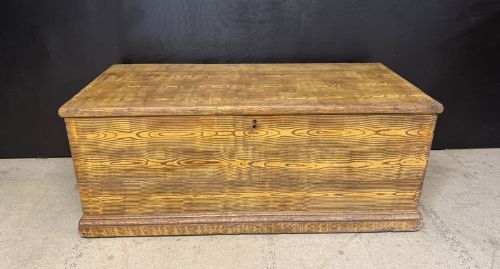
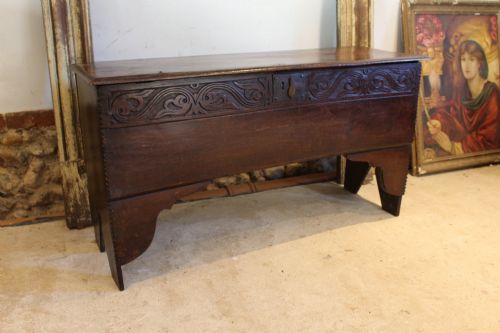
Surface treatments range from natural waxed grain and fruitwood inlay to applied paint finishes on artisan chests. Chip carving and owner initials frequently personalise the woodwork, demonstrating individual provincial craftsmanship.
Welsh Country Coffer Retail Price Guide 2026
Typical asking prices for welsh country coffer among the pieces listed under this phrase on Sellingantiques today, from the lower quarter to the upper quarter. They describe what is for sale here now, not the wider market.
The selection includes 17th-century joined oak coffers, 18th-century mule chests, and 19th-century painted pine storage boxes.
Distinctions in quality and execution
Quality separates simpler utilitarian storage boxes from ambitious architectural pieces bearing distinct regional characteristics, such as those originating from Carmarthenshire or the Gower peninsula. The presence of original turned feet, integrated drawers in mule chests, and untouched surface patination elevate a piece.
Structural integrity and the survival of original hardware distinguish well-preserved examples from heavily altered ones. Finer items display careful timber selection and deliberate decorative details like chip carving rather than plain assembly.
The Welsh Country Coffer Glossary
- Coffer bach
- A small Welsh miniature chest or coffer, historically used to store valuable documents, textiles, or small personal items.
- Mule chest
- A storage chest featuring one or more drawers built into the base beneath the primary compartment.
- Box settle
- A dual-purpose seating bench with a high back and a concealed storage box integrated beneath the seat.
- Six plank
- A primitive form of chest construction joined directly at the corners using six individual boards without a secondary internal frame.
- Grain ark
- A specialised large storage chest historically used for keeping grain and dry foodstuffs secure in rural dwellings.
Welsh Country Coffer: Frequently Asked Questions
What is a coffer bach?
A coffer bach is a miniature Welsh chest built to hold small valuables, often standing on small feet or integrated drawers.
These compact pieces mirror the construction methods of full-sized domestic coffers but served intimate purposes within the home.
How were these coffers used?
Rural households utilised these heavy chests for storing textiles, blankets, documents, and personal belongings safely away from damp floors.
Many designs also functioned as casual seating benches or table surfaces within modest vernacular interiors.
What is a mule chest?
A mule chest combines a traditional lift-top storage compartment with one or more lower drawers for improved organisation.
This hybrid form emerged as domestic storage needs evolved during the Georgian period in provincial workshops.
Are painted finishes original?
Some provincial pine and artisan pieces feature historic paint layers applied to protect or decorate the softwood boards.
Examining the surface wear helps distinguish early decorative schemes from later decorative interventions.