


Small Oak Trunk
A small oak trunk offers compact timber storage with centuries of domestic utility behind its hinged lid.
Small Oak Trunk
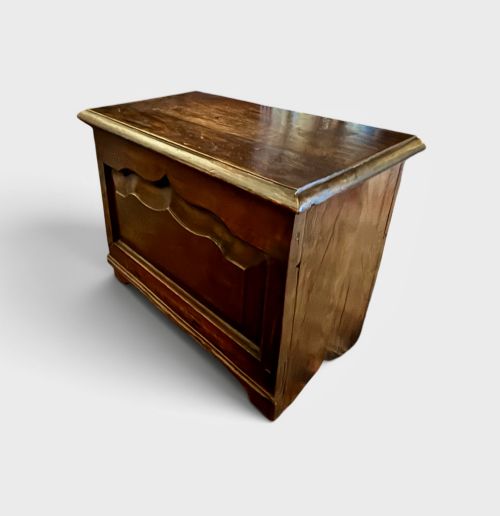
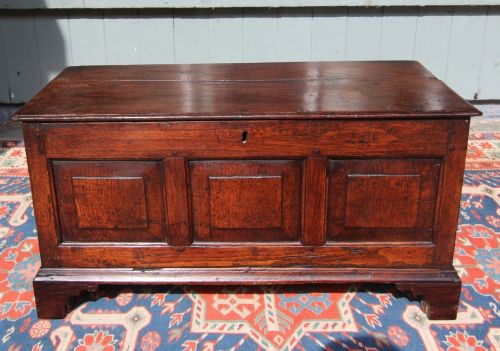
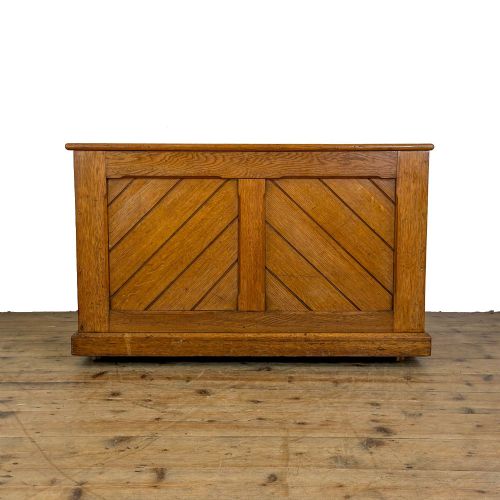
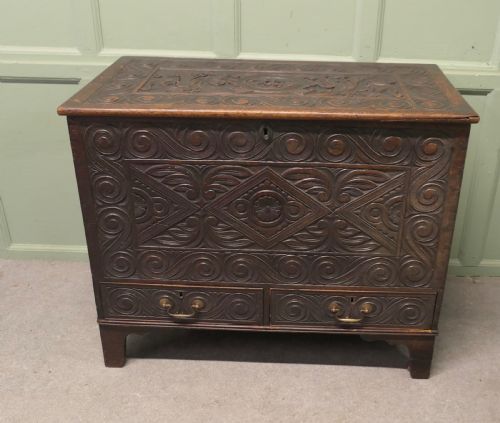
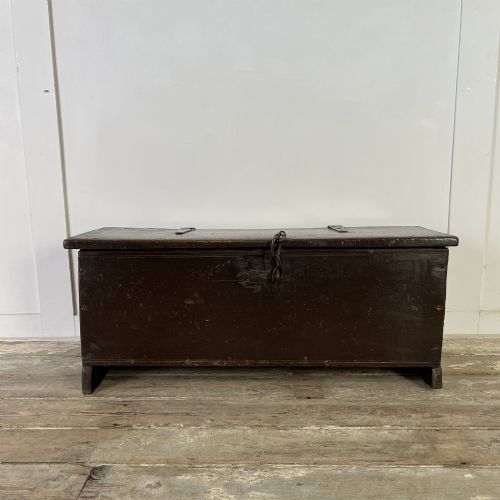
A small oak trunk represents a broad category of domestic receptacles designed to secure linens, documents, and valuables in restricted spaces. When buyers search for a small oak trunk, they encounter diverse historic formats including diminutive coffers, coffer bachs, bible boxes, and mule chests spanning the sixteenth to the nineteenth centuries.
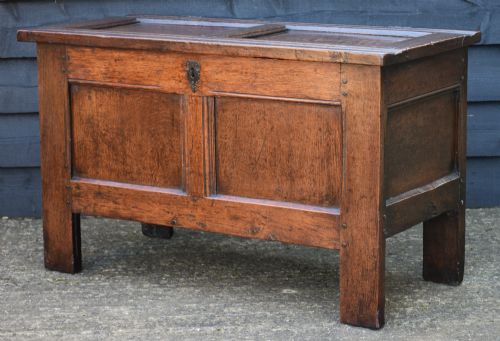
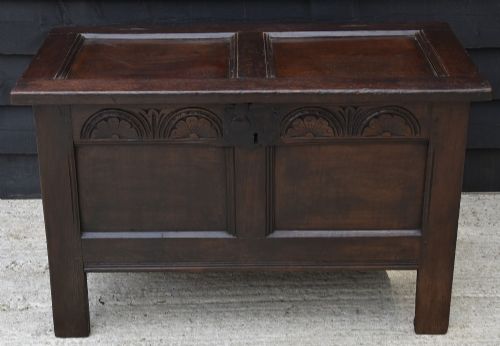
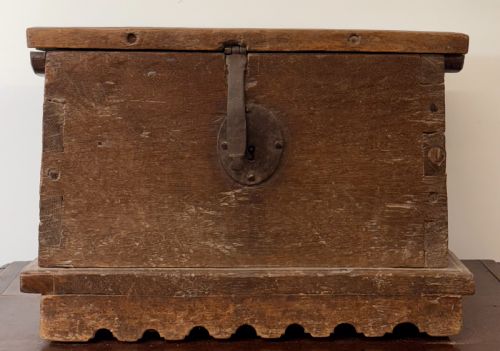
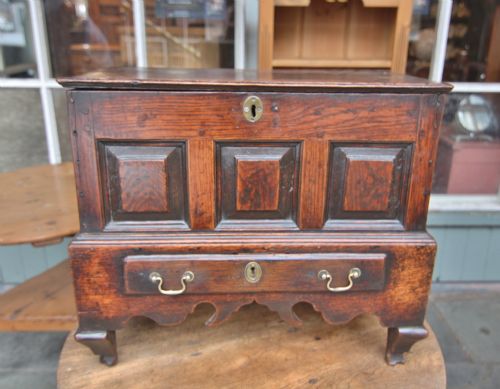
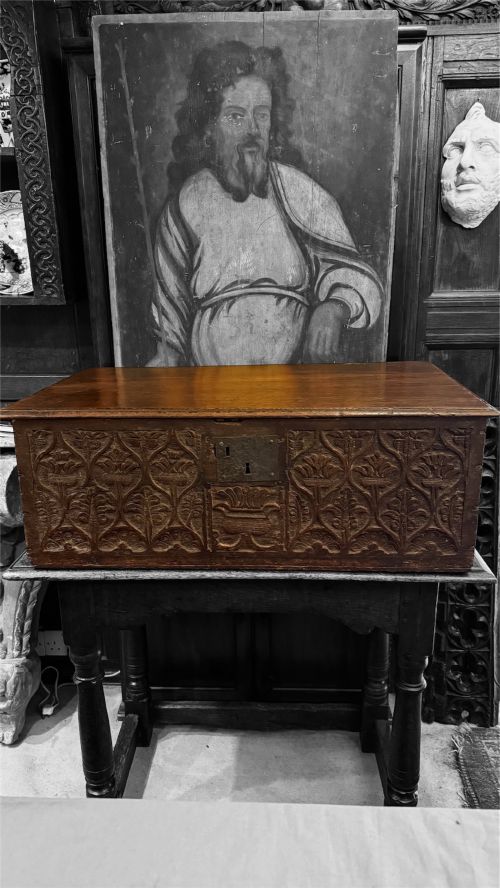
The pieces appearing on this page lean heavily toward seventeenth-century English panelled boxes and eighteenth-century Welsh vernacular miniature chests. These compact containers bring authentic period character into modern interiors while serving practical storage functions.
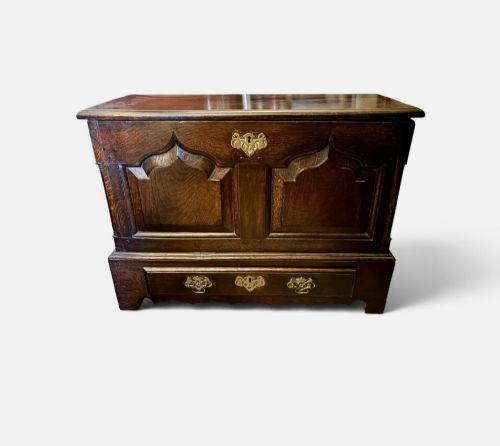
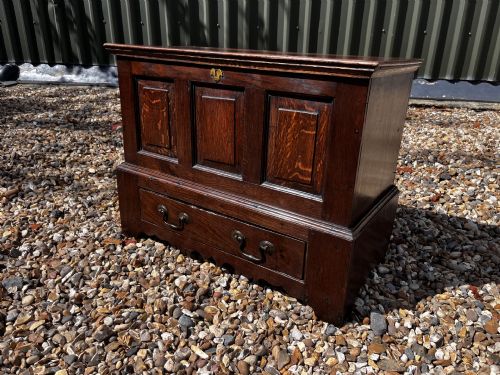
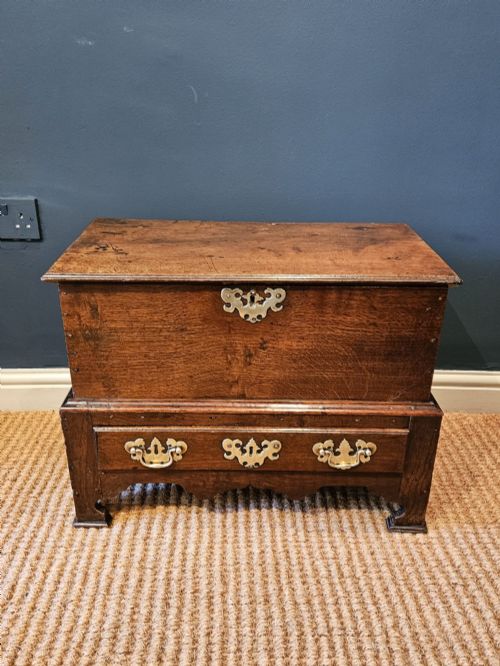
Regional variations emerge clearly across the selection, contrasting austere English joinery with decorative Welsh coffer bachs mounted on drawers. Buyers frequently meet solid oak construction enriched with ironwork, brass hinges, and occasional carved details.
How they were made
Carpenters and joiners built these small trunks primarily using solid oak boards joined by pegged mortise and tenon frames surrounding inset panels. This traditional timber construction allowed the wood to expand and contract naturally with seasonal humidity changes without splitting the main structure.
Hardware played a vital functional role, employing hand-wrought iron hinges, strapwork, and robust locks to secure the contents. Secondary materials like brass, bone inlay, and painted surfaces appear selectively to finish or ornament specific regional variants.
One cheerful trunk bears a carved green man peering quietly from the woodwork.
What varies in quality
The integrity of the timber and the survival of original structural elements dictate the standing of an individual piece. Retaining original floor boards, hinges, and authentic surface patination elevates a trunk above examples with extensive timber replacement.
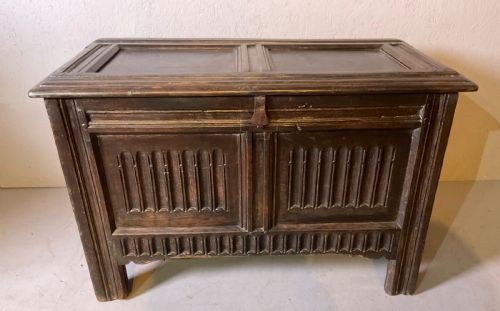
The refinement of the joinery and any decorative carving separate standard utility boxes from exceptional regional examples. Crisp execution of panels, linen fold motifs, or green man carvings points to superior workshop standards.
The Small Oak Trunk Glossary
- Coffer bach
- A small Welsh chest, often featuring one or more drawers beneath the main storage compartment and elevated on short feet. These miniature receptacles served traditional domestic roles in Welsh homes.
- Linen fold
- A carved wooden panel motif resembling folded cloth or parchment, popular in sixteenth and seventeenth-century joinery. This decorative technique added texture to otherwise plain rectangular furniture panels.
- Mule chest
- A storage chest featuring one or more drawers built into the base beneath the primary trunk compartment. The name bridges the transition between simple chests and multi-drawer tallboys.
- Kist
- A regional term for a heavy wooden storage chest or trunk used domestically for blankets and dry goods. These sturdy containers formed essential furniture in early domestic settings.
- Bible box
- A small, slope-topped or flat-topped desk box designed to hold sacred texts and writing implements. They frequently sat on tables or benches within early households.
Small Oak Trunk: Frequently Asked Questions
What were small oak trunks used for originally?
These compact wooden containers secured valuable textiles, legal documents, family bibles, and personal silver against theft or damp conditions. Their portable nature allowed households to move belongings easily during changing domestic circumstances.
Over subsequent generations, their roles shifted toward bedside storage, fireside bins, and decorative display pieces within period interiors.
How do I tell a seventeenth-century trunk from a later copy?
Examining the construction marks reveals the underlying age of the timber and assembly methods. Hand-split oak panels, pegged joints, and hand-wrought iron hardware indicate historic hand-tool production.
Internal surfaces and timber oxidation should display consistent signs of historic wear rather than artificial ageing or modern mechanical fastenings.
Where should I place a small oak trunk in my home?
Their modest proportions allow these trunks to function effectively as coffee tables, window seats, or bedroom blanket boxes. Placing them away from direct heat sources protects the historic oak timber from drying out and cracking.
Inside living spaces, they provide concealed storage for everyday items while adding historic texture to the room.
What is the difference between a coffer and a mule chest?
A coffer consists of a simple wooden box with a hinged lid for top-loading storage. It represents the foundational form of domestic chest storage.
A mule chest incorporates one or more drawers fitted beneath the main chest cavity, offering dual access to stored belongings.