

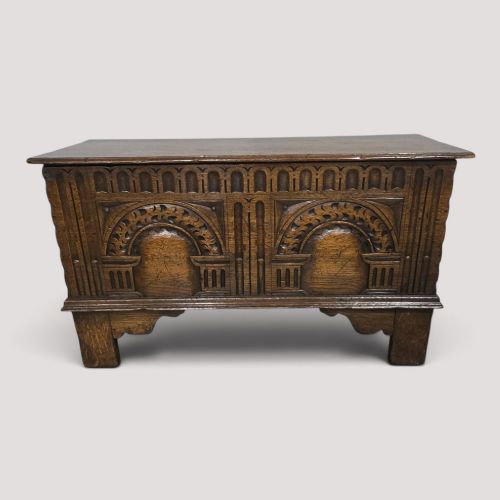


Carved Oak Miniature Coffer
These small carved oak miniature coffer examples are sturdy lidded boxes made in miniature, offering compact storage with traditional regional character.
Carved Oak Miniature Coffer
When you search for a carved oak miniature coffer, you encounter diminutive lidded storage chests designed in regional British and continental styles. The pieces on this page span the eighteenth and nineteenth centuries, including Georgian examples and Welsh vernacular tradition.
Most items you meet here are traditional Welsh coffor bach designs alongside English and Dutch variants. They replicate full-size furniture forms in miniature, serving domestic storage roles on tabletops and dressers.
Materials and construction methods
These items are constructed primarily from solid oak timber, frequently accented with wood inlay, bone, and brass or iron hardware. Carpenters utilised traditional joining methods suited to miniature proportions while maintaining sturdy panel construction.
Surface ornamentation relies heavily on hand carving and detailed inlay work rather than applied veneers. The timber gains its character from natural grain patterns and historical patina accumulated over centuries.
Carved Oak Miniature Coffer Retail Price Guide 2026
Typical asking prices for carved oak miniature coffer among the pieces listed under this phrase on Sellingantiques today, from the lower quarter to the upper quarter. They describe what is for sale here now, not the wider market.
Current listings feature eighteenth century and Georgian periods, utilising oak, brass, iron, bone, and mixed wood inlay.
Distinctions in quality and execution
Quality rests upon the crispness of the hand carving and the proportional harmony of the miniature form. Finer examples display meticulous attention to detail in their joinery and harmonious integration of inlay or hardware.
Simpler vernacular pieces rely on honest utilitarian charm rather than elaborate ornamentation. The distinction between standard and exceptional pieces lies in the precision of the construction and the sophistication of the decorative carving.
The Carved Oak Miniature Coffer Glossary
- Coffor bach
- A Welsh term translating to small coffer, traditionally given as a wedding or love gift. These miniature chests often feature internal compartments and drawer sections.
- Vernacular
- Regional furniture built by local craftsmen using available native timber rather than following strict metropolitan design patterns. This style embodies traditional local building methods and decorative motifs.
- Inlay
- A decorative technique where contrasting materials such as lighter wood or bone are fitted into recessed spaces within the oak surface. This method creates geometric or floral patterns.
- Georgian
- A design period spanning the eighteenth century, characterised by balanced proportions and classical restraint. Pieces from this era reflect evolving domestic tastes and refined craftsmanship.
Carved Oak Miniature Coffer: Frequently Asked Questions
What was a miniature coffer used for?
These small chests served to store precious personal items, documents, or small valuables in domestic settings. Their portable nature allowed owners to keep important belongings secure.
They also functioned as traditional presentation pieces or love tokens, particularly within Welsh domestic tradition where they were given to mark significant life events.
How do I date an antique oak coffer?
Dating relies on examining the construction methods, tool marks left by carpenters, and the wear patterns on the oak timber. Regional style variations and historical hardware types provide further chronological clues.
Changes in decorative carving styles and inlay techniques help narrow down the period of manufacture between the eighteenth and nineteenth centuries.
Are all miniature coffers from Wales?
While the distinctive coffor bach originates from Welsh vernacular traditions, similar miniature chests were produced across England and the continent. Dutch apprentice pieces and English boxes share similarities in scale and material.
Examining the specific carving motifs, wood combinations, and construction details reveals the regional origin of each individual piece.
How should I care for antique oak?
Maintain stable environmental conditions away from direct heat sources and strong sunlight to prevent the oak timber from drying out or splitting. Gentle dusting with a dry cloth preserves the historical surface.
Avoid applying modern furniture polishes or silicones, as these can accumulate and damage the traditional wax finish and aged patina.