

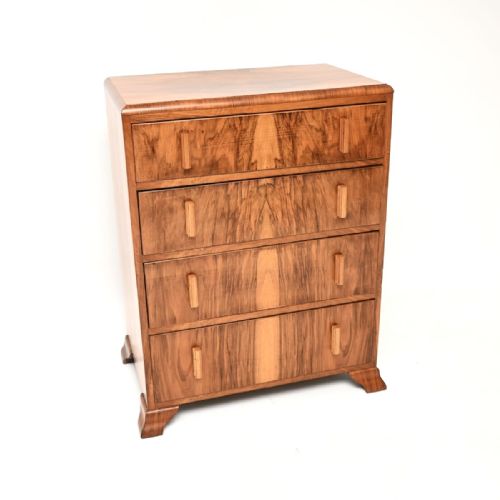
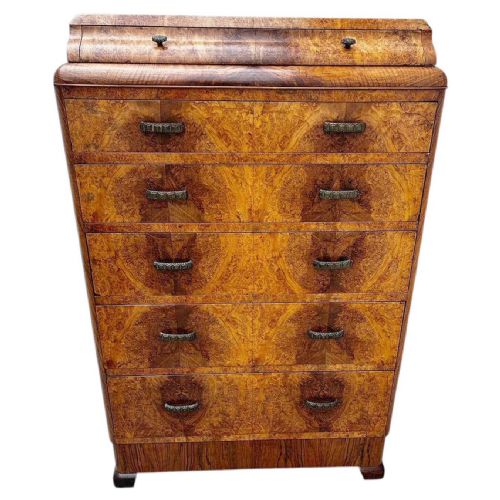
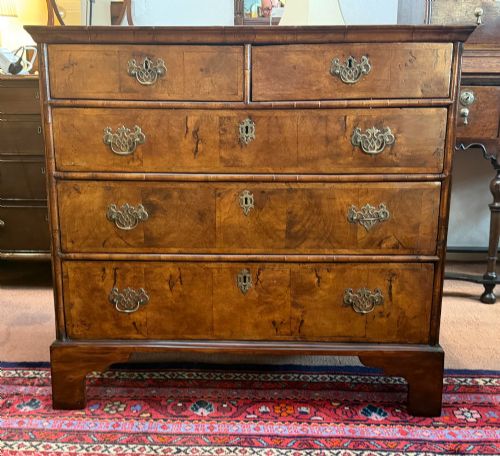
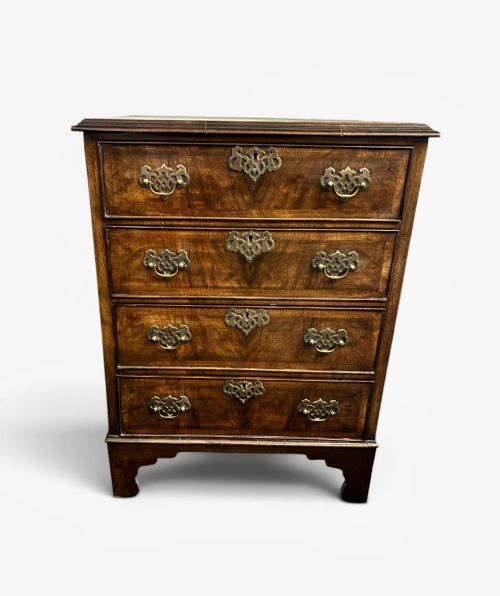
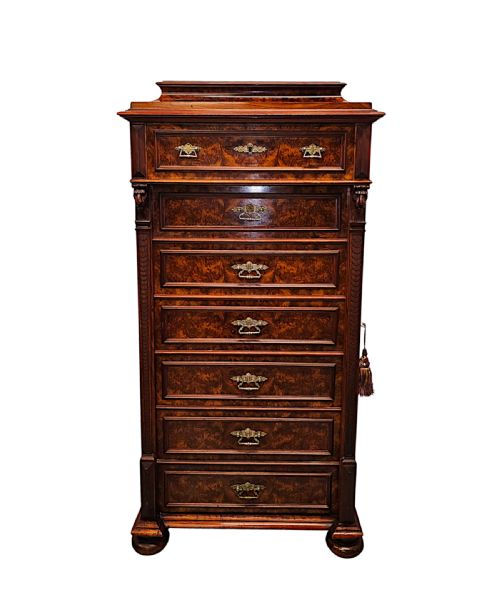
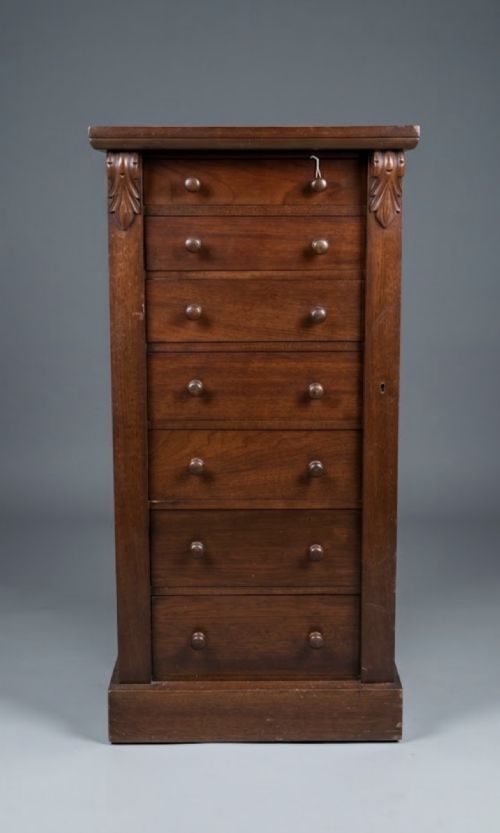
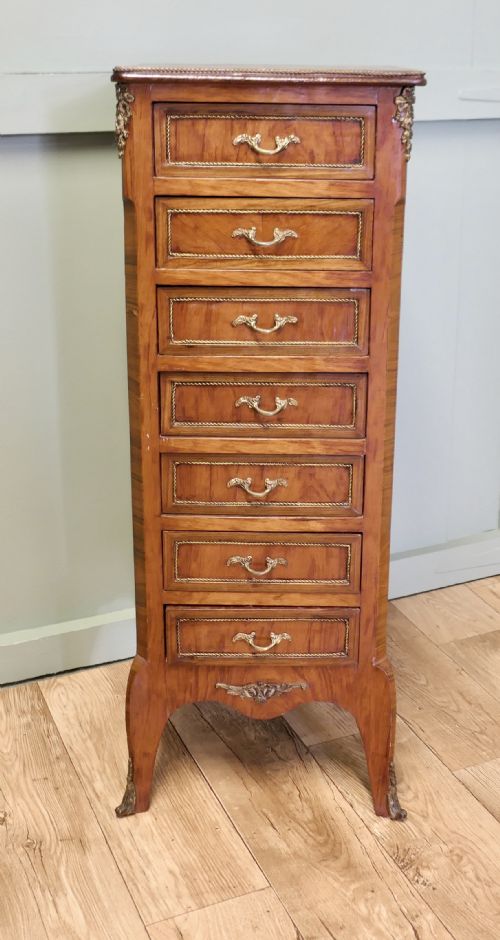
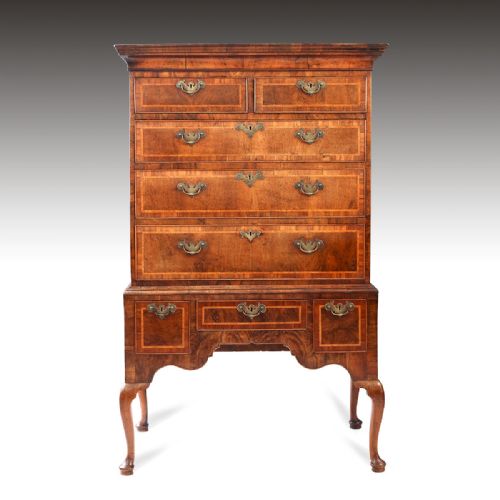
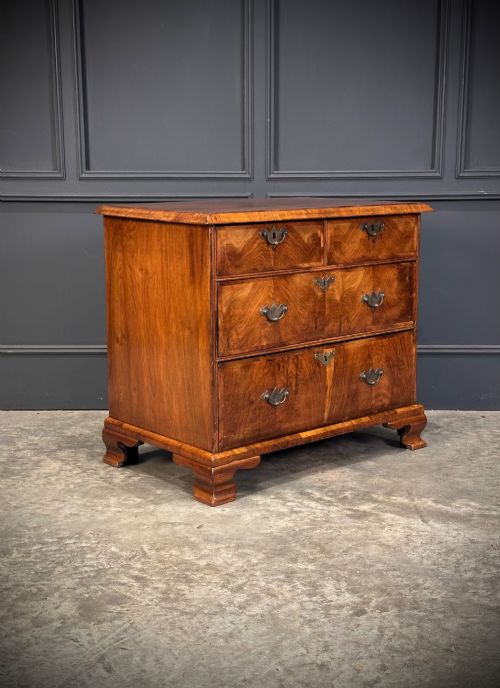
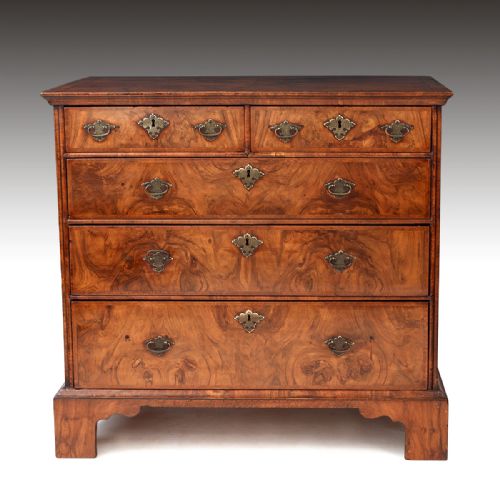
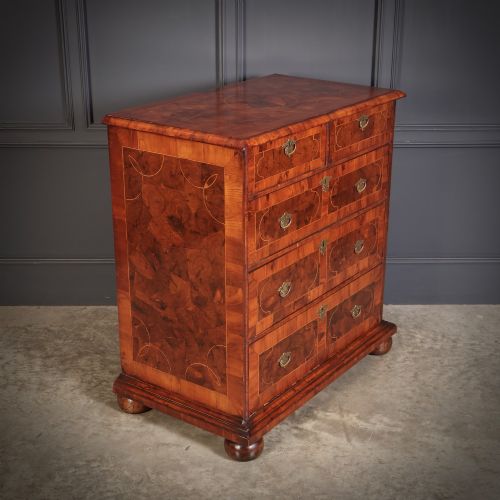
Walnut Tallboy Chest
When you search for a walnut tallboy chest, you are seeking a commanding vertical storage piece that combines timber depth with considerable practical height.

Walnut Tallboy Chest
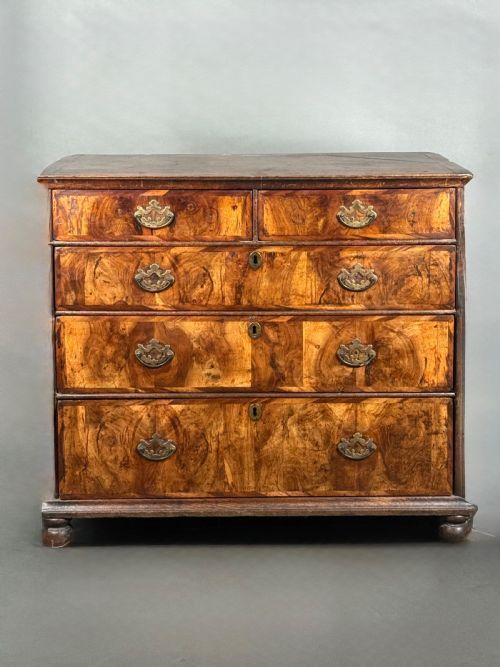
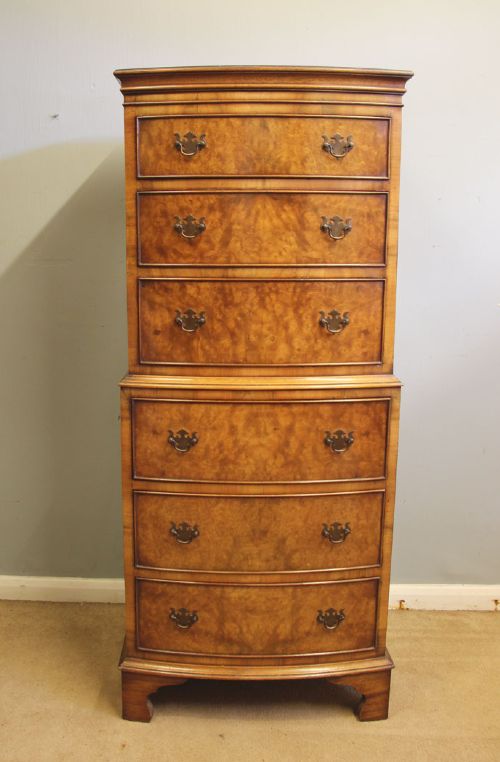
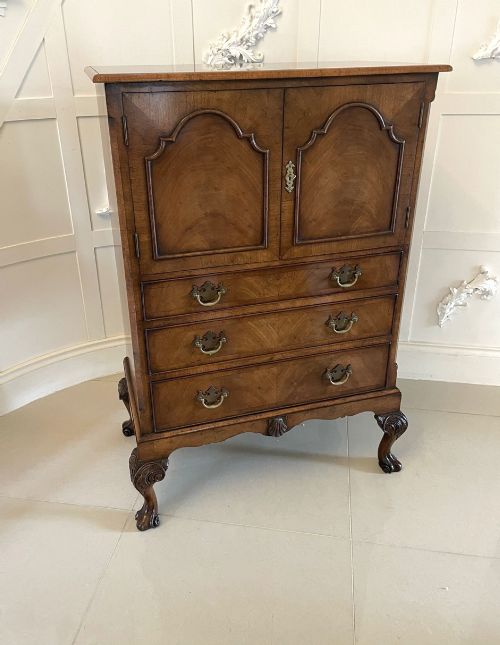
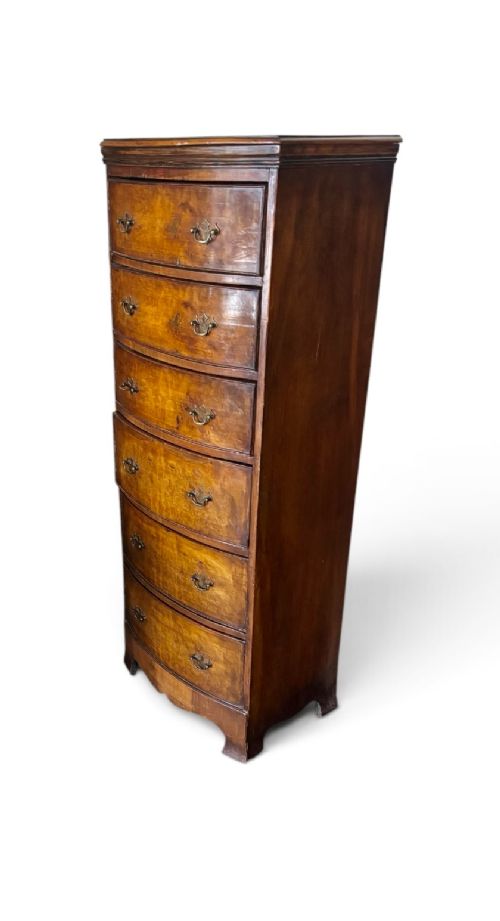
A walnut tallboy chest is a tall vertical storage item, encompassing forms such as chests on chests, chests on stands, and tall chests of drawers. These pieces maximise storage capacity while maintaining a smaller floor footprint than traditional horizontal chests.
The selection ranges widely across periods, including 17th-century William and Mary examples, 18th-century Queen Anne and Georgian pieces, and later interpretations from the 1920s and 1930s. Buyers will encounter both traditional stacked double-carcase forms and streamlined 20th-century variations.
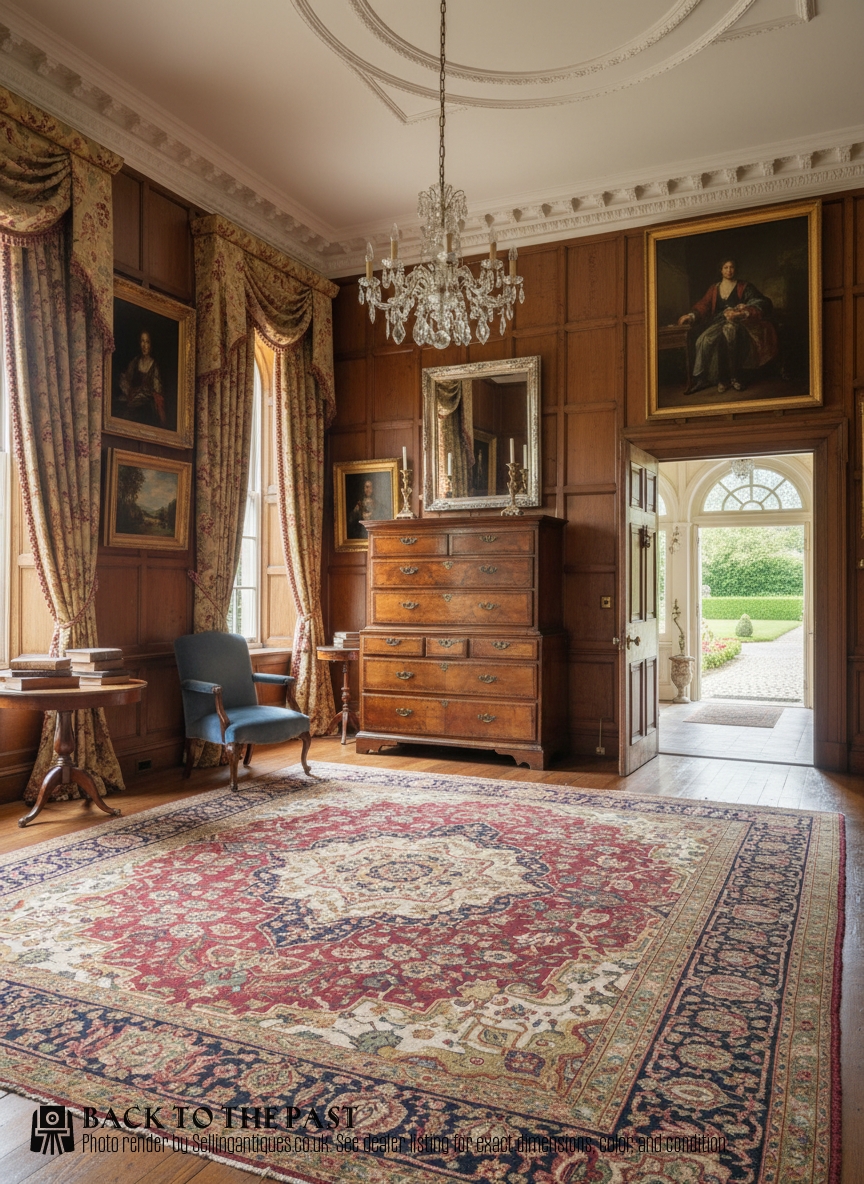
How they were made
Cabinet makers utilised solid timbers alongside pine and oak carcases, applying choice veneers to create striking exterior surfaces. Oyster veneering, burr walnut, and figured walnut were skillfully cut and arranged to display intricate natural grain patterns.
Detailing often incorporated brass hardware, such as drop handles and escutcheons, alongside herringbone banding, line inlay, and marquetry. Drawers were constructed with traditional joints, while stands and bases featured cabriole legs or bracket feet.
Walnut Tallboy Chest Retail Price Guide 2026
Typical asking prices for walnut tallboy chest among the pieces listed under this phrase on Sellingantiques today, from the lower quarter to the upper quarter. They describe what is for sale here now, not the wider market.
Listings feature walnut tallboy chests across the 17th, 18th, 19th, and 20th centuries, utilising burr walnut, figured walnut, and brass hardware.
What varies in quality
The choice of face veneer sets the standard, with tightly curled burr walnut and matched figured grain commanding higher regard than plainer timber surfaces. Selection of decorative banding and inlay work also distinguishes finer workshops from more utilitarian production.
Structural integrity and proportion determine refinement, particularly in the alignment of drawers across stacked carcases and the preservation of original brass furniture and timber patination over centuries of use.

Jas Shoolbred·Waring and Gillow·Gillows
The Walnut Tallboy Chest Glossary
- Tallboy
- A tall chest of drawers, often constructed as one chest stacked upon another, also known as a chest on chest.
- Oyster Veneer
- Slices cut transversely from small branches or roots to produce circular or oval patterns resembling oyster shells, popular in the late 17th century.
- Burr Walnut
- Timber taken from a growth or wart on a walnut tree, yielding highly figured and convoluted grain patterns prized for cabinet fronts.
- Chest on Stand
- A drawer carcase elevated on a separate frame with legs, typical of earlier periods before the full tallboy form developed.
- Herringbone Banding
- Inlaid strips of veneer arranged in a V-shaped pattern, frequently used to frame drawer fronts on Georgian furniture.
Walnut Tallboy Chest: Frequently Asked Questions
What is a tallboy chest?
A tallboy chest is a vertical storage furniture piece, typically built as a chest on chest or a tall set of drawers designed to maximise interior volume.
These pieces provide substantial drawer space while occupying minimal floor area within a room.
How do I date a walnut tallboy?
Dating relies on observing construction methods, timber choice, handle styles, and overall proportions across periods like the 18th century or the 1930s.
Early pieces often feature oyster veneers or cabriole stands, whereas 20th-century versions display bow fronts or art deco influences.
Where should I place a tallboy?
A tallboy suits bedrooms, dressing rooms, or hallways where vertical wall space allows the piece to stand comfortably without crowding.
Ensure the room has adequate ceiling clearance, as these chests reach considerable heights.
Are walnut tallboys sturdy?
Walnut tallboys are robustly constructed using dense hardwoods for carcases and drawer frames.
Because of their height, stacked forms often separate into two sections for easier transport and stable placement.