
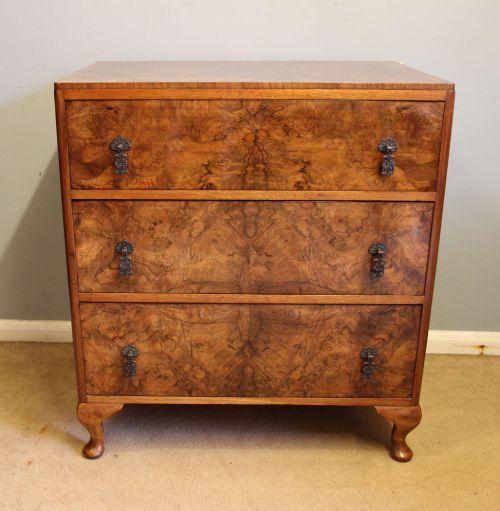
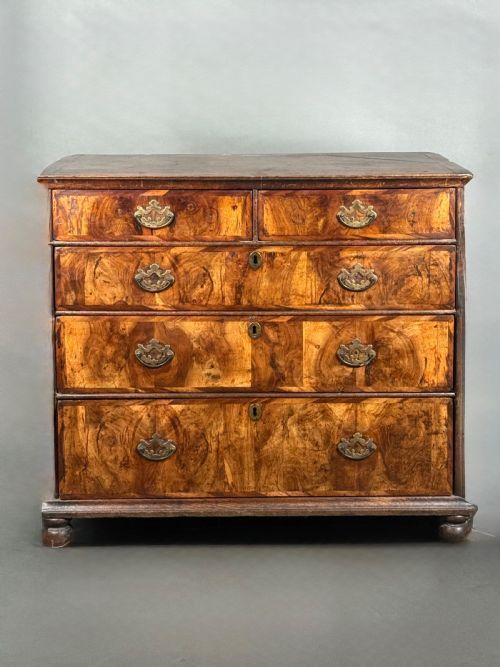
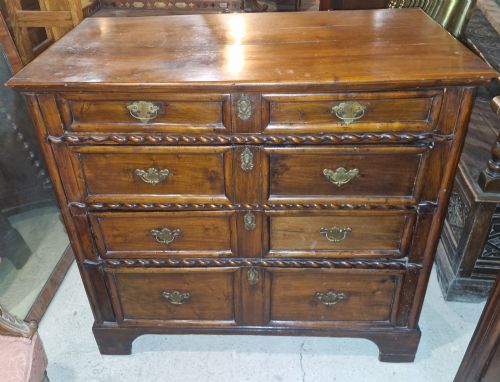
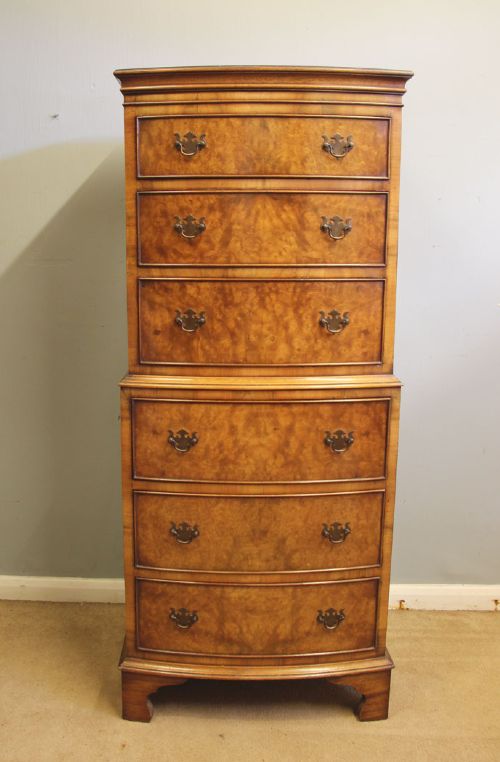
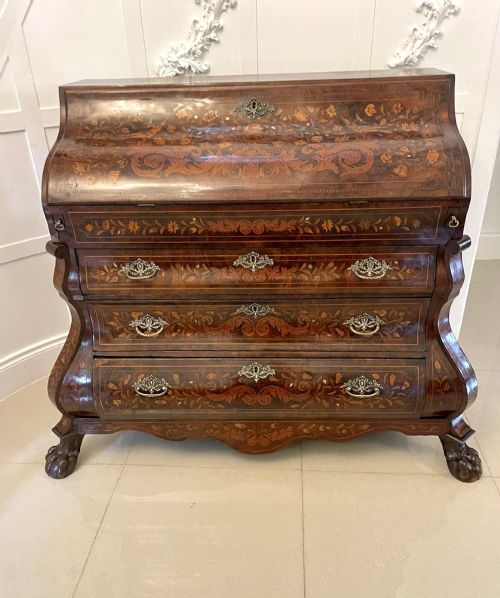
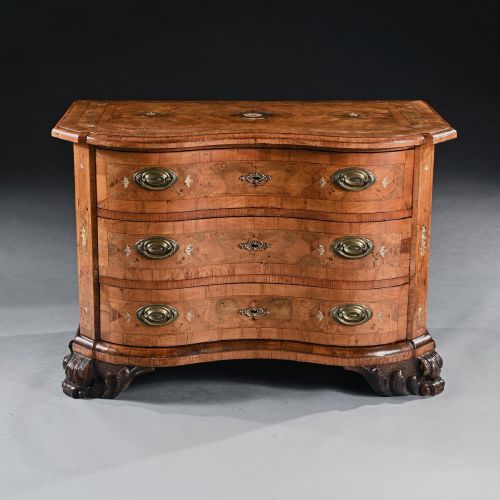
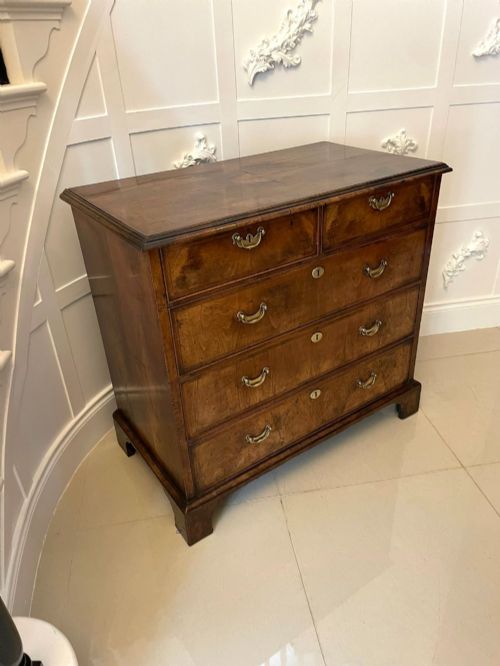
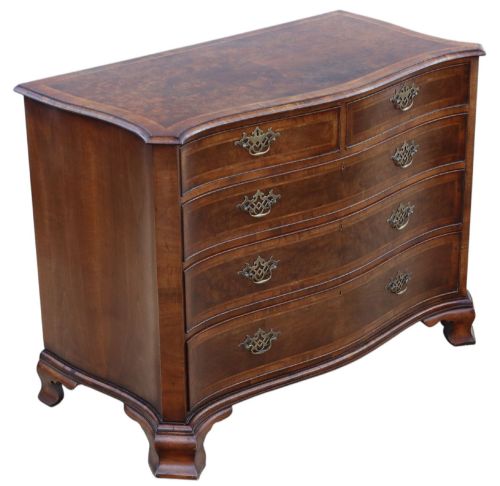


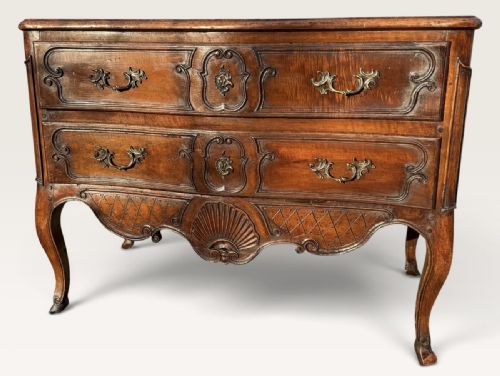
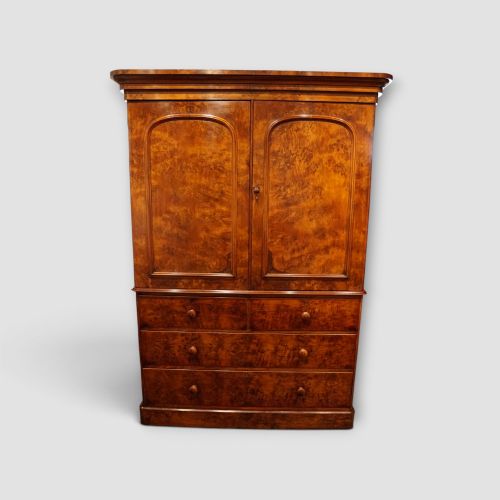
Walnut Chest with Drawers
When you search for a walnut chest with drawers, you are looking for practical storage combined with rich timber figures.

Walnut Chest with Drawers
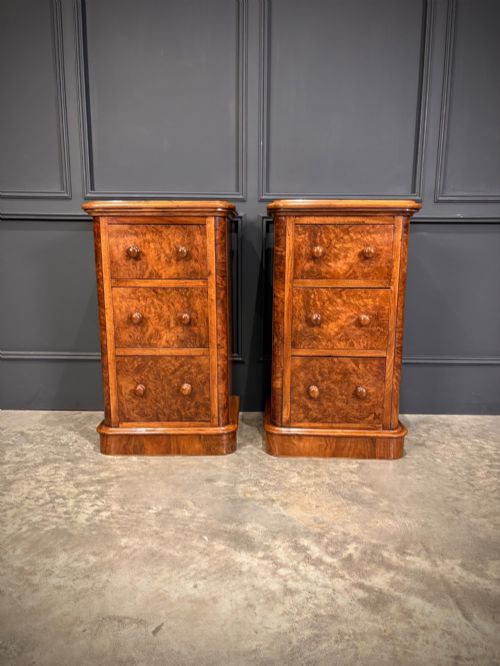
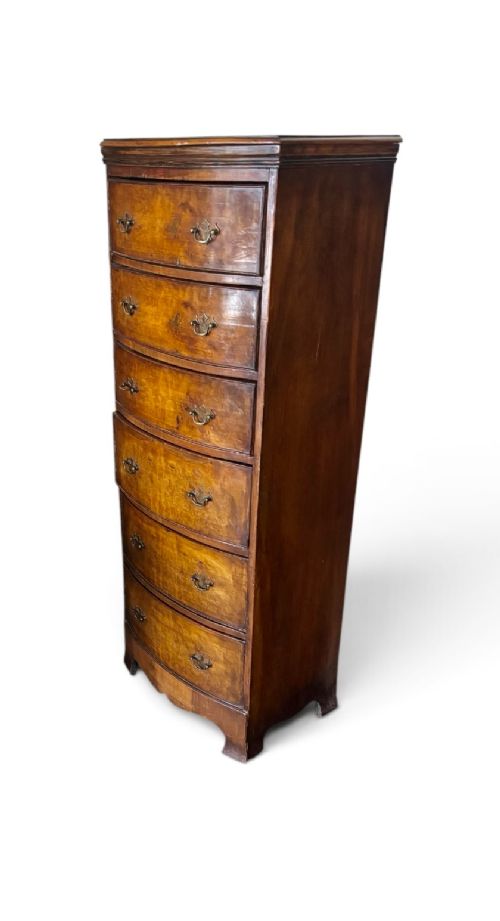
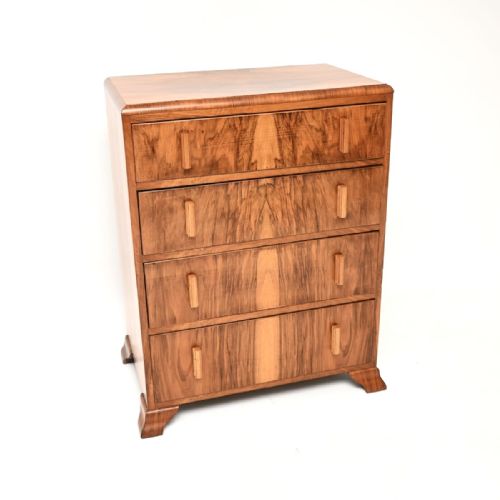
A walnut chest with drawers provides functional compartmentalised storage, ranging from compact bedside tables to tall chests on chests and kneehole desks. Pieces frequently date from the early eighteenth century through the Georgian and Victorian eras, alongside later twentieth-century revivals.
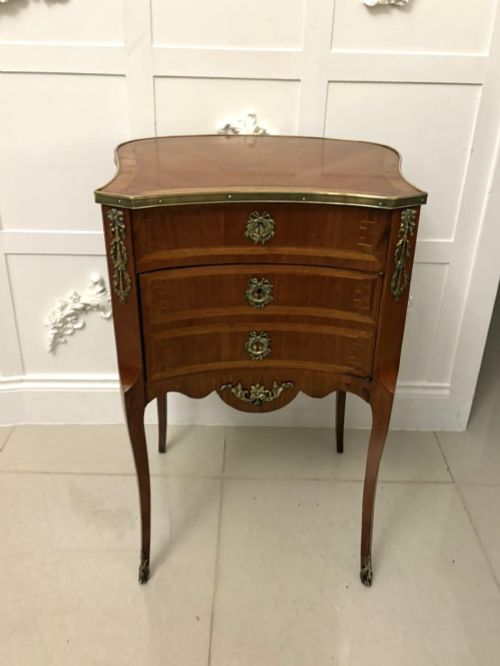
Formations vary from simple rectangular drawer arrangements to serpentine fronts, escritoires with drop-down writing surfaces, and Continental commodes topped with grey, white, or rouge marble.
Buyers will encounter traditional English cabinetwork featuring crossbanding and feather-banding alongside French and Dutch variations incorporating marquetry, parquetry, and ormolu mounts.
Materials and construction methods
Cabinetmakers utilised figured walnut and burr walnut veneers applied over secondary foundational timbers such as oak, pine, or deal, often enhanced by decorative crossbanding and contrasting line inlays in boxwood or fruitwoods.
Hardware details such as brass drop handles, loop handles, and escutcheons were fixed using original ironwork or cast brass, while drawer linings were commonly constructed from solid oak or mahogany.
Surface finishing relied on traditional polishing techniques that preserved the natural grain patterns and rich patina of the timber over centuries of use.
Listings feature walnut drawer chests spanning the seventeenth, eighteenth, nineteenth, and twentieth centuries, incorporating brass, marble, and leather.
Distinguishing quality across the range
Quality rests upon the symmetry and choice of the burr or figured walnut veneer, where continuous matching grain across drawer fronts signifies superior craftsmanship.
The integrity of the construction is demonstrated by the precision of the dovetail joints in the drawers, the retention of original brass hardware, and the survival of secondary woods without extensive timber replacement.
Proportion and decorative restraint elevate finer pieces, particularly where subtle feather-banding, line inlays, or original sliding top panels and brushing slides remain intact.
The Walnut Chest with Drawers Glossary
- Burr walnut
- A figured wood grain derived from the wart-like growths on walnut trees, prized for its swirling, highly decorative patterns when sliced into veneer.
- Brushing slide
- A pull-out shelf positioned above the top drawers, historically used for dusting clothes or writing correspondence.
- Crossbanding
- A narrow strip of veneer laid perpendicular to the surrounding grain, creating a distinct border around drawer fronts or table tops.
- Feather-banding
- An inlay technique using two strips of veneer laid diagonally to form a herringbone pattern along the edges of furniture.
- Commode
- A low French or Continental chest of drawers, frequently fitted with a marble top and decorative metal mounts.
Walnut Chest with Drawers: Frequently Asked Questions
How do I spot an 18th-century walnut chest?
Examine the construction methods visible inside the drawers, looking for hand-cut dovetails and solid oak or pine secondary timbers. Early English pieces often display crossbanding, feather-banding, and candle marks or natural timber shrinkage consistent with age.
Check the backboards and drawer bottoms for tool marks left by early saws. Original ironwork and brass drop handles further confirm the period origin.
What is a brushing slide used for?
A brushing slide is a pull-out wooden board integrated just beneath the top surface or upper drawer. Historically, valets used these surfaces to brush garments or lay out items.
Today, they function well as compact writing ledges or temporary display areas when space is limited.
Are marble top commodes English or Continental?
Marble top commodes generally originate from France or other Continental European workshops rather than Britain. French makers favoured decorative stones such as grey, white, and rouge marble paired with ormolu mounts.
English cabinetmakers preferred all-wood surfaces utilising figured walnut veneers and crossbanded borders.
How should I care for antique walnut furniture?
Keep walnut furniture away from direct sunlight and strong heat sources to prevent the burr veneer from drying out or splitting. Maintain a stable indoor humidity level.
Apply a microcrystalline wax occasionally to nourish the timber and protect the patina without building up heavy residues.