




Georgian Walnut Coffer
A georgian walnut coffer brings rich dark timber and deep grain into a room, offering both practical storage and period presence.
Georgian Walnut Coffer
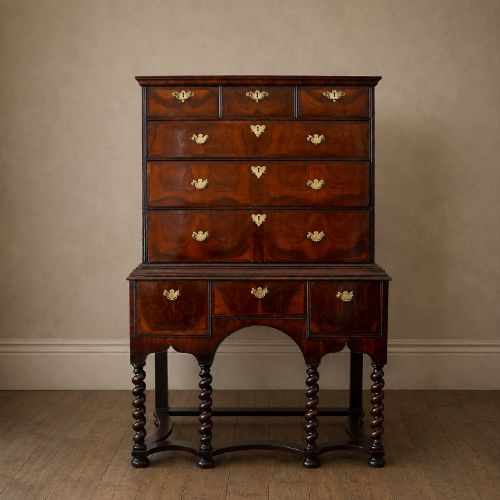
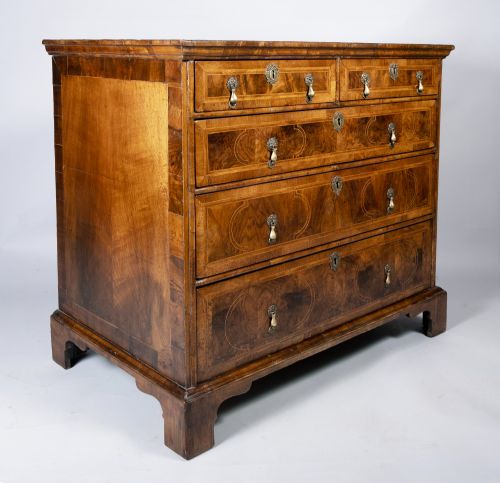
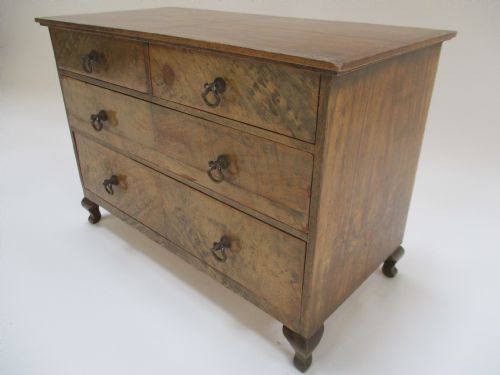
When you search for a georgian walnut coffer, you enter a field defined by storage chests and trunks stretching from the seventeenth century through the Georgian era and into later revival periods. These pieces combine utilitarian strength with the decorative warmth of walnut, often appearing as mule chests with lower drawers, blanket chests, or more elaborate chests on stands.
The selections available here span small apprentice pieces and miniature chests alongside large colonial examples and iron bound trunks. Oak frequently forms the secondary timber beneath the walnut veneers, while brass hardware and marquetry inlay provide period detail across the forms.
Materials and Construction
Cabinet makers built these pieces using solid walnut, burr walnut, and oak, applying fine veneers over sturdier secondary timbers to create rich figured surfaces. Iron bands, brass handles, and bone details served both structural and decorative functions on trunks and chests.
Joinery methods ranged from pegged frames in earlier seventeenth-century examples to sophisticated drawer linings and stand constructions in the George I and George II periods.
Georgian Walnut Coffer Retail Price Guide 2026
Typical asking prices for georgian walnut coffer among the pieces listed under this phrase on Sellingantiques today, from the lower quarter to the upper quarter. They describe what is for sale here now, not the wider market.
Sir Randolph Isham Routh carried his iron bound trunk through the Waterloo campaign before it found its way here.
Markers of Quality
Quality in these pieces rests upon the choice of timber and the dexterity of the veneer work, particularly where burr walnut creates intricate patterns across the front. The integration of original brass hardware, stable stands, and well-executed internal drawer construction distinguishes the finer examples from simpler provincial work.
Whytock & Reid
The Georgian Walnut Coffer Glossary
- Burr walnut
- A figured timber obtained from walnut tree growths, prized for its swirling grain patterns. Cabinet makers used it for high-status veneering on drawer fronts and top panels.
- Mule chest
- A storage chest featuring one or more drawers built into the base beneath the main compartment. This form bridges the traditional blanket chest and the chest of drawers.
- Chest on stand
- A two-part form where a drawer chest rests upon a separate support frame with legs. This elevates the storage space and lightens the visual mass of the furniture.
- Marquetry
- The art of applying pieces of veneer to a structure to form decorative patterns. Craftsmen utilised various woods to create floral or geometric designs on drawer fronts.
Georgian Walnut Coffer: Frequently Asked Questions
How do I date a walnut chest?
Examine the construction of the drawers, the timber used for secondary framing like oak, and the style of the brass hardware.
Changes in feet, handles, and veneer thickness help separate seventeenth-century William and Mary examples from later Georgian or Victorian pieces.
What is a mule chest?
A mule chest is a traditional storage chest that includes one or more drawers fitted beneath the main lifting lid compartment.
This hybrid form emerged to provide easier access to stored linens without requiring items to be lifted entirely from the top.
Where should I place a coffer?
These pieces suit living rooms, hallways, or bedrooms where their flat tops can function as display surfaces while the interior holds blankets.
Keep them away from direct heat sources and strong sunlight to protect the walnut veneers from drying and cracking.
Are miniature chests authentic?
Miniature and apprentice chests are smaller scale pieces created either as cabinet makers' demonstration models or specialised small-scale furniture.
They utilise the same construction techniques and timber grades as full-sized chests from the same periods.