

Walnut Bedroom Dresser
A walnut bedroom dresser brings rich grain and deep tone into a room, offering practical storage through centuries of cabinet-making.
Walnut Bedroom Dresser
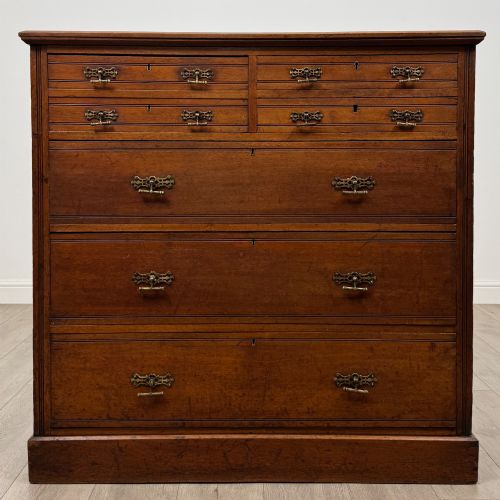
A walnut bedroom dresser encompasses various forms designed to hold garments and personal items, primarily appearing as chests of drawers alongside dressing tables. These items span multiple eras, stretching from early periods through Georgian and Victorian epochs up to Art Deco designs.
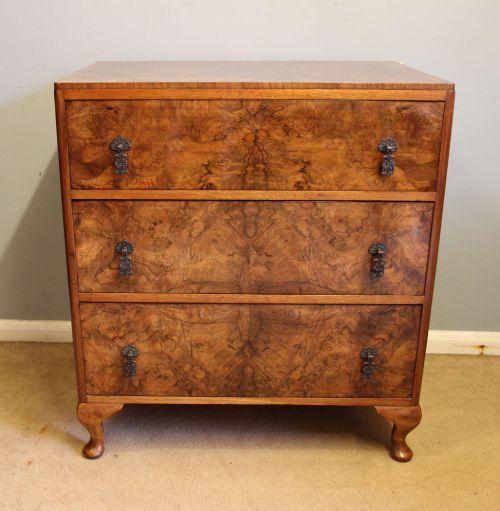
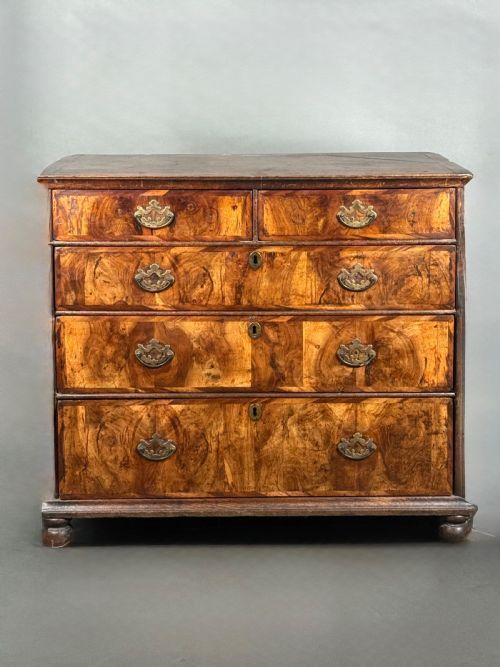
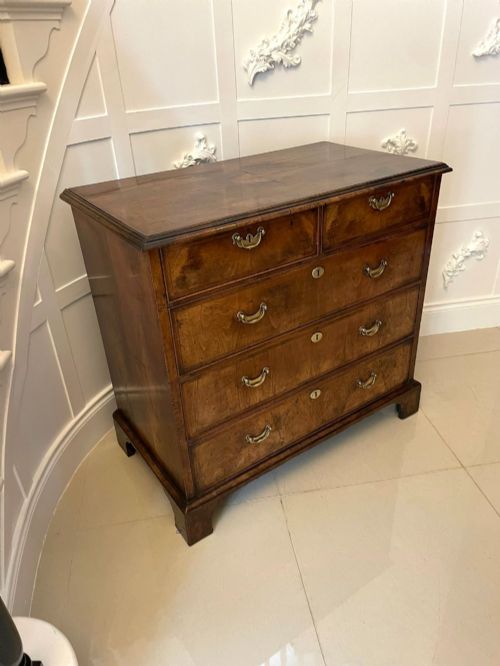
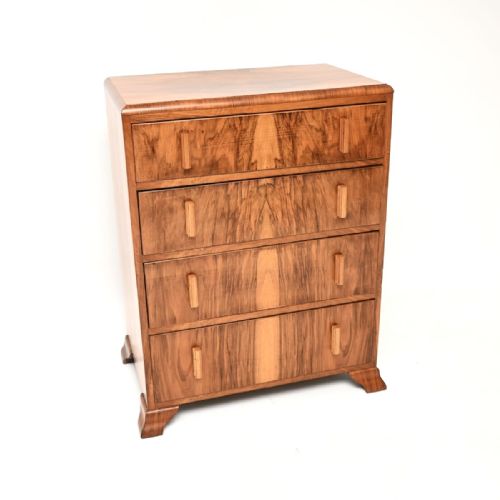
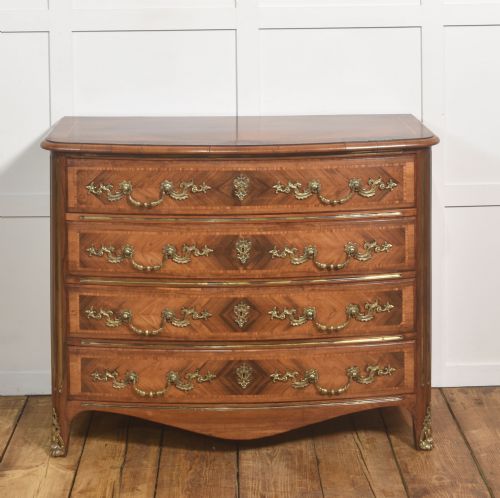
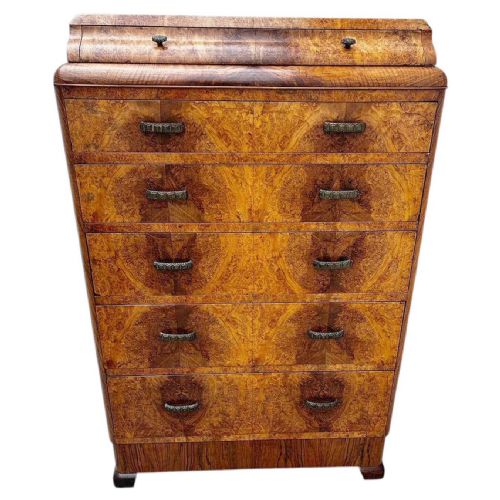
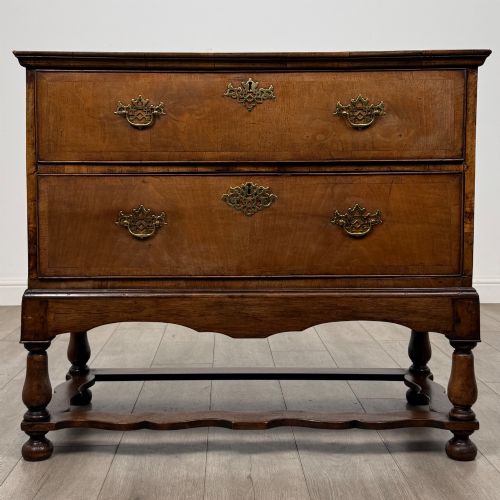
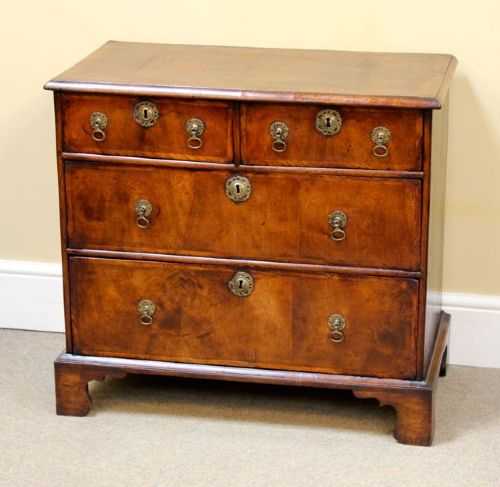
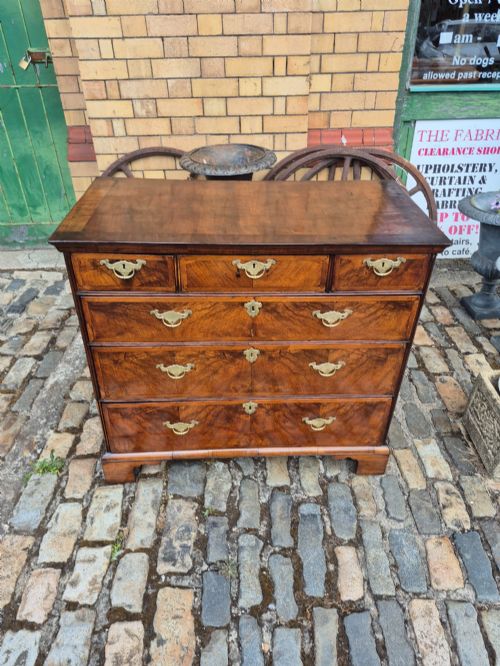
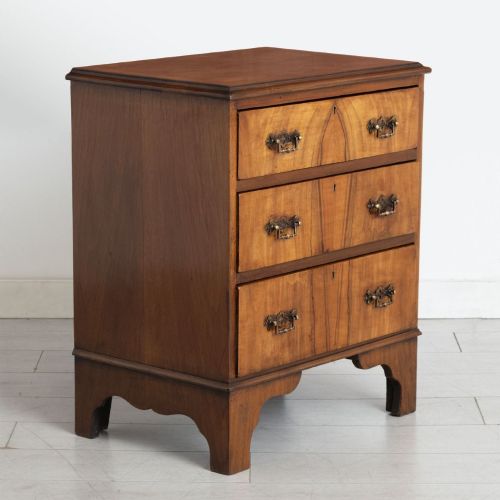
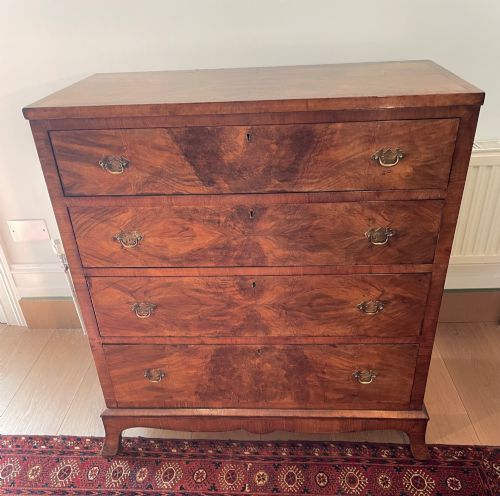
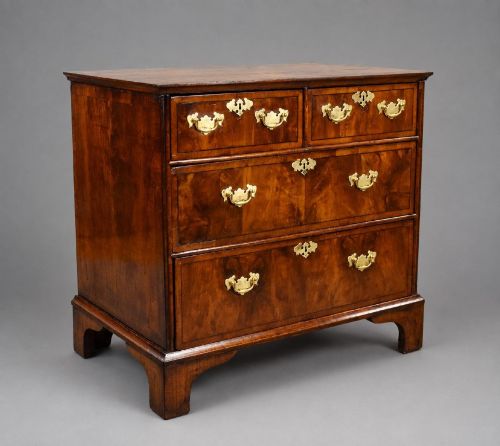
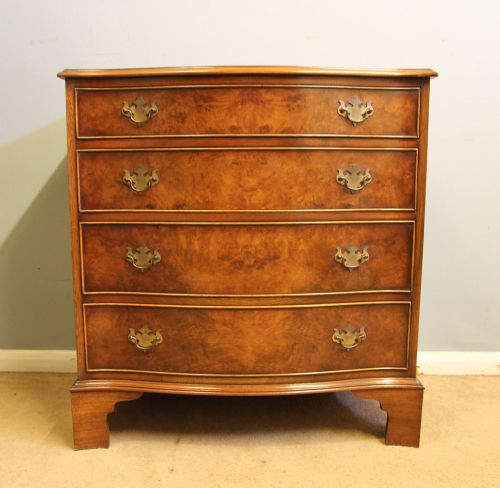
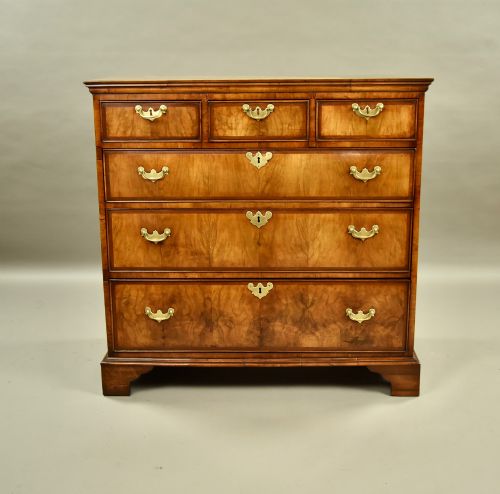
The version most commonly met on this page is the chest of drawers, often constructed in figured walnut or burr walnut veneer. Pieces range from compact small chests to tall formats and serpentine or bow front configurations.
How they were made
Cabinet-makers utilised solid walnut and walnut veneer laid over secondary timbers such as oak, often selecting burr walnut to create dramatic, swirling grain patterns across the drawer fronts. Brass hardware, including drop handles and escutcheons, provides functional contrast to the dark timber.
Construction techniques evolved from early dovetailed drawer carcases and sliding top panels to later veneering methods seen in Art Deco and twentieth-century examples. Marble tops also appear on select continental commodes and dressing furniture.
The inventory spans the seventeenth century through the Art Deco era, featuring materials like brass, marble, oak, and burr walnut veneer.
What varies in quality
The distinction between tiers rests upon the choice of timber veneer and the crispness of the cabinet-making. Figured and burr walnut selections display deliberate grain matching across the drawer rows, whereas simpler builds rely on plain surfaces.
Originality of surface finish and hardware dictates much of the character, with retained patination and intact brasses elevating the standing of a piece. Structural integrity in the drawer runners and carcase joints further marks out superior examples.
Jas Shoolbred
The Walnut Bedroom Dresser Glossary
- Burr walnut
- A specialised timber cut from the growth warts of walnut trees, yielding intricate, swirling grain patterns. Cabinet-makers prize this wood for veneering prominent drawer fronts.
- Serpentine
- A furniture front shape curved with a convex centre flanked by concave sides. This undulating profile requires skilled woodworking to follow the contours.
- Commode
- A low French chest of drawers or cabinet. These often feature marble tops and marquetry details.
- Veneer
- A thin layer of superior wood adhered to a base timber body. This technique allows makers to display decorative grain without using solid expensive wood throughout.
Walnut Bedroom Dresser: Frequently Asked Questions
How do I clean walnut furniture?
Dust surfaces regularly with a soft, dry cloth to prevent accumulation. Avoid modern silicone sprays that build up residue over time.
Feed the timber periodically with appropriate beeswax to maintain the moisture and lustre of the polish. Keep pieces away from direct heat sources and strong sunlight to prevent warping.
Are these dressers suitable for modern bedrooms?
These pieces provide substantial storage capacity while introducing architectural warmth to contemporary spaces. Their varied dimensions allow them to fit both spacious and compact rooms.
Pairing period wood tones with neutral walls lets the grain patterns remain the visual focus. The flat top surfaces also offer functional display space for daily items.
How do I distinguish between periods?
Early pieces from the seventeenth and eighteenth centuries often display distinct proportions, feather banding, and walnut on oak construction. Art Deco examples introduce sleeker lines, blonde walnut tones, and geometric veneer layouts.
Examining the internal drawer construction and hardware fixings provides further chronological clues. Regional variations also shape the distinct profiles found across different decades.