
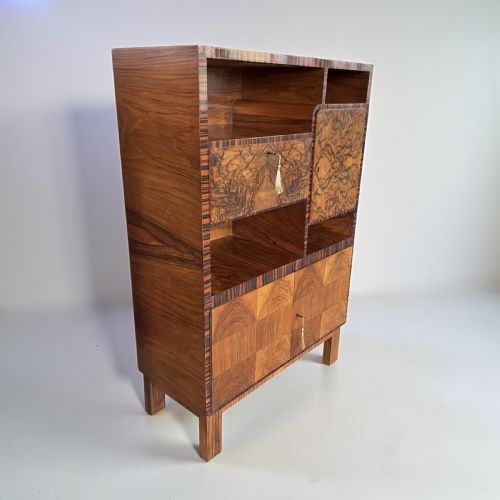
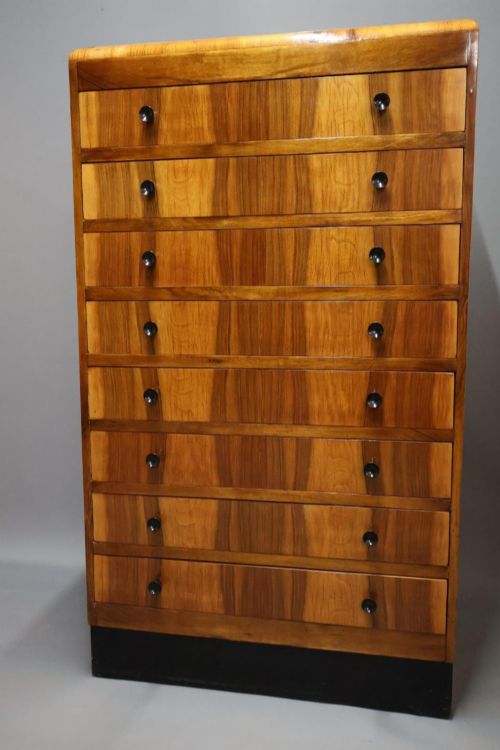


Art Deco Walnut Tallboy
An art deco walnut tallboy offers practical vertical storage wrapped in the striking geometric grain patterns of the interwar years.
Art Deco Walnut Tallboy
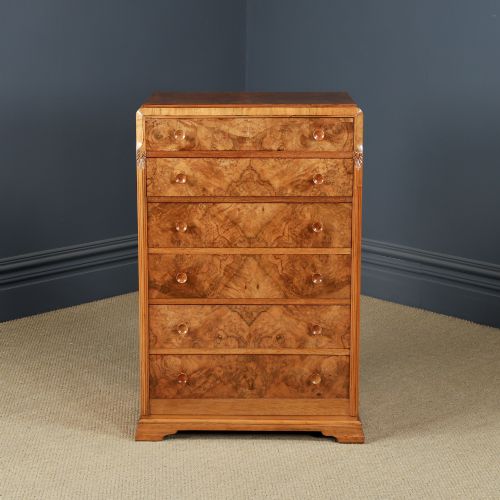
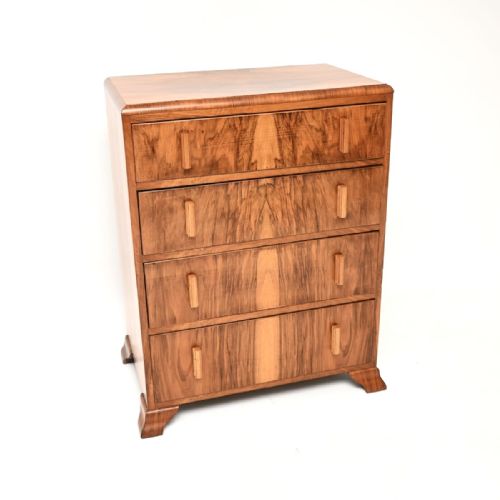
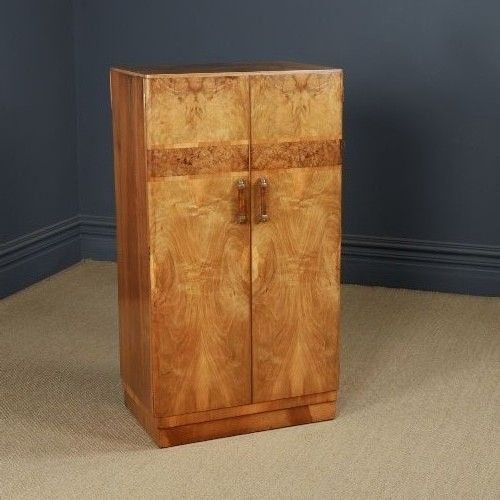
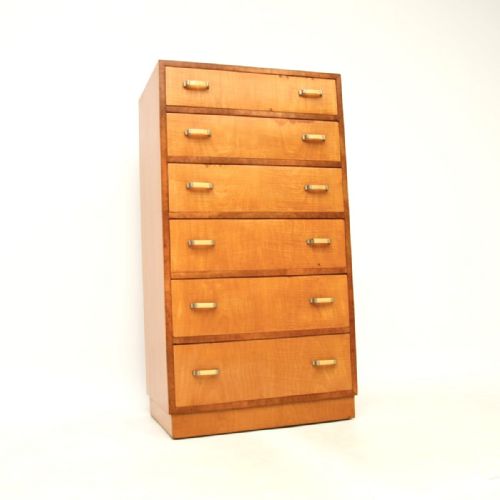
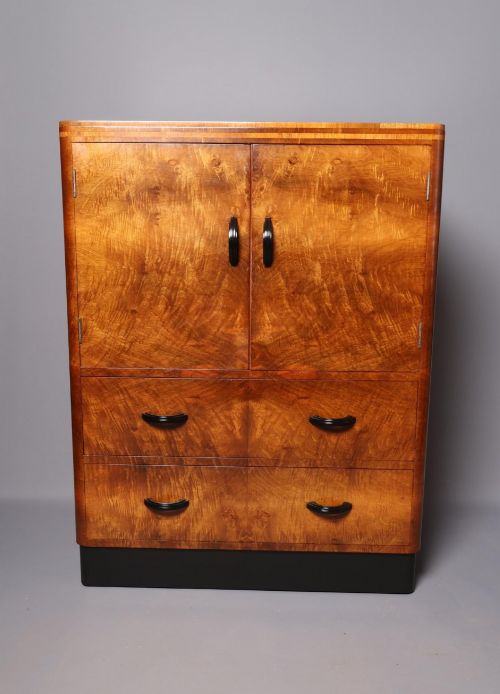
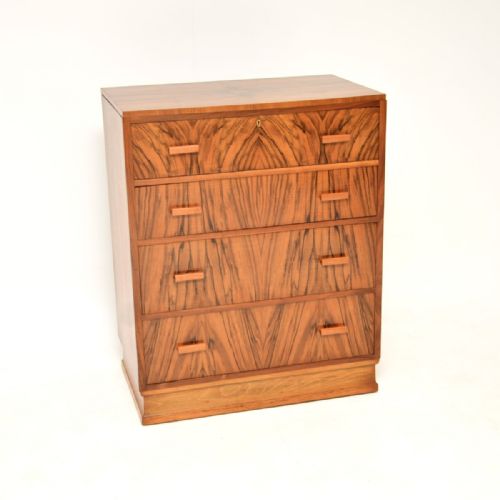
When searching for an art deco walnut tallboy, a buyer finds tall, upright storage pieces primarily originating from the nineteen thirties and nineteen twenties. These items frequently combine upper cabinet doors or wardrobes with lower sets of drawers, though simpler tall chests of six or five drawers also appear.
The most common examples on this page utilise richly grained timber surfaces, often enclosing fitted internal shelving or hanging space alongside the drawer compartments. Alongside standard upright chests, compactums and armoires designed for bedroom use frequently share the tallboy designation.
Most items hail from English workshops and French studios, with dates clustering tightly around nineteen thirty. Pieces range from straightforward functional cabinets to elaborate bow-front designs incorporating multiple wood types.
Construction and materials
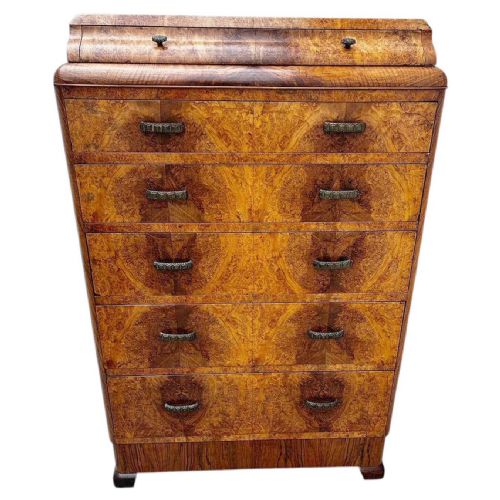
Makers built these pieces using solid timber frames overlaid with decorative veneers, most notably burr walnut, figured walnut, and standard walnut veneer. Satinwood, birds eye maple, coromandel, and ebony occasionally appear as contrasting inlay or banding materials.
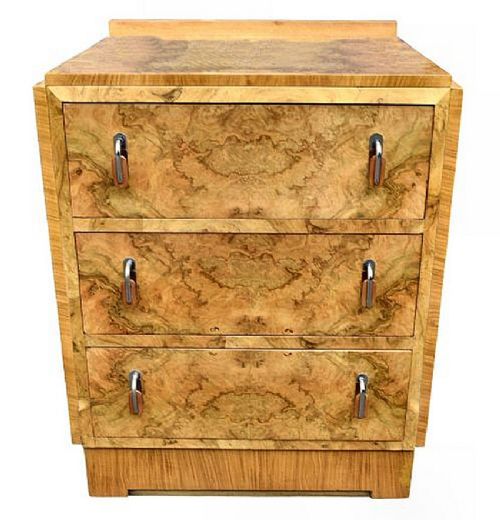
Metal accents played a functional and aesthetic role, with solid brass handles, chrome hardware, and metal details providing contrast against the dark wood. Bakelite components occasionally appear on handles and fittings from the period.
Some tallboys hide integrated writing desks behind their grand walnut doors, turning morning correspondence into a secret compartment operation.
Judging quality in these cabinets
Quality rests heavily on the selection and matching of the wood grain across the front drawers and doors. Book-matched burr walnut creates a symmetrical, swirling pattern that elevates a standard chest into a more ambitious cabinet.
The sophistication of the internal fittings separates standard bedroom furniture from superior examples. Fitted compartments, sliding trays, and integrated secretary desks demonstrate greater care in construction.
Attribution to known makers or distinctive architectural hardware lifts certain pieces above anonymous factory production. The presence of contrasting secondary timbers such as ebony or satinwood signals higher ambition.
Betty Joel·Heal's·Waring & Gillow
The Art Deco Walnut Tallboy Glossary
- Tallboy
- A tall chest of drawers, often standing upon a lower chest or incorporating a wardrobe section at the top. These pieces maximise vertical storage space in the bedroom.
- Burr walnut
- A prized veneer taken from the warted growths on walnut trees, yielding complex, swirling grain patterns. It forms the primary decorative surface on many interwar cabinets.
- Compactum
- A multi-functional wardrobe and chest combination designed to hold various garments in one unit. They frequently feature hanging space, shelves, and internal drawers behind two doors.
- Book-matching
- A veneer technique where adjacent slices of wood are opened like a page to mirror each other. This creates symmetrical patterns across large drawer fronts.
- Secretaire
- A cabinet incorporating a pull-down writing flap concealing small drawers and pigeonholes. French examples from the period often integrate this feature into taller units.
Art Deco Walnut Tallboy: Frequently Asked Questions
How do I use a tallboy today?
These cabinets provide deep vertical storage that suits modern bedrooms, hallways, or living spaces needing concealed organisation.
The internal drawers and compartments easily accommodate folded clothing, linens, or paperwork while occupying a minimal floor footprint.
What is the difference between a tallboy and a compactum?
A standard tallboy focuses primarily on stacked horizontal drawers rising to a considerable height.
A compactum includes enclosed cupboard doors at the top, hiding hanging space or fitted shelves alongside or above the lower drawers.
How do I date an art deco walnut piece?
Most items date from the nineteen twenties and nineteen thirties, identifiable through characteristic geometric forms and streamlined proportions.
Secondary woods, hardware materials like brass and chrome, and maker signatures help narrow down the production decade.
How should I care for walnut veneer?
Protect the surface by keeping the piece away from direct sunlight and maintaining steady room humidity.
Occasional dusting with a soft, dry cloth preserves the polished finish without risking moisture damage to the delicate veneer.