

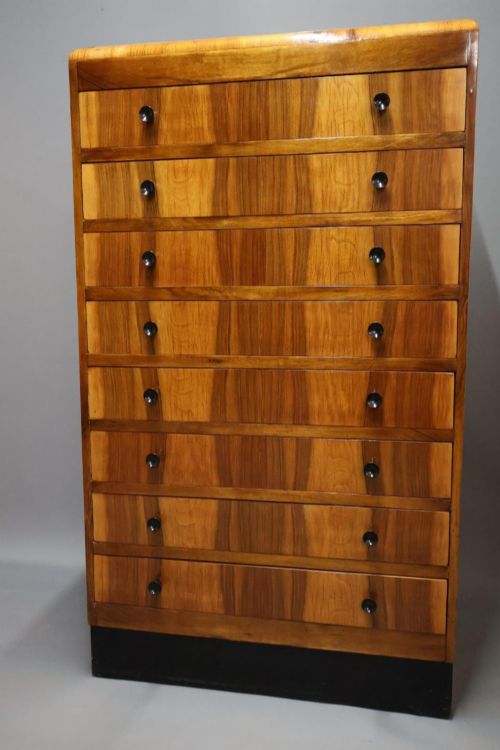


1930s Walnut Bedroom Chest
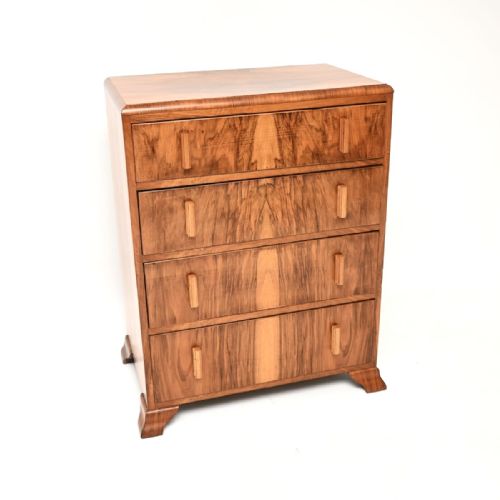
A 1930s walnut bedroom chest brings striking grain patterns and geometric lines to an interior.
1930s Walnut Bedroom Chest
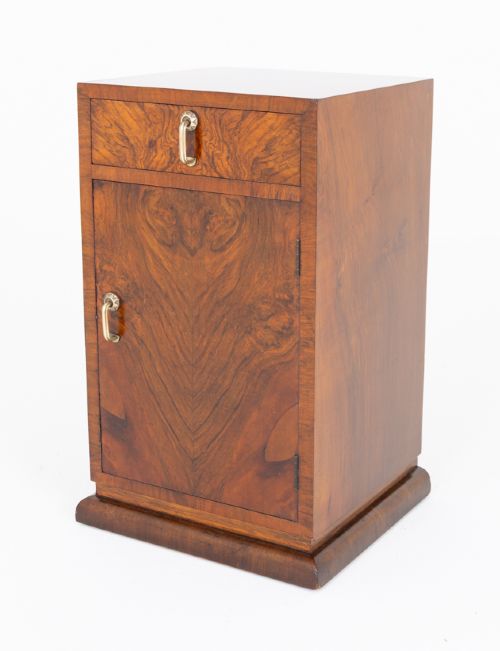
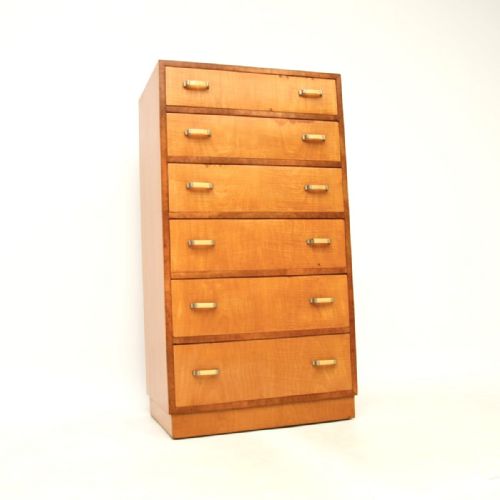
When you search for a 1930s walnut bedroom chest, you are looking at storage furniture built during the interwar decades, heavily influenced by the Art Deco movement. These pieces range from standard chests of drawers and tallboys to compactums and bedside cabinets, all designed to bring symmetry and modern elegance to sleeping quarters.
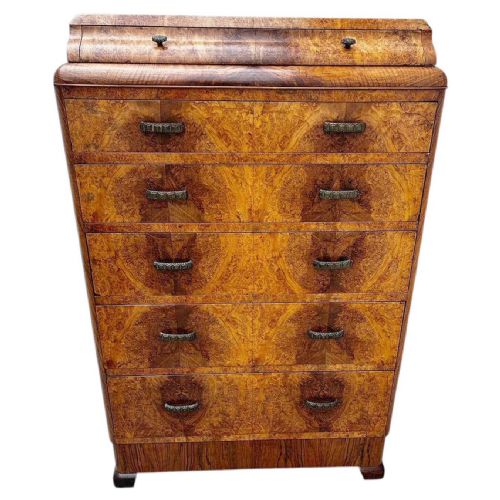
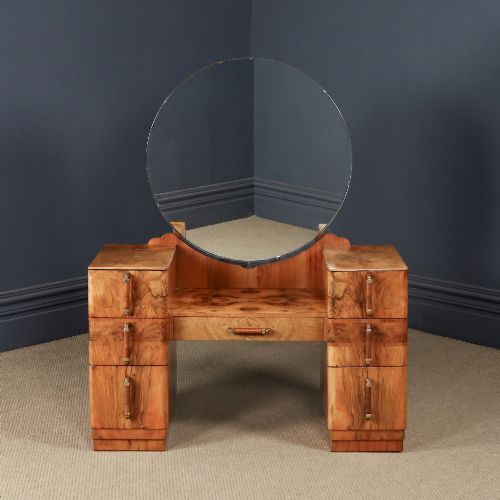
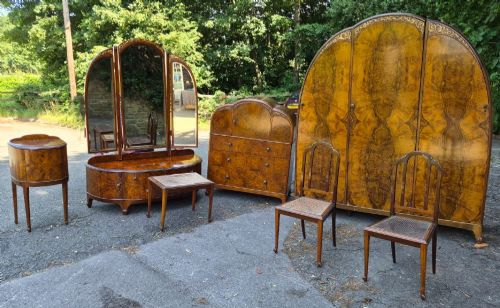
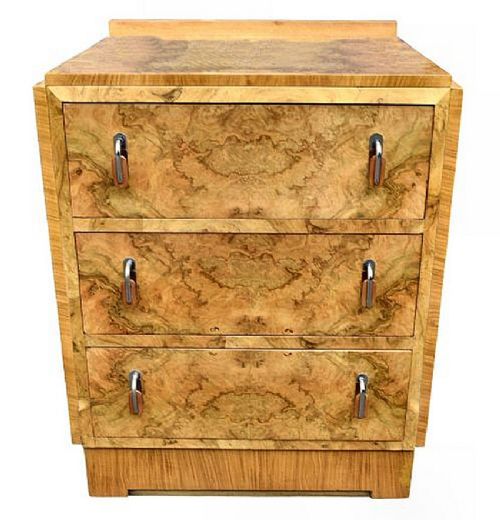
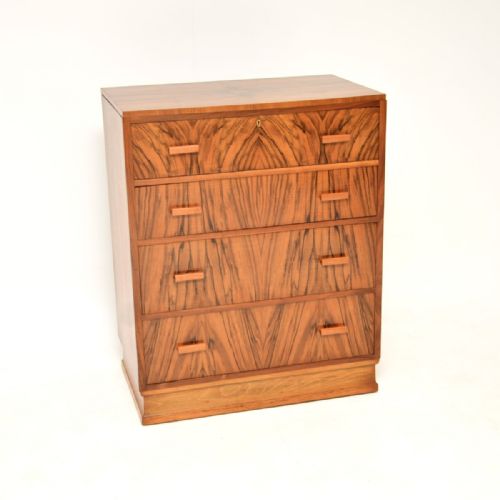
The versions most likely to meet you on this page display the rich figuring of walnut and burr walnut veneer, often arranged in bookmatched patterns across the drawer fronts. Alongside conventional drawer units, you will discover related forms such as pedestal dressing tables with mirrors and matching bedroom suites from the period.
Construction and materials
Cabinet makers of this era utilised walnut and burr walnut veneer laid over solid secondary timbers to achieve sweeping, decorative grain patterns that solid wood alone could not provide. These veneers were carefully matched and balanced across drawer faces and cabinet doors to create symmetrical geometric designs.
Metal and brass hardware, alongside occasional glass and Bakelite details, finished the construction of these pieces, anchoring the drawers and doors. Traditional cabinet-making joinery underpinned the carcases, ensuring structural stability beneath the decorative exterior.
Some dressing tables hide tilting mirrors designed to catch the morning light just right.
Assessing quality
The distinction between standard and superior pieces rests largely on the choice and placement of the walnut veneer. Finer examples display lively burr figuring or matched grain patterns that wrap purposefully around the corners and drawer fronts of the cabinet.
Construction methods and secondary details also dictate the tier of the piece, from standard production items to workshop-built furniture attributed to notable makers. The integration of auxiliary materials like brass handles and contrasting satinwood accents further signals the ambition of the original design.
Frank Taylor & Co.·Maurice Adams·Heal's
The 1930s Walnut Bedroom Chest Glossary
- Burr walnut
- A veneer sliced from the irregularly grained growth of a walnut tree, prized for its swirling patterns. It creates a highly decorative surface on drawer fronts.
- Tallboy
- A tall chest of drawers, often combining a set of drawers with a cupboard section above. This form maximises vertical storage space in the bedroom.
- Compactum
- A fitted wardrobe or multi-compartment storage unit designed for personal clothing. These pieces organise various garments within a single enclosed frame.
- Bookmatching
- A technique where adjacent veneer slices are opened like a book to mirror each other. This method produces symmetrical patterns across the front of a chest.
- Pedestal dressing table
- A vanity table featuring banks of drawers supporting a central mirror. They frequently accompany matching chests of drawers in bedroom suites.
1930s Walnut Bedroom Chest: Frequently Asked Questions
What is a 1930s walnut bedroom chest?
It is a storage unit built during the 1930s utilising walnut timber or veneer, typically styled with clean lines characteristic of the period.
These pieces served as functional bedroom furniture, ranging from low drawer chests to tallboys and compactums.
How do I identify Art Deco style?
Art Deco design emphasises geometric shapes, symmetry, and sleek ornamentation rather than heavy historical carving.
On these chests, you spot this through bookmatched veneers, stepped cornices, and streamlined metal or Bakelite handles.
Are these pieces made of solid walnut?
Most examples utilise walnut or burr walnut veneer applied over a stable secondary timber core.
This technique allowed makers to display dramatic, figured grain patterns across large drawer surfaces without the wood warping.
How do I care for walnut veneer?
Keep the wood away from direct sunlight and consistent moisture to protect the thin veneer layers from fading or lifting.
Dust the surface regularly with a dry cloth and occasionally apply appropriate polish suited for vintage wood.
What pieces match a walnut chest?
Bedside cabinets, tallboys, and pedestal dressing tables from the same era share the characteristic walnut finish.
Matching items often appear as part of coordinated bedroom suites or share similar Cotswold School and Art Deco styling.