

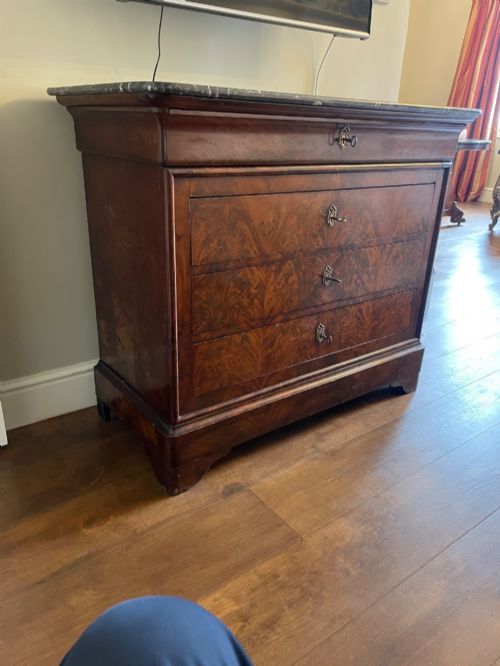
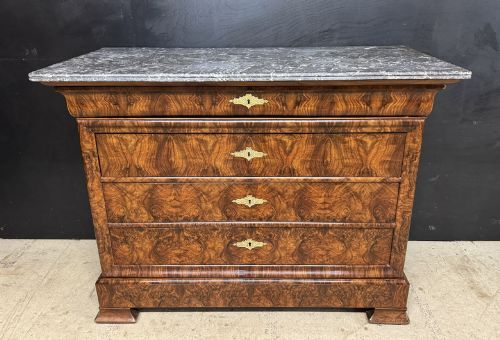
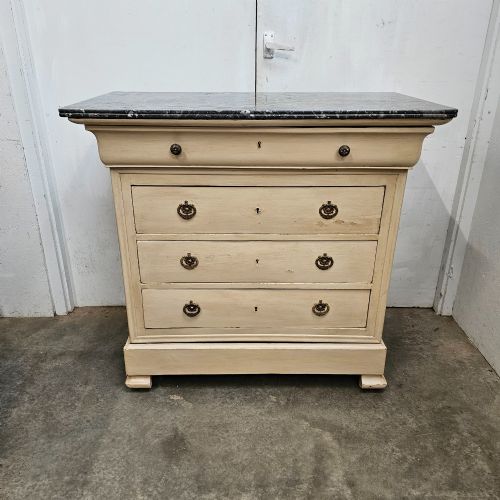
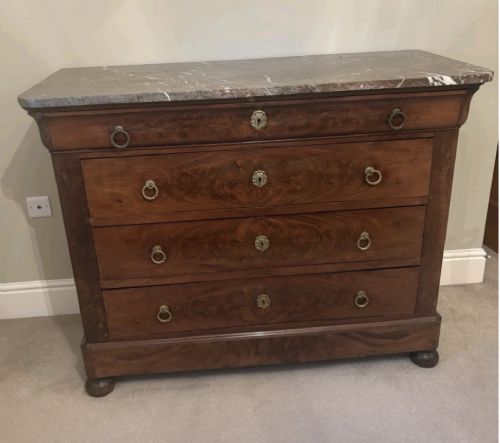


Louis Philippe Chest
A louis philippe chest brings sober French elegance to a bedroom, offering generous drawer storage beneath a cool stone surface.
Louis Philippe Chest
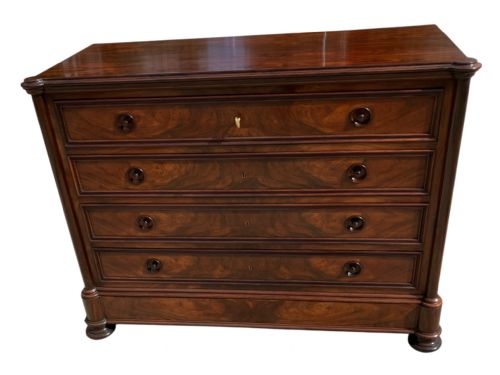
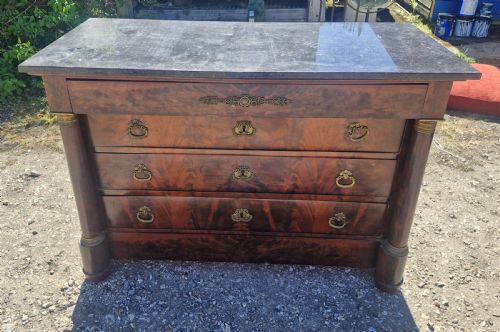
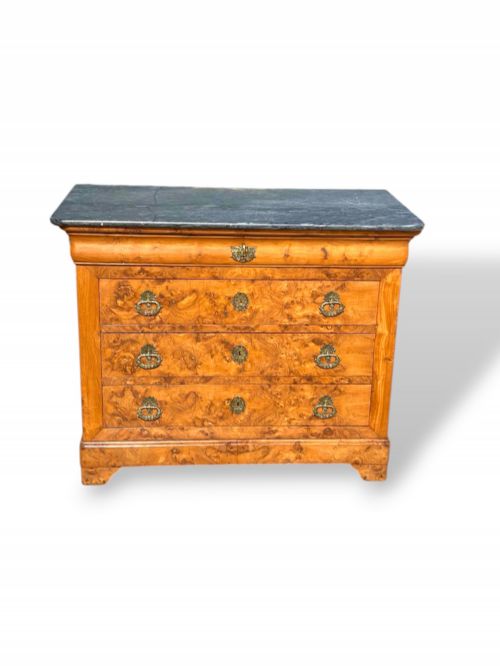
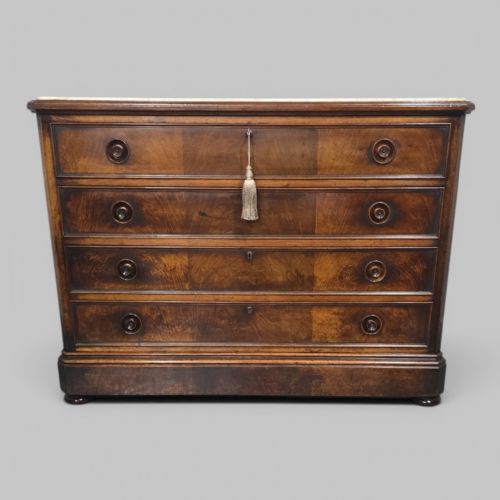
A louis philippe chest is typically encountered as a heavy, clean-lined commode originating from nineteenth-century France. These pieces favour architectural simplicity over elaborate carving, relying instead on the natural grain of the timber to provide visual interest.
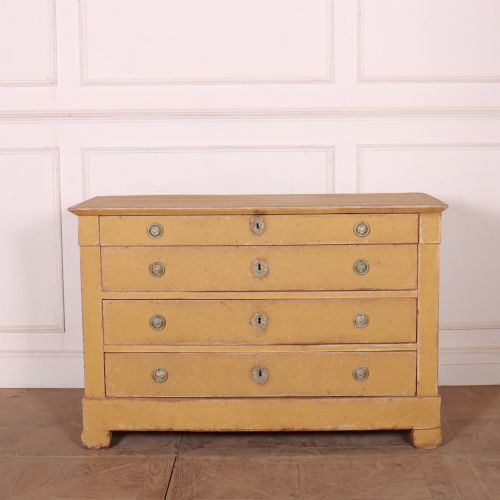
While most examples date from the mid nineteenth century, variations appear in painted wood, oak and rosewood. Taller vertical formats such as the semainier also emerge among the standard commodes.
Materials and Construction
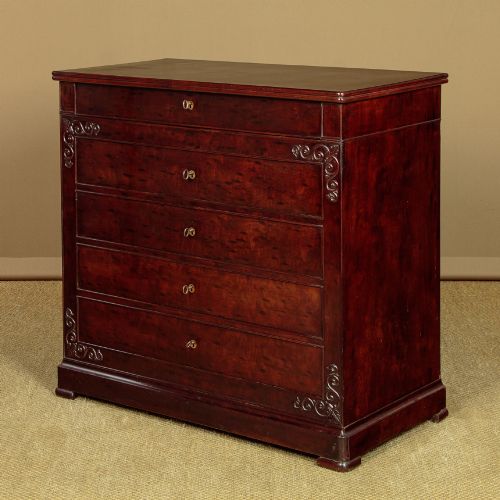
Cabinet makers built these carcases using substantial softwood or hardwood frames as a foundation for figured veneers. Flame mahogany, burr walnut and burr ash were sliced thinly and laid with grain patterns meeting symmetrically across the drawer fronts.
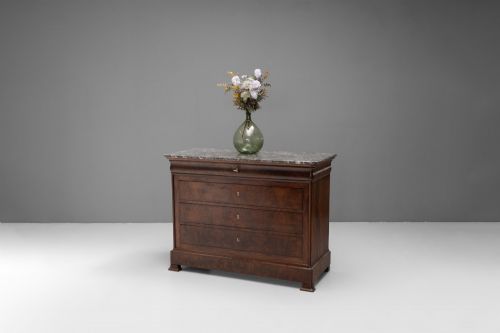
Heavy marble tops were quarried to fit precisely over the upper moulding, adding substantial weight and a durable functional surface. Mounts and key escutcheons were cast in brass, providing understated contrast to the polished timber surfaces below.
Louis Philippe Chest Retail Price Guide 2026
Typical asking prices for louis philippe chest among the pieces listed under this phrase on Sellingantiques today, from the lower quarter to the upper quarter. They describe what is for sale here now, not the wider market.
Walnut and mahogany dominate the timber selections recorded here, frequently paired with thick grey marble tops.
Judging Quality and Finish
Quality rests upon the choice of timber veneer and the precision with which the grain matches across the drawer tiers. Better examples display lively figure in the walnut or mahogany that remains uninterrupted by clumsy repairs.
The integration of the stone top dictates the overall refinement of the piece. A heavy marble slab with clean, undamaged edges and a tight fit to the wooden frieze marks a superior grade of construction.
Gomien
The Louis Philippe Chest Glossary
- Commode
- A low chest of drawers, typically French in origin. This term is frequently used interchangeably with chest of drawers in the trade.
- Semainier
- A tall, narrow chest of drawers traditionally designed with seven drawers for each day of the week. These pieces offer vertical storage whilst retaining compact floor footprints.
- Frieze drawer
- The uppermost drawer set directly beneath the top surface of the chest. It often sits within the top moulding and may feature a concealed lock.
- Veneer
- A thin layer of highly figured wood applied over a secondary timber foundation. This technique allows cabinet makers to display dramatic grain patterns without using solid scarce timber for the entire carcase.
- Escutcheon
- A decorative plate surrounding a keyhole. On these pieces, they are commonly cast in brass and fitted flush to the wood.
Louis Philippe Chest: Frequently Asked Questions
What is a louis philippe chest?
A louis philippe chest is a nineteenth-century French commode known for restrained classical lines and minimal carving. It relies on figured wood veneers and heavy stone tops for its visual presence.
These pieces emerged during the reign of Louis Philippe and prioritise quiet utility and balanced proportions over ornate decoration.
How were marble tops fitted?
Heavy marble slabs rested directly upon the wooden upper framework of the carcase. Their substantial weight kept them in place without mechanical fixings.
This provided a practical, cool surface for a bedroom, protecting the timber beneath from water or spills.
Where should I place one?
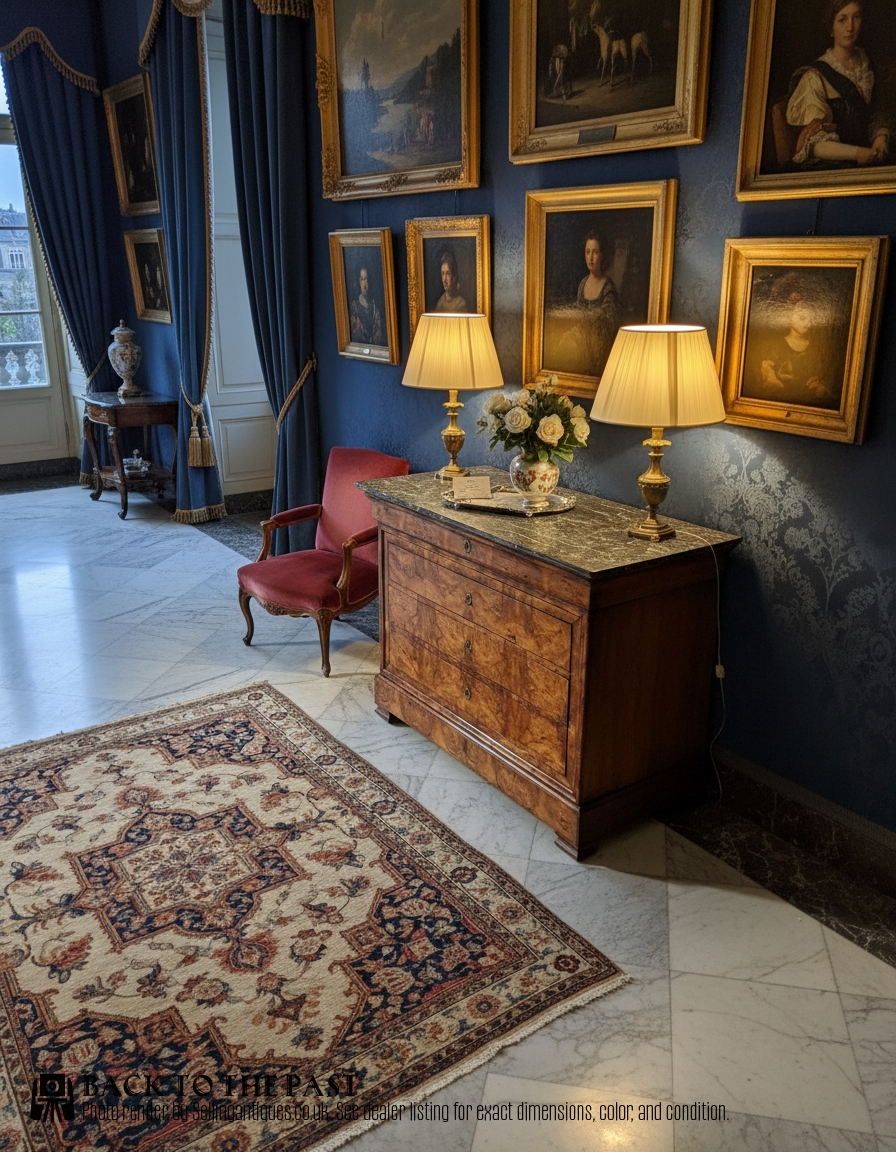
These chests suit bedrooms, hallways or living spaces as storage units with surface display potential. Their subdued wood tones integrate easily with diverse interior styles.
Ensure the floor is level and capable of supporting the combined weight of timber and thick stone.
How do I care for the marble?
Wipe the stone surface with a soft, damp cloth and mild neutral soap. Avoid acidic cleaners that etch the polished finish.
Protect the marble from oils and strong pigments to prevent staining over time.