

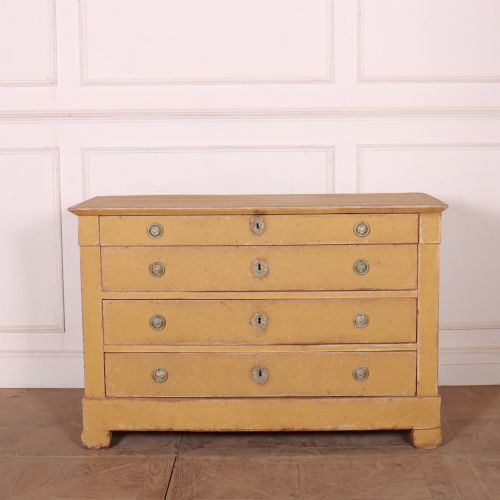
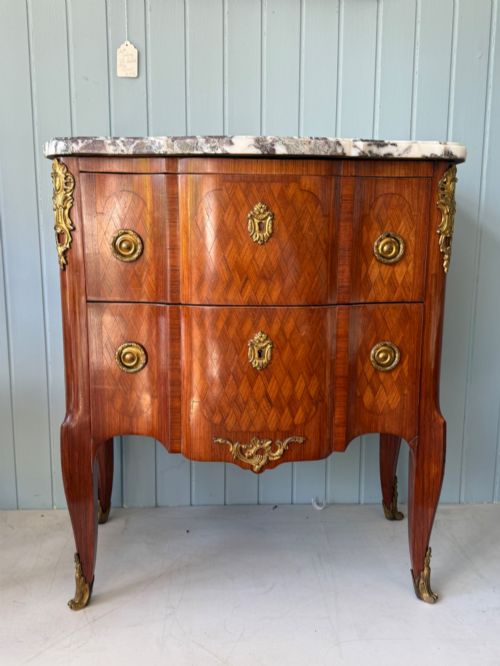
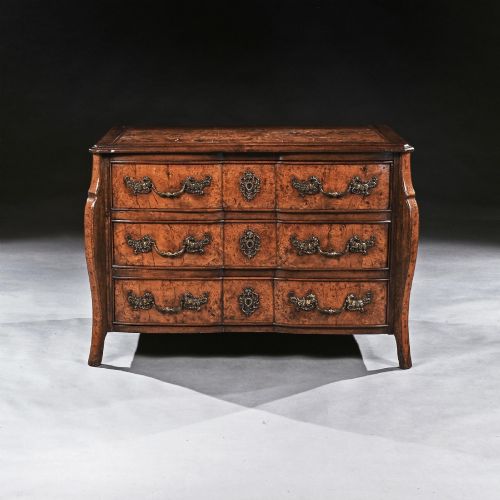
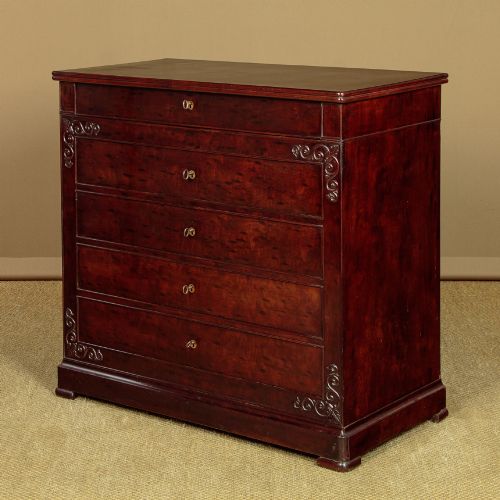
French Wooden Commode
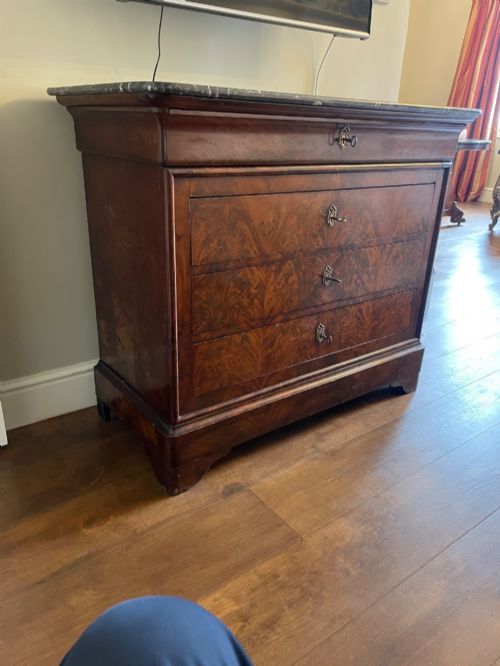
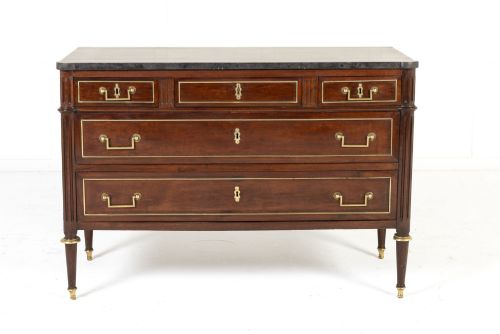
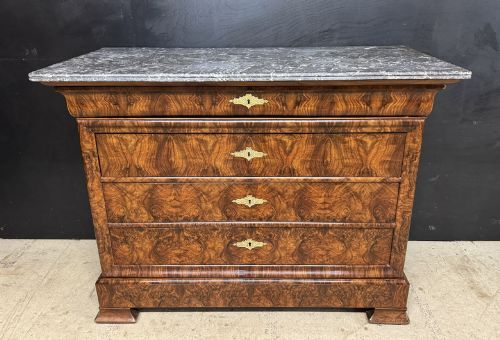
A French wooden commode offers deep storage and a heavy marble top, bringing continental presence into a room.
French Wooden Commode
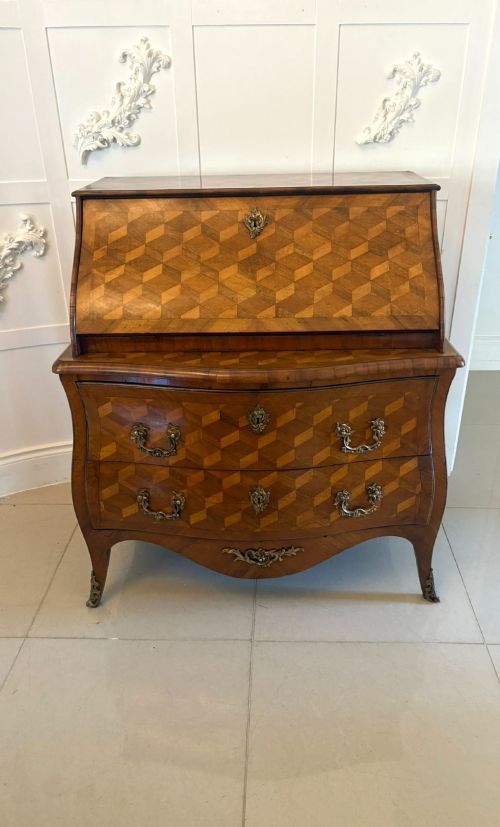
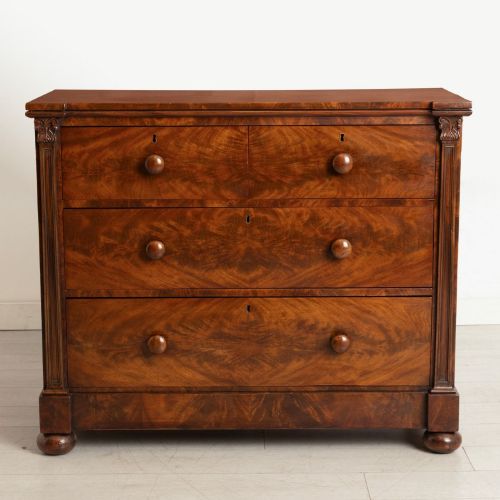
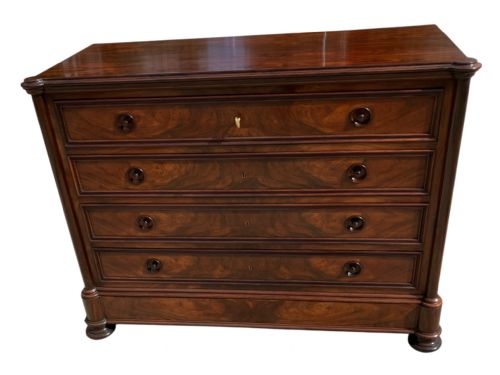
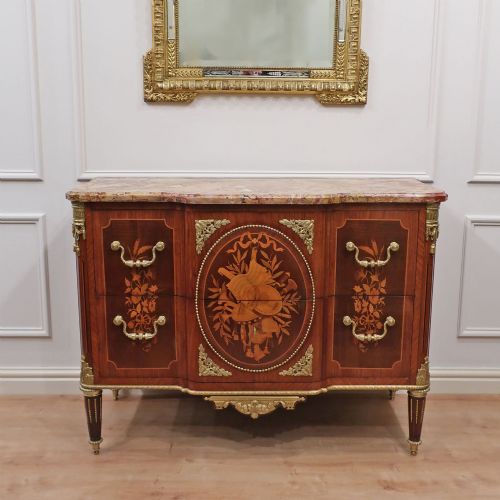
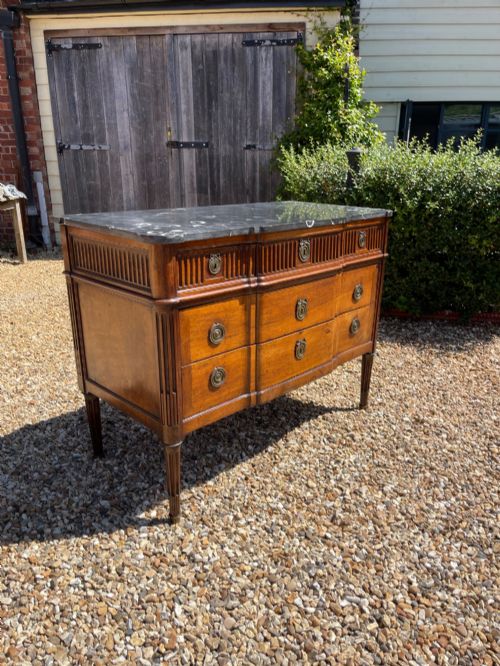
A french wooden commode is a low chest of drawers, built primarily for domestic storage and often finished with a marble top. These pieces appear in forms ranging from provincial walnut chests to sophisticated marquetry cabinets.
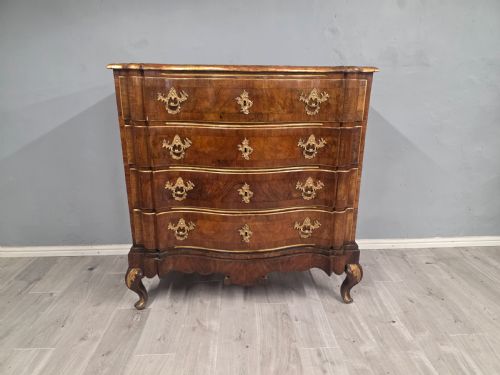
The versions most common on this page span the eighteenth and nineteenth centuries, taking shapes like the serpentine front, the bombe contour, or the simpler upright chest. Regional provincial pieces share space with refined Louis style revivals.
Makers and workshops constructed these cabinets using dense native and exotic timbers, providing stable housing for clothing and household items across generations.
Construction and Materials
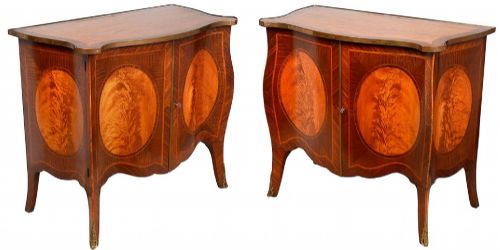
Cabinetmakers built carcasses from foundational woods such as oak, walnut, chestnut, and elm, applying decorative veneers like kingwood, burr elm, and mahogany over the structural frame. Marquetry and parquetry patterns add geometric or floral complexity to drawer fronts and sides.
Many surfaces feature shaped marble tops in white or coloured varieties, fitted precisely to the wooden carcass. Brass and ormolu mounts, handles, and escutcheons punctuate the timber surfaces.
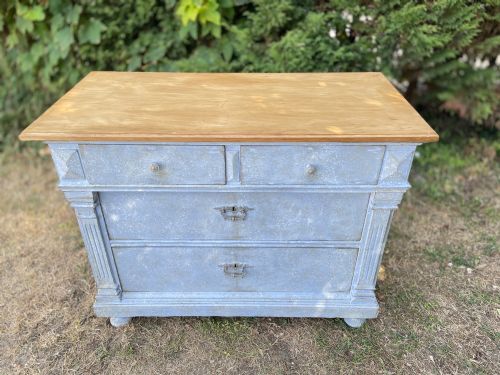
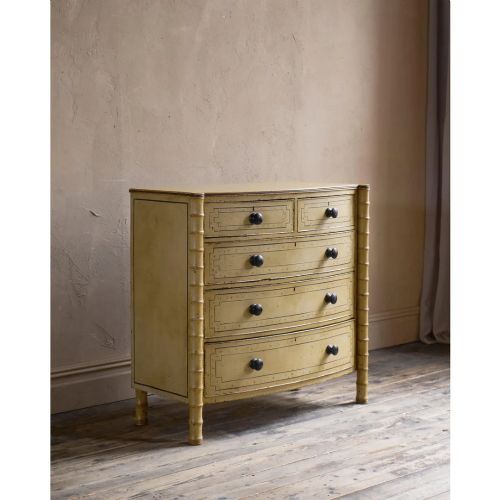
Surface treatments range from clear wax polishing on exposed grain to painted and ebonised finishes, depending on the provincial or urban origin of the piece.
French Wooden Commode Retail Price Guide 2026
Typical asking prices for french wooden commode among the pieces listed under this phrase on Sellingantiques today, from the lower quarter to the upper quarter. They describe what is for sale here now, not the wider market.
Listings feature periods spanning from the mid eighteenth century through the Art Deco era of the nineteen thirties.
Evaluating the Pieces
The integration of the marble top to the wooden frame sets a standard for finish; slabs fitted flush without excessive packing show greater original care. Timber selection also divides the output, where matched burr veneers or finely figured walnut elevate a simple chest into a sophisticated object.
Joinery within the drawer construction, such as hand-cut dovetails and solid timber linings, indicates the hand of a skilled cabinetmaker rather than mass production. The crispness of carved mounts and parquetry lines maintains visual authority across the piece.
Edwards and Roberts
The French Wooden Commode Glossary
- Bombe
- A bulging or swelling contour found on the front and sides of eighteenth century and revival commodes. This curved profile requires advanced woodworking skill to build.
- Marquetry
- The art of applying decorative veneer pieces to a structural surface to form pictures or geometric patterns. Craftsmen use varied woods to create tonal contrast.
- Serpentine
- A front shape characterised by a central convex curve flanked by two concave curves. This undulating line appears frequently on eighteenth century commodes.
- Ormolu
- Gilt bronze mounts applied to furniture for decorative effect. These cast metal details accent corners, feet, and drawer pulls.
- Parquetry
- Geometric wood inlay work forming repeating patterns such as cubes or diamonds. It differs from marquetry by focusing on repeating shapes rather than pictorial designs.
French Wooden Commode: Frequently Asked Questions
What is a french wooden commode used for?
These pieces serve primarily as low chests of drawers for domestic storage in bedrooms, hallways, or living spaces. Their substantial surface area also functions well for lamps and decorative objects.
In period settings, they provided secure storage for garments and linens close to the bedchamber.
How do I spot an 18th century commode?
Eighteenth century examples often show hand-cut dovetails, older timber shrinkage patterns, and traditional wax finishes built up over generations. Structural elements like the carcass framing rely on hand tools rather than modern machine production.
Stylistic cues such as early Louis XV or Louis XVI carving details also point toward this earlier period of manufacture.
Are marble tops original to these chests?
Many commodes were built specifically to carry heavy marble slabs, particularly those originating from French workshops. The wooden top frame is often recessed slightly to support the weight of the stone.
Replacement marble tops do occur, but a proper fit aligns with the era and style of the wooden base.
How do I care for a wood and marble commode?
Apply traditional beeswax sparingly to nourish the timber surfaces and buff gently with a soft cloth. Avoid placing wet items directly on the wood or unsealed marble to prevent staining.
Keep the furniture away from direct heat sources to prevent timber shrinkage and veneer lifting.