

Vintage Work Table
A vintage work table brings genuine utility and character to a room, offering sturdy surfaces shaped by practical use.
Vintage Work Table
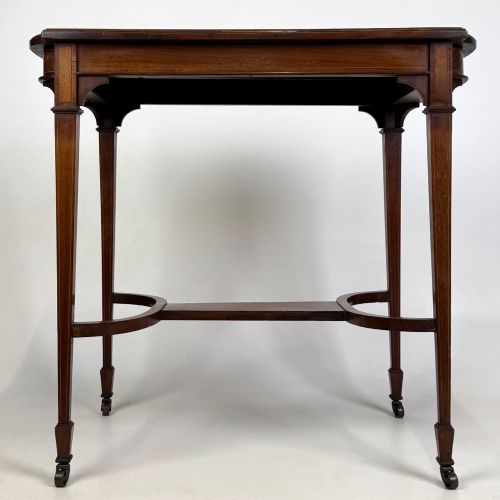
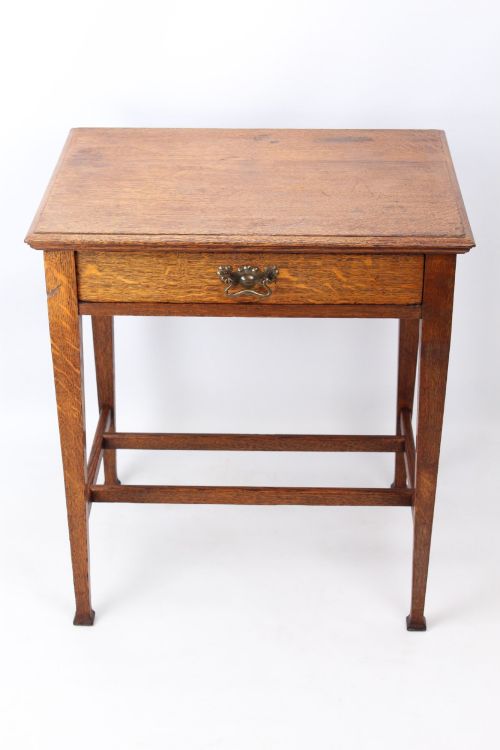
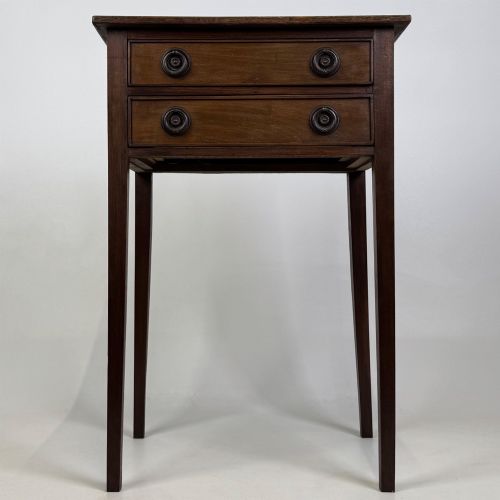
A vintage work table covers robust items designed originally for practical tasks, from dairy preparation to needlework and sewing. These pieces range from nineteenth-century pine dairy tables to Edwardian walnut sewing tables and robust kitchen furniture.
Origins span English farmhouse environments and French provincial settings, giving buyers a choice between scrubbed pine, polished mahogany, and painted finishes. Each piece retains the proportions and functional adaptations required by its original workspace.
How They Were Made
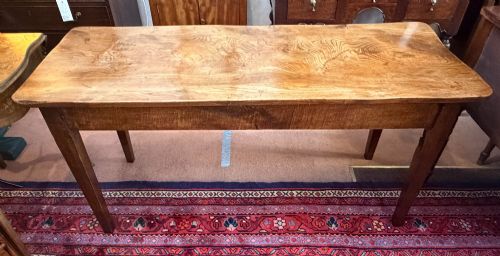
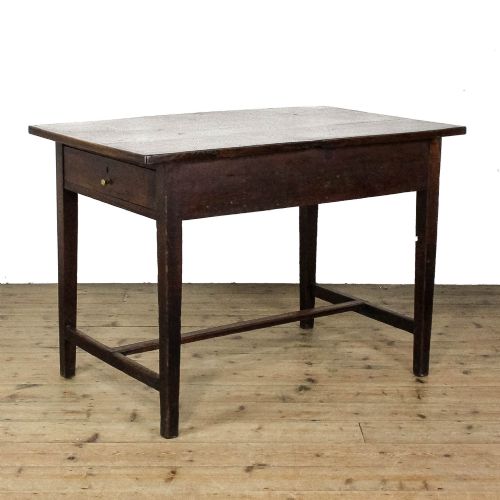
Construction relies heavily on traditional timbers such as oak, mahogany, pine, and sycamore, joined to withstand heavy daily labour. Workshops utilised solid planks for table tops, often supported by box stretchers or robust legs designed to prevent wobbling during intense tasks.
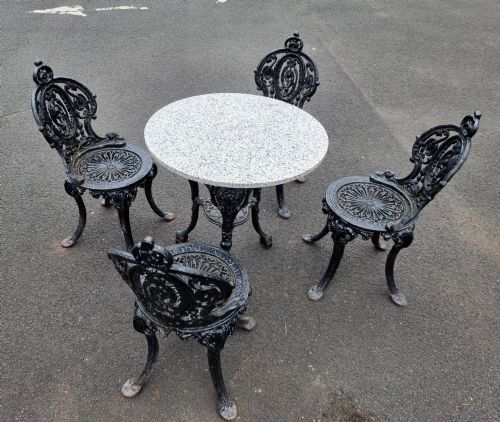
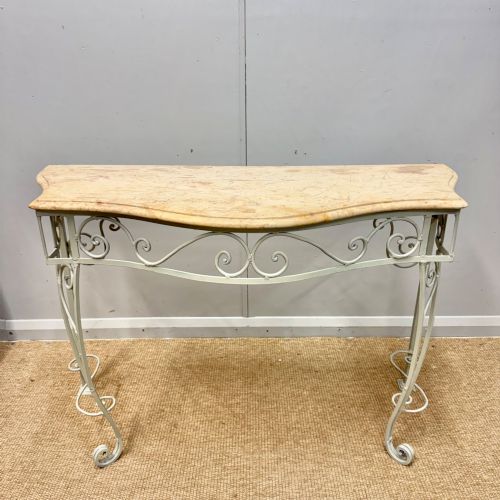
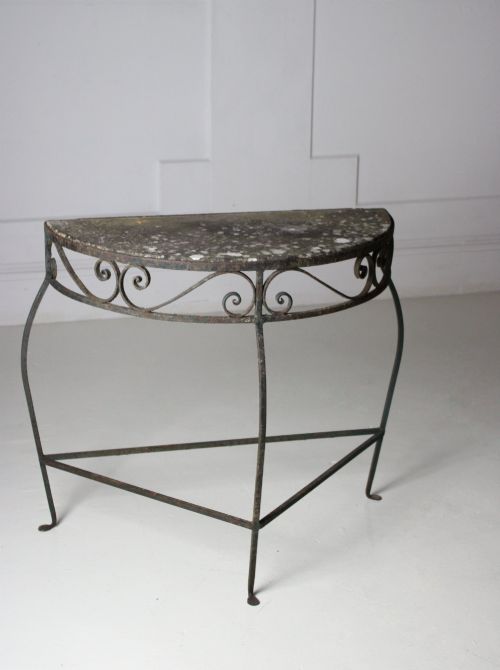
Metal elements like wrought iron and brass appear frequently in frames, strapwork, and hardware, providing structural rigidity alongside wooden components. Marble tops also feature on console and bistro variations, offering a cool, impervious surface for preparation work.
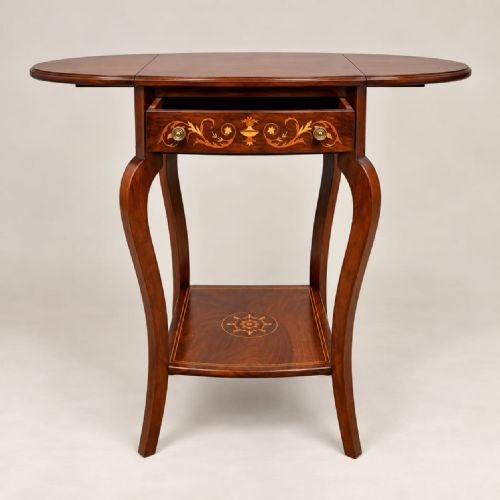
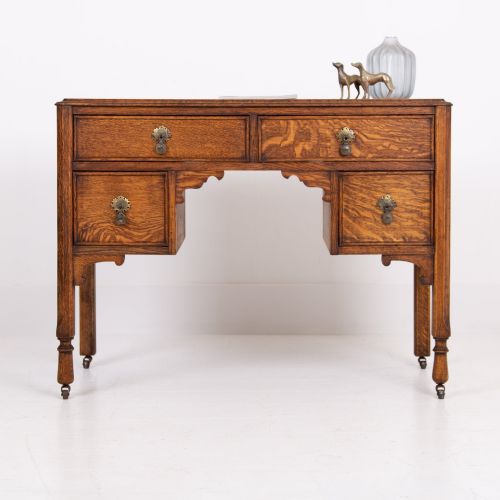
Surface treatments range from painted finishes on pine dairy pieces to intricate cross-banding and inlay work on fine mahogany sewing tables. These varied techniques show that utilitarian tables received both rough-and-ready workshop builds and refined cabinetmaker attention.
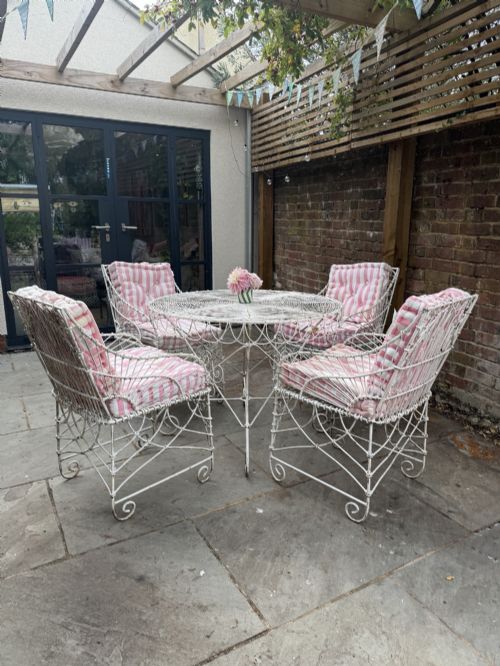
Estate-made wrought iron garden racks sit alongside delicate nineteenth-century table gongs, proving someone in the past took dinner announcements very seriously.
What Varies in Quality
The standard of timber selection and the integrity of the original joints separate ordinary utility pieces from finer examples. Superior specimens retain their original tops and fitted interiors without heavy structural timber replacement.
The refinement of decorative details, such as inlaid cross-banding on Edwardian mahogany or hand-forged scrollwork on wrought iron frames, distinguishes workshop standards. Simpler pine farmhouse tables rely on honest patination and solid board thickness rather than cabinet flourishes.
The Vintage Work Table Glossary
- Sewing Table
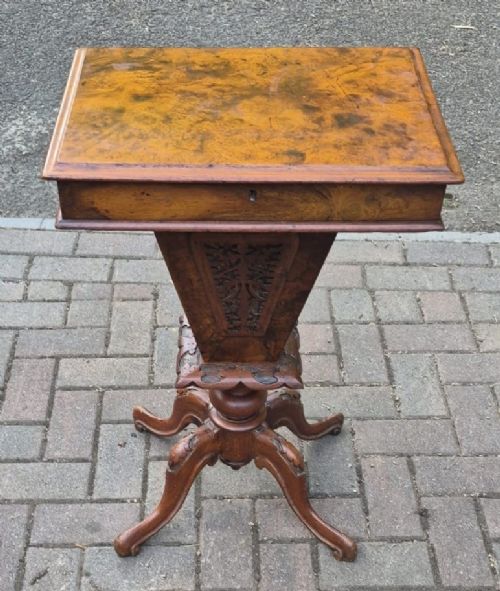
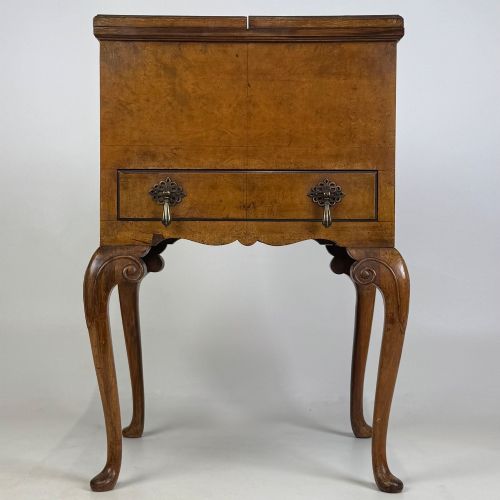
- A small specialised piece featuring fitted interior compartments for thread and needles, popular during the Victorian and Edwardian eras. These items often include drop leaves and silk catch bags.
- Dairy Table
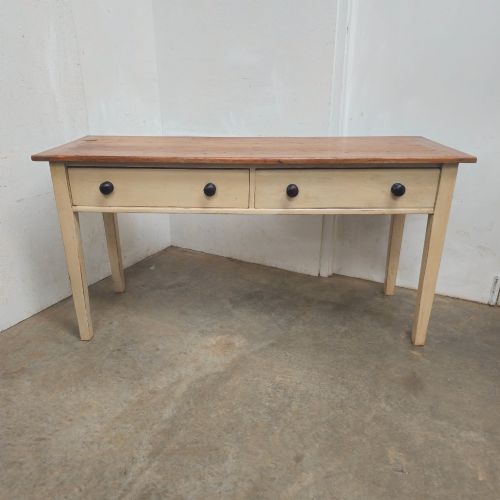
- A functional wooden table utilising scrubbed pine or sycamore tops designed to resist moisture during milk and cheese processing. They typically feature unpainted scrubbed surfaces and sturdy frame construction.
- Console Table
- A narrow table designed to stand against a wall, frequently topped with marble and supported by wrought iron or carved wood. They serve narrow hallways and reception rooms.
- Cross-Banding
- A decorative technique where thin strips of veneer are laid across the grain of the primary wood around the perimeter of a table top. This adds subtle geometric framing to Edwardian and Victorian pieces.
- Box Stretcher
- A set of horizontal rails connecting the lower legs of a table on all four sides to increase rigidity. This structural addition prevents the legs from spreading under heavy loads.
Vintage Work Table: Frequently Asked Questions
What is a work table used for?
These tables served practical functions in past decades, acting as prep stations in dairies, kitchens, and estate workshops. Today, owners utilise them as kitchen islands, side desks, or display surfaces in living spaces.
Their robust construction allows them to handle modern daily tasks while adding historical character to a room.
How do I date a vintage table?
Dating relies on examining the timber species, construction joints, and stylistic details recorded across periods like the Victorian and Edwardian eras. Secondary woods, drawer dovetails, and hardware styles offer reliable clues to the decade of manufacture.
Comparing the piece to documented examples from similar workshops helps narrow down the precise historical era.
Are these tables suitable for daily kitchen use?
Many of these pieces were built precisely for food preparation, dairy work, or workshop tasks, making them exceptionally durable for modern kitchens. Solid wood and marble-topped variants handle regular activity well.
Care should be taken with antique polished surfaces to protect them from excessive moisture and heat.