


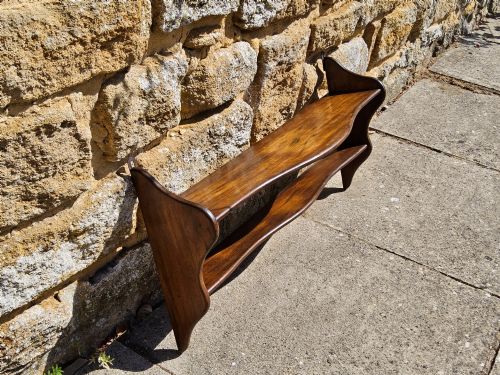
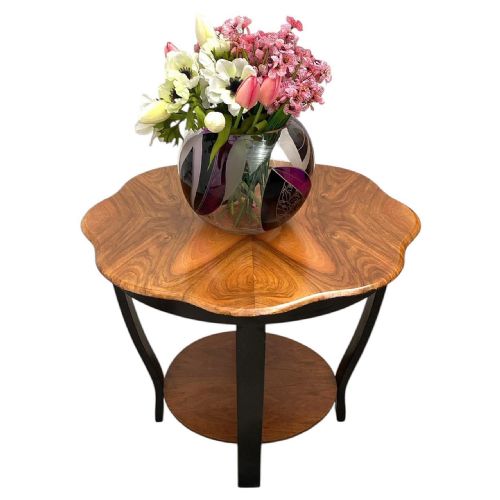
Vintage Walnut Shelves
These vintage walnut shelves span periods from the nineteenth century to Art Deco, offering rich timber grain for displaying books and objects.
Vintage Walnut Shelves
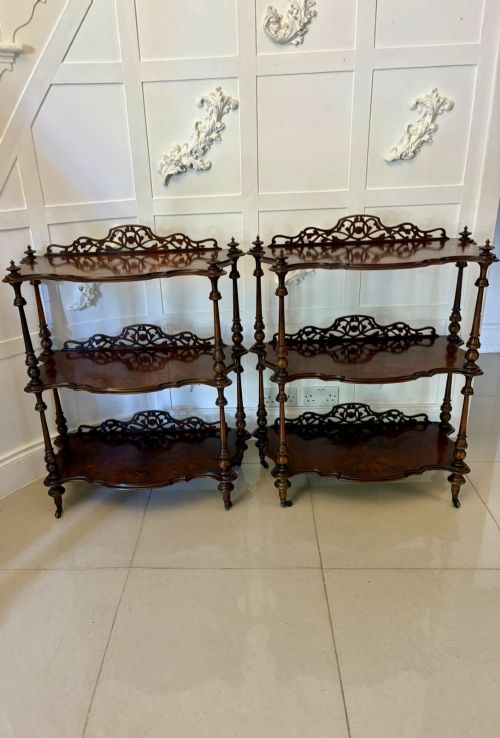
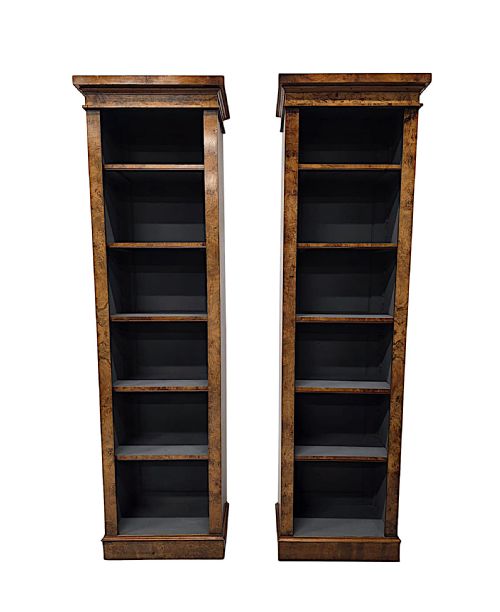
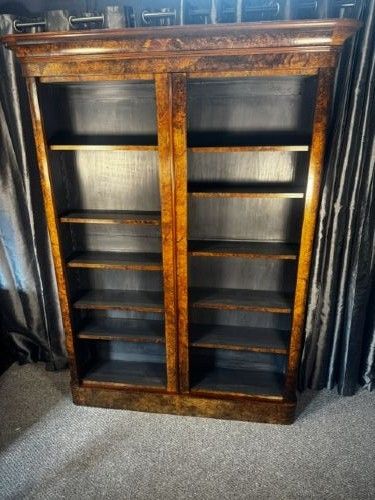
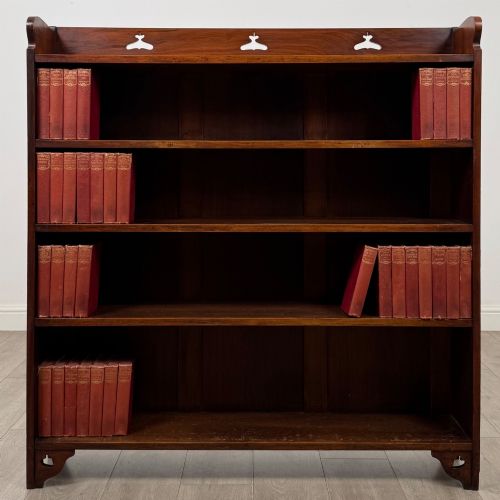
When you search for vintage walnut shelves, you encounter various timber storage pieces designed to mount on walls or stand on the floor. These items range from open bookcases and library shelving to tiered whatnots and corner cabinets created across the nineteenth and twentieth centuries.
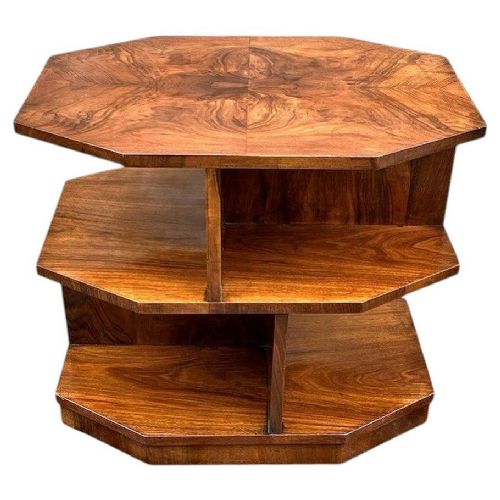
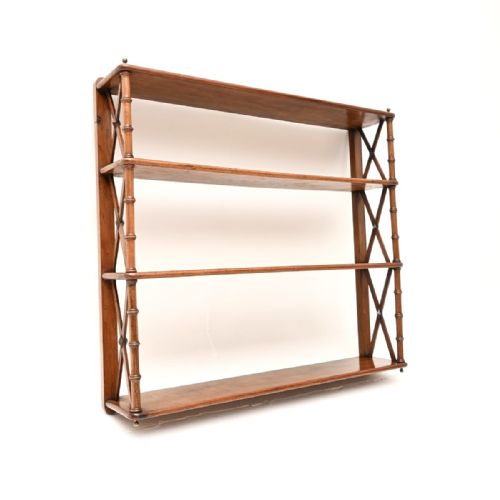
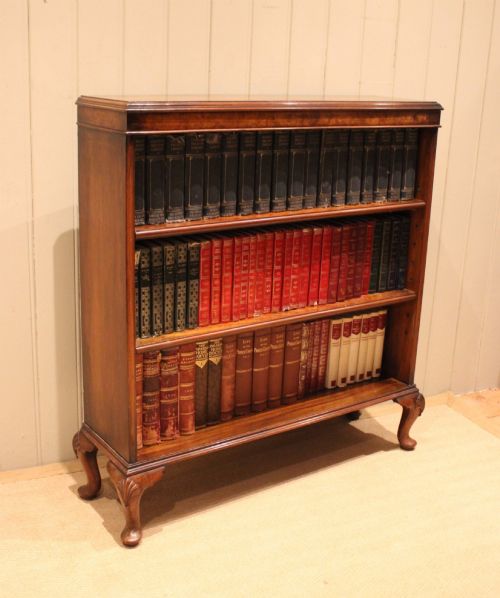
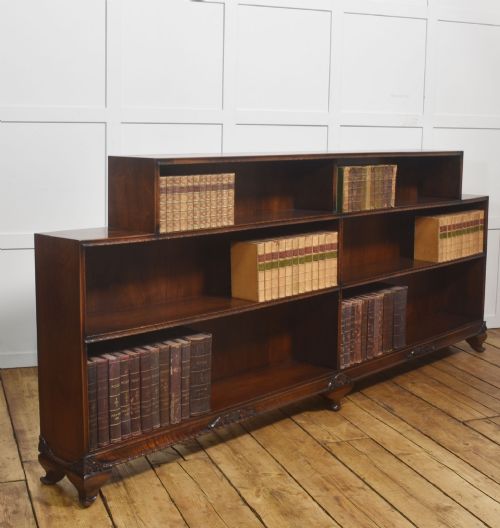
The selections available here lean heavily toward open bookcases from the Victorian era and stepped designs from the Art Deco period. You will also find specialised items such as wall shelves, etageres, and cabinets utilising the same dark timber.
Origins vary from English workshops to Continental makers, reflecting shifting domestic tastes in storage and display. Whether utilising solid timber or decorative veneers, each piece serves the fundamental purpose of organising books and ornaments within a room.
How they were made
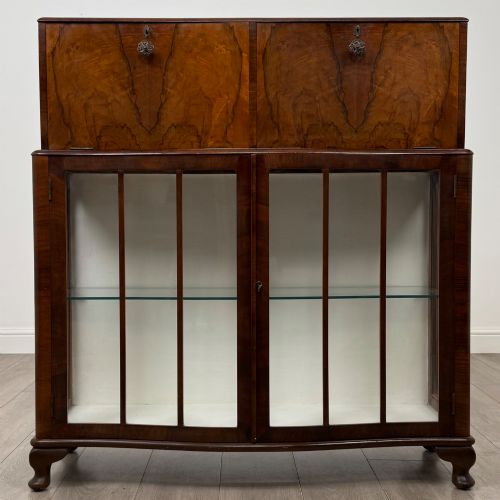
Cabinet makers utilised walnut timber, often selecting burr walnut or figured walnut veneers to create striking surface patterns across the grain. These veneers were meticulously applied to carcases constructed from secondary woods, providing stability and visual depth.
Construction methods combined traditional joinery with decorative elements such as brass fittings, glass panels, and ebonised details. Art Deco examples occasionally integrate chrome alongside walnut, reflecting the industrial shifts in material use during the nineteen-thirties.
A pair of carved wooden bookends depicts owls with glass eyes keeping watch over the surrounding library shelves.
What varies in quality
The standard of a piece depends heavily on the selection of the walnut veneer and the precision of its matching across the doors, shelves, or panels. Superior examples display continuous grain patterns that require considerable skill from the cabinet maker to align properly.
Construction depth also separates standard utility furniture from finer commissions, seen in the thickness of the solid timber shelves, the complexity of carved details, and the quality of integrated brass hardware or adjustable mechanisms.
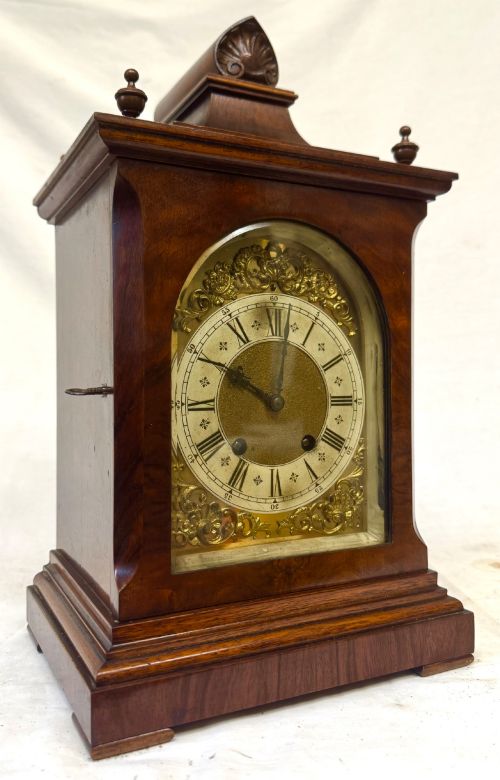
Maurice Adams·Haller·Lenzkirch
The Vintage Walnut Shelves Glossary
- Burr walnut
- A figured wood grain derived from the warted growths on walnut trees, prized for its swirling patterns. It is sliced into thin veneers for decorative furniture surfaces.
- Whatnot
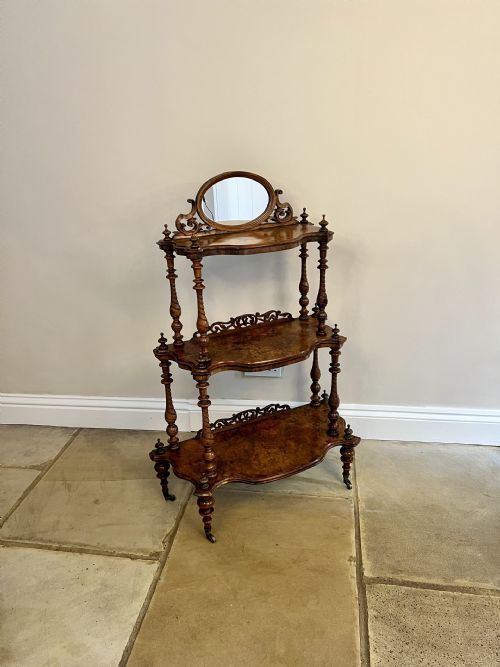
- A set of open shelves standing on legs, designed for displaying ornaments and small objects. These pieces became particularly popular during the Victorian period.
- Art Deco
- A design style from the nineteen-twenties and nineteen-thirties characterised by geometric shapes, streamlined forms, and modern materials. Walnut was frequently paired with chrome in these items.
- Etagere
- A piece of furniture consisting of a set of open shelves for displaying articles. French examples often feature turned legs.
- Veneer
- A thin layer of superior wood glued to a base of commoner timber. Figured walnut veneer provides a decorative finish to bookcase exteriors.
Vintage Walnut Shelves: Frequently Asked Questions
How do I date a walnut bookcase?
Dating relies on observing construction techniques, hardware, and stylistic markers such as Victorian mouldings or Art Deco stepped silhouettes. Comparing the secondary woods and joint methods also helps establish the era of manufacture.
Makers often left subtle clues through the choice of veneer application and shelving adjustment mechanisms. Examining these details alongside known design periods clarifies when the piece was built.
Are walnut shelves strong enough for heavy books?
Many older bookcases feature adjustable solid timber shelves capable of supporting substantial library volumes. However, veneer-faced shelves require more care regarding weight distribution.
Evaluating the thickness of the boards and the support brackets provides a clear indication of load capacity. Standard open bookcases from the nineteenth century were engineered specifically for heavy volumes.
How do I maintain walnut furniture?
Walnut benefits from occasional polishing with appropriate waxes to nourish the grain and protect the surface from drying out. Avoiding direct sunlight prevents the rich brown tones from fading unevenly.
Keeping the timber away from extreme temperature shifts protects both solid wood and applied veneers from warping. Gentle dusting with a soft cloth preserves the original finish.
What is the difference between an etagere and a whatnot?
While both terms describe multi-tiered shelving units for display, whatnot is a term more commonly applied to nineteenth-century English corner and freestanding units. Etagere frequently denotes pieces of French origin with lighter proportions.
Both serve the same primary function of displaying decorative items rather than heavy book collections. Their open structures make them visually light additions to reception rooms.