

Three Tier Shelving Unit
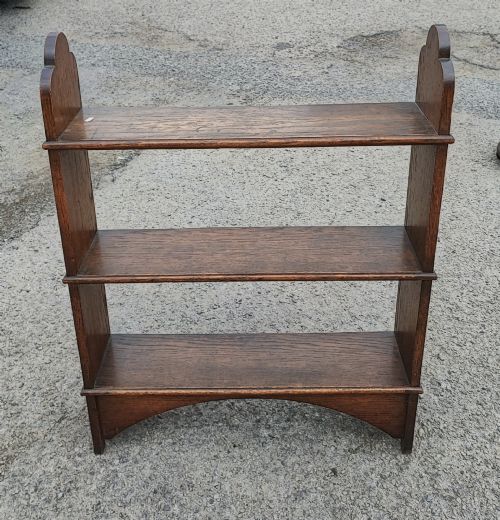
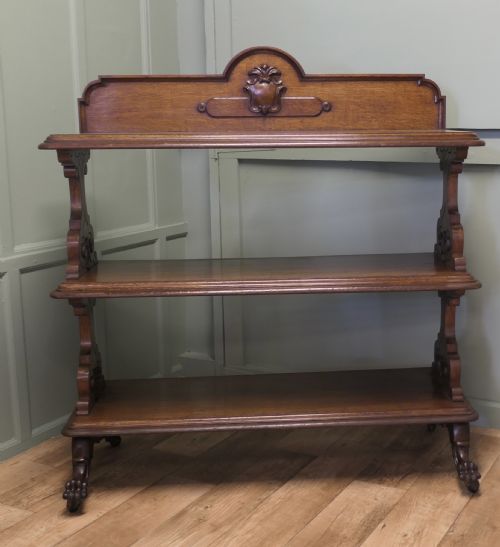
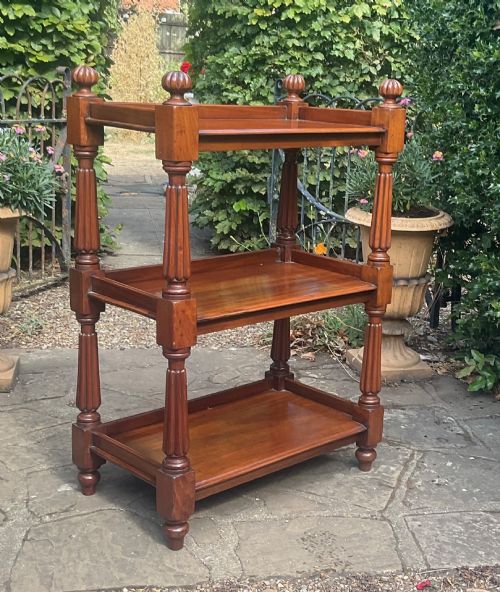
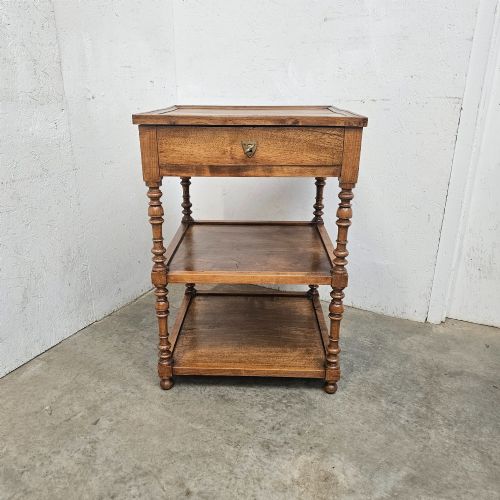
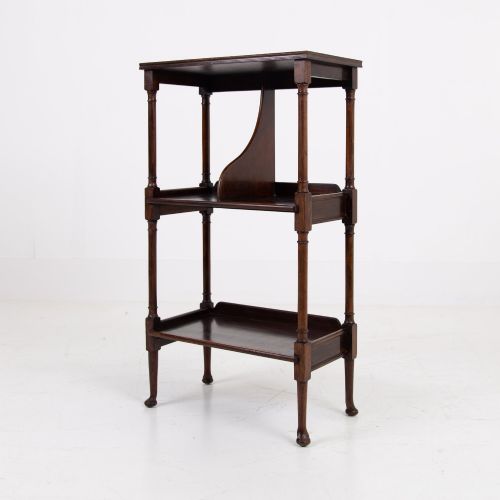
A three tier shelving unit brings vertical display space to a room, offering open tiers for books and ornaments in rich timbers like mahogany and burr walnut.

Three Tier Shelving Unit
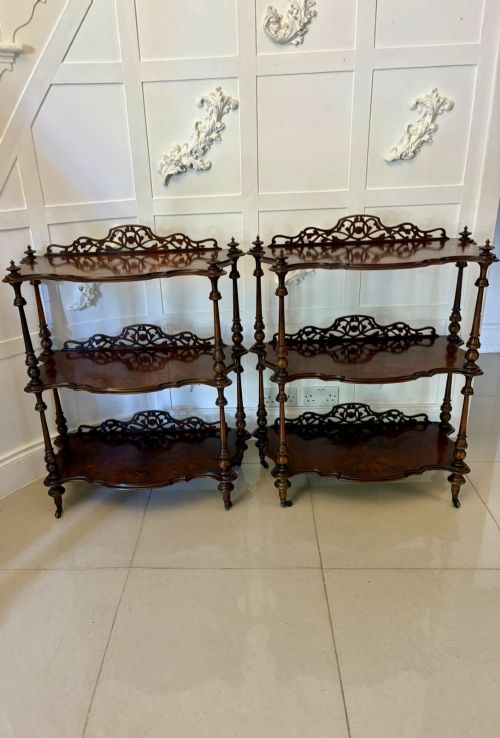
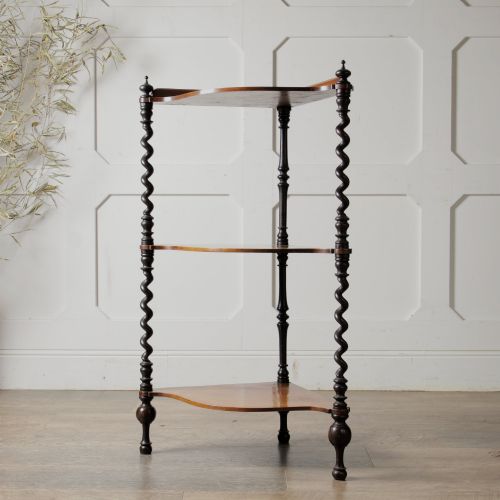
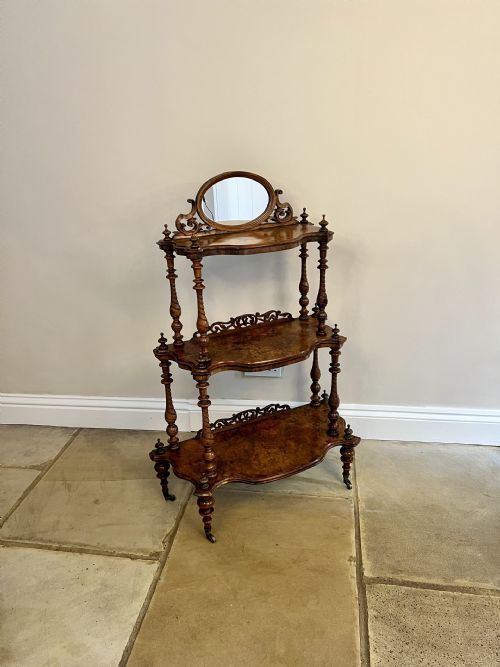
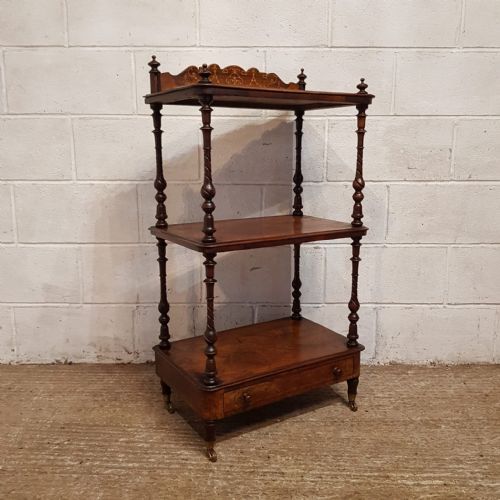
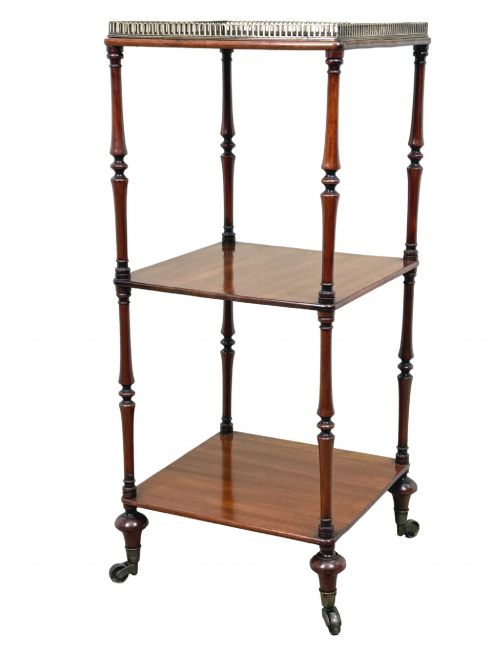
A three tier shelving unit appears primarily in the form of whatnots and etageres from the nineteenth century, including Victorian and Regency examples. These tiered pieces provide open levels supported by turned legs or columns, designed originally to hold books, ceramics and decorative objects.
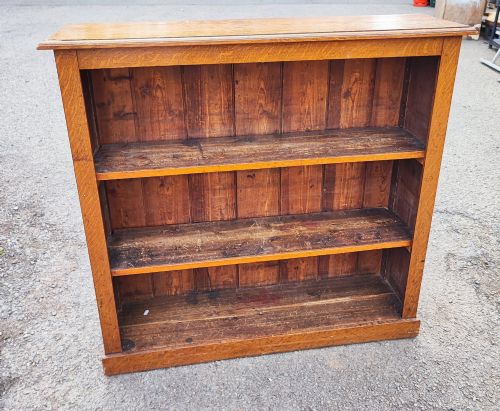
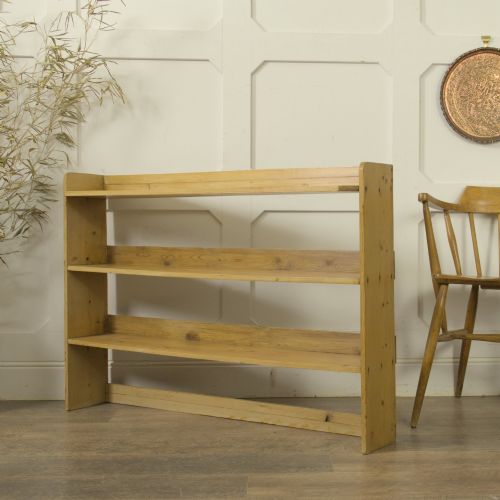
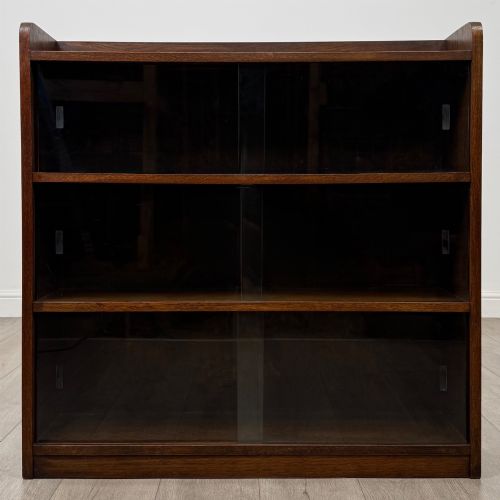
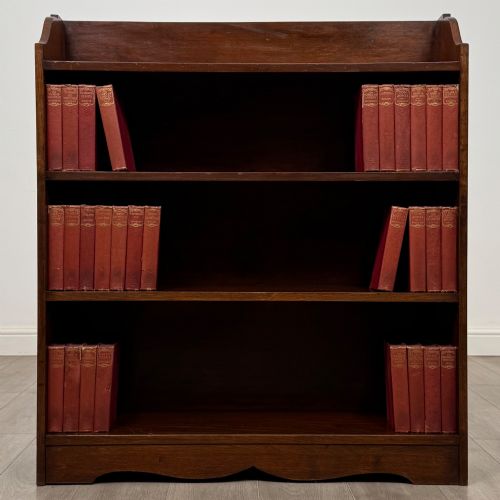
Makers also produced wall shelves, open bookcases, and display stands alongside traditional whatnots. The selection ranges from compact rosewood etageres to larger oak bookcases and pine bookshelves.
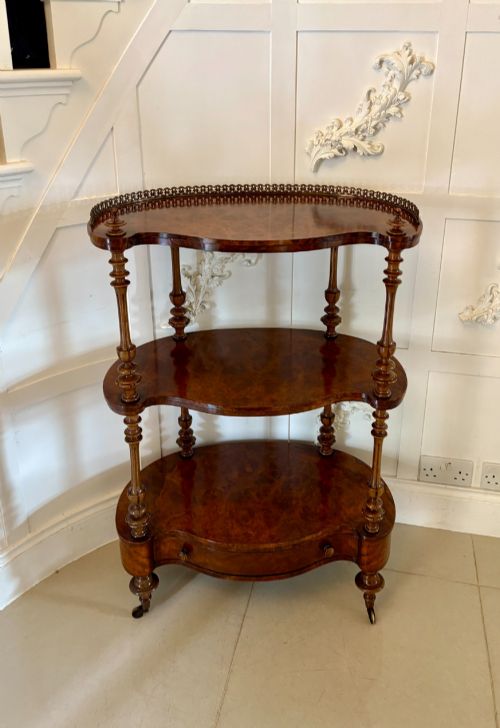
Originating through the Georgian, Victorian and Edwardian periods, these tiered units serve as practical display furniture for modern interiors. The pieces vary from serpentine-shaped burr walnut designs to slim mahogany side tables and portable bookshelves.
Materials and construction
Craftsmen built these tiered units using dense hardwoods such as mahogany, walnut, rosewood, and oak, often selecting burr walnut or birdseye maple for decorative grain patterns. Ebonised wood and pine appear across specific regional or stylistic pieces.
Joinery techniques involve turned supports, barley twist columns, and precise shelving tiers fixed between upright members. Wall-hanging versions utilise structural brackets, while freestanding etageres rely on stable corner or central pillar supports.
Scottish pine shoe racks share shelf space with French walnut etageres and portable mahogany bookshelves.
Distinctions in craftsmanship
Quality rests in the choice of timber veneer, where figured walnut, burr walnut, and rosewood exhibit superior natural grain patterns compared to standard pine or plain oak. Finer examples feature serpentine shaping, delicate turning, and crisp carved details rather than plain rectilinear construction.
The integrity of the tier supports and the stability of the upright columns distinguish standard utility pieces from exhibition-grade furniture. Superior construction ensures uniform tier spacing and robust joints that withstand daily display use.
Heals
The Three Tier Shelving Unit Glossary
- Whatnot
- A piece of furniture with multiple open shelves for displaying small objects and books. It gained popularity during the nineteenth century.
- Etagere
- A set of open shelves for displaying ornaments, typically taking a freestanding or tiered form. The term derives from French furniture traditions.
- Burr walnut
- A wood veneer taken from the growth excrescence of a walnut tree, prized for its swirling, highly figured grain patterns. Cabinetmakers utilised it on high-status Victorian furniture.
- Barley twist
- A carved wooden column resembling a spiralling rope. This decorative turning technique appears frequently on nineteenth-century supports.
- Serpentine
- A furniture outline featuring a curved line that undulates inward and outward. It adds visual movement to the edge of a shelf or tabletop.
Three Tier Shelving Unit: Frequently Asked Questions
How were these units used originally?
Victorian and Regency households utilised these tiered stands in drawing rooms and parlours to display porcelain, silver, and current reading material. They kept everyday items accessible while ornamenting vacant wall spaces.
Freestanding models sat beside seating areas, while wall-hung versions saved floor space in smaller rooms.
Where should I place a three tier shelving unit today?
These units suit living rooms, hallways, and studies as open display spaces for books and collections. Their slender proportions allow them to fit into alcoves or beside seating without dominating the room.
Placing them away from direct sunlight protects vulnerable veneers like rosewood and burr walnut.
How do I identify a Victorian whatnot?
Victorian whatnots typically feature three or more tiers supported by turned wooden columns or barley twist uprights. They often employ rich timbers such as walnut, mahogany, or rosewood.
Details like serpentine shelves and delicate fretted galleries help separate mid-nineteenth-century examples from later revival pieces.