




Rosewood Tiered Shelf
A rosewood tiered shelf brings stacked display surfaces and rich timber grain to a room, drawing the eye upwards.

Rosewood Tiered Shelf
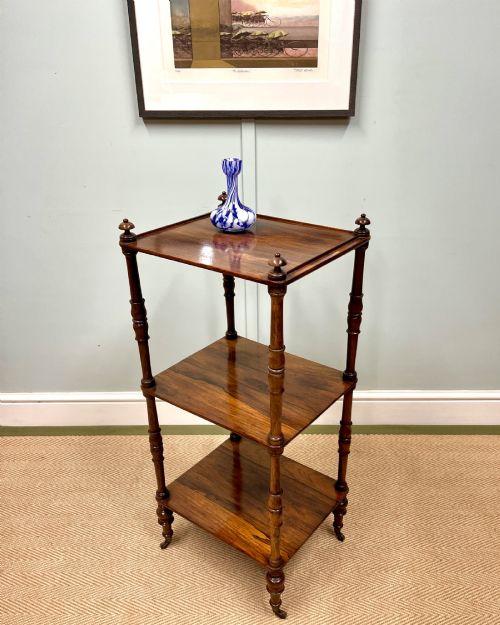
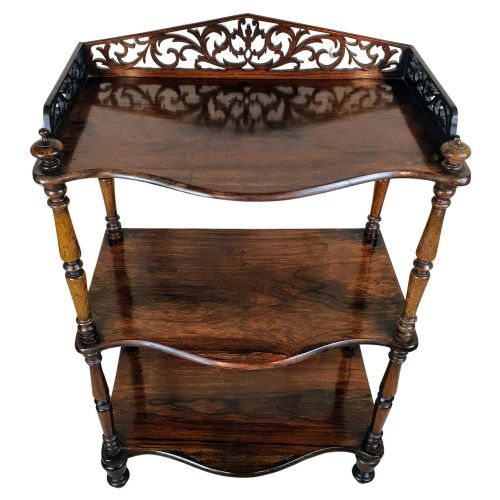
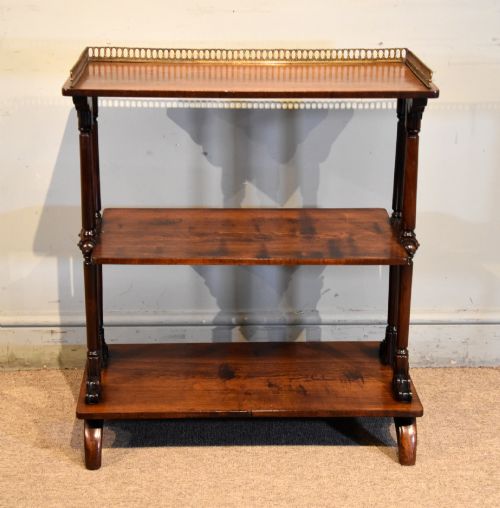
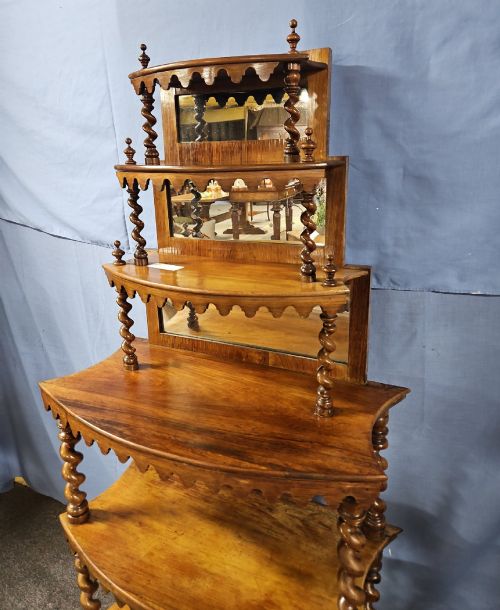
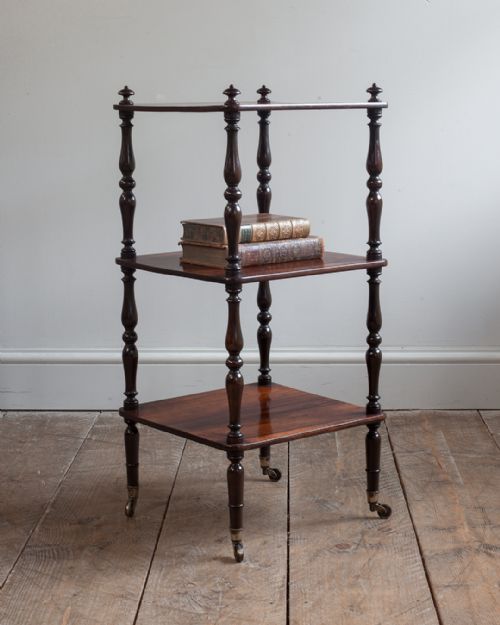
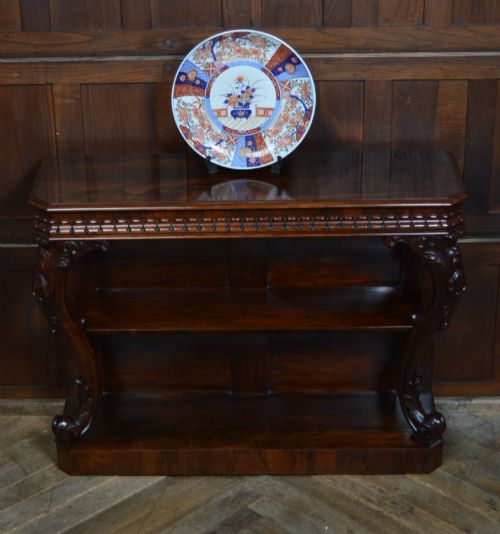
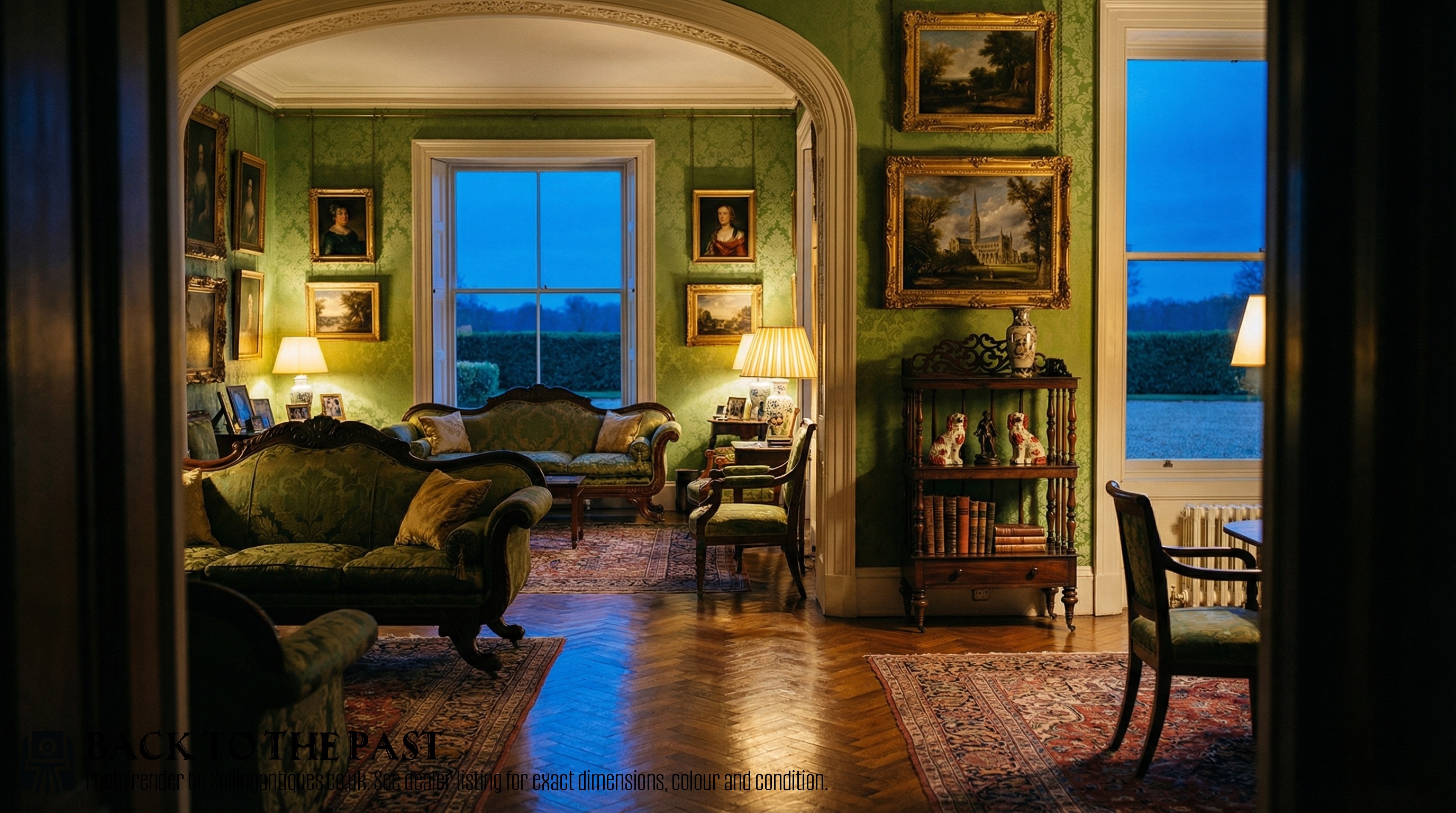
A rosewood tiered shelf typically takes the form of a whatnot, etagere or open bookcase with multiple open levels for display and storage. These pieces appear across the Regency, William IV, Victorian and Edwardian periods, functioning as versatile display units in sitting rooms and libraries.
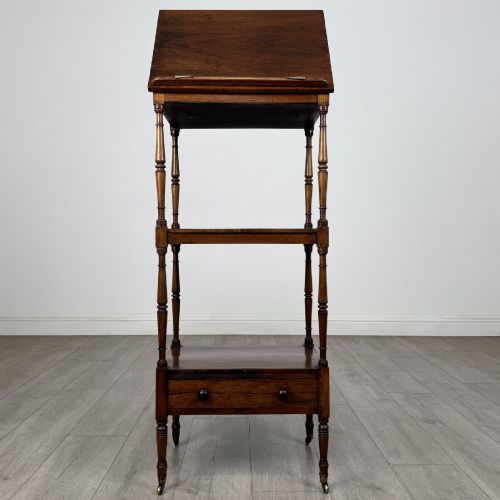
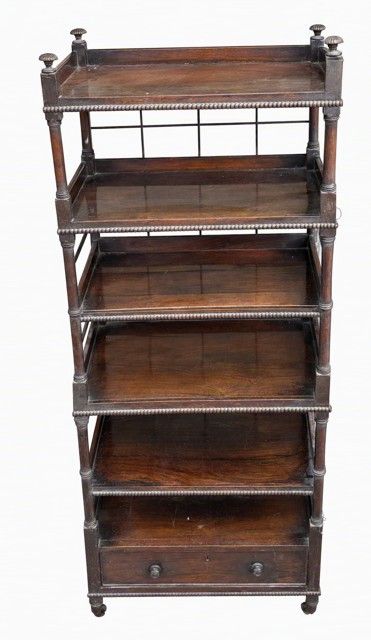
The most common variants on this page are freestanding whatnots and tiered bookcases featuring three to six levels supported by slender uprights. Makers built them for utility and elegance, often incorporating drawers at the base or pivoting reading desks on the upper levels.

Materials and construction
Cabinet makers utilised solid and veneered rosewood, sometimes turning to simulated rosewood or pairing the dark timber with contrasting satinwood and fruitwood inlay. Structural integrity relied on finely turned uprights and sturdy corner posts supporting multiple graduating tiers.
Metal and glass components frequently supplemented the timber construction, with brass castors, ormolu mounts and occasional mirrored backs adding decorative refinement. French pieces incorporated elaborate marquetry, while English workshops focused on clean architectural lines and pegged joints.
Rosewood Tiered Shelf Retail Price Guide 2026
Typical asking prices for rosewood tiered shelf among the pieces listed under this phrase on Sellingantiques today, from the lower quarter to the upper quarter. They describe what is for sale here now, not the wider market.
Some nineteenth-century whatnots included built-in reading stands, proving that ancestors also liked to multitask while leaning against the sideboard.
Distinctions in craftsmanship
Quality rests in the selection of timber figures, the crispness of turned supports and the precision of inlaid details. Superior examples display symmetrical grain patterns across every tier and solid brass fittings that integrate seamlessly into the framework.
Structural stability separates standard production items from masterwork pieces, as multi-tiered furniture requires rigorous joinery to prevent swaying. Finer items balance substantial weight on delicate columns without compromising the clean proportions of the silhouette.
Robert Strahan·Samson And Son·Gillows
The Rosewood Tiered Shelf Glossary
- Whatnot
- A piece of furniture with multiple open shelves for displaying ornaments, books or small objects. It gained popularity during the Georgian and Victorian eras as domestic spaces demanded more display areas.
- Etagere
- A French tiered piece designed for the display of bric-a-brac, often featuring more ornate mounts and marquetry than its English counterpart. The form emerged in the eighteenth century and persisted through the nineteenth.
- Waterfall bookcase
- A shelving unit where each successive tier steps back from the one below it, creating a profile resembling descending water. This style appeared frequently in Regency and Edwardian libraries.
- Palisander
- A historical trade term often applied to richly figured rosewood timbers imported from South America and Asia. Cabinet makers prized it for its deep dark grain and polished finish.
- Ormolu
- Gilded bronze used for decorative mounts, feet and gallery rails on high-end nineteenth-century furniture. It added metallic contrast to dark rosewood surfaces.
Rosewood Tiered Shelf: Frequently Asked Questions
What is a rosewood tiered shelf used for?
These multi-level units served as practical display furniture for books, ceramics and decorative objects in nineteenth-century drawing rooms. Their open tiers allowed owners to exhibit collections without cluttering floor space.
Today, they function well in modern interiors for organising books or displaying plants and decorative items. Their vertical format makes efficient use of wall space in compact rooms.
How do I identify a Regency period piece?
Regency tiered shelves typically exhibit classical proportions, precise brass inlay, and restrained classical ornamentation dating from the early nineteenth century. The turned supports tend to be crisper and cleaner than later Victorian interpretations.
Inspect the secondary timbers and construction methods underneath the shelves. Earlier pieces often feature hand-cut joints and dense, heavy rosewood stocks before mass production standardised cabinet making.
How should I care for rosewood furniture?
Keep rosewood furniture away from direct sunlight and heat sources to prevent the timber and veneers from drying out and cracking. Maintain a stable indoor climate to protect the polish and wood grain.
Dust regularly with a dry cloth and apply a quality furniture wax sparingly only when the finish appears dry. Avoid commercial silicon-based sprays that can damage antique French polish.