
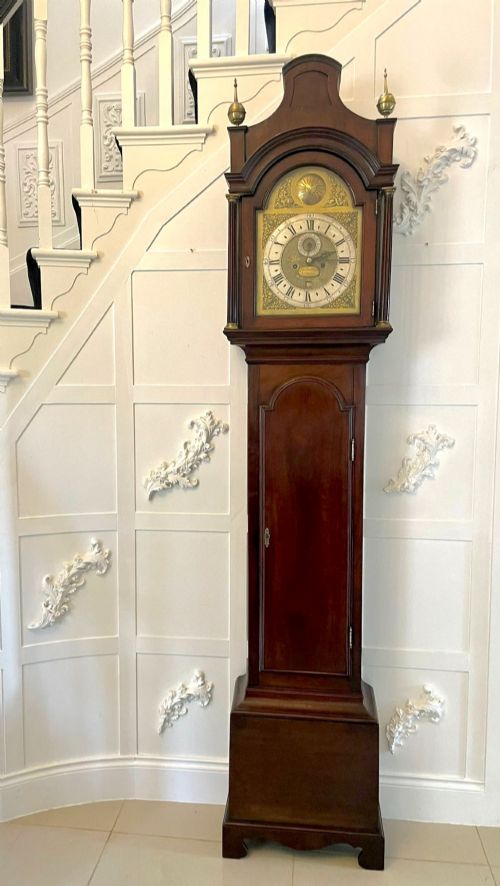
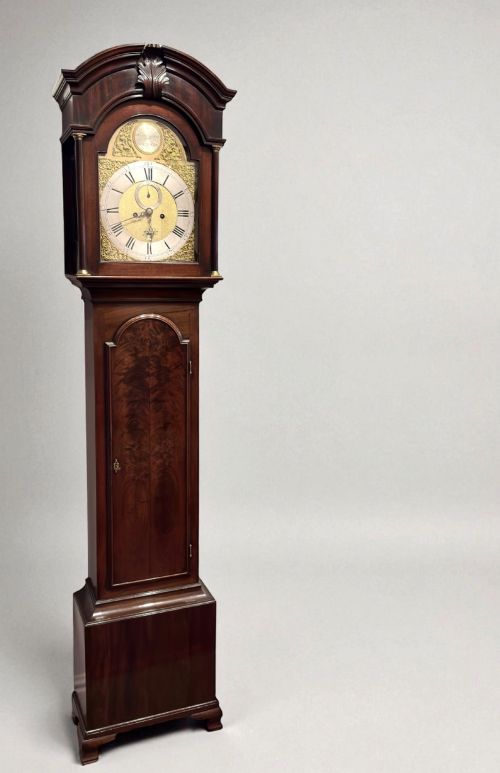
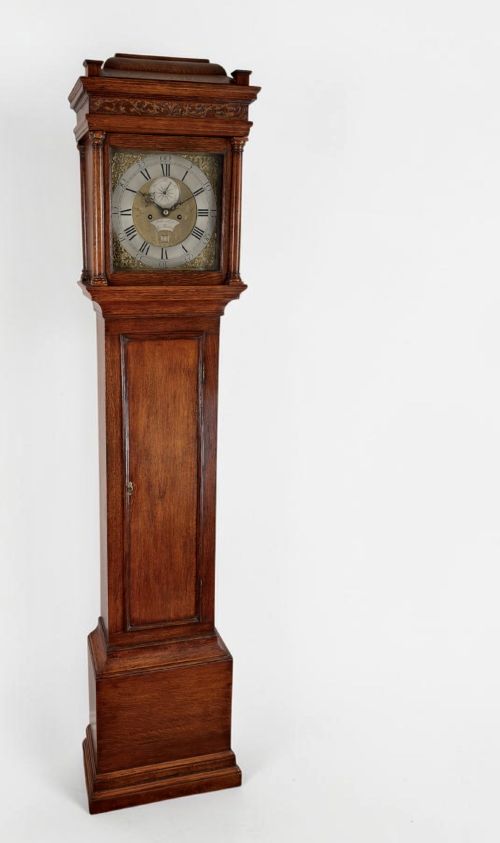
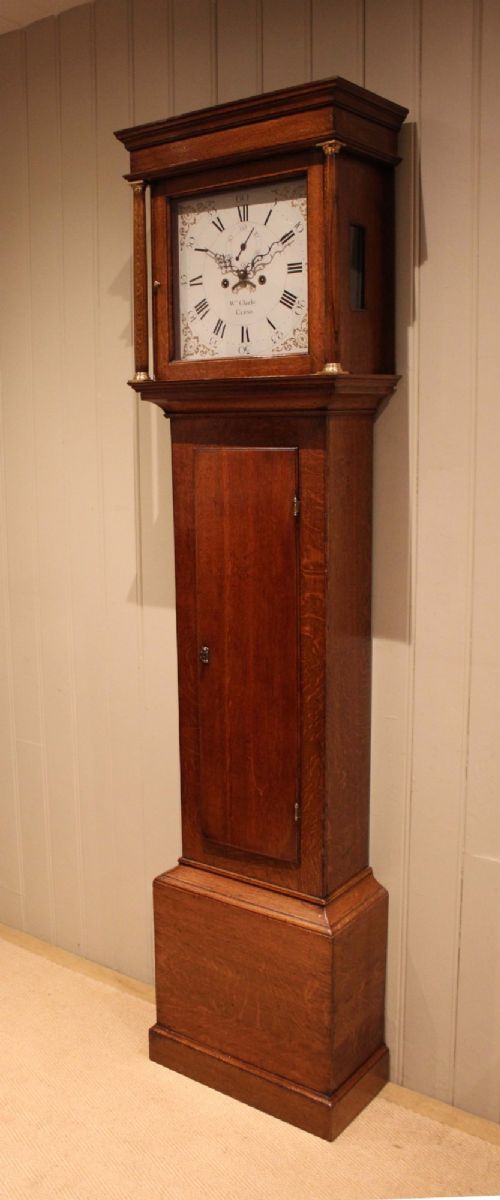
Vintage Tall Standing Clock
A vintage tall standing clock anchors a room with mechanical precision and centuries of woodworking skill.
Vintage Tall Standing Clock
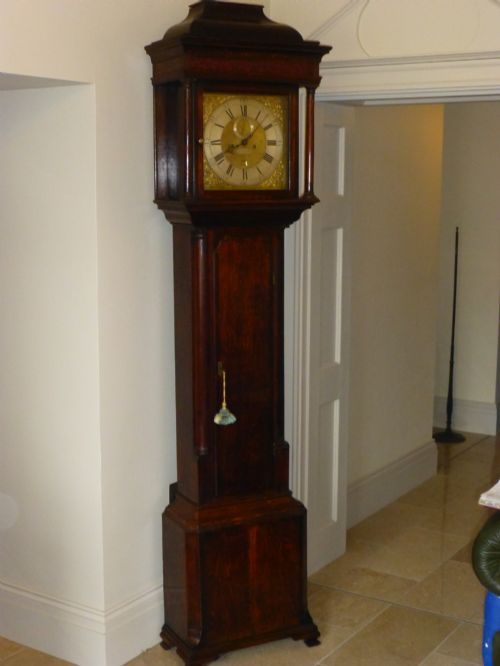
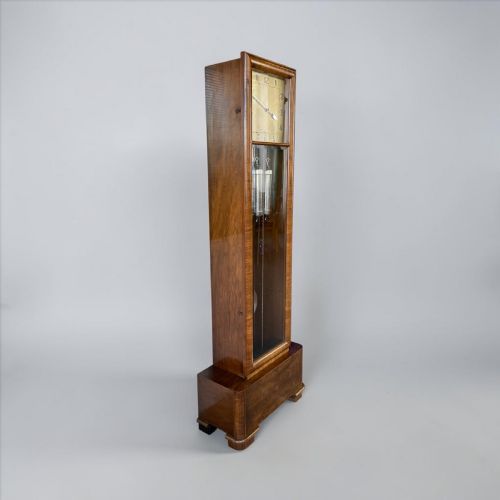
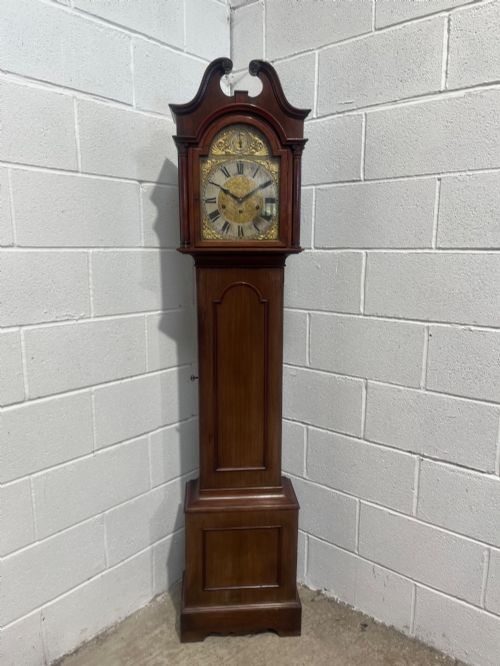
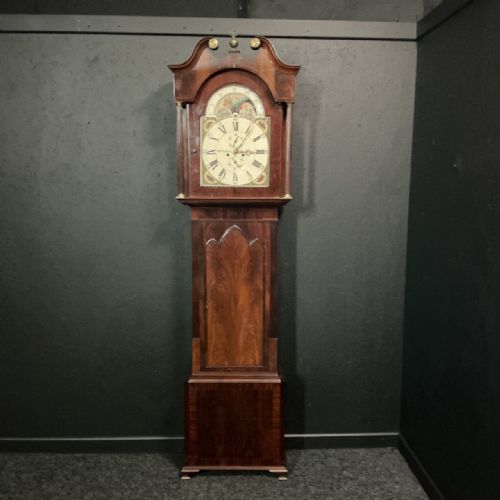
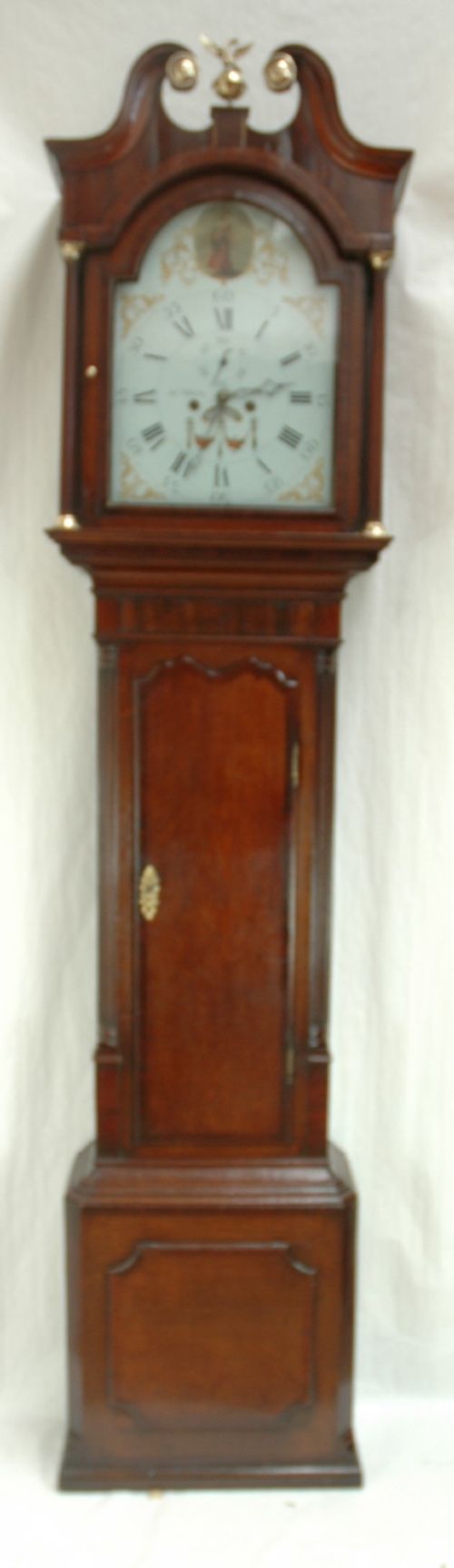
When searching for a vintage tall standing clock, buyers encounter tall floor-standing timepieces commonly known as longcase, grandfather, or grandmother clocks. These objects span periods from the seventeenth century through the Georgian and Victorian eras into the Art Deco and Edwardian twentieth century.
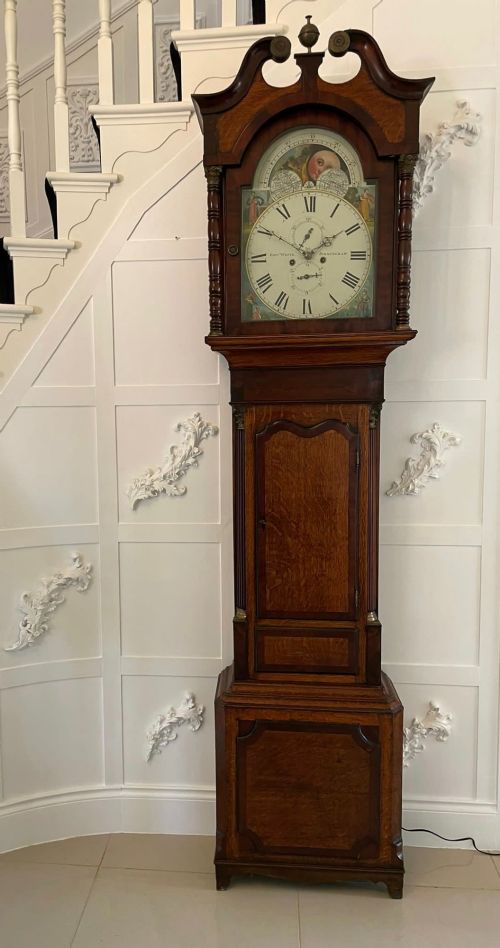
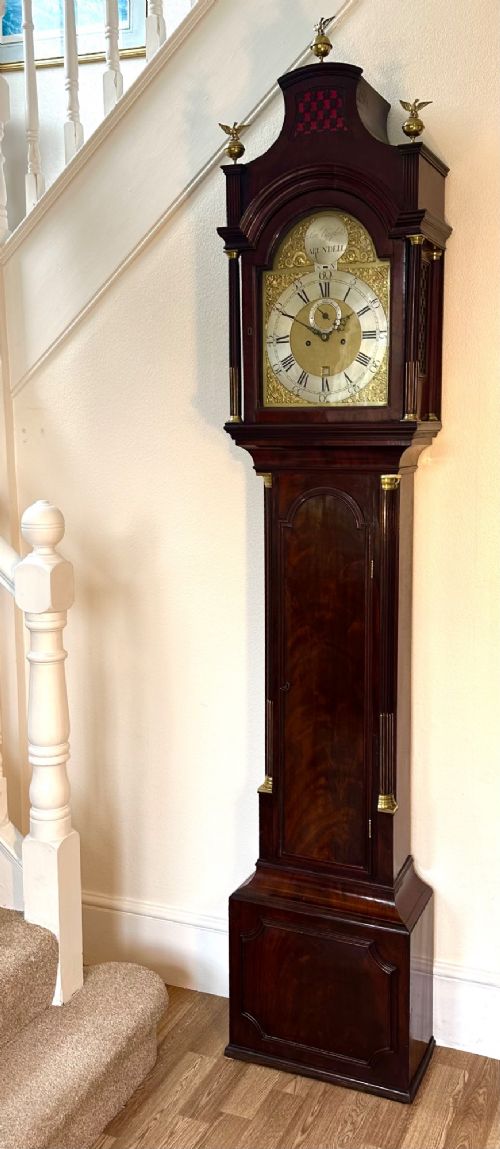
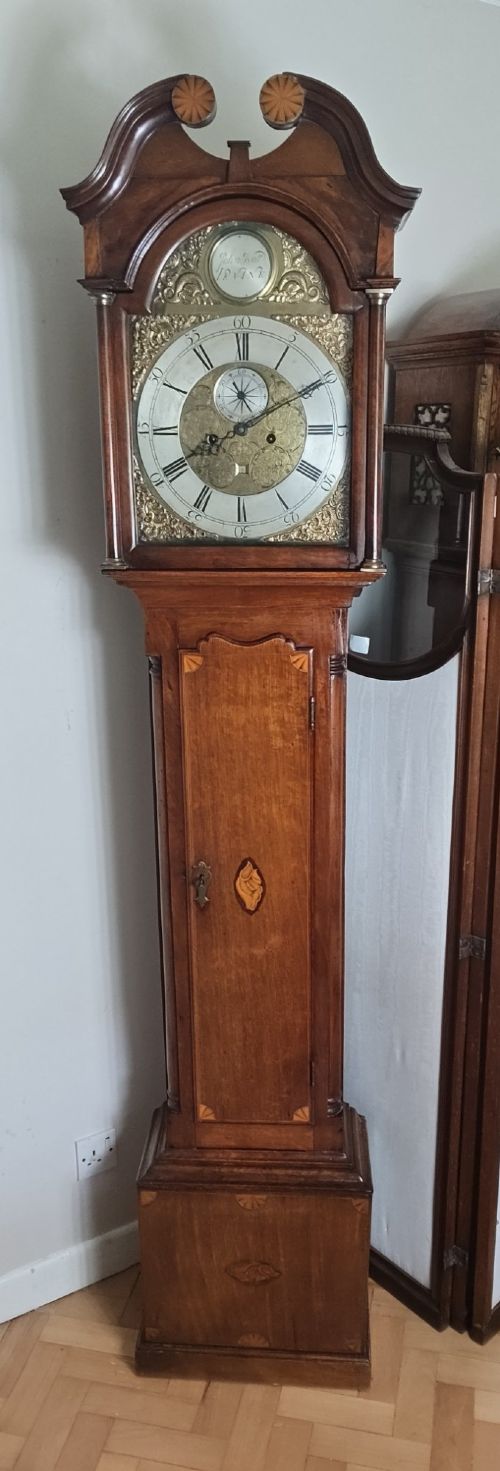
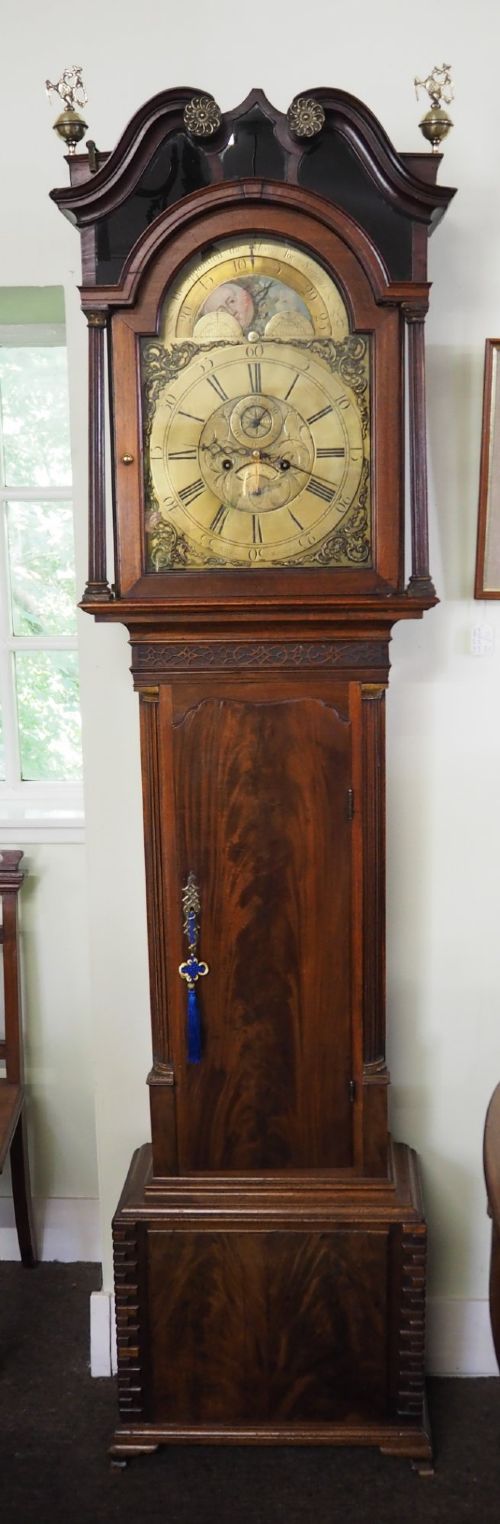
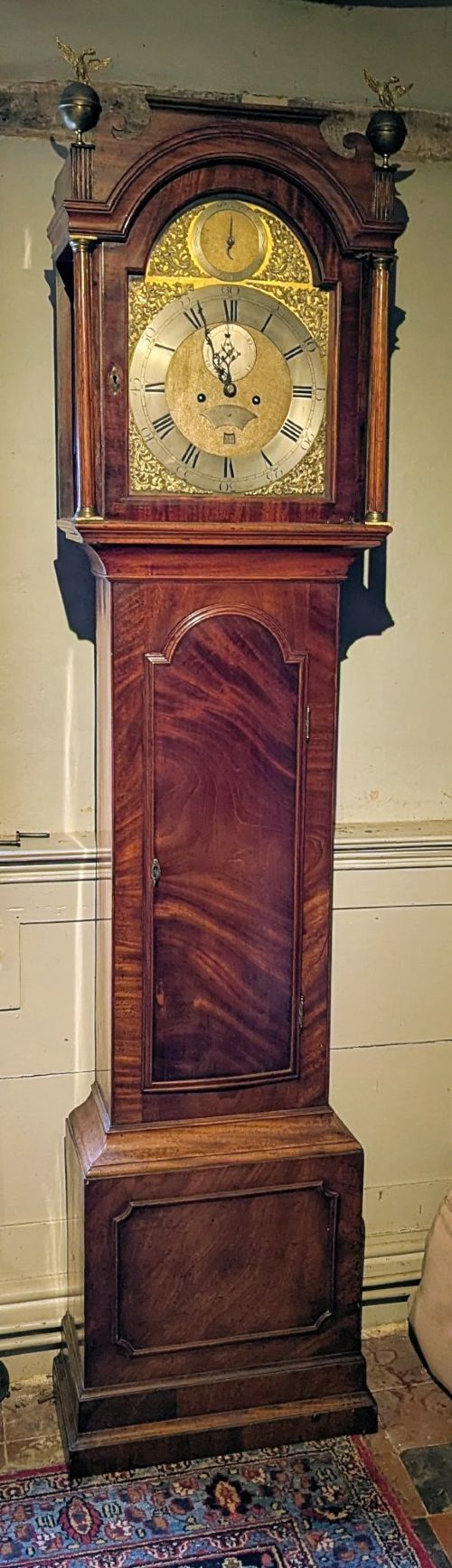
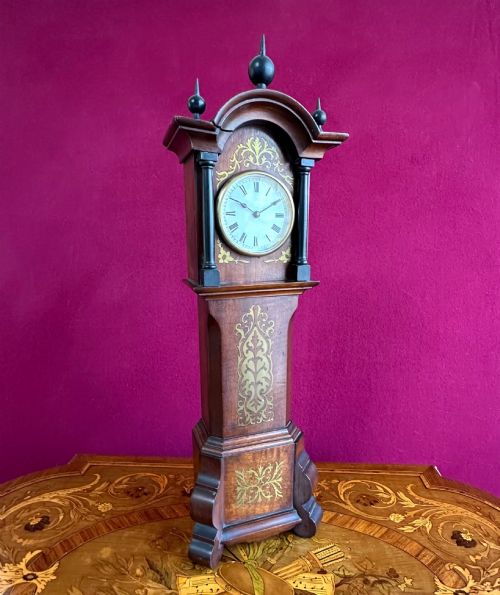
The selection on this page shows pieces originating from English, Scottish, and Welsh makers, constructed primarily in oak, mahogany, and walnut. Forms range from full-sized longcase clocks to smaller proportions such as grandmother clocks and miniatures.
Makers recorded in the evidence demonstrate regional British craftsmanship, from London workshops to provincial towns. Buyers find movements driven by weights and brass dials decorated with moon phases or chiming mechanisms.
Materials and construction
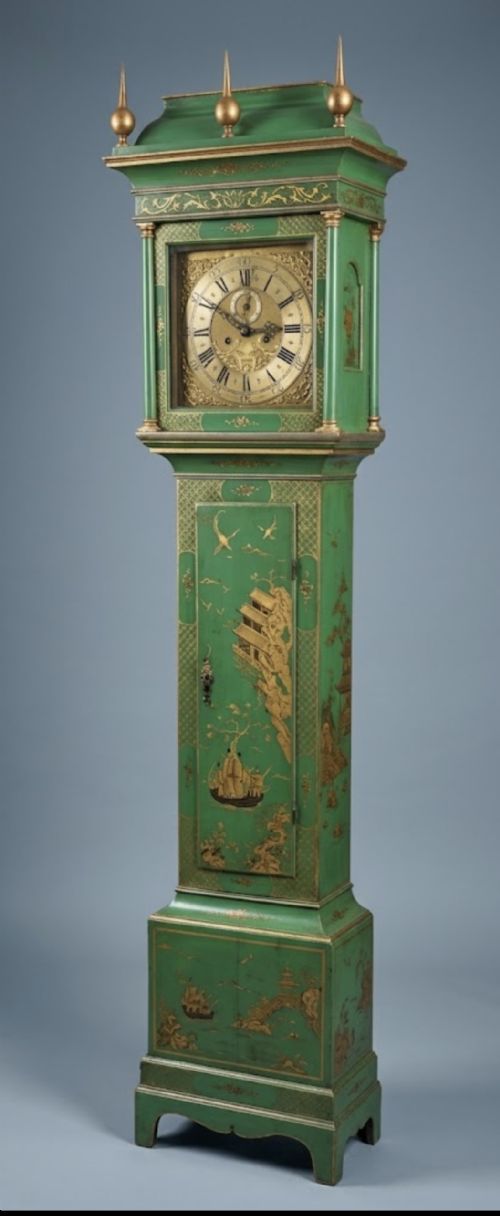
Cabinets for these tall clocks rely on solid hardwoods including oak, mahogany, and walnut, frequently enhanced with burr walnut veneers or green lacquered chinoiserie decoration. Woodworkers constructed tall trunk cases to house hanging weights and swinging pendulums safely behind glazed or panelled doors.
Dials utilise brass plates, often engraved with maker details, subsidiary seconds, or calendar apertures, paired with steel hands. Movements combine brass gear trains and wheels designed to run for eight days or shorter durations, sometimes incorporating musical chimes and carillons.
Some tall clocks keep time alongside painted horses trotting across the dial.
What separates quality in these clocks
The quality of a tall standing clock rests upon the crispness of the cabinet timber selection, such as figured mahogany or burr walnut veneers, and the condition of the case mouldings. Dial execution also dictates standard, where hand-engraved brass work by a known maker elevates the piece above standard provincial production.
Internal mechanics reflect craftsmanship through the finish of the brass movement plates and the complexity of musical or quarter-chiming gear trains. Harmony between the original dial, movement, and case preserves the integrity that collectors value.
John Fielder of Alton·Charles Shuckburgh London·Gordon of Aberdeen·Lee of Great Marlow·Richard Corless of Stockport·Windmills and Wightman London·Rickards Wotton Under Edge·Edward Shepley Manchester·Thomas Webbe New Quay·John Denbigh Merton Park·Edin Burgis London·David Craig Ford Path head·Gillett and Johnston Westminster
The Vintage Tall Standing Clock Glossary
- Longcase clock
- A tall pendulum clock enclosed in a wooden case standing directly on the floor. These pieces are frequently referred to as grandfather clocks.
- Grandmother clock
- A scaled-down version of the traditional longcase clock, standing shorter in height. This form appeared in later periods such as the twentieth century.
- Moon dial
- A specialised clock face featuring a rotating disc that tracks the phases of the moon. It often displays painted celestial imagery.
- Chinoiserie
- A decorative style employing imitation Chinese motifs and lacquerwork. It appears on eighteenth-century clock cases finished in green lacquer.
- Regulator
- A precision pendulum clock designed for high accuracy. These movements typically feature subsidiary dials and specialised weight-driven mechanisms.
Vintage Tall Standing Clock: Frequently Asked Questions
What is the difference between a grandfather and grandmother clock?
A grandfather clock is a full-sized tall standing clock, usually measuring over six feet in height to accommodate long pendulum swings and weight drops.
A grandmother clock is simply a smaller, shorter version of the same design, built to occupy less floor space in twentieth-century homes while retaining weight-driven movements.
How do I wind an eight-day tall clock?
Eight-day clocks require winding every week by using a crank key to draw up the hanging weights inside the trunk. Care must be taken not to overwind the mechanism.
Swinging the pendulum gently after winding starts the escapement beat, setting the clock back into motion.
Where were these tall clocks typically made?
Clockmaking flourished across Britain, with prominent urban workshops established in London alongside skilled regional makers operating in provincial English towns, Scottish burhs, and Welsh communities.
Local cabinet makers often built the timber cases while specialist horologists supplied the brass movements and engraved dials.
What causes a tall clock to chime melodies?
Quarter-chiming and musical longcase clocks feature additional gear trains inside the movement that release hammers striking tuned gongs or bells at specific intervals.
More complex movements incorporate interchangeable tune sheets or carillons to play multiple melodies.