




Painted Moon Phase Clock
A painted moon phase clock stands as a towering piece of horological history, bringing mechanical artistry and lunar tracking into British homes from the Georgian era onward.
Painted Moon Phase Clock
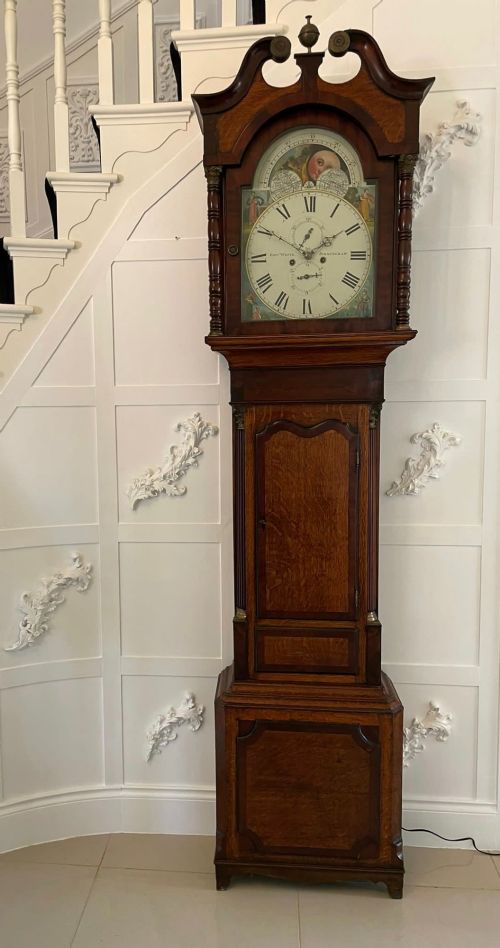
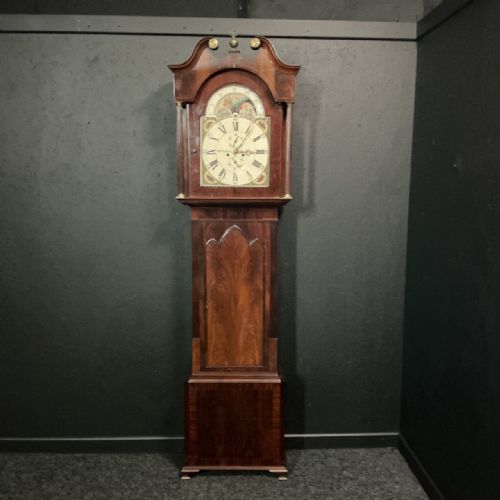
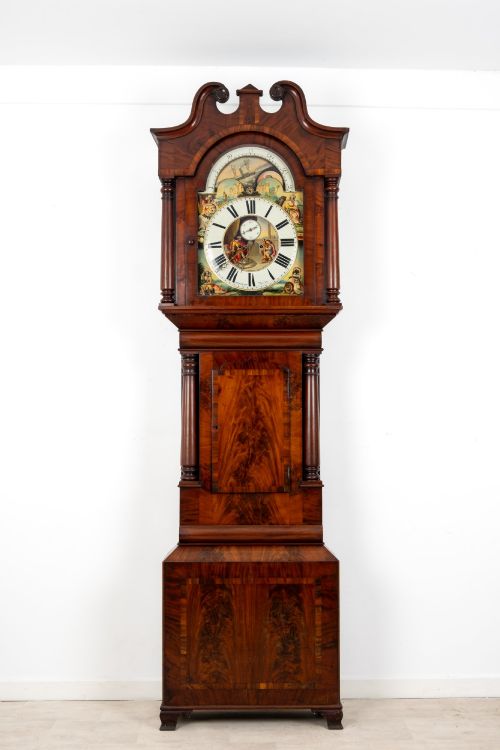
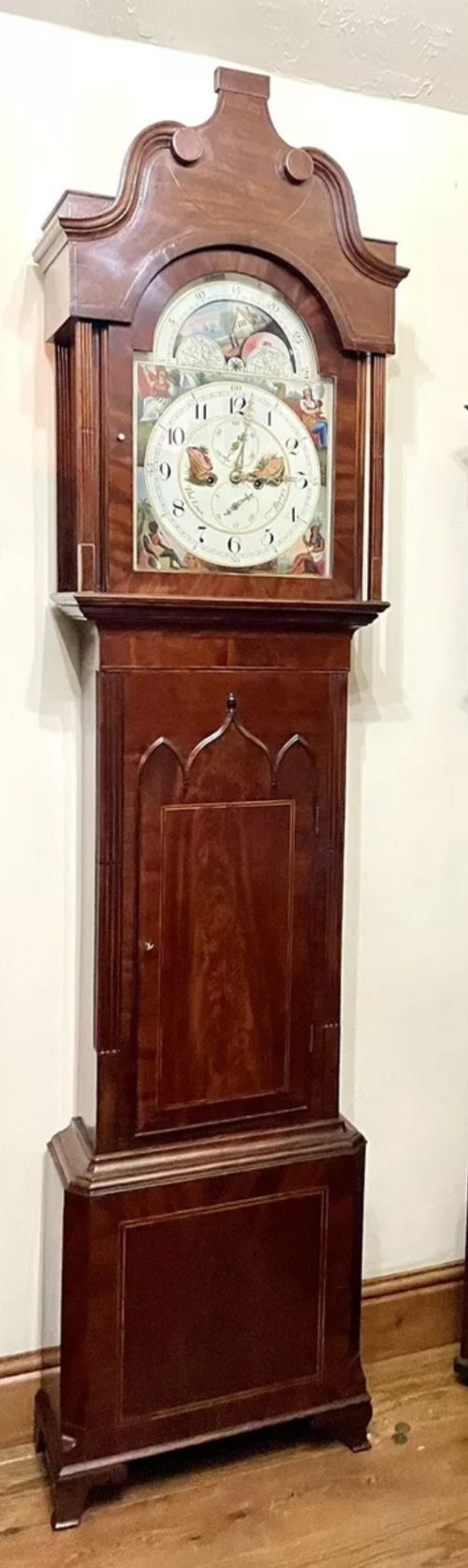
A painted moon phase clock typically takes the form of a tall grandfather or longcase clock, housing an intricate movement beneath an arched dial. These floor-standing pieces serve as both practical timekeepers and grand architectural statements.
The selection centres on specimens from the Georgian, Regency, and Victorian periods. Most examples found here combine traditional timber casework with hand-painted iron dials that depict the waxing and waning of the moon.
Makers from various regional northern and midland towns dominate the selection, showing the widespread popularity of these domestic astronomical timepieces. Oak and mahogany serve as the primary woods for the protective cases.
What varies in quality
The precision and artistic execution of the painted dial set the finer examples apart from standard workshop production. Detailed miniature illustrations on the moon roller indicate a higher level of commissioning skill.
Cabinetwork quality depends upon the selection of timber veneers and the intricacy of the marquetry inlay on the trunk and base. Solid mahogany framing and well-proportioned architectural hoods distinguish superior longcase builds.
Listings feature mahogany, oak, brass, and hand-painted iron materials spanning the Georgian, Regency, and Victorian eras.
Parkinson Bros Batley·Edward Shepley of Manchester·Edward White Birmingham·Will Lassell of Toxteth Park·Thomas Lees Bury·Thos Russell Lancaster·Furnival Oldham·Thomas Dean of Leigh·Edward Glase of Bridgnorth·David Griffith Carnarvon·John Wyat Altrincham
The Painted Moon Phase Clock Glossary
- Longcase clock
- A tall, floor-standing pendulum clock enclosed in a wooden case, commonly known as a grandfather clock. These housing units protect the delicate weights and movement from dust and environmental changes.
- Moon phase
- A mechanical feature showing the current phase of the lunar cycle on the dial face. It uses a rotating disc behind the painted arch to track the moon's progress.
- Flame mahogany veneer
- A decorative wood slicing applied to casework to create a fiery, swirling grain pattern. Cabinetmakers used this technique on high-status furniture and clock panels.
- Marquetry inlay
- Pieces of contrasting timber fitted into a prepared wooden surface to form decorative patterns. This ornamental work embellishes the doors and bases of select clock cases.
- Painted iron
- A sheet metal substrate coated and painted by hand to form the visible clock face. Artisans used this material extensively for Georgian and Victorian dial production.
Painted Moon Phase Clock: Frequently Asked Questions
How does a moon phase dial work?
The mechanism employs a toothed wheel linked to the clock movement that rotates a dual-moon disc twice every lunar month. This movement causes the painted moons to appear and recede behind two curved apertures on the dial arch.
Such mechanical tracking allowed historical households to follow the lunar calendar for agricultural, tidal, or social purposes without consulting external almanacs.
Where should I place a longcase clock?
Select a dry interior wall away from direct sunlight, heating vents, and exterior doors to protect the wooden case and delicate internal suspension spring. Stable room temperatures prevent the timber from warping and keep the pendulum swinging evenly.
Ensure the floor surface is level and secure the tall case to the wall using the internal brackets provided so the heavy pendulum operates safely.
How can I date a painted moon dial clock?
Examine the style of the painted arch, the font used for the maker's signature, and the construction details of the mahogany or oak case. Georgian dials often feature floral spandrels and hand-painted lunar scenes, while Victorian examples display bolder decorative borders.
Cross-referencing the inscribed maker's name and town with regional trade directories provides a reliable window for the year of manufacture.