

Vintage Satinwood Furniture
Vintage satinwood furniture brings luminous pale timber and crisp mahogany banding to Edwardian and Art Deco interiors.
Vintage Satinwood Furniture
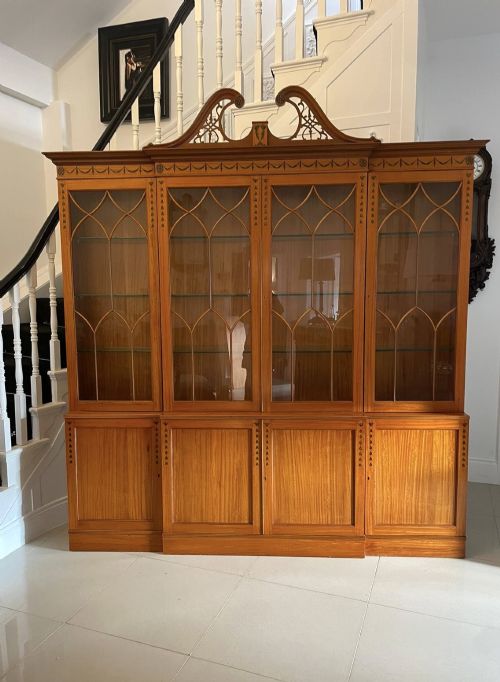
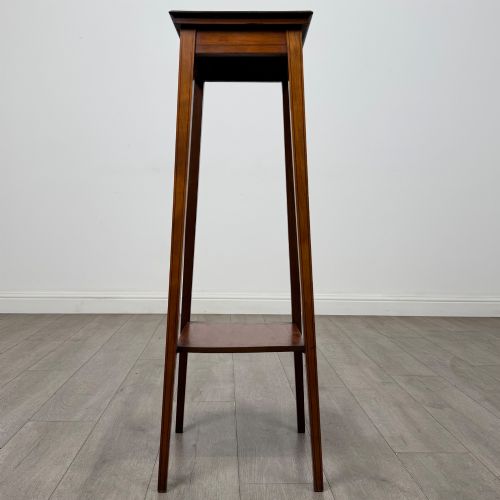
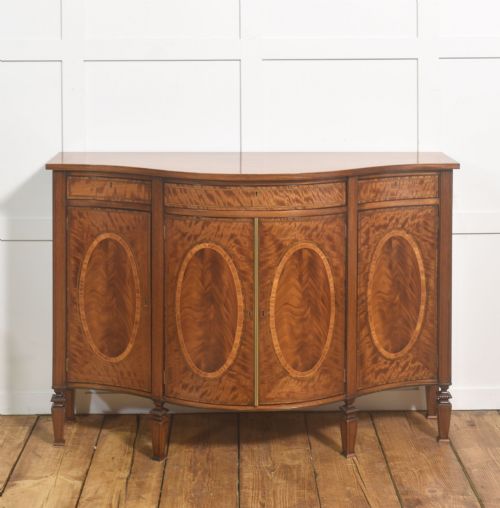
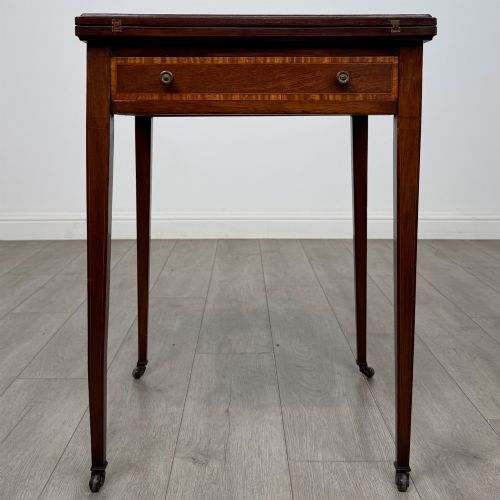
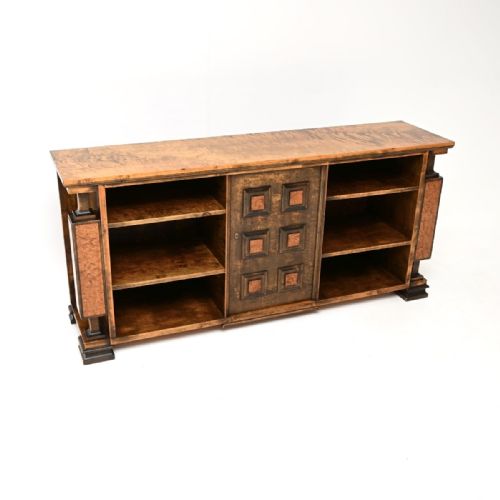
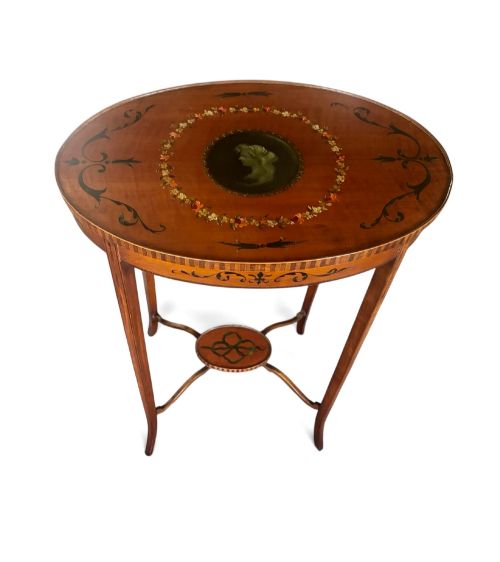
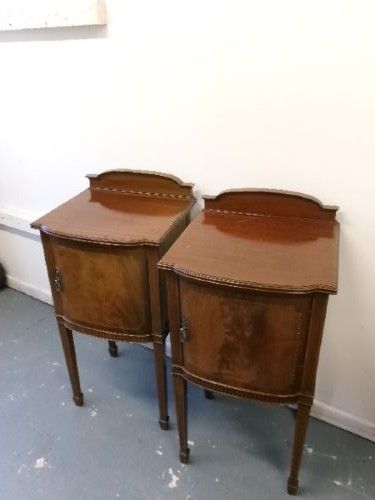
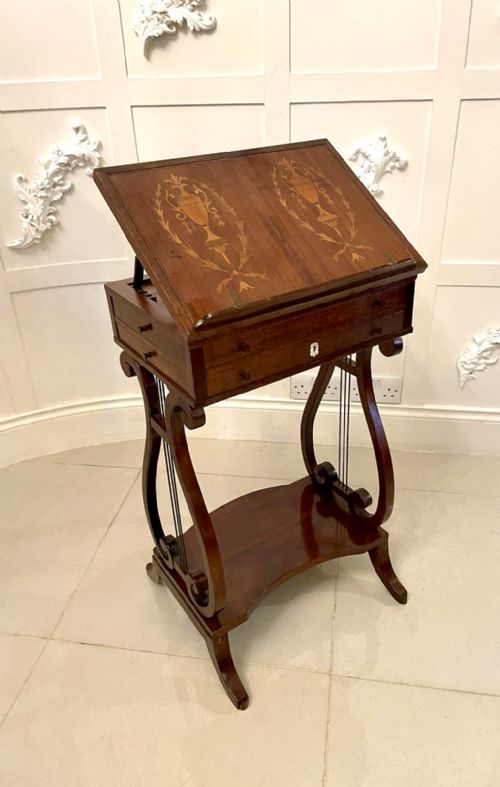
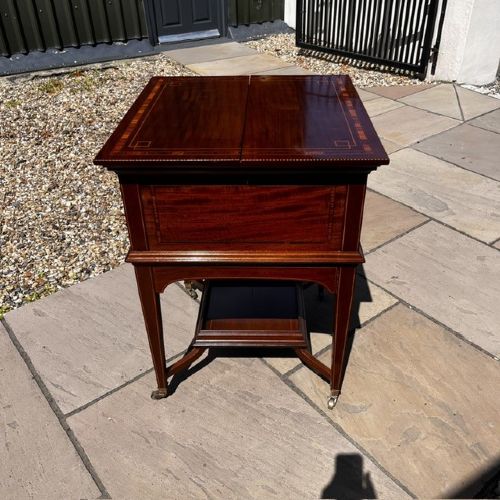
Vintage satinwood furniture encompasses pieces made from pale, light-reflecting timbers, frequently enriched with contrasting stringing and crossbanding. Buyers encounter diverse forms ranging from large breakfront display cabinets and triple wardrobes down to bedside cabinets, chests of drawers, and occasional tables.
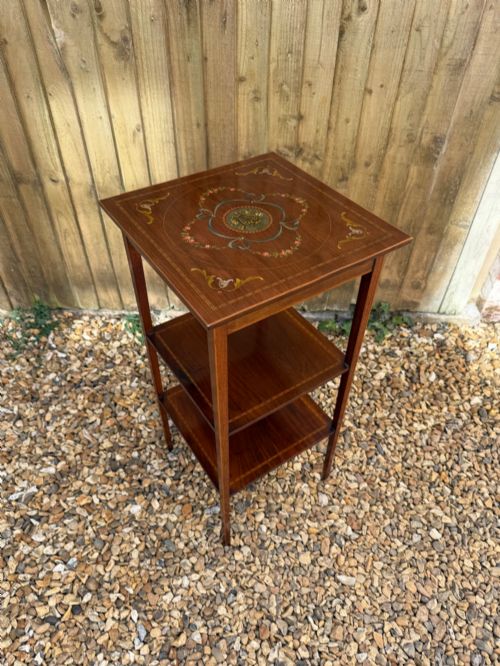
The material appears most prominently within Edwardian Sheraton Revival pieces and later Art Deco designs. Makers combined satinwood with mahogany, walnut, and boxwood, often adding painted floral decoration or glass panels to light up domestic spaces.
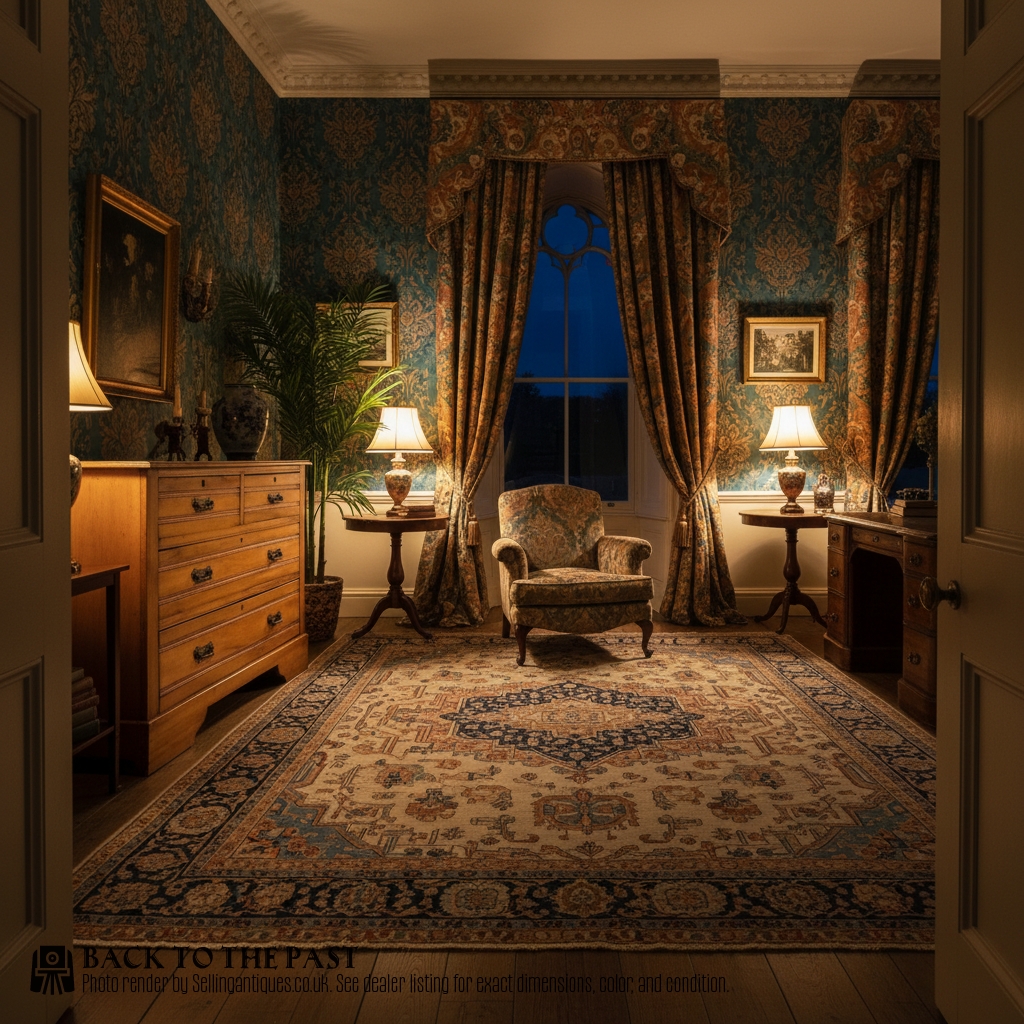
Materials and construction methods
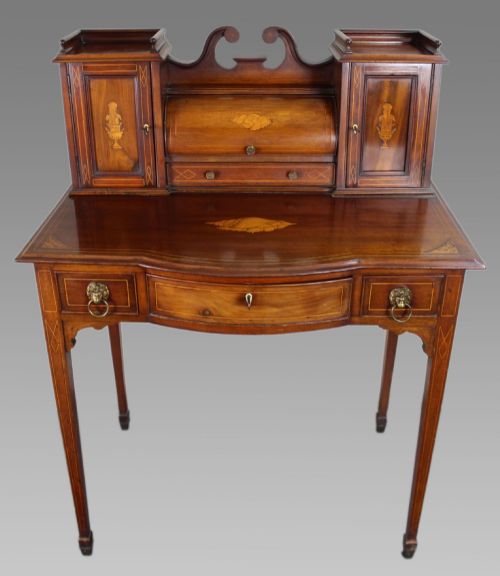
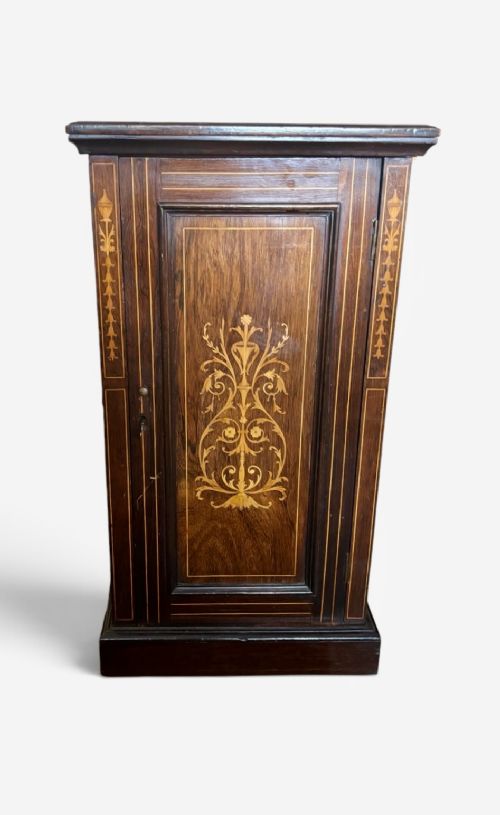
Cabinet makers utilised solid satinwood or applied fine veneers over secondary woods such as mahogany and pine. Surface decoration frequently involved intricate boxwood and ebony inlay, brass hardware, and hand-painted floral motifs.
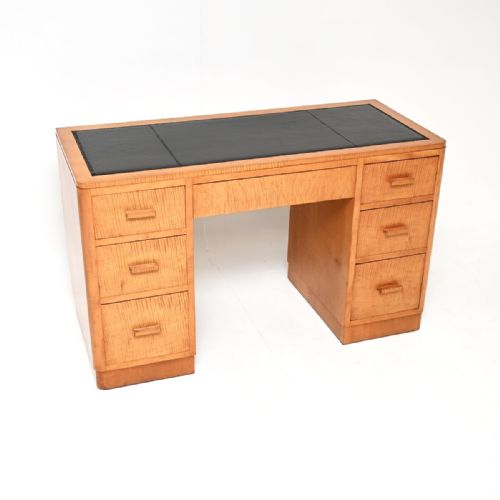
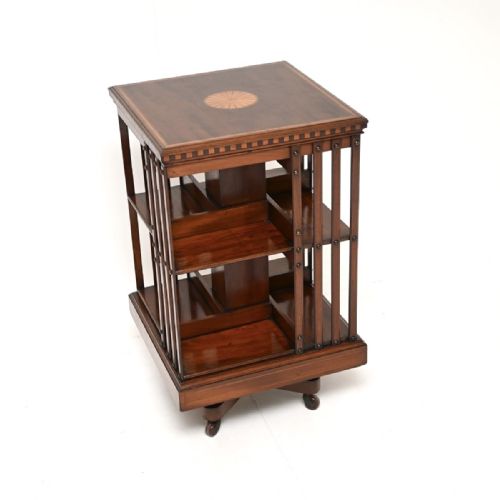
Structural elements incorporated glazed astral doors, leather writing surfaces, and revolving mechanisms for bookcases. Timber selection focused on grain figure and light reflectance, complemented by polished finishes.
Listings feature Edwardian, Victorian, and 1930s periods, incorporating materials such as satinwood, mahogany, walnut, glass, and leather.
Assessing quality in satinwood pieces
Quality rests on the selection of the timber veneer and the precision of the marquetry and stringing. Superior examples exhibit tightly figured grain patterns and crisp, uncompromised inlay work without lifting or missing sections.
Construction integrity distinguishes workshops, seen in the retention of original brass handles, hand-painted decoration that avoids later over-painting, and smooth operation of drawers, leaves, and doors.
Morant And Co London·Waring And Gillows·Maple And Co·Bath Cabinet Makers·Hille
The Vintage Satinwood Furniture Glossary
- Satinwood
- A hard, durable timber with a natural sheen and golden-yellow colour used for cabinet making and fine veneering. It forms the primary visual identity of Sheraton Revival and Edwardian decorative pieces.
- Sheraton Revival
- A late nineteenth and early twentieth century design movement drawing inspiration from the neoclassical furniture of George Sheraton. It relies heavily on satinwood veneers, painted swags, and slender proportions.
- Astral Glazed
- A style of cabinet door featuring delicate wooden bars dividing the glass panes into geometric patterns. These were commonly utilised on breakfront display cabinets and bookcases.
- Crossbanding
- A strip of veneer laid across the grain of the primary surface to create a framed border. It often contrasts satinwood panels with darker mahogany or walnut surrounds.
- Wellington Chest
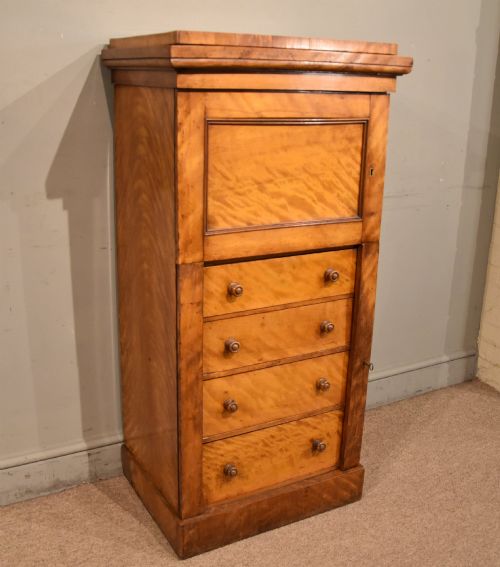
- A tall, narrow chest of drawers secured by a hinged vertical locking sidebar fixed with a padlock. This form appears in nineteenth century cabinet making.
Vintage Satinwood Furniture: Frequently Asked Questions
How do I care for satinwood surfaces?
Keep vintage satinwood furniture away from direct sunlight and excessive heat sources to prevent timber drying and veneer lifting. Dust regularly with a soft, dry cloth and apply a quality furniture wax periodically to nourish the grain.
Avoid using modern liquid polishes or silicone sprays, as these build up harmful residues on polished antique surfaces. Maintain a stable room temperature to protect the timber joints and decorative inlays.
What is the difference between Edwardian and Art Deco pieces?
Edwardian satinwood pieces often reflect Sheraton Revival influences with painted floral details, stringing, and classical proportions. They lean towards lighter, decorative aesthetics inspired by eighteenth-century designs.
Art Deco items present cleaner geometric lines, pairing satinwood with walnut, satin birch, or maple. These later examples emphasise bold wood grains and functional modernist forms without traditional painted swags.
Where were these pieces used in the home?
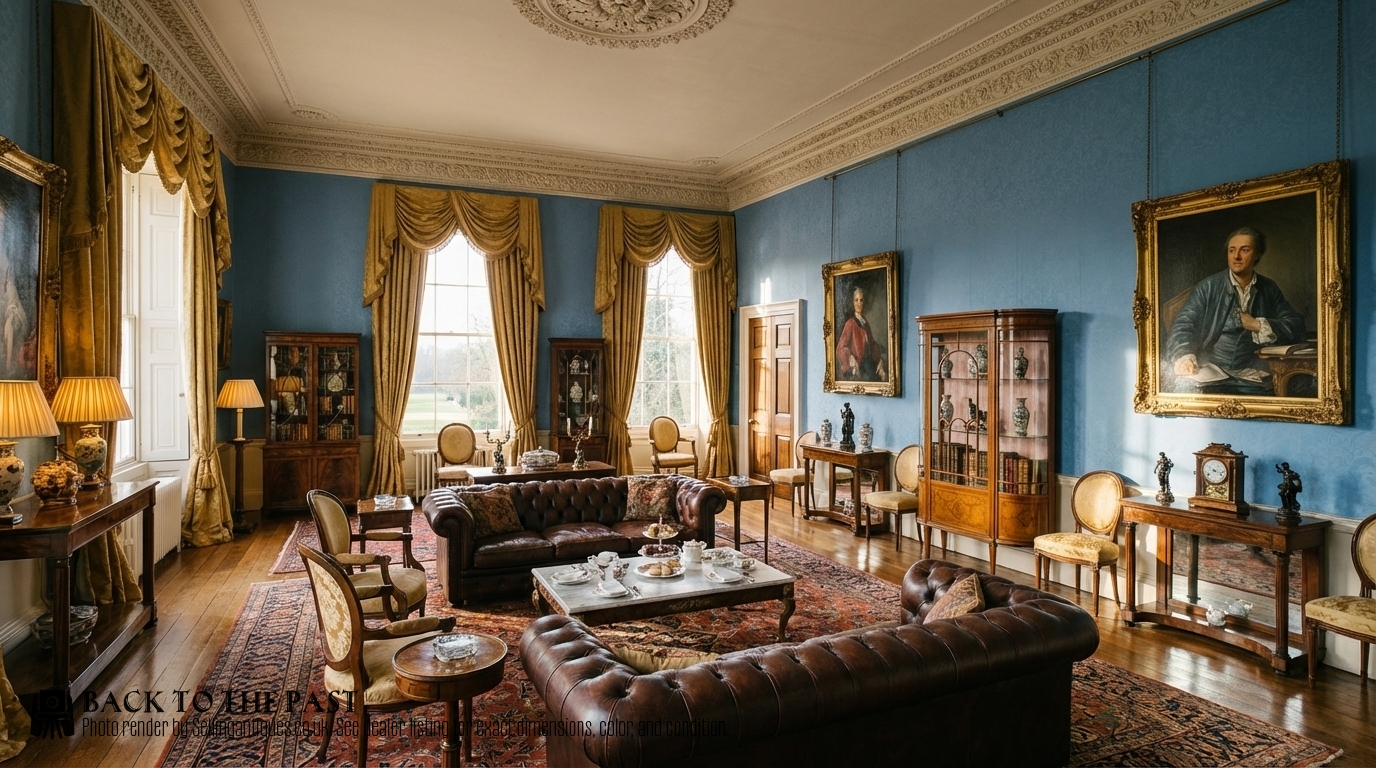
Larger items such as triple wardrobes, tallboys, and breakfront display cabinets originated in principal bedrooms and formal drawing rooms. Smaller pieces like bedside cabinets, occasional tables, and envelope card tables served intimate sitting spaces.
Specialist items including revolving bookcases, writing desks, and Sutherland tables were designed for libraries and studies. Dining suites equipped dining rooms with matching tables and leather chairs.
How do I identify original painted decoration?
Original painted floral decoration on Edwardian satinwood shows slight softening and integration into the aged varnish layer. The pigments display the muted tones characteristic of turn-of-the-century hand application.
Later touch-ups or modern reproductions often sit too brightly on top of the surface finish. Examining the brushwork closely under magnification reveals the hand of the period artisan.