


Vintage Porcelain Tableware
Vintage porcelain tableware brings nineteenth century dining rooms to life through plates, services and teasets marked by porcelain, bone china and earthenware.
Vintage Porcelain Tableware
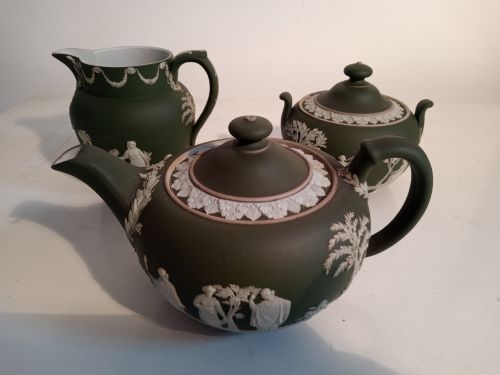
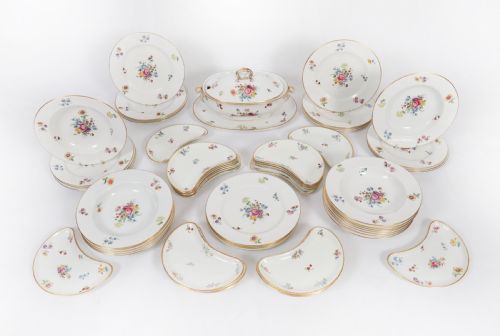
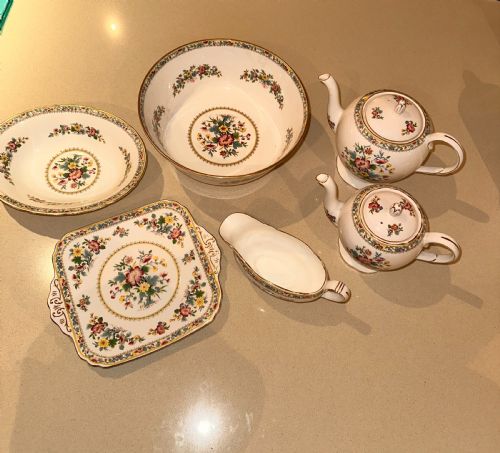
Vintage porcelain tableware spans comprehensive dinner services, tea sets, dessert services and individual decorative plates originating across the nineteenth and early twentieth centuries. Buyers seeking vintage porcelain tableware encounter extensive sets alongside paired dishes and single serving vessels.
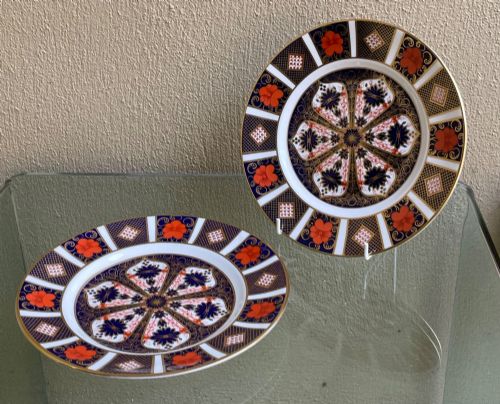
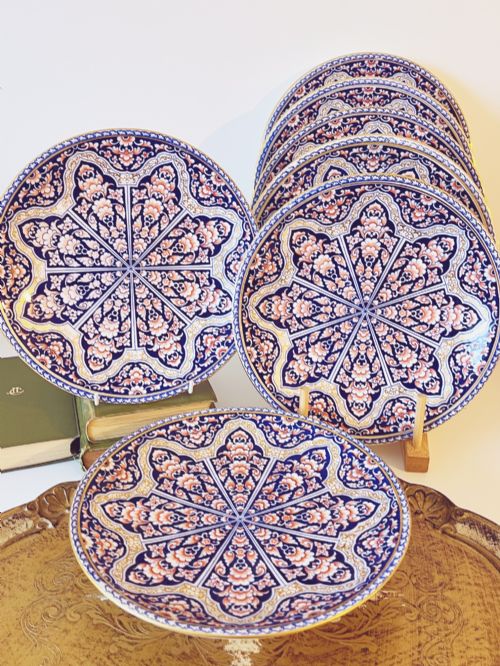
The selections include British factories, continental European makers and Japanese workshops reflecting styles from Victorian and Edwardian periods to Rococo Revival and Japanese Imari. Forms range from soup dishes and sauce tureens to coffee pots, cream pots and sugar bowls.
Materials and production methods
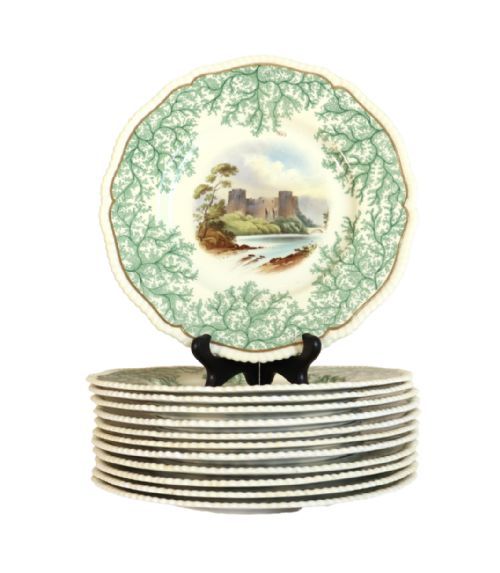
Pieces utilise porcelain, bone china and earthenware bodies finished with smooth glaze and enriched with gold leaf or gilding. Many items incorporate hand-painted floral or landscape designs alongside transfer-printed patterns.
Ironstone and felspar porcelain provide robust structure for utilitarian dinner services and sauceboats while delicate bone china suits tea and coffee sets.
Storage boxes keep nineteenth century sushi plates snug, proving vintage dining styles transcend centuries.
Distinctions in quality
Quality rests upon the crispness of the hand-painted detailing, the precision of the gilding and gold leaf application, and the overall balance of the form. Comprehensive services demand uniformity across dozens of individual plates and serving vessels.
Maker attribution and documented provenance elevate specific sets, distinguishing standard production items from ambitious factory commissions featuring armorial crests or specialised moulded shapes.
Royal Crown Derby·Wedgwood·Spode·Müller Volkstedt·Chamberlain Worcester·Coalport·Doulton·Grainger and Co Royal Worcester·Jacob Petit·Meissen·Limoges·Copeland Spode·Sutherland·Gladstone potteries
The Vintage Porcelain Tableware Glossary
- Bone china
- A type of porcelain incorporating animal bone ash, producing a strong, translucent body suited to fine tea sets.
- Sucrier
- A small covered vessel designed specifically for holding sugar, commonly found within tea and coffee services.
- Imari
- A style of Japanese ceramic decoration utilising distinctive palettes of underglaze blue, iron red and gold.
- Ironstone
- A heavy, durable type of earthenware patented to resist chipping while mimicking porcelain.
- Comport
- A raised dish or bowl used historically for serving dessert or fruit at the table.
Vintage Porcelain Tableware: Frequently Asked Questions
How do I date vintage porcelain tableware?
Dating relies upon factory date marks, impressed or printed backstamps, and stylistic indicators associated with periods like the Victorian era or Edwardian times.
Comparison with documented factory patterns helps narrow the decade of production.
Can I use vintage porcelain tableware daily?
Most antique dinner services and tea sets require gentle hand washing to protect delicate hand-painted designs and gold leaf gilding.
Using older pieces cautiously prevents thermal shock and preserves the glaze.
What is the difference between porcelain and bone china?
Traditional porcelain uses fine clay fired at high temperatures to achieve a hard, white vitrified body.
Bone china adds calcified bone ash into the mixture, creating lighter, more translucent walls.
How are large dinner services stored safely?
Large sets benefit from custom storage boxes, felt dividers between stacked plates, and stable shelving protected from vibration.
Keeping serving vessels and covers stored separately reduces the risk of rim chips.