
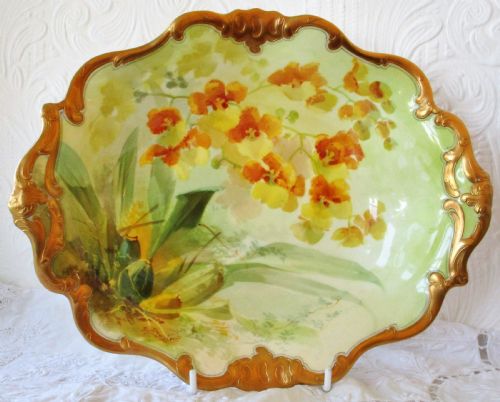


Botanical Decorative Plate
A botanical decorative plate brings floral and natural studies directly to the wall or cabinet, prized for fine hand-painted plant and bird motifs.
Botanical Decorative Plate
A botanical decorative plate brings floral and natural studies directly to the wall or cabinet, prized for fine hand-painted plant and bird motifs. The selection centres on nineteenth century and early twentieth century examples, ranging from Victorian English porcelain to Japanese Meiji period chargers.
Most entries take the form of cabinet dishes, wall chargers, and dessert plates designed for display rather than daily service. Pieces frequently showcase specific floral or avian subjects such as orchids, lilies, and goldfinches rendered with botanical accuracy.
Methods of manufacture
Makers utilised hard-paste porcelain and standard porcelain bodies shaped into plates, dishes, and chargers. Artisans applied hand-painted enamels directly to the glazed surfaces to achieve detailed plant and flower studies.
Gilt, gold leaf, and traditional gilding embellished the rims and borders of English cabinet pieces, while Japanese Meiji examples relied on copper and brass foundations for cloisonne work.
Some orchids painted by David Dewsberry look remarkably stern, as though posing for a Victorian portrait.
Evaluating the pieces
Quality rests upon the precision of the hand-painted botanical artwork and the delicacy of the enamel work across the centre of the plate. Signed works by established artists or identifiable retailer marks add significant distinction.
The crispness of gilding and the preservation of the porcelain surface determine the standing of each cabinet dish or wall charger within its period.
Royal Doulton·Royal Worcester·Ridgway·Meissen·New Hall·Rockingham·Royal Crown Derby·David Dewsberry·Fukagawa
The Botanical Decorative Plate Glossary
- Cabinet plate
- A decorative plate intended for display in a cabinet or on a wall rather than for dining use. These items typically feature finer hand-painted decoration than standard tableware.
- Hard-paste porcelain
- A durable ceramic material fired at high temperatures, composed of kaolin and petuntse. It provides a dense, white body well suited to detailed enamel painting.
- Cloisonne
- A metalwork technique where wires are soldered to a copper or brass base to create compartments filled with enamel paste. The piece is then fired and polished smooth.
- Gilding
- The application of gold leaf or gold powder to ceramic surfaces, usually highlighting the rim or border of a plate. This finish adds a decorative metallic border.
- Charger
- A large decorative plate or dish used primarily as a base setting or hung on a wall for display. They offer a wider surface area for elaborate floral or avian designs.
Botanical Decorative Plate: Frequently Asked Questions
How were botanical decorative plates displayed?
These items were frequently housed in glass-fronted cabinets or mounted on walls as decorative chargers. Their primary function was visual appreciation rather than service at the table.
Collectors often used wire hangers or dedicated plate stands to showcase the hand-painted floral and bird designs.
What subjects appear on these plates?
Decorations focus predominantly on natural history, featuring named orchids, lilies, roses, and songbirds. Artists rendered these subjects with strict attention to botanical accuracy.
Some pieces record specific flower varieties or pair birds with floral branches across the central well.
How do I identify nineteenth century pieces?
Dating relies upon maker marks, puce or printed ciphers on the reverse, and the style of the porcelain body. Victorian and Regency examples often combine hand-painted enamels with gilt borders.
Reference marks and artist signatures on the verso help narrow the production era to specific decades.
Can these plates be used for dining?
Most items function strictly as cabinet pieces or wall chargers due to delicate enamel work and gold leaf decoration. Daily use would risk wearing the hand-painted botanical details.
Preserving the surface glaze and gilding requires keeping them on display stands or secure wall mounts.