


English China Dessert Plates
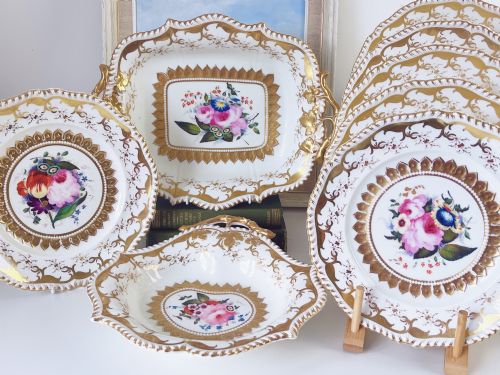
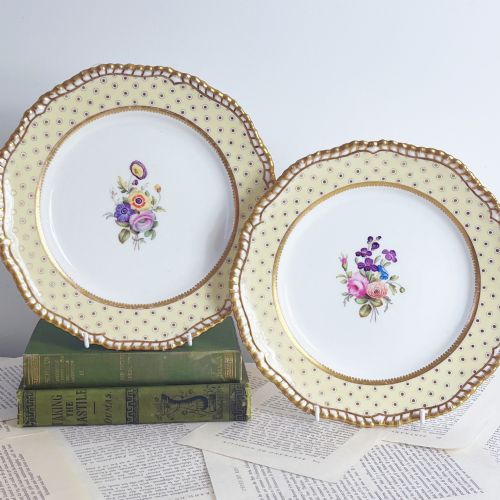
English china dessert plates bring colourful fruit painting, botanical studies and armorial crests to the table from Georgian, Regency and Victorian makers.
English China Dessert Plates
English china dessert plates span the eighteenth, nineteenth and early twentieth centuries, emerging primarily from porcelain and ironstone manufactories. A buyer looking at english china dessert plates will encounter individual cabinet pieces, paired dishes and larger multi-piece dessert services.
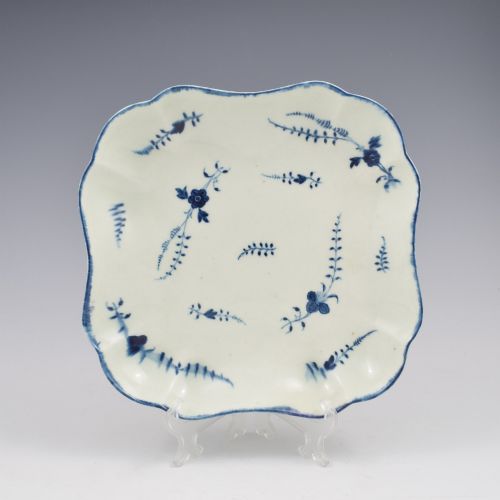
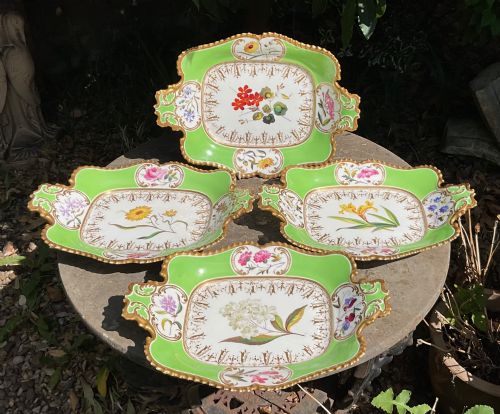
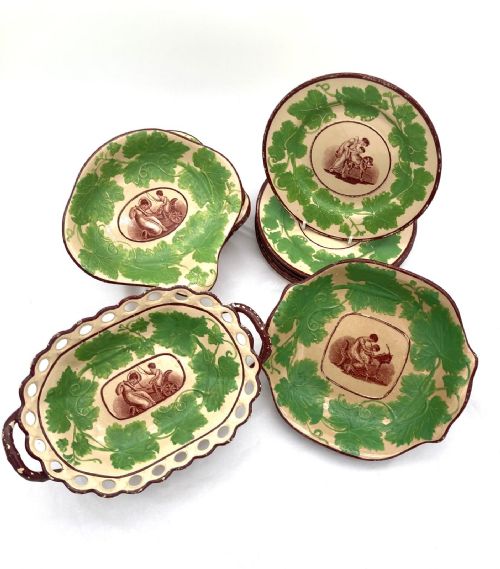
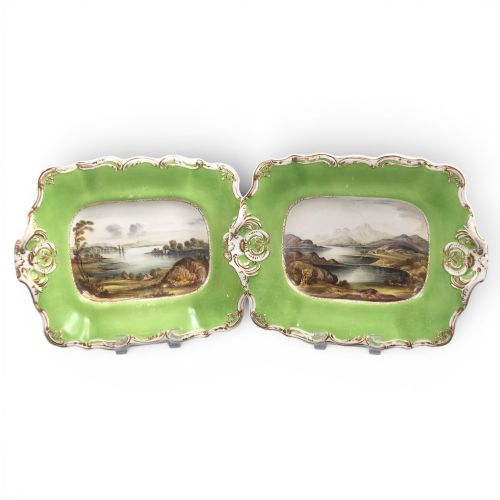
The versions most commonly met on this page date from the Regency and Victorian periods, featuring shapes designed specifically for serving fruit, sweets and confectionary at the end of a formal meal. Forms range from standard circular plates to square dishes, basketweave moulds and footed comports.
How they were made
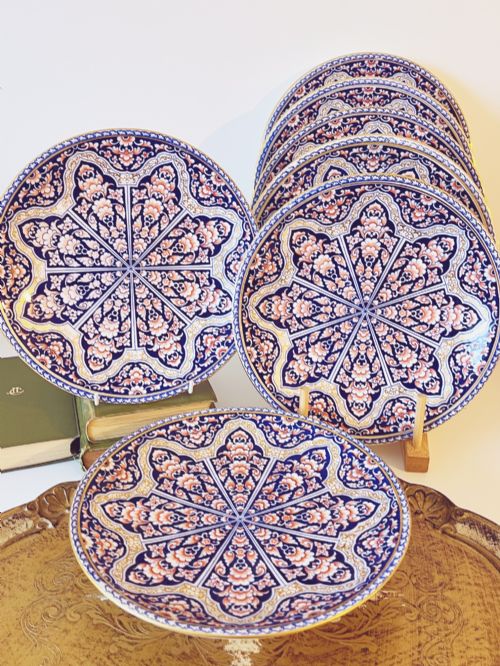
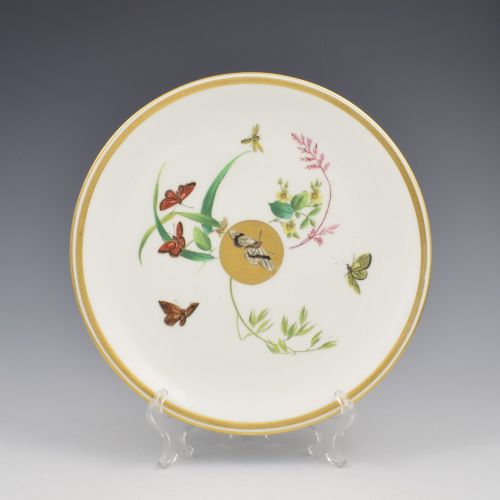
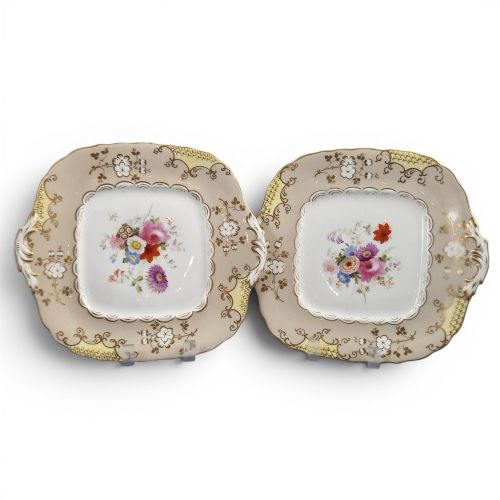
Potters shaped these wares from fine porcelain, bone china, felspar porcelain and stone china before applying hand-painted or transfer-printed enamel decoration. Artisans then added rich gilding and gold leaf highlights to borders and rims.
Many pieces underwent multiple kiln firings to set the intricate botanical studies, topographical views and armorial crests securely beneath the glaze.
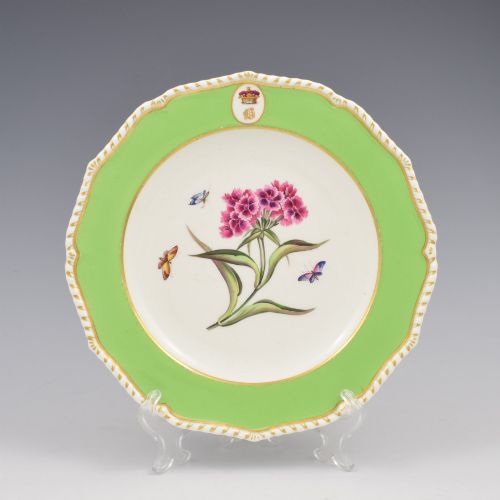
Some plates feature detailed paintings of sweet william and jabberwocky patterns, proving that nineteenth-century dessert tables enjoyed a touch of whimsy.
What varies in quality
Quality rests principally in the ambition of the painting and the crispness of the porcelain body. Hand-painted botanical studies by named artists and detailed topographical scenes sit well above standard transfer prints.
The weight of the gilding, the sophistication of ground colours such as apple green or pink, and the presence of moulded relief details like basketweave or specific shaped edges further separate ordinary tableware from exceptional cabinet porcelain.
Grainger Lee And Co·Spode·Royal Crown Derby·Dr Wall Worcester·Chamberlains Worcester·Minton·Coalport·Copeland And Garrett·Bloor Derby·Flight Barr And Barr·Kerr And Binns·Royal Worcester·Crescent China·Masons Patent Ironstone·Rockingham·Davenport·Wedgewood
The English China Dessert Plates Glossary
- Bone china
- A type of soft-paste porcelain containing bone ash, developed in England to create a durable, brilliantly white body. It allows for thin, translucent plates suited to fine service.
- Felspar porcelain
- An innovative body introduced in the nineteenth century using felspar minerals to improve whiteness and durability. Spode utilised this material extensively for dessert wares.
- Armorial
- A ceramic decoration featuring a family crest, coat of arms or motto. These bespoke pieces were typically commissioned by landed gentry and noble houses.
- Comport
- A raised serving dish or pedestal bowl used in a dessert service to display fruit. It stands taller than the surrounding plates to create tiered visual interest on the dining table.
- Enamel
- Opaque coloured glass fused to the ceramic surface in the kiln. It provides the vibrant palette seen on floral and landscape plates.
English China Dessert Plates: Frequently Asked Questions
What were english china dessert plates used for?
These plates served the final course of a formal dinner, which typically consisted of fresh fruit, nuts, cheeses and delicate sweetmeats. They formed part of grand matching services rather than everyday dining.
Because dessert was often served at the table after the main dishes were cleared, the plates were designed to be decorative and visually striking under candlelight.
How do I identify a Regency period plate?
Regency plates often feature distinct border colours like apple green or deep blue, paired with finely painted botanical specimens or armorial crests. The porcelain bodies tend to show crisp moulding and generous gilt highlights.
Makers from this era frequently marked their wares with pattern numbers or early factory script on the reverse rather than standard printed backstamps.
Can I use antique dessert plates for food?
Most collectors treat these pieces as display or cabinet items due to their age and delicate enamels. Hand washing is essential if they are used, as modern dishwashers will damage the soft glazes and gold leaf.
Avoid serving highly acidic foods on antique enamels to prevent staining the historic porcelain bodies.
What is ironstone china?
Ironstone is a dense, heavy earthenware patented in the nineteenth century to provide a durable alternative to porcelain. It resists chipping while offering a suitable surface for bright enamel patterns.
Makers like Mason used ironstone to create robust dessert services that could withstand frequent use.