



Gilt Botanical Ceramic Plates
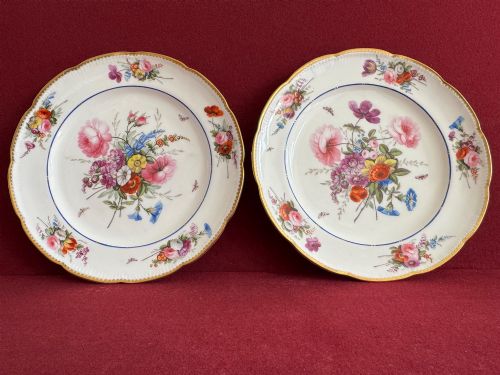
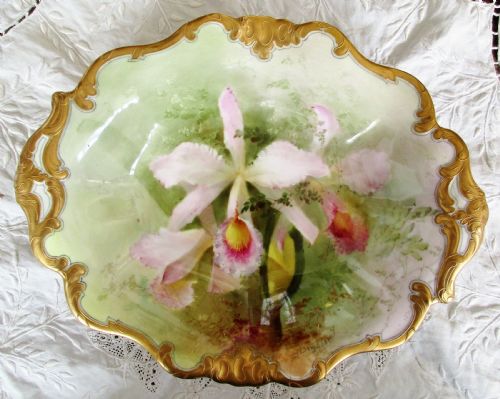
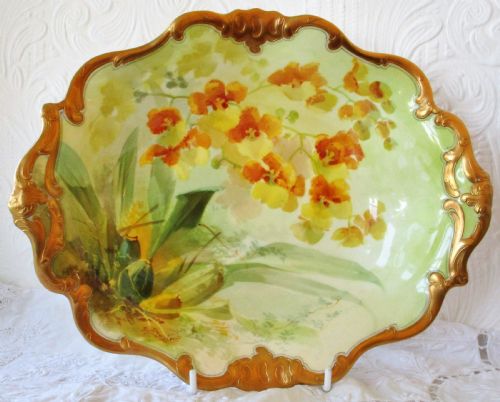
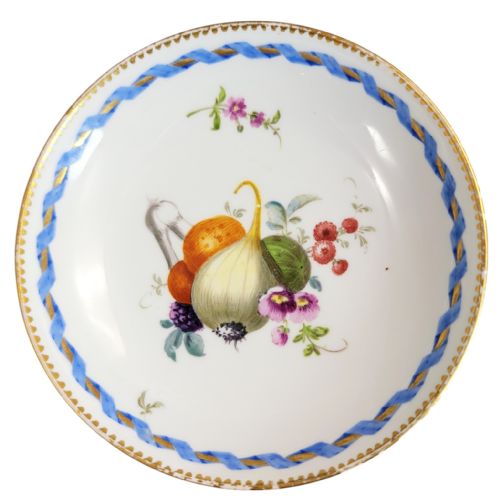
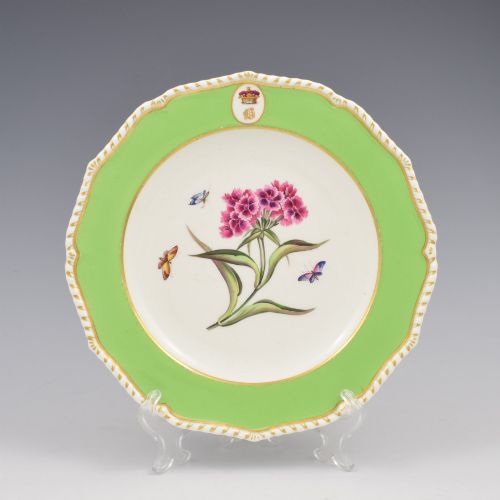
These gilt botanical ceramic plates bring together handpainted floral studies and metallic gilding across porcelain and bone china.
Gilt Botanical Ceramic Plates
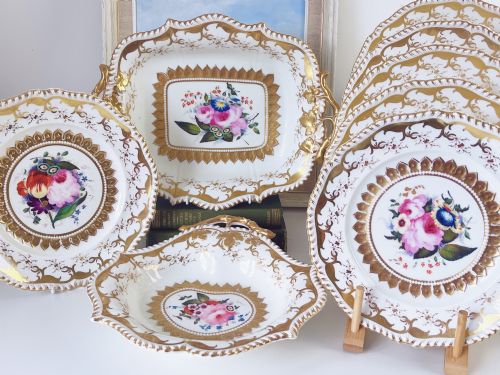
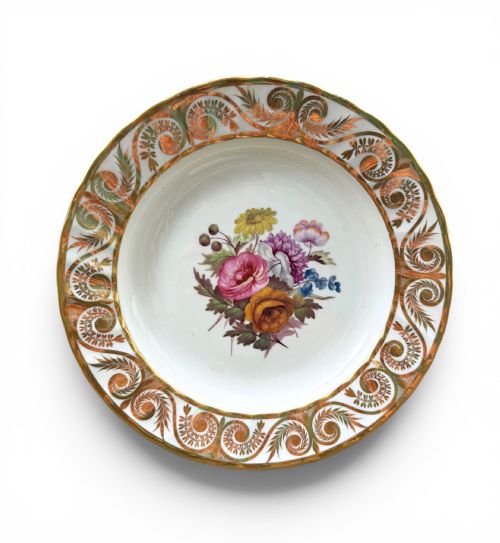
Gilt botanical ceramic plates encompass decorative plates, cabinet dishes, dessert services, and soup dishes designed for display or formal dining. These pieces emerge from periods spanning the eighteenth century through the early twentieth century, incorporating Regency, Victorian, Edwardian, Rococo, and Aesthetic styles.
The most frequent examples on this page are nineteenth century English and European porcelain and bone china plates featuring handpainted flowers, butterflies, and armorial details. Makers and factories utilise hard paste porcelain and enamel alongside gold leaf to highlight botanical motifs.
Materials and technique
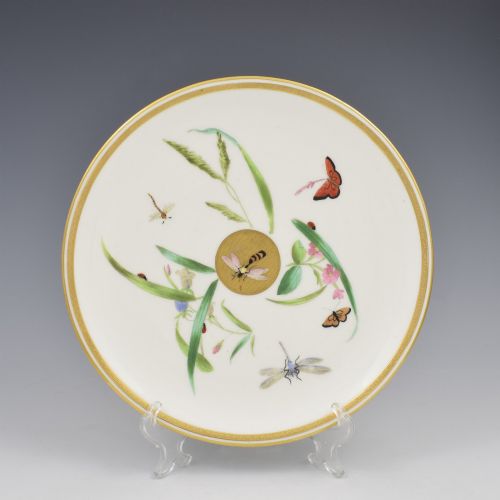
Potters shape porcelain, bone china, and hard paste porcelain into plates, dishes, and saucers before applying handpainted enamel details. Artisans paint floral subjects, orchids, birds, and insects directly onto the ceramic body.
Gilding, gold leaf, and gold paint accent borders, rims, and motifs, often finished with raised or burnished application. Kiln firing sets the enamels and gold prior to final polishing.
Listings feature porcelain and bone china from the eighteenth, nineteenth, and early twentieth centuries, incorporating Regency, Victorian, and Aesthetic Movement styles.
Distinctions in quality
Quality rests in the precision of the handpainted botanical artistry and the crispness of the gilt work upon the porcelain surface. Fine examples display detailed brushwork by named painters or established factories, while simpler pieces show standard transfer printing or minimal enamel work.
The weight of the porcelain, the depth of the glaze, and the preservation of the gold leaf distinguish standard domestic tableware from cabinet plates intended for display.
Grainger Lee And Co·Royal Doulton·Barr Flight And Barr·Thomas Moorcroft·Chamberlain Worcester
The Gilt Botanical Ceramic Plates Glossary
- Cabinet plate
- A decorative plate intended for display in a cabinet rather than for serving food. These pieces typically feature elaborate handpainted botanical scenes and rich gilding.
- Bone china
- A type of soft paste porcelain containing bone ash, known for its high strength, chip resistance, and translucent body.
- Hard paste porcelain
- A ceramic material composed of kaolin and petuntse fired at high temperatures, creating a dense, white, vitreous body.
- Gilding
- The application of gold leaf or gold powder to the surface of porcelain to create decorative borders and highlights.
- Tazza
- An Italian term for a shallow saucer or bowl mounted on a stem and foot, used here as a comport for dessert service.
Gilt Botanical Ceramic Plates: Frequently Asked Questions
What are cabinet plates?
Cabinet plates are decorative ceramic items produced primarily for display in vitrines or on walls rather than for daily dining use. They often feature intricate handpainted botanical subjects and substantial gilding.
These pieces reflect the aesthetic priorities of eighteenth and nineteenth century porcelain manufacturers who catered to collectors and wealthy households.
How do I care for gilt porcelain?
Gilt porcelain requires gentle hand washing with mild soap and warm water, avoiding abrasive sponges or harsh detergents that can wear away the gold leaf. Storing them securely prevents rim chipping and protects the delicate enamels.
Displaying them away from direct sunlight preserves the vibrancy of the handpainted botanical pigments over time.
How do I date antique plates?
Dating antique ceramic plates involves examining the factory marks stamped or painted on the underside, alongside the stylistic indicators of periods like the Regency or Victorian eras. Handpainted signatures and pattern numbers provide further chronological clues.
Material composition, such as the transition from soft paste to hard paste porcelain and bone china, also helps establish the era of manufacture.
Were dessert services used daily?
Dessert services were typically reserved for formal dinner parties, where fruit, sweets, and confectioneries were served at the conclusion of the meal. The plates, dishes, and comports formed a matching set designed to impress guests.
Because they saw infrequent use, many surviving dessert service plates retain their original handpainted details and gilding in good condition.