
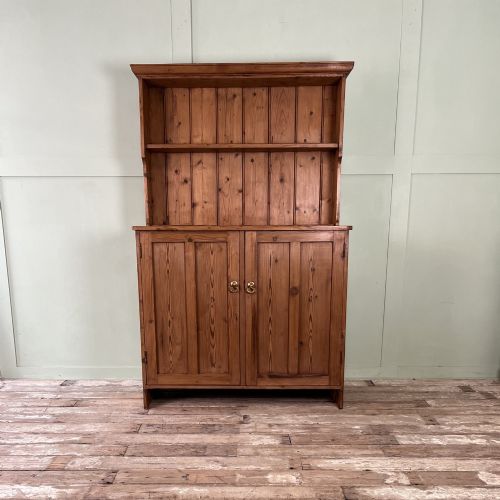
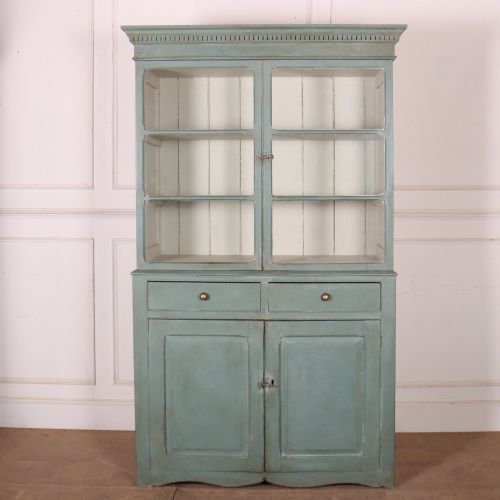
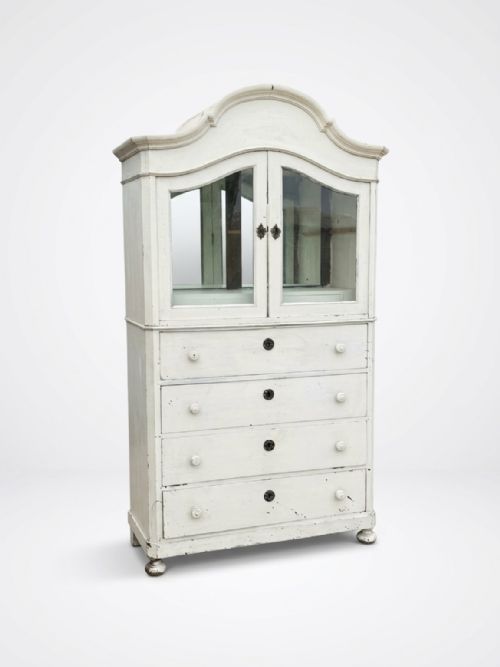

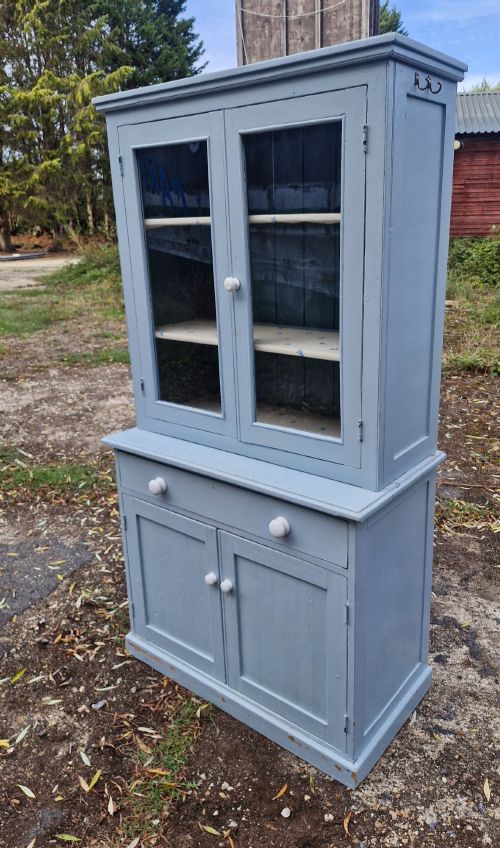
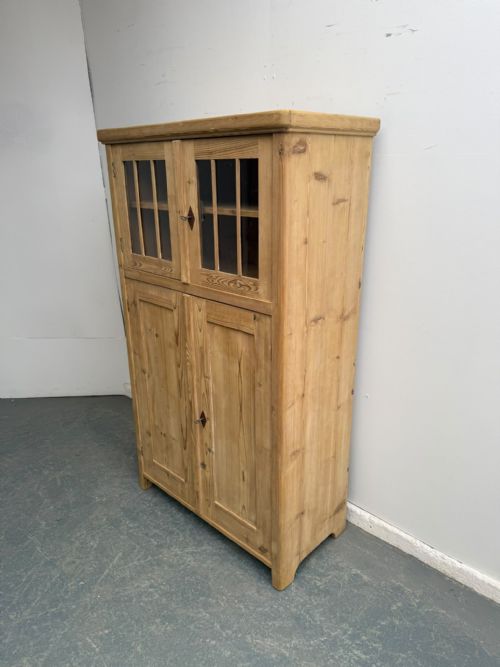
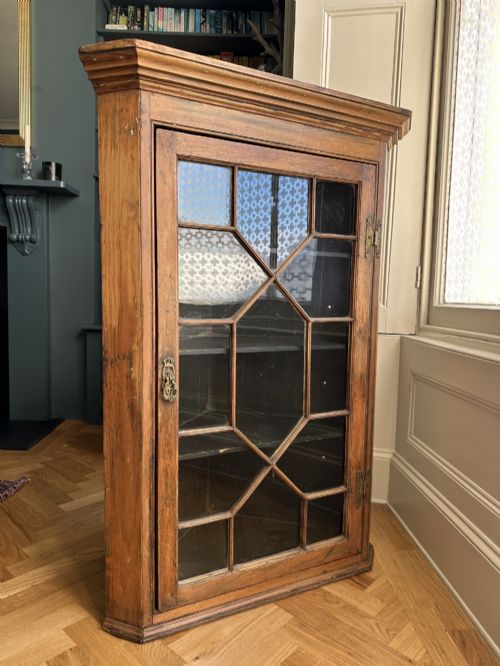
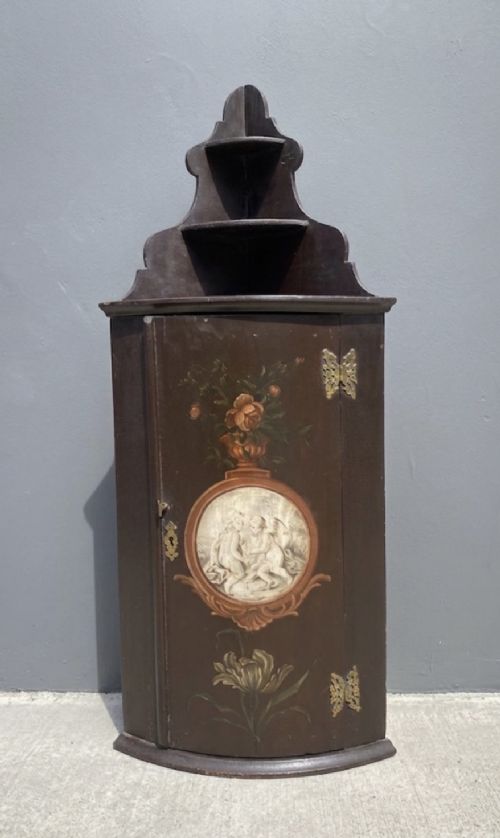
Vintage Pine Display Cabinet
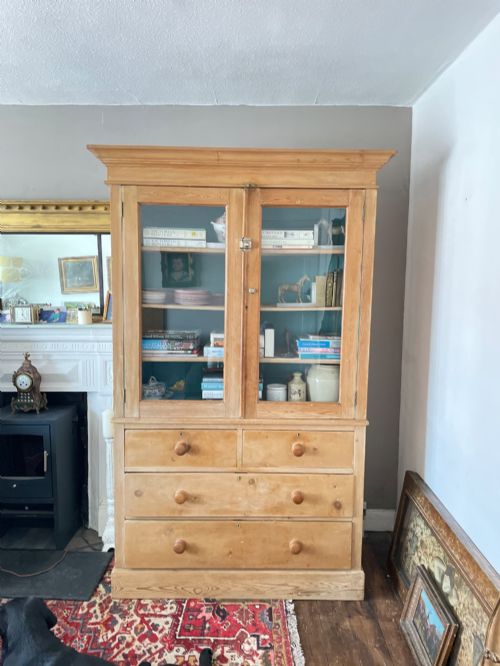
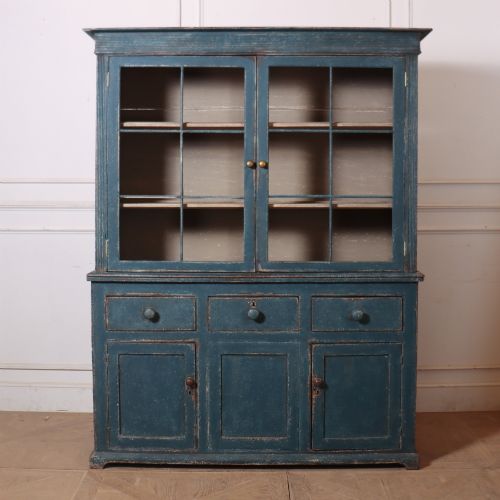
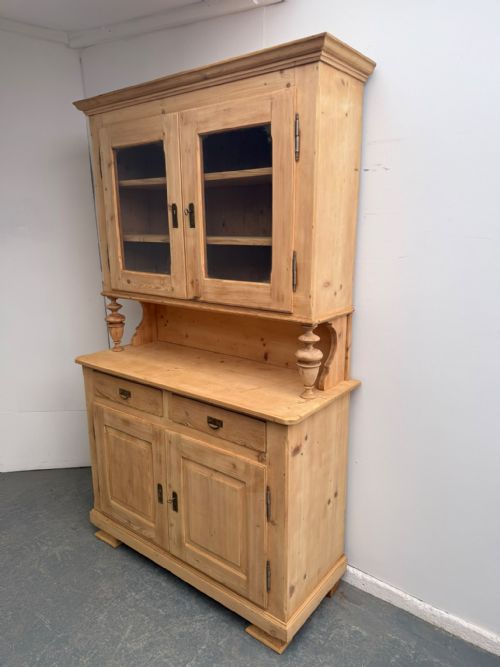
These vintage pine display cabinets combine practical storage with glazed viewing space, offering a functional centrepiece for the home.
Vintage Pine Display Cabinet
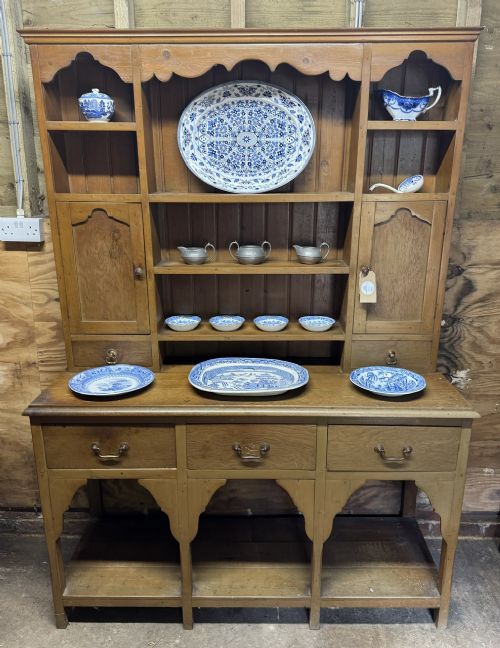
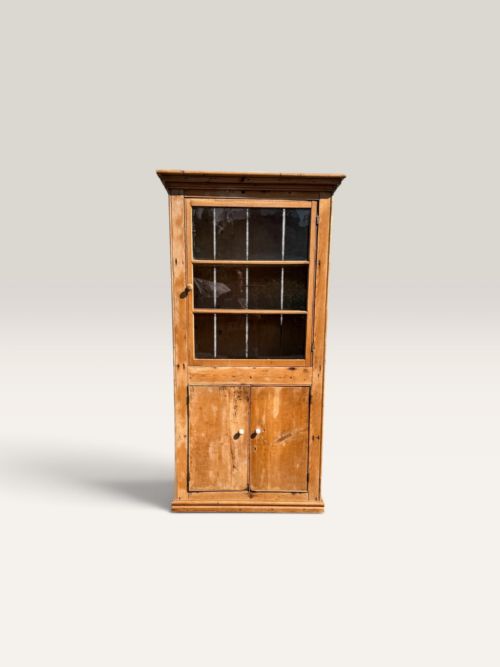
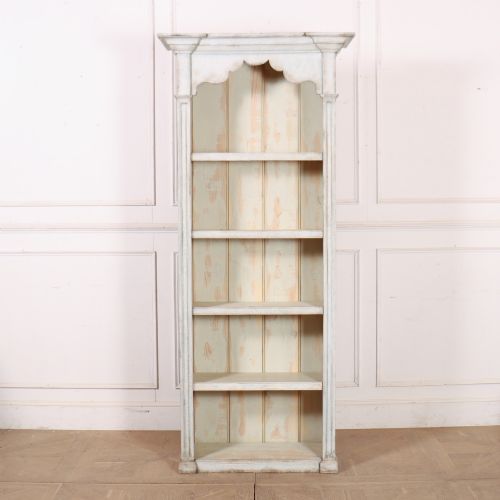
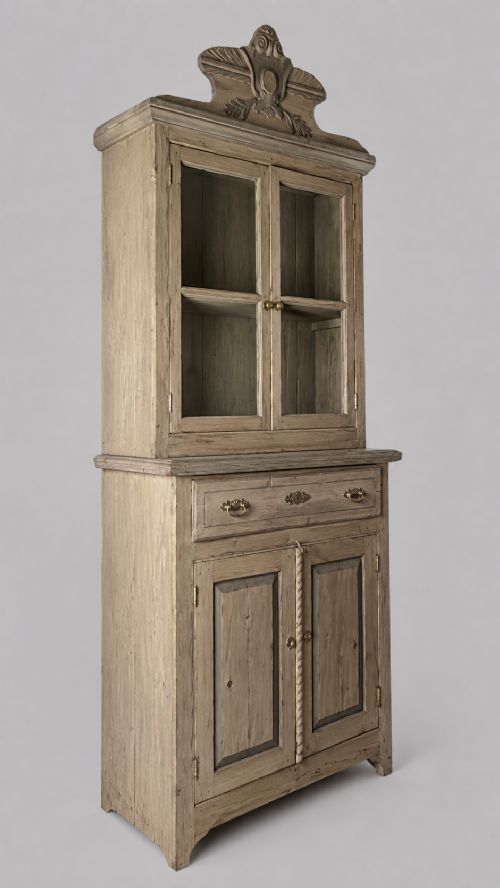
A vintage pine display cabinet serves to organise and exhibit household items through glazed doors or open shelving. Pieces matching this vintage pine display cabinet description originate primarily from the nineteenth century, including Victorian examples alongside Edwardian and later twentieth-century iterations.
The selection here encompasses various regional forms such as English country dressers, Welsh and Scottish kitchen cupboards, French provincial bookcases, and Swedish cabinets. Buyers encounter both two-part constructions and single glazed units configured for storage and display.
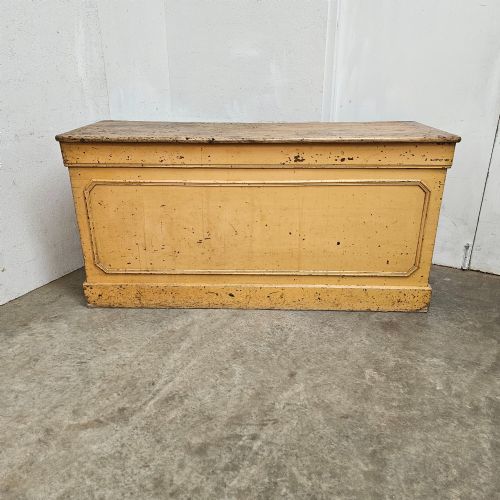
Formations range from corner cabinets and shop fittings to large library bookcases and kitchen dressers. Many retain glazed doors, painted surfaces, or natural wood finishes.
How they were made
Construction relies upon pine and pitch pine timbers, shaped into cabinetry using traditional joinery methods. Surfaces are frequently finished with applied paint, original paint layers, or wax treatments.
Hardware incorporates brass and iron for hinges, pulls, and locking mechanisms on doors and drawers. Glazing provides transparent panels for front-facing cabinet doors and bookcases.
Listings feature pine and pitch pine materials across nineteenth-century and twentieth-century periods, spanning kitchen dressers, bookcases, and corner cabinets.
What varies in quality
The integrity of original surfaces distinguishes pieces, particularly where authentic paint finishes, scrumbled details, or historic patinas remain intact beneath subsequent layers. Construction robustness in the underlying pine framework also governs overall durability.
Proportion and scale influence desirability, especially in larger two-part dressers, breakfront bookcases, and multi-drawer shop fittings where balanced joinery maintains structural stability.
The Vintage Pine Display Cabinet Glossary
- Glazed
- Fitted with glass panels to permit visibility of contents stored within the cabinet. This feature defines display furniture.
- Dresser
- A multi-tier furniture item combining lower cupboards or drawers with upper shelving or display space. These often originate from kitchen environments.
- Scrumbled
- Painted with a decorative technique that simulates the grain of more expensive hardwoods. It creates a mottled or textured surface appearance.
- Breakfront
- A cabinet design where the central section projects forward from the flanking wings. This configuration adds architectural depth to large bookcases.
- Pitch pine
- A dense, resinous variety of pine timber used for cabinetry. It yields a pronounced grain pattern compared to standard softwoods.
Vintage Pine Display Cabinet: Frequently Asked Questions
How do I date a pine cabinet?
Dating relies upon construction methods, hardware types, and timber characteristics observed in the piece. Nineteenth-century examples often display hand-cut joints and distinct surface patinas.
Later twentieth-century iterations show different manufacturing standards and standardised hardware. Comparing the structural elements against documented regional styles helps narrow the period.
Are painted finishes original?
Original paint layers appear as worn, weathered surfaces that show natural age through underlying timber showing through. Many pieces retain traces of historic cream, teal, or white paint.
Subsequent repainting is common in utility furniture of this type. Examining edges and protected corners reveals whether the paint surface dates from the original construction.
Can I use a kitchen dresser for display?
Kitchen dressers and cupboards feature upper shelving and glazed doors specifically designed for exhibiting ceramics and glassware. Their sturdy construction supports heavier tableware collections.
Lower cupboards provide enclosed storage for items kept out of sight. This dual function makes them practical for dining rooms and living spaces.
How do I care for waxed pine?
Waxed pine surfaces require occasional nourishment using a traditional beeswax polish to maintain the sheen and protect the timber. Avoiding direct sunlight prevents the wood from drying out.
Routine dusting with a soft cloth preserves the historic patina without damaging the finish. Moisture should be wiped away promptly from wooden surfaces.