
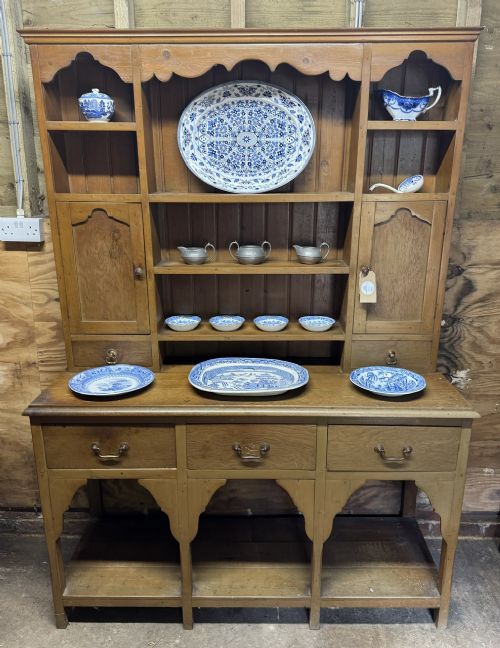
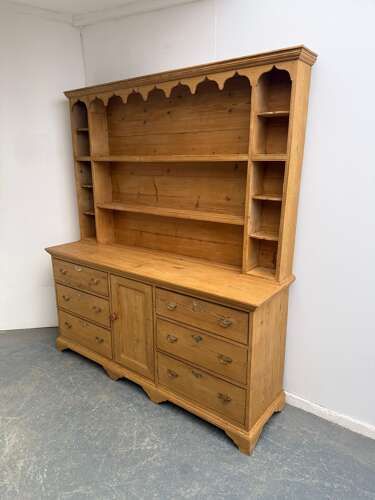


Rustic Pine Sideboard Rack
A rustic pine sideboard rack brings honest utility and timeless storage to a room, offering open display shelves above practical base cabinetry.

Rustic Pine Sideboard Rack
A rustic pine sideboard rack combines a sturdy base cabinet with an upper plate rack, serving as a traditional storage and display unit for everyday household items. These pieces emerge from periods spanning the eighteenth century through to the early twentieth century, reflecting practical domestic traditions.
Buyers encountering a rustic pine sideboard rack will find examples shaped by regional vernacular designs, including English country, Welsh vernacular, and Scandinavian traditions. These items range from compact cottage versions to larger farmhouse iterations featuring open pot boards and breakfront drawers.
The materials and forms recorded on this page centre on solid pine timbers, complemented by occasional oak or mahogany elements, and finished in natural waxed surfaces or historic painted coats. Their construction reflects the utilitarian needs of kitchens and dining rooms across past centuries.
Construction and materials
Makers built these pieces primarily from solid pine, utilising heavy timbers for the structural frames and thinner boards for the panelled backs and shelving. Joinery typically relies on traditional hand-cut joints, reflecting the practical demands placed on domestic furniture.
Surfaces receive either a protective coat of natural wax to nourish the grain or a durable painted finish, sometimes showing layers of historic colour over time. Metal elements such as brass or iron handles and hinges appear on select doors and drawers.
Listings span from the eighteenth century to the early twentieth century, featuring both waxed pine and painted finishes.
Distinctions in quality
Quality in these pieces rests upon the integrity of the original timber and the survival of an honest, untouched patina acquired through generations of domestic use. Pieces retaining their original painted finishes or early waxed surfaces demonstrate superior historical preservation.
Proportion and regional character also dictate distinction, with balanced architectural cornices and well-scaled plate racks setting apart finer vernacular examples from simpler utility furniture.
The Rustic Pine Sideboard Rack Glossary
- Pot Board
- A low, open lower shelf built into the base of a dresser, historically used for storing heavy pots and pans. This feature defines many traditional country kitchen pieces.
- Vernacular
- Furniture designed and built by local craftsmen to satisfy regional domestic needs rather than following academic metropolitan styles. These pieces display distinct local characteristics.
- Patina
- The deep sheen and surface alteration developed on wood and paint over decades of handling, cleaning, and exposure to light. It acts as a visual indicator of age.
- Breakfront
- A cabinet configuration where the central section projects forward from the flanking outer sections. This architectural arrangement adds depth and visual interest to the base unit.
Rustic Pine Sideboard Rack: Frequently Asked Questions
What is a rustic pine sideboard rack?
A rustic pine sideboard rack is a traditional kitchen or dining room storage unit consisting of a lower cabinet base and an upper display rack. These items were designed for everyday domestic use to store and display tableware.
They reflect regional craftsmanship from the eighteenth century onwards, utilising pine and other domestic timbers with waxed or painted finishes.
How do I date a pine dresser?
Dating a pine dresser involves examining the construction methods, tool marks, and overall proportions of the piece. Earlier examples often feature hand-planed boards and simpler, sturdier joinery.
Surface finishes also provide clues, as historic painted coats or deep wax patinas accumulate over centuries of continuous household use.
Where were these dressers made?
These dressers originated in various regional workshops across Britain, Ireland, and Scandinavia. Local makers adapted designs to suit the specific needs and aesthetic preferences of their communities.
Styles range from Welsh vernacular and English farmhouse to Scandinavian country traditions, each employing local woods and construction techniques.
How do I care for a waxed pine finish?
Caring for a waxed pine surface involves regular dusting with a soft, dry cloth and occasional application of traditional beeswax to nourish the wood. Avoid placing the furniture near direct heat sources or strong sunlight.
Gentle maintenance preserves the natural patina and protects the timber from drying out over time.