
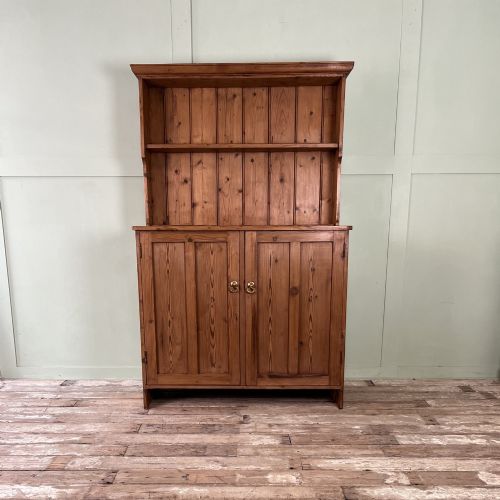
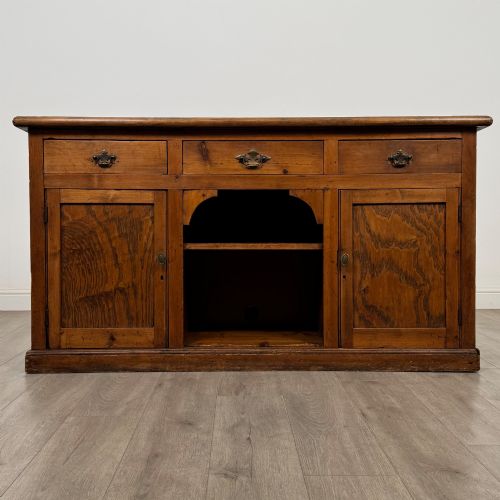
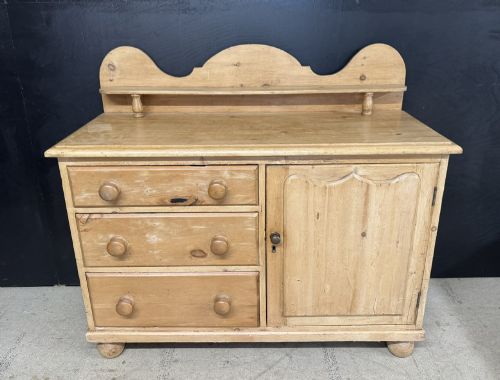
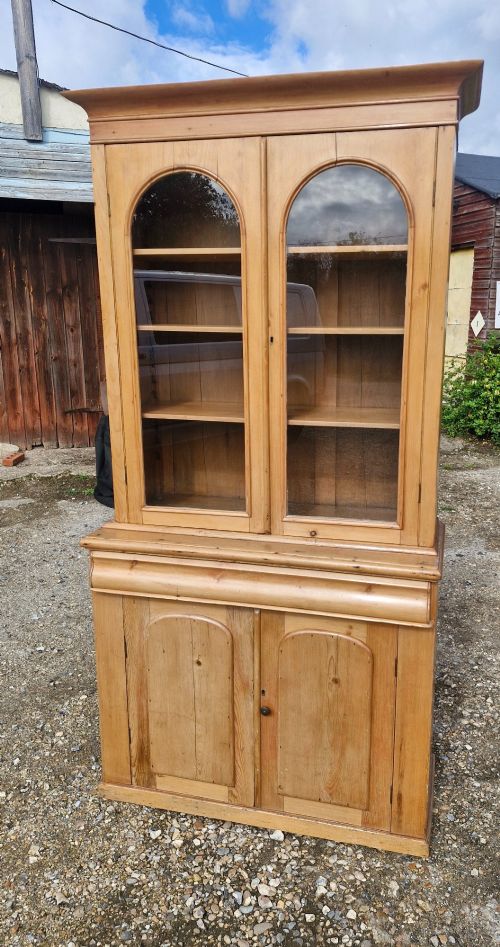


Honey Pine Kitchen Dresser
A honey pine kitchen dresser brings practical storage and warm timber grain to a room, offering open display shelves above generous cupboards and drawers.
Honey Pine Kitchen Dresser
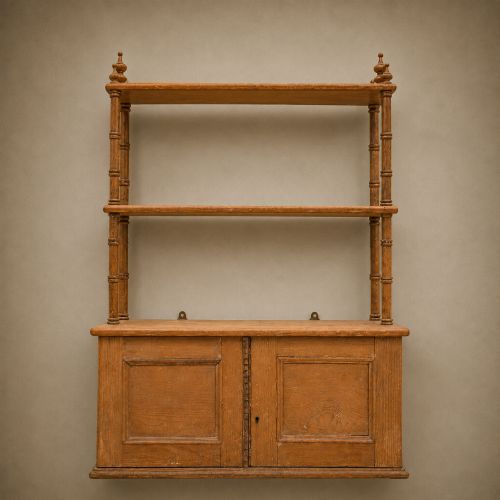
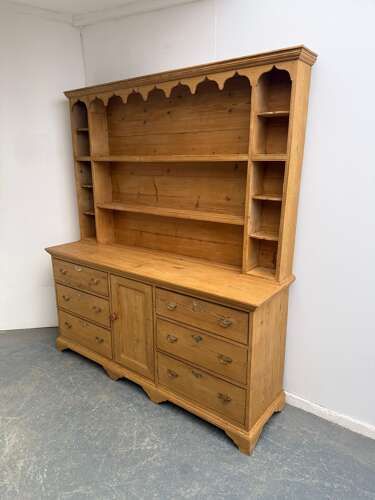
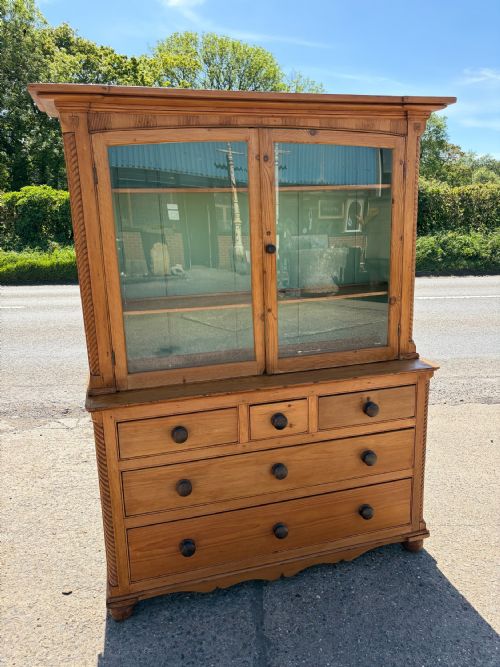
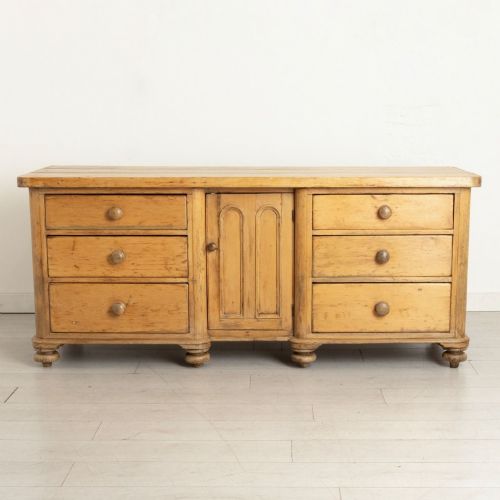
A honey pine kitchen dresser combines a set of upper wall shelves, often called a rack, with a lower base cabinet containing doors and drawers. These pieces served working kitchens across rural homes for generations, providing space to store tableware and provisions.
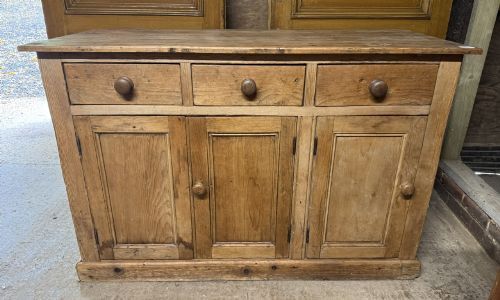
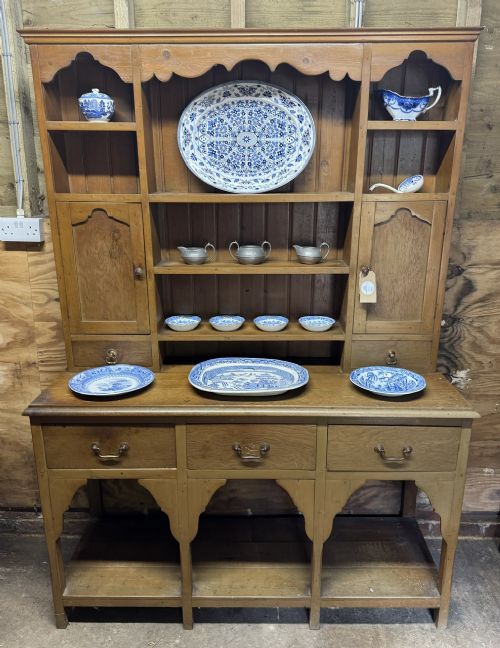
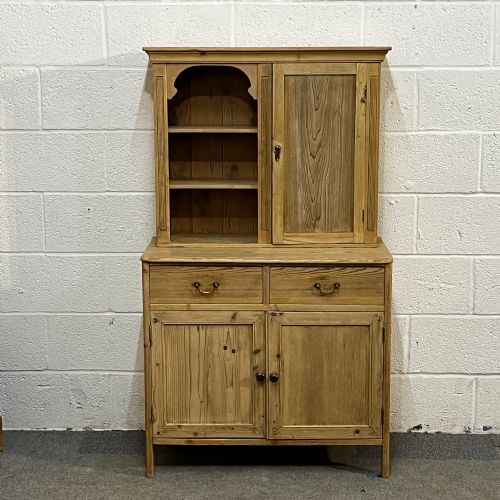
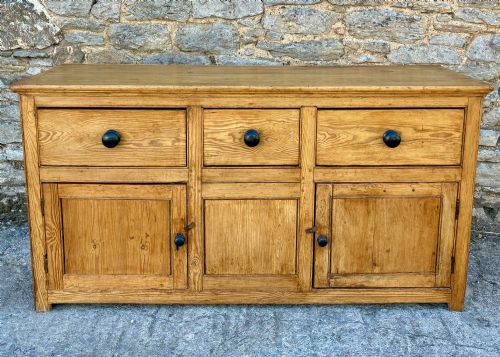
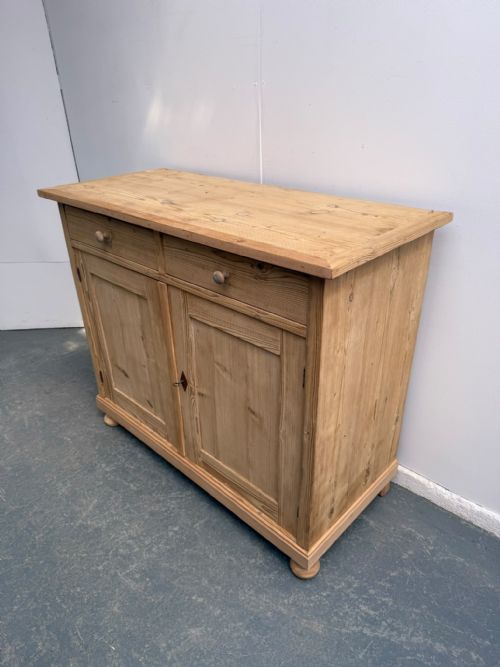
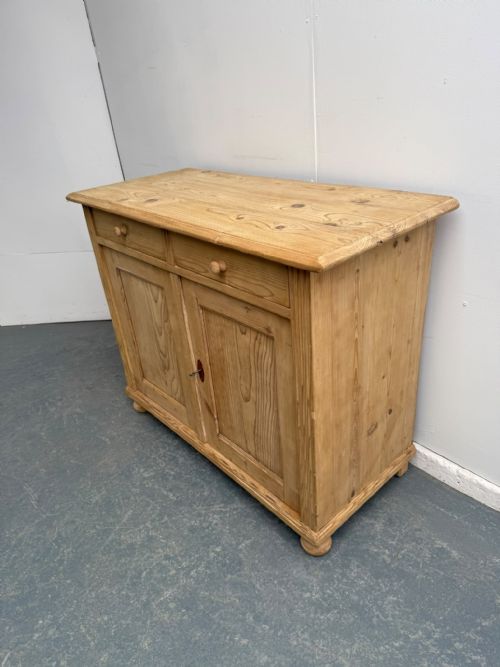
The honey pine kitchen dresser pieces seen here span the Victorian era back into the eighteenth century, taking forms from Welsh, English, Scottish, Scandinavian, and Hungarian vernacular traditions. They range from compact cottage cupboards and shallow dresser bases to tall multi-door units.
Buyers meet variations including open pot shelves beneath the lower cabinet, glazed upper bookcases, and smaller sideboards. Many retain a waxed finish or a stripped pine surface showing years of domestic use.
How they were made
Makers built these pieces primarily from solid pine timbers, employing brass and iron for drawer pulls, hinges, and occasional hooks. Glass appears in upper cabinet doors, whilst ceramic knobs and metal fixtures provide functional details.
Carpenters constructed carcasses with straightforward joints, applying wax finishes to protect the wood whilst developing a warm patina over time. Many surfaces were later stripped of paint or left bare for traditional waxing.
Several pieces proudly retain their original patina, having survived centuries of family meals and kitchen gossip.
What varies in quality
Quality rests in the balance of proportions and the integrity of the timber, where earlier eighteenth and nineteenth-century examples display thoughtful construction and uncompromised structural depth. The presence of original backboards, unaltered hardware, and untouched patination distinguishes finer survivals from heavily altered pieces.
Proportion and scale dictate the visual weight of a dresser, with smaller country cupboards and shallow bases offering versatility in tighter modern spaces. The depth of the grain and the quality of the wax finish determine how well the pine reflects light within a room.
The Honey Pine Kitchen Dresser Glossary
- Dresser base
- The lower portion of a dresser, functioning as a sideboard or standalone cabinet with drawers and cupboards.
- Pot shelf
- An open lower shelf situated beneath the main base cabinet, traditionally used for storing large kitchen pots.
- Patina
- The surface sheen and colour acquired by wood through age, handling, and repeated waxing.
- Pine rack
- The upper shelving unit designed to sit atop a dresser base or mount directly to a wall for displaying plates.
- Cornish dresser
- A regional variant of the kitchen dresser characterised by specific local cabinetry traits and proportions.
Honey Pine Kitchen Dresser: Frequently Asked Questions
How do I clean a waxed pine dresser?
Dust the surfaces regularly with a soft, dry cloth to prevent dirt accumulation in the grain. Apply a traditional beeswax sparingly when the timber appears dry, buffing it gently to maintain the natural sheen.
Avoid using household detergents or excess water, as moisture damages traditional wax finishes and softens historic pine. Proper maintenance preserves the accumulated patina built up over decades of domestic use.
Can I use a dresser base without the top rack?
Many dresser bases function independently as sideboards or serving tables, offering surface space and enclosed storage beneath. This arrangement suits rooms with low ceilings where a full stacked dresser would overwhelm the available wall space.
Inspect the top surface of the base to ensure it is finished cleanly if you choose to display it separately from its original upper shelving unit.
How do I tell Victorian pine from earlier pieces?
Victorian pieces often display machine-sawn timber elements and standardised hardware fittings that reflect industrial manufacturing shifts. Eighteenth-century examples tend to show hand-planed surfaces, irregular board widths, and older joinery techniques unique to local vernacular workshops.
Examine the backboards and drawer construction closely, as hand-cut dovetails and forged iron nails point toward earlier craftsmanship.
Where were regional dressers made?
Makers constructed regional dressers across Welsh, Scottish, English, and Scandinavian farming communities, tailoring forms to local kitchen needs. Welsh and West Country pieces frequently feature distinct rack proportions and open pot shelves suited to regional pottery displays.
Hungarian and Swedish examples introduce alternative door configurations and subtle shifts in timber selection that reflect continental country traditions.