


Painted Welsh Dresser
A painted welsh dresser brings enduring storage and regional character to a room, combining open display racks with practical cupboards.

Painted Welsh Dresser
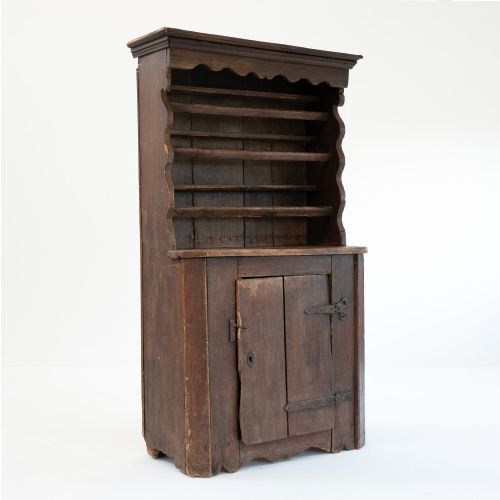
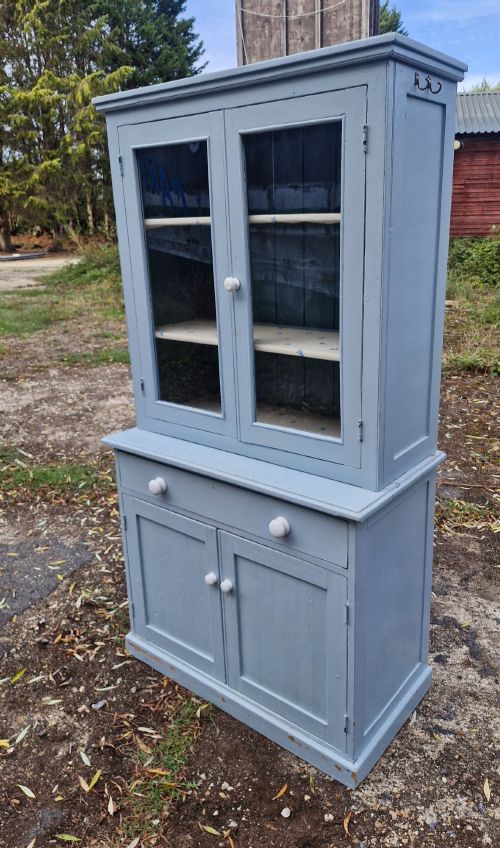
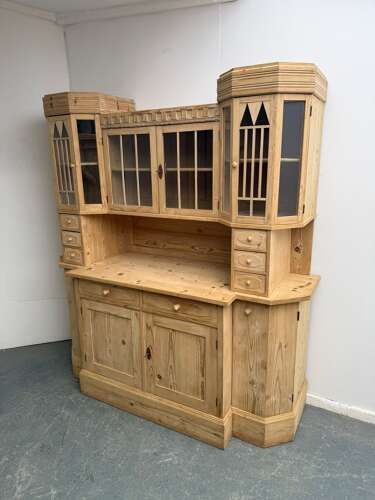
When you search for a painted welsh dresser, you are looking at large storage furniture that combines a lower base of drawers or cupboards with an upper plate rack. The examples you meet on this page span the eighteenth, nineteenth, and early twentieth centuries, reflecting diverse regional traditions from Wales, England, Ireland, and Scandinavia. They appear in several distinct forms, including potboard bases, dog kennel designs featuring a central recess, and two-part kitchen cupboards.
Most pieces encountered here are constructed from pine or oak, carrying coats of paint that range from early layers to later finishes. They serve as functional storage for kitchenware or display surfaces in farmhouse and country interiors. The selection covers everything from compact eighteenth-century formats to substantial nineteenth-century farmhouse editions.
How they were made
Makers built these pieces primarily using solid timbers like pine and oak, joined with traditional framing methods suited to heavy domestic use. Wrought iron and brass hardware, such as hinges and drawer pulls, fasten the doors and drawers securely to the wooden structure.
Surfaces received layers of paint, sometimes combined with waxed finishes or decorative tiles, particularly in later arts and crafts examples. Potboard bases and integrated racks were joined directly to the main body to support heavy loads of crockery.
Listings feature pieces spanning the eighteenth century through to the nineteen-thirties, documenting regional styles from Wales, England, Ireland, and Scandinavia.
What varies in quality
The standard of a painted welsh dresser depends upon the integrity of its timber and the retention of its original structural form. Pieces that retain their early or original paint surfaces hold greater interest for buyers than those stripped or repeatedly recoated.
Proportion and regional detail also separate standard examples from finer specimens, particularly where cornice mouldings, shaped aprons, and dog kennel recesses display careful craftsmanship. The harmony between the upper rack and the lower base indicates the skill of the original workshop.
The Painted Welsh Dresser Glossary
- Pot Board
- An open lower shelf positioned near the floor between the legs of a dresser. It was traditionally used to store heavy pots and pans.
- Dog Kennel
- A central recessed compartment enclosed by a door, located beneath the drawers in the base of certain dressers. This feature is particularly associated with West Country and Welsh vernacular pieces.
- Plate Rack
- The upper shelving unit attached to the back of a dresser, featuring vertical boards and plate grooves. It is designed to display ceramic plates and platters safely.
- Housekeeper Cupboard
- A large enclosed storage piece related to the dresser family, designed for linen and provisions rather than open display.
- Vernacular
- Furniture made by local craftsmen using regional styles and readily available materials, rather than following formal metropolitan design patterns.
Painted Welsh Dresser: Frequently Asked Questions
How do I date an old dresser?
Dating relies on examining construction methods, timber types, and hardware fixings. Eighteenth-century examples often display hand-planed boards and pegged joints.
Later nineteenth and twentieth-century versions introduce machine-sawn timber and different fastening techniques. Paint analysis also helps reveal whether the surface finish is contemporary with the wood or applied later.
Were these always painted?
Many pieces were painted originally to protect the pine or softwood timbers, while others received paint coats during subsequent decades of domestic use. Regional workshops frequently used available pigments to finish country furniture.
Surviving early paint layers contribute significantly to the character and historical value of the piece. Some examples show traces of multiple historic colours beneath the surface.
How do I use a dresser in a modern home?
A painted welsh dresser provides substantial storage for dining rooms, kitchens, and living spaces. The upper rack holds everyday crockery, glassware, or decorative ceramics.
The lower cupboards and drawers accommodate linens, dry goods, or general household items. Their enduring proportions allow them to anchor both traditional and contemporary room schemes.