



Cream Kitchen Dresser
A cream kitchen dresser brings honest utility and soft colour to a room, offering generous storage for everyday crockery and provisions.

Cream Kitchen Dresser
A cream kitchen dresser combines a sturdy base cabinet with open shelving or upper cupboards designed for displaying tableware and storing household goods. These pieces originate from various regional traditions, spanning English country workshops, Welsh farmhouses, and continental provinces.
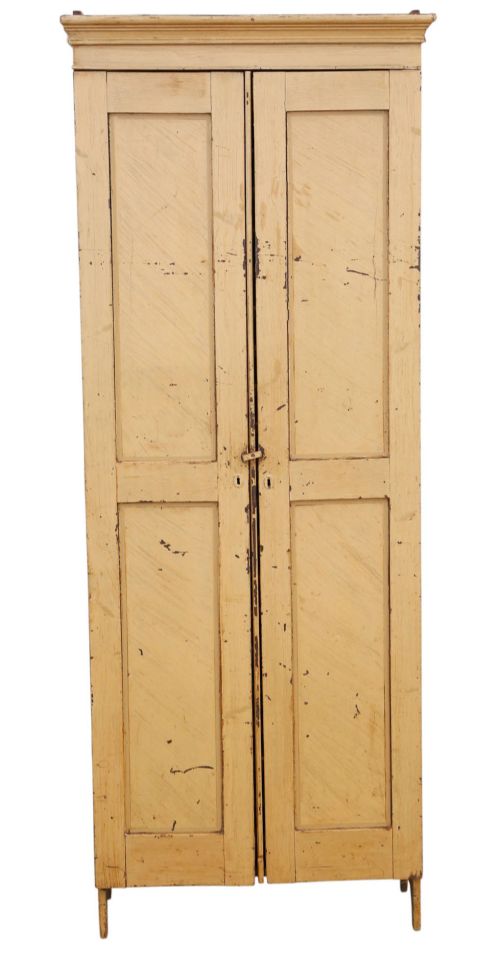
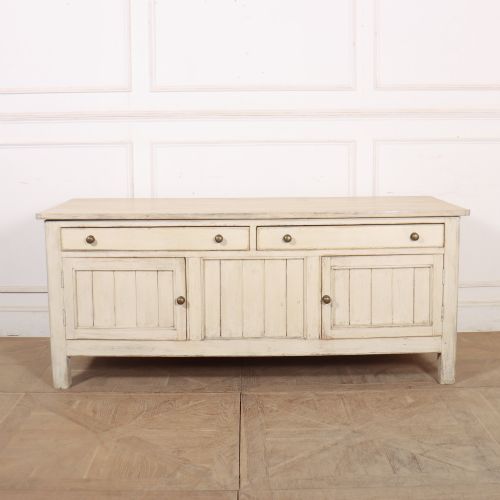
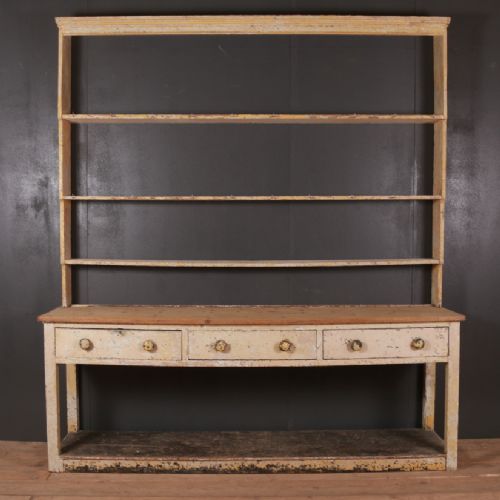
The selections encountered here range from tall nineteenth-century housekeeper's cupboards and potboard bases to twentieth-century pine dressers with accompanying racks. Many retain their original layered paint surfaces, showing decades of domestic use across nineteenth-century and early twentieth-century homes.
Buyers seeking a cream kitchen dresser will find examples built for practical utility in farmhouses and country houses alike. The forms vary from open plate racks mounted on dressers to enclosed cupboards and monumental base units designed for heavy storage.
How they were made
Makers constructed these pieces primarily from solid pine and other native timbers, joining structural elements with traditional carpentry methods suited to heavy daily use. Surfaces received coats of paint, often updated over generations, resulting in deep patinas built up through repeated application.
Fittings such as handles, hinges, and latches utilise iron and brass, reflecting the functional requirements of domestic service and rural life. Glazed doors appear on upper sections where protection for fine crockery was necessary.
Construction techniques include boarded backs, dovetail joints in drawers, and heavy planked tops designed to withstand the physical demands of a working kitchen or storeroom.
Cream Kitchen Dresser Retail Price Guide 2026
Typical asking prices for cream kitchen dresser among the pieces listed under this phrase on Sellingantiques today, from the lower quarter to the upper quarter. They describe what is for sale here now, not the wider market.
Some field kitchen dressers carry traces of metal drainers, proving that even army rations required proper washing up.
What varies in quality
Quality in a cream kitchen dresser rests upon the integrity of its original construction and the survival of its early surface finishes. Pieces featuring uncompromised proportions, thick timber boards, and untouched historical paint coatings stand apart from heavily altered examples.
The balance between the lower cabinetry and the upper rack or cupboard determines the visual success of the piece. Superior examples display harmonious scaling and robust joinery that has endured centuries of shifting domestic duties.
The Cream Kitchen Dresser Glossary
- Potboard dresser
- A dresser featuring a low open shelf near the floor, traditionally used for storing heavy pots and pans. This lower platform sits directly above the feet or plinth.
- Housekeeper's cupboard
- A large tall storage piece combining drawers and enclosed shelving, originally used for linens and dry stores. These pieces offer substantial vertical storage capacity.
- Dresser base
- The lower section of a dresser without the upper plate rack or shelving unit. Many survive independently after upper racks were separated over time.
- Buffet de corps
- A large traditional French dining room cupboard featuring lower doors and upper display shelving. These substantial pieces provide grand storage proportions.
Cream Kitchen Dresser: Frequently Asked Questions
What is a cream kitchen dresser?
A cream kitchen dresser is a traditional storage item featuring lower cupboards or drawers paired with upper shelves for plates and provisions. These pieces provide practical storage while adding painted character to kitchen spaces.
They reflect rural and domestic traditions from the eighteenth, nineteenth, and early twentieth centuries, constructed mainly in pine and other accessible timbers.
How were these dressers used?
Households utilised these dressers for storing everyday crockery, dry goods, and linens in farmhouses, country houses, and domestic quarters. The open racks allowed plates to dry and display simultaneously.
Enclosed cupboards and drawers kept provisions secure from pests and dust while keeping utensils close to hand for daily meal preparation.
How do I care for original paint?
Original painted surfaces require gentle dusting with a soft dry cloth and protection from direct sunlight and excessive moisture. Avoid harsh modern chemical cleaners that strip historical finishes.
Allow the natural patina to remain undisturbed, as wax treatments are rarely needed unless the timber beneath shows signs of dryness.
How do I date a pine dresser?
Dating relies on examining construction methods, nail types, joint styles, and the wear patterns visible on the timber boards. Hand-cut dovetails and pegged joints generally indicate earlier nineteenth or eighteenth-century origin.
Paint layering and hardware styles also offer clear indicators of period, distinguishing Victorian workshop practices from later twentieth-century production.