


Antique Pine Dressers
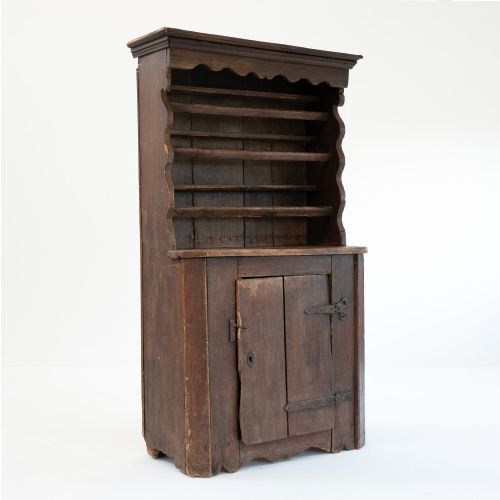
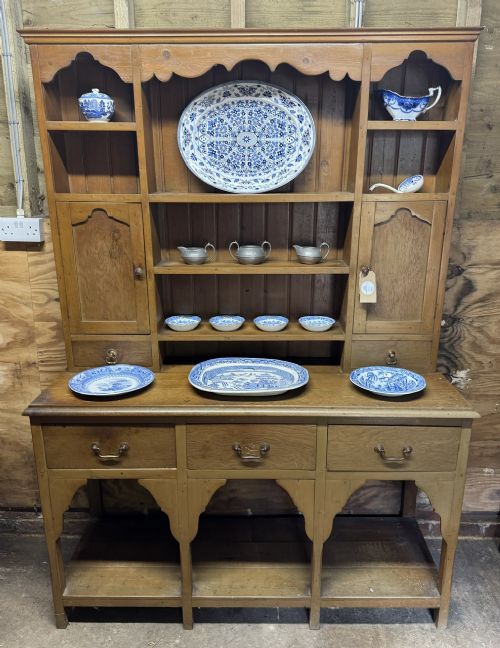
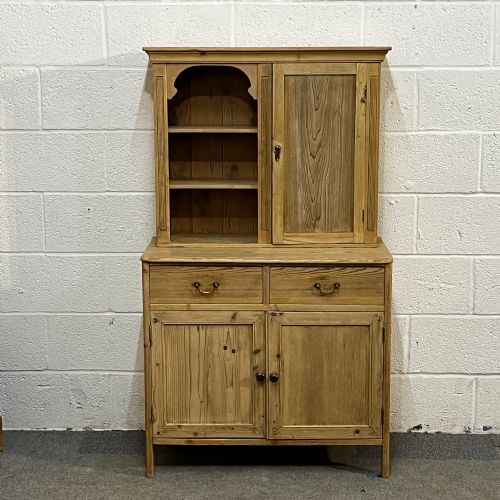
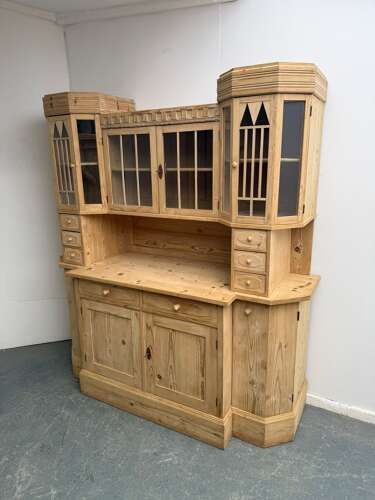
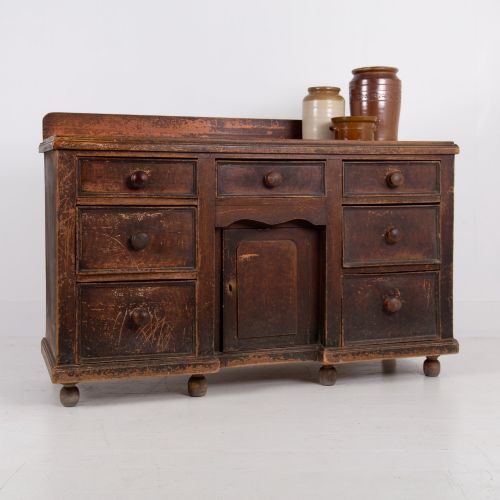
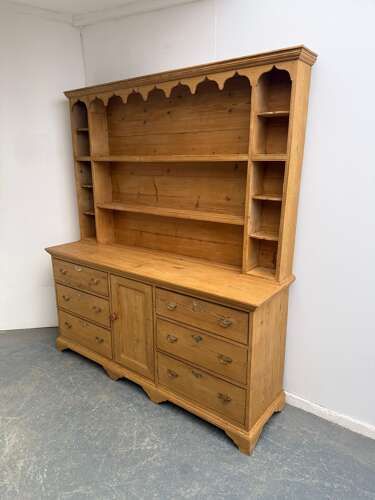
A pine dresser is a country kitchen storage piece: drawers and cupboards below, usually an open shelf rack above, built to hold and display the household's plates and dishes.
Antique Pine Dressers
The dresser began as a working kitchen fitting in British and Irish houses, a food-preparation board with drawers beneath and shelves above for plates. Pine was the everyday softwood answer to the oak dresser, made in quantity through the 18th and 19th centuries for farmhouses, cottages and service quarters.
The version you'll meet oftenest is the plain 19th-century English kitchen dresser: base plus open rack, no other description needed. Of 279 titles on Sellingantiques, 70 say Victorian, 59 say kitchen and 47 say 19th century, and some form of "pine kitchen dresser" is the single commonest phrase in the whole set.
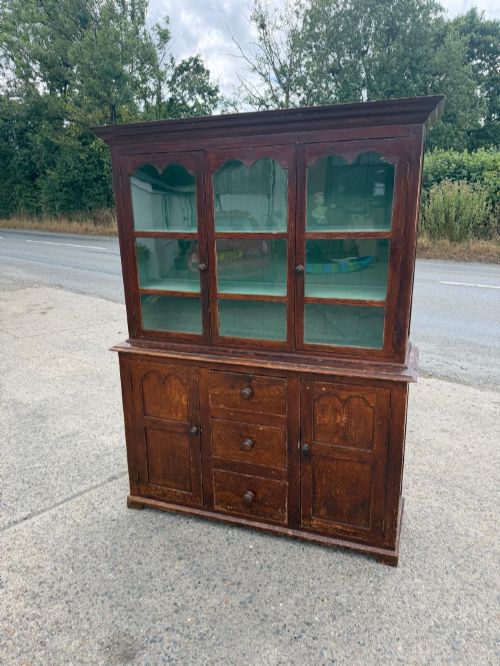
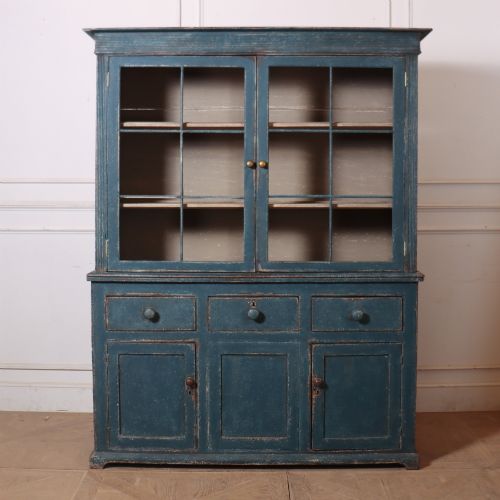
Around it sit the variants. Painted and scumbled surfaces run through the category, and make up a larger slice of what's currently for sale than of what's sold. Regional labelling is specific for a softwood category, with Welsh, West Country and Irish attributions and place names from Pembrokeshire to the Tamar Valley. Named country forms turn up occasionally: potboard, dog kennel, chicken coop, and glazed upper doors instead of open shelves.
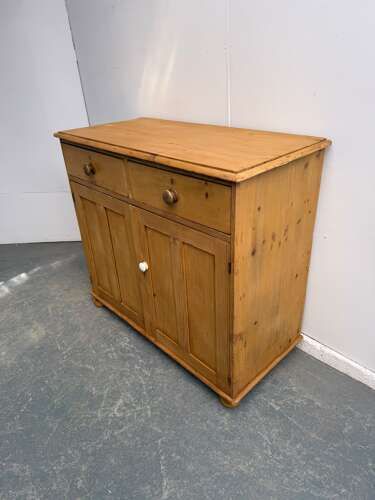
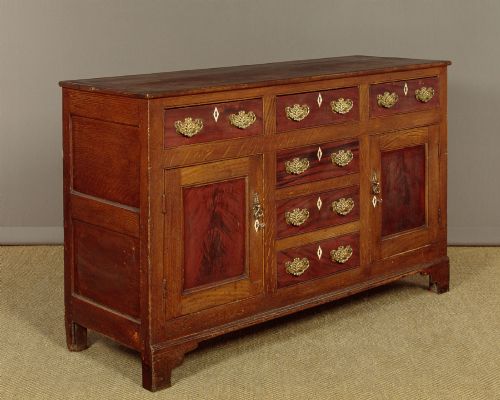
Dates are usually given in bands rather than decades. Victorian and 19th century between them cover more than half the dated entries, with Georgian and 18th-century pieces fewer, and a thin run of 1900s to 1930s work. Titles and the dealer's date field sometimes disagree, so read both. Roughly one in twenty listings is a base sold on its own, with no rack.
The Range
Scale does most of the work. "Large" appears in 35 titles and clusters in the upper half of the range, with "huge", "grand scale", "extremely large" and one "monumental" base at the very top. Small and miniature cottage dressers sit at the other end.
After size comes surface and place. Original paint, original scumble or original patina lift a dresser above one described as later painted or stripped back to wax. A named county or town rather than a general "country" label does the same: West Country wording is almost absent below the middle of the range and dominates the top, and Welsh place names behave the same way.
Date and completeness finish the picture. Georgian and 18th-century pieces gather in the upper range while 1900s to 1930s dressers sit low. A base with its rack reads higher than a base alone or a part dresser, and titles that specify the original plate rack sit higher still.
Antique Pine Dressers Retail Price Guide 2026
Typical UK retail prices for pine dressers, calculated from the Sellingantiques database of over a million retail prices indexed since 2003. This retail price guide relies exclusively on Sellingantiques data; no external sources or auction records are used, so the figures do not describe the wider market.
The dates dealers give pine dressers on Sellingantiques run from 1800 to 1930, though most sit in a broad band rather than a single year.
The Antique Pine Dressers Glossary
- Rack
- The upper section of open shelves standing on or behind the base. Nineteen titles name it directly.
- Base
- The lower half, with drawers and cupboards. Fifteen titles offer it on its own, without a rack.
- Two part
- A dresser whose rack lifts off the base, so the two halves can be moved and fitted separately.
- Potboard
- An open shelf at floor level between the legs of the base, for pots. Written as both "pot board" and "potboard".
- Scumble
- A grained, dragged paint finish imitating a better timber. Two titles record it as original, one spelling it "scrumble".
- Dog kennel dresser
- A base with a central recess or arch flanked by cupboards, named for the kennel-like space beneath.
Antique Pine Dressers: Frequently Asked Questions
What is a chicken coop dresser?
An Irish form with a slatted or barred lower compartment in the base. Some listings give it as chicken hutch instead.
It appears four times across the archive, so it's a distinct form rather than a common one, and sits mid-range upward.
Are pine dressers sold in one piece or two?
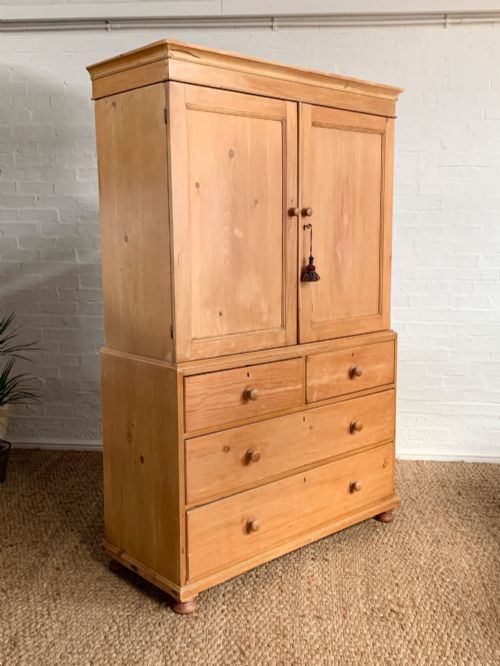
Commonly in two. The rack lifts off the base, which is how a piece of this size gets through a door and up a staircase.
Listings often say "two part" or "2 part" in the title. Whether a given rack and base started life together isn't something the archive records.
How old are most pine dressers on the market?
The dealers' dated field runs from 1800 to 1930. Victorian and 19th century between them cover more than half the dated entries.
Georgian and 18th-century pieces are fewer, and there's a steady thin run of 1900s, 1910s and 1920s dressers. Only 82 of 279 listings pin a clean year.
Titles sometimes name a period the date field contradicts, with "Georgian" in a title against a 19th-century date.
Does a painted finish matter?
Original paint carries weight. Wording like "original green painted", "original red painted" or "in original paint" sits above "later painted" or a piece taken back to wax.
Painted examples run at about one in eight of everything listed, and make up a bigger share of current stock than of the sold archive.
Why do so many say Welsh or West Country?
Regional labelling is unusually specific for a softwood category. Welsh appears in 29 titles, Irish in 12, West Country in nine, alongside single mentions of Pembrokeshire, Tregaron, Talwrn, Penzance, the Tamar Valley, Dorset, Somerset, Cumbria, Yorkshire and Lancashire.
Those attributions are the dealer's own wording. They cluster at the top of the range: West Country terms barely appear below the middle of it.
Who made antique pine dressers?
No maker names appear. A scan across all 279 listings returned no workshop, firm or retailer at all.
These were country and provincial pieces, and the archive identifies them by region, form and period instead.