Antique Farmhouse Dressers
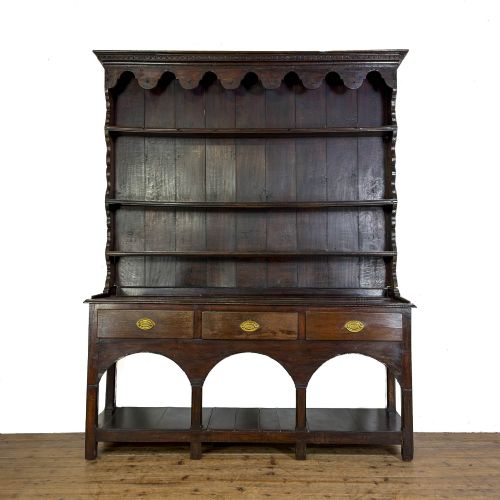
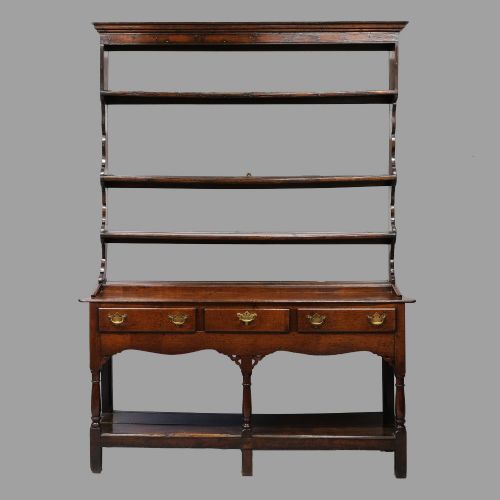
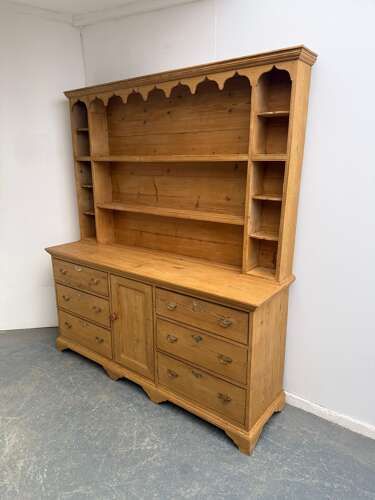
A farmhouse dresser is a country kitchen storage piece: a base of drawers and cupboards with a shelved rack above it, made to hold and show plates, jugs and everyday tableware.
What Is A Farmhouse Dresser?
The form grew up in British and Irish farmhouse and cottage kitchens, storage below and display above, made locally in whatever timber came to hand. That vernacular joinery carried on well into the 19th and early 20th centuries, which is why the vocabulary in these listings is regional and rustic rather than cabinet-made.
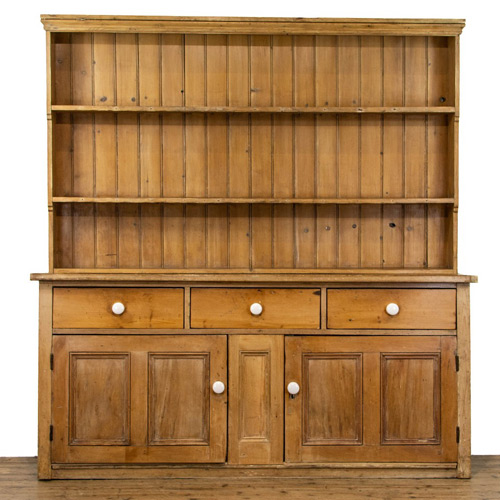
Softwood dominates. Pine appears in 26 of the 56 titles on Sellingantiques against oak in 12, better than two to one, which runs against the way the form is usually pictured. The likeliest piece you will meet is a 19th-century pine dresser, often called a kitchen dresser outright; that phrase is fixed in dealer copy and turns up in ten titles.
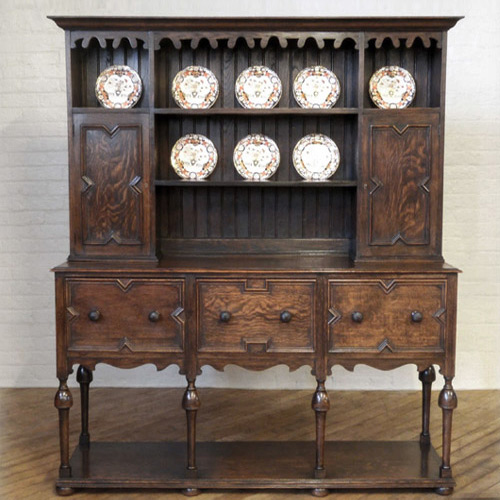
Oak makes up about a fifth, and it is where the earlier work sits: an English oak dresser dated 18th century, a Georgian Welsh oak potboard dresser of about 1770, a Welsh oak dog kennel dresser. Welsh is the commonest regional label with nine titles, and Irish, Scottish, Cumbrian, West Country, French and Alpine each appear once or twice.
Dating is loose. The field spans 1750 to 1930, but only 20 listings carry a clean year, and the biggest single bucket is a plain "19th Century" with Victorian behind it. Five pieces sit in the 1900s and five in the 1910s, so a farmhouse dresser here is as likely to be Edwardian as Georgian. A handful are bases only, sold without their rack.
Where The Range Splits
Timber and age set the two ends. The 18th-century oak pieces and the Georgian Welsh potboard dresser sit at the top of the range, along with the mid-Victorian dated examples; the Edwardian and 1910s pine dressers cluster in the lower half, and the cheapest tier is almost solidly pine.
Scale counts for a lot in a form this plain. Monumental, huge and very large all appear on pieces high in the range, while "small" turns up four times and every one of them sits low. The very top is held by a country house dresser base, larger and better finished than farmhouse scale, and sold without its rack.
Then there is surface and specificity. Original paint and folk art painted pine sit above stripped pine, which announces that an earlier finish has been taken off. A named regional type, West Country, Cumbrian, Welsh oak, sits above the generic pine kitchen dresser that fills the middle, and the two distinctive base forms recorded, potboard and dog kennel, both sit well above the pine median.
Retail Price Guide 2026
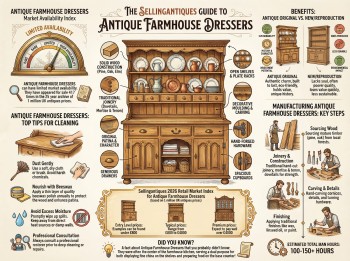
Typical UK retail prices for farmhouse dressers, calculated from the Sellingantiques database of over a million retail prices indexed since 2003. This retail price guide relies exclusively on Sellingantiques data; no external sources or auction records are used, so the figures do not describe the wider market.
Regional labels run wide for so small a group on Sellingantiques: Welsh appears nine times, with Irish, Scottish, Cumbrian, West Country, French and Alpine each once or twice.
The Antique Farmhouse Dressers Glossary
- Dresser base
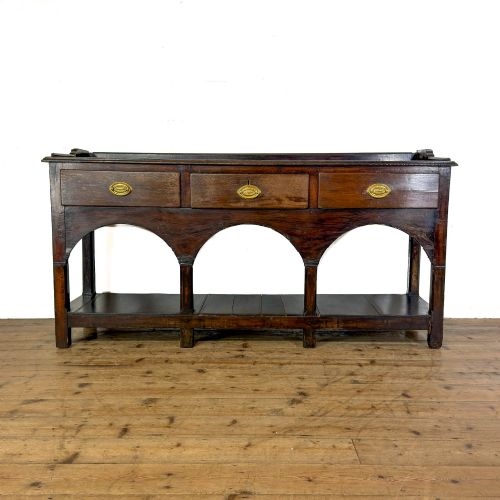
- The lower half alone, drawers and cupboards, sold without its shelved top. Two of the listings here are bases, and one of them tops the range.
- Rack
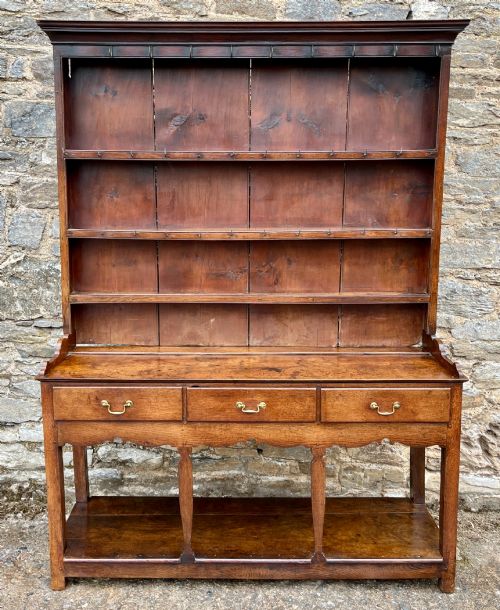
- The shelved upper structure, also called a plate rack, which stands plates on edge. One title advertises an open top with plate racks.
- Open top
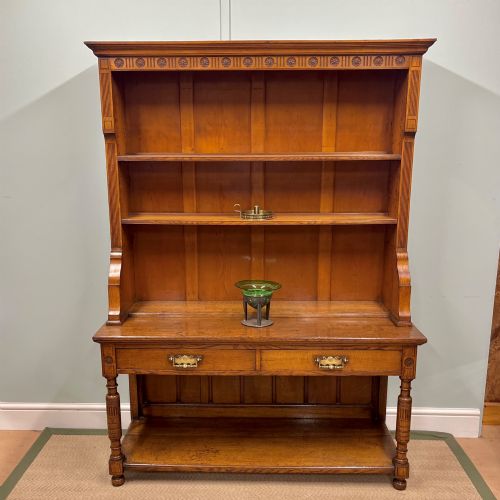
- A rack with no doors and the shelves left exposed, as against a glazed upper section fitted with glass doors, a term two titles use.
- Two part
- Rack and base made as separate units that lift apart; "2 part" appears in three titles. One piece means the two are built as a single unit.
- Potboard
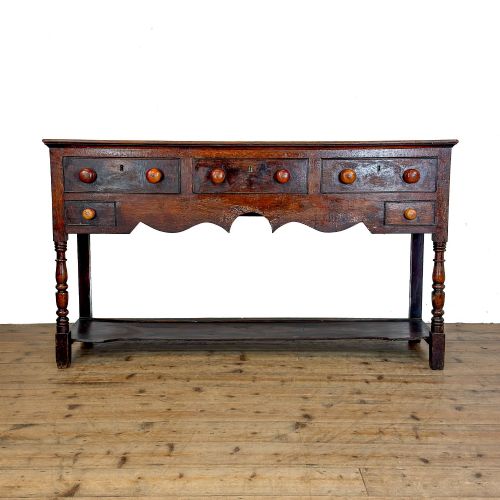
- A low open shelf running between the feet of the base, for pots and crocks. Recorded once, on the Georgian Welsh oak dresser of about 1770.
- Dog kennel
- A base with a recessed arched central space between banks of cupboards. It has appeared exactly once, in Welsh oak.
Frequently Asked Questions
Are farmhouse dressers pine or oak?
Both, with pine well ahead. It appears in 26 of the 56 titles against oak in 12, better than two to one, which is unusual for a form so often pictured in oak.
The oak group is where the earlier work sits, including two dated to the 18th century. Pine runs from mid-Victorian through the 1900s and 1910s.
What does a dresser base mean in a listing?
It means the lower half only, the drawers and cupboards, sold without the shelved rack that would have stood on top.
A handful of the pieces here are bases or part-dressers. One monumental country house dresser base holds the very top of the range, ahead of every complete dresser recorded.
How old are these dressers usually?
The dated field runs from 1750 to 1930, but only 20 of the 56 listings carry a clean year. The largest single group is dated simply to the 19th century, with Victorian behind it.
Early pieces are scarce: two are 18th century and two sit in the 1750s. The other end is well filled for a country form, with five in the 1900s and five in the 1910s.
Why are so many described as Welsh?
Welsh is the commonest regional label in this category, in nine titles, and it covers both oak and painted pine examples.
Regional naming is varied for so small a group. Irish, Scottish, Cumbrian, West Country, French and Alpine each turn up once or twice, and pieces with a named type sit above the generic pine kitchen dresser cluster.
The two most distinctive base forms recorded, a potboard and a dog kennel, are both Welsh oak.
Do many come with original paint?
Painted survivals are the exception. Six titles mention paint of some kind, whether folk art, original or simply painted, and one advertises the opposite in stripped pine.
In this archive the painted pieces sit above the stripped ones in the range.
Who made antique farmhouse dressers?
No maker, workshop or retailer name appears anywhere in these listings. They are anonymous vernacular pieces, made by local joiners in whatever timber was to hand.
What stands in place of a maker is a region or a form: Welsh oak, West Country, Cumbrian, potboard, dog kennel.