


Antique Hutches
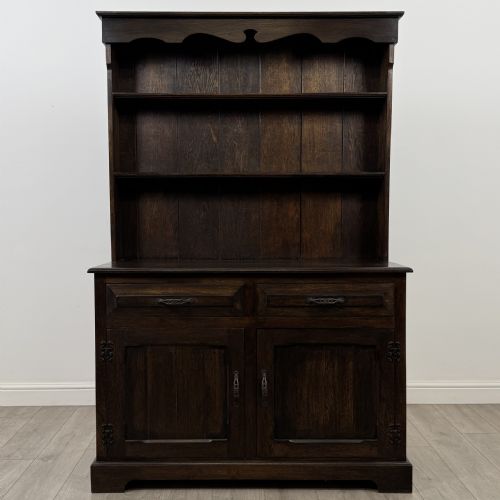
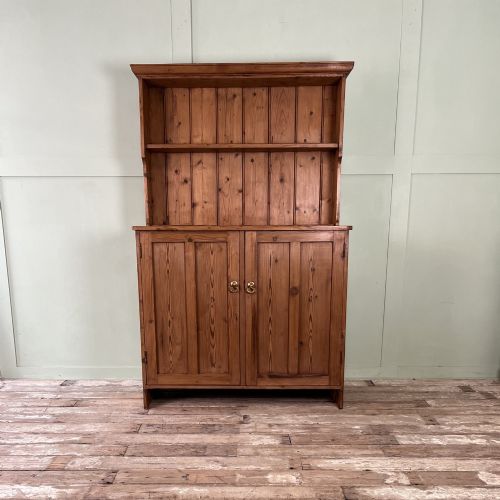
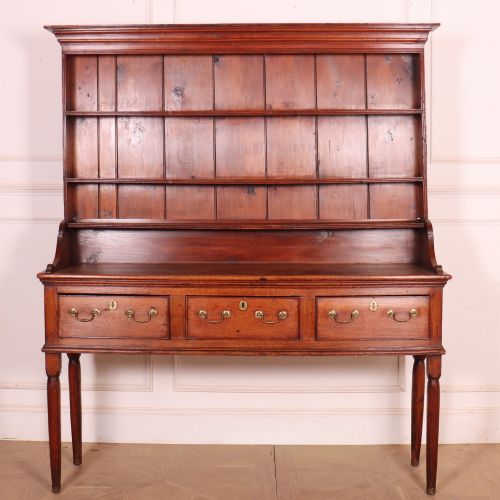
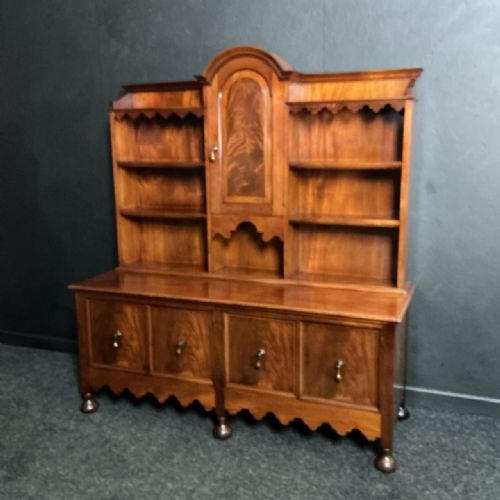
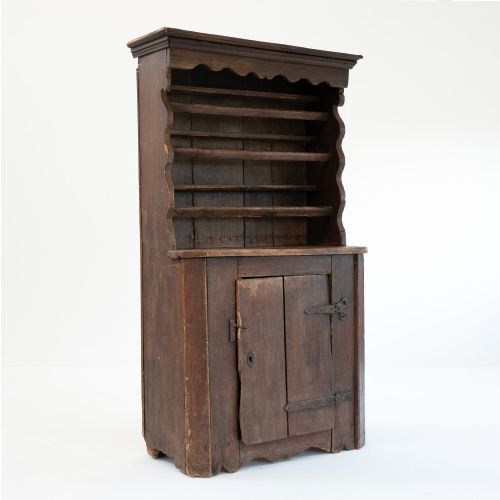
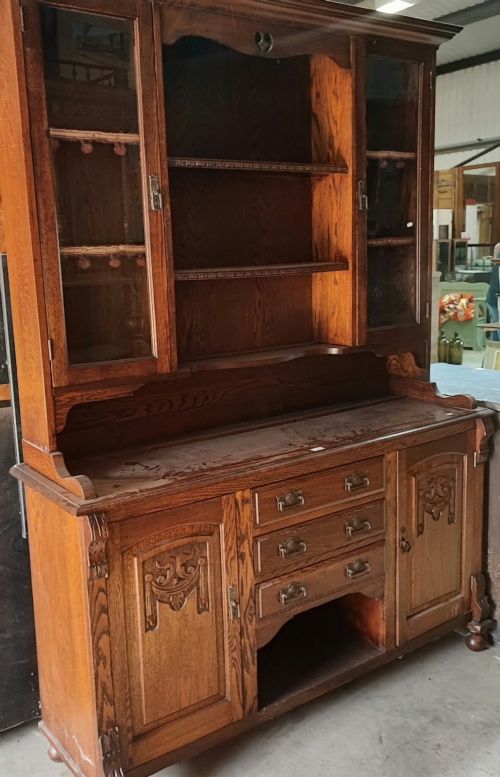
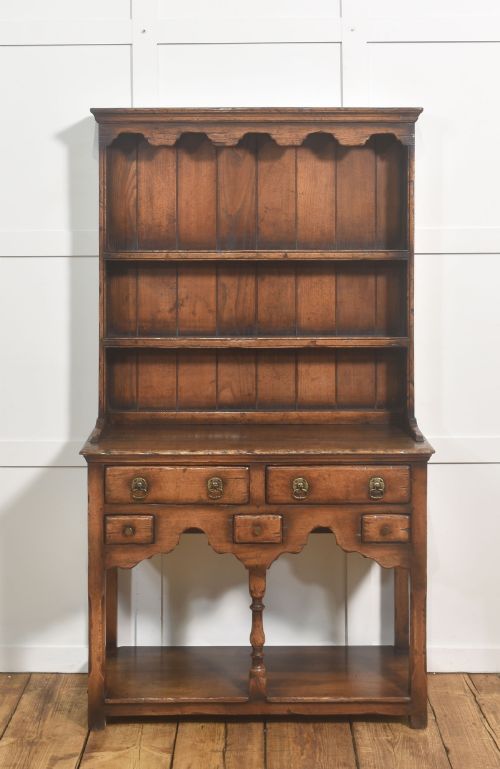
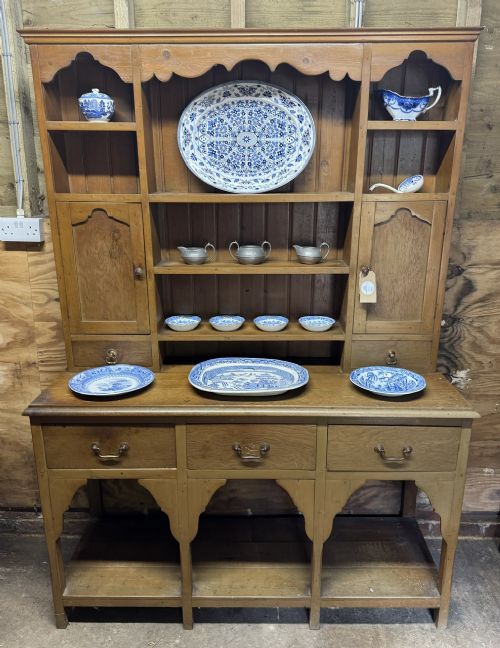
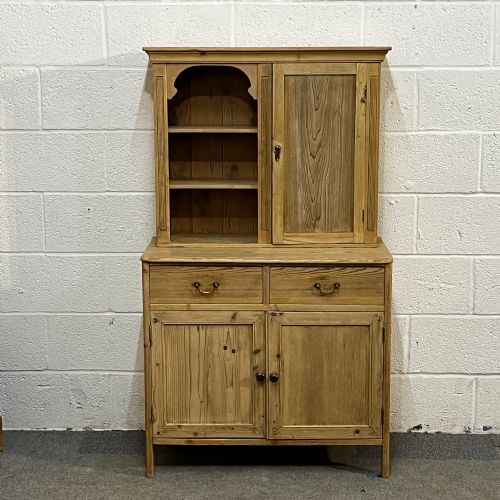
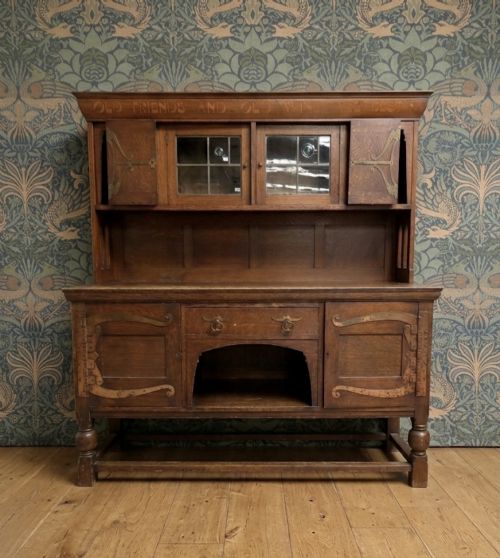
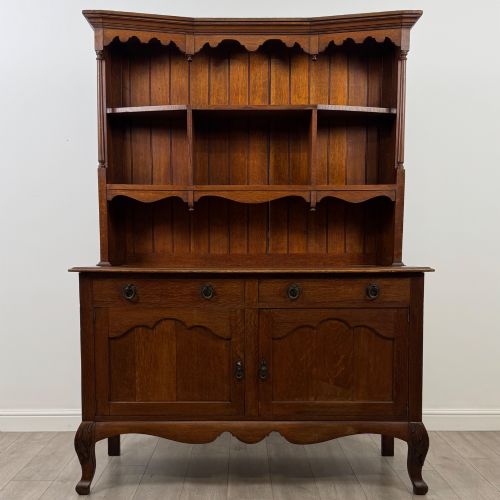
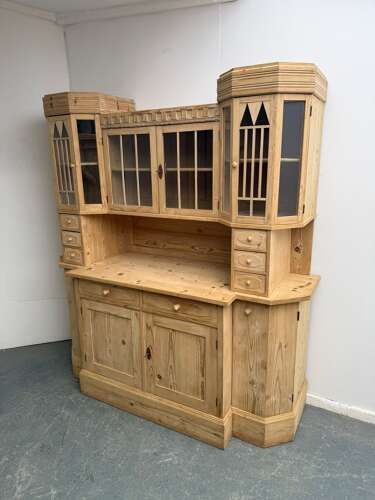
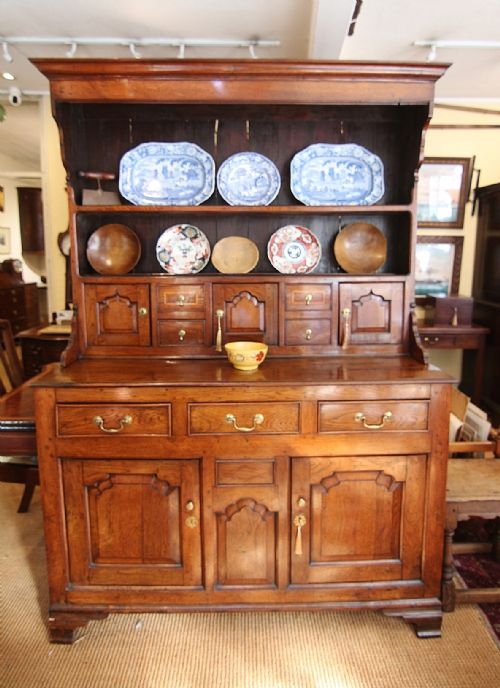
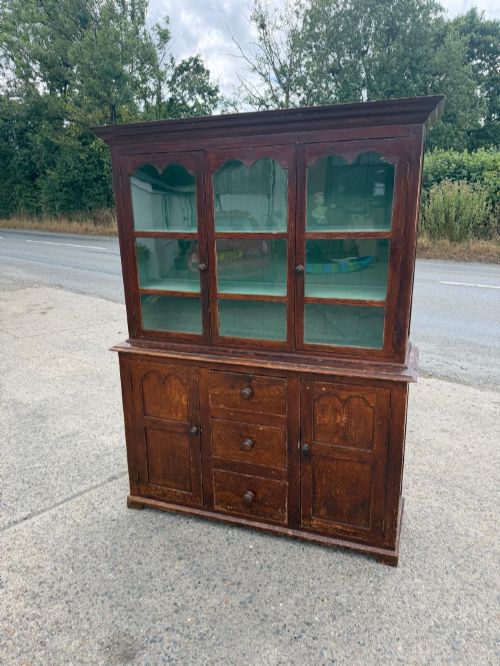
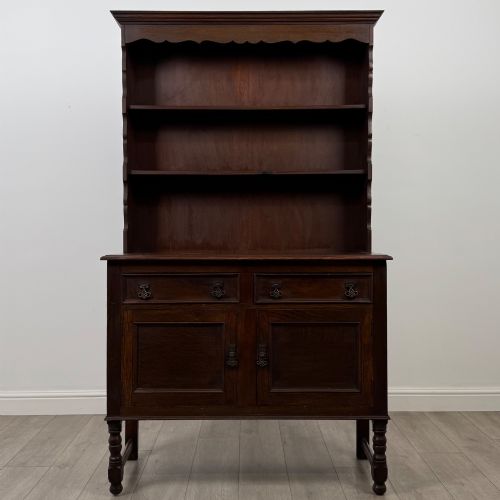
Almost everything under this heading is a country dresser: a drawered or cupboarded base with an open shelved rack above it, made for storing and showing plates and dishes in a farmhouse kitchen.
Antique Hutches
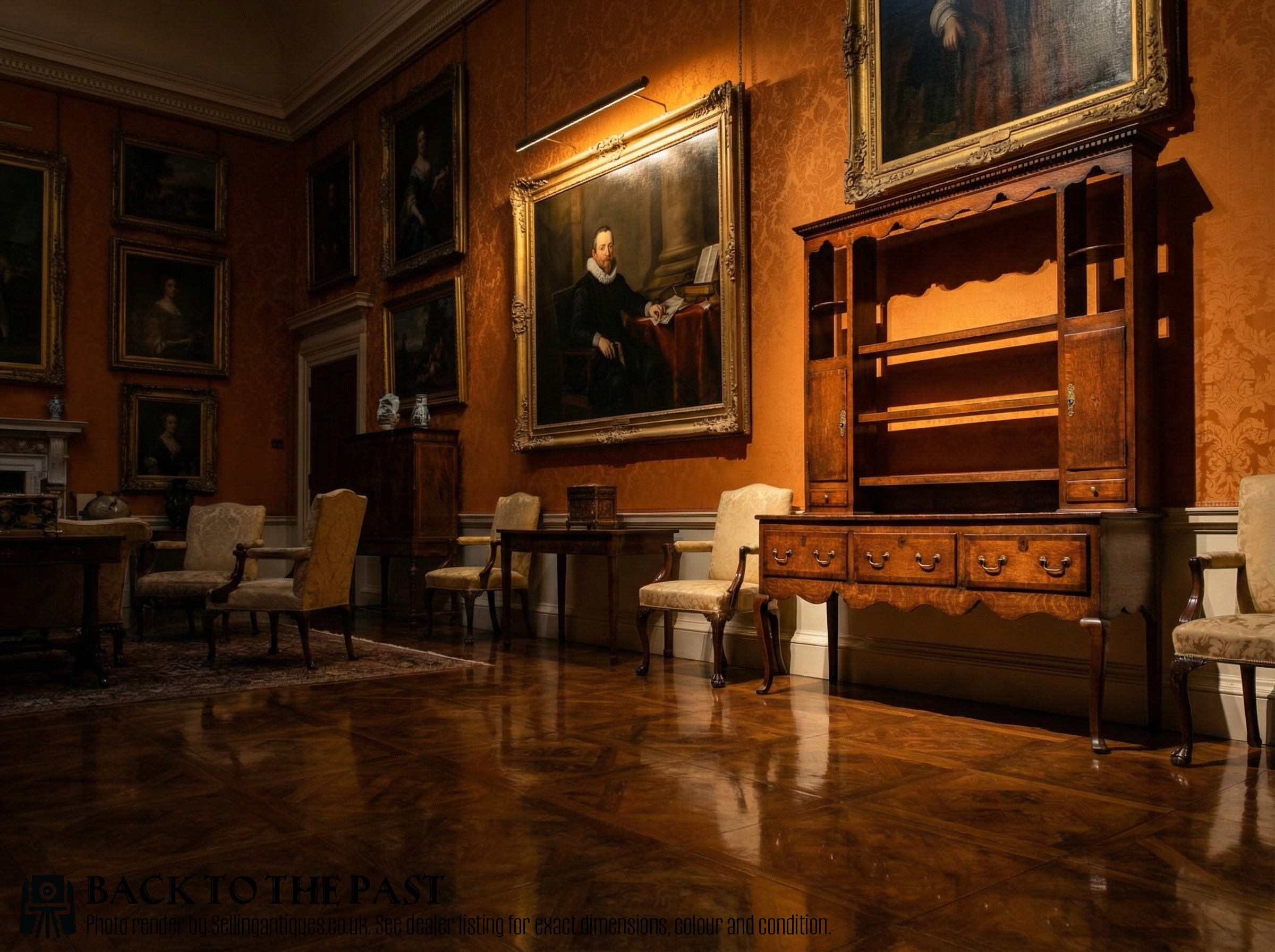
The word on the listings is dresser. Ninety-six of ninety-eight titles use it, and "hutch" survives in a single Irish chicken hutch dresser. What you're looking at is a two-part country piece: a base with drawers, cupboards or an open pot-board, and a shelved rack standing on top of it.
Oak dominates, named in sixty-two of the titles, with pine a clear second at seventeen and walnut, elm, fruitwood and cherrywood turning up occasionally. Welsh identity is the commonest regional label, in 26 titles, followed by generic English country and farmhouse pieces and a group of West Country ones. Painted pine covers Scots, Hungarian, Danish and Alpine examples.
The form came out of British and Continental farmhouse and kitchen use and was in common service from the seventeenth century onward, made in vernacular workshops from local timber. It was revived in the later nineteenth and early twentieth centuries as a decorative kitchen and dining-room fitting, which is where the Jacobean Style, Georgian Style, Arts and Crafts and barley twist dressers come from.
Dating is usually the dealer's period judgement rather than a documented year. Only 26 listings carry a clean year, running 1750 to 1930, while the dated field is more often "18th Century", "19th Century", "Georgian" or "Victorian". Title text reaches back to circa 1690 and circa 1730, and several "Georgian Style" and "Jacobean Style" pieces are dated 1900 to 1925.
Where The Range Splits
Stated age does most of the work. Eighteenth-century pieces and the circa-1730 and circa-1690 Welsh oak dressers hold the upper end, while the revival dressers dated 1900 to 1925 sit near the bottom. Timber follows the same line: oak carries the upper range, plain pine concentrates lower, though painted pine and South Wales pine reach the middle and above.
The rack matters. These were made in two parts that lift apart, so bases and racks got separated over two centuries of moving house. Titles reading "retaining its original rack", "dresser and rack" or "plate back" run through the middle and top of the range, and the rack is named outright in eleven titles.
A specific regional identity lifts a piece. Snowdonia, South Wales, West Country and named Welsh types cluster in the upper half, while an unqualified "oak dresser" spans the whole spread. Scale and decoration do the rest: monumental country house dressers, original painted surfaces, inlay and carved work sit at the top, and "very small" appears near the bottom, though small pieces show up at both ends.
Antique Hutches Retail Price Guide 2026
Typical UK retail prices for hutches, calculated from the Sellingantiques database of over a million retail prices indexed since 2003. This retail price guide relies exclusively on Sellingantiques data; no external sources or auction records are used, so the figures do not describe the wider market.
Hutches have been listed on Sellingantiques since 2012.

The Antique Hutches Glossary
- Dresser
- Base unit of drawers or cupboards with a shelved rack above, for storing and displaying tableware. The word used in almost every title in this category.
- Rack, plate rack, plate back
- The shelved upper structure, sometimes sold as "dresser and rack" where the two parts have stayed together.
- Two-part, 2 piece
- Base and rack made as separate sections that lift apart, stated outright in several titles.
- Pot-board
- The open low shelf running between the feet at the base of some dressers, specified twice in this evidence.
- Belly rack
- A rack with bowed or shaped shelving, appearing once, on a Welsh oak dresser.
- Vaisselier
- The French equivalent form, a buffet with a shelved rack above, appearing once among these titles.
Antique Hutches: Frequently Asked Questions
Why are these called hutches when listings say dresser?
The heading covers the form, but the dealers who write the descriptions call it a dresser. Ninety-six of ninety-eight titles use that word.
"Hutch" appears once, in an Irish chicken hutch dresser, an Irish type with a slatted coop compartment built into the base.
What wood are most of these made from?
Oak, named in sixty-two of the ninety-eight titles. Pine is second with seventeen, covering Scots pine, painted pine and the Continental painted examples.
Walnut, elm, fruitwood and cherrywood turn up occasionally, in ones and twos rather than as a block.
How Welsh are Welsh dressers on the market?
Welsh is the commonest regional label in this category, in 26 titles, with "Welsh oak" in ten of them. Snowdonia and South Wales are each named twice.
The rest divide between generic English country and farmhouse pieces, four West Country titles, and a handful of Continental ones.
Are the base and rack always original to each other?
Not always. These were built as two sections that lift apart, so bases and racks parted company over the years.
Eleven titles name the rack, and phrasing like "retaining its original rack" runs through the middle and top of the range.
Do any come from outside Britain?
Rarely. Continental examples in this evidence amount to a French provincial walnut buffet vaisselier, a French walnut two-part dresser, a Danish painted dresser, a Hungarian painted one and an Alpine painted pine farmhouse piece.
Everything else is British or Irish.
How many come up for sale each year?
Around eleven a year on Sellingantiques, and 43 different dealers have listed one, so no single dealer sets the tone of the category.
That spread means the descriptions vary in how a piece is dated and labelled.