



Antique Kitchen Dressers
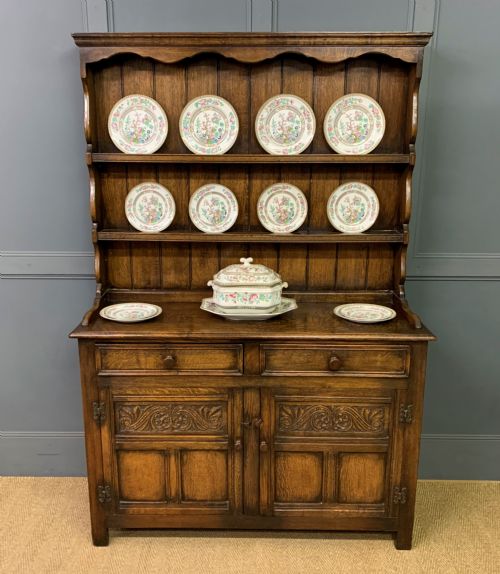
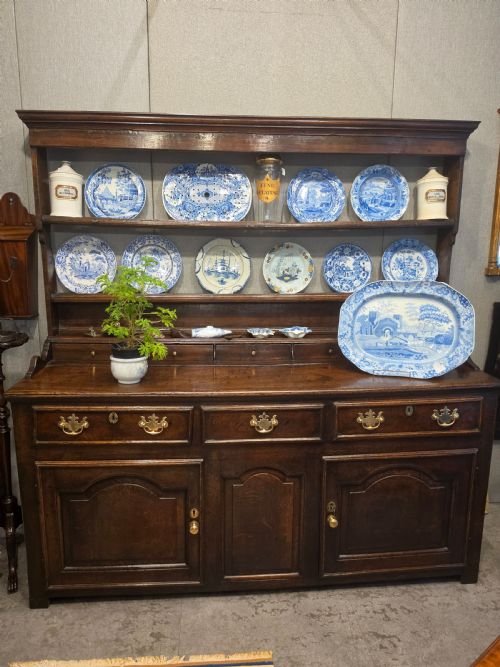
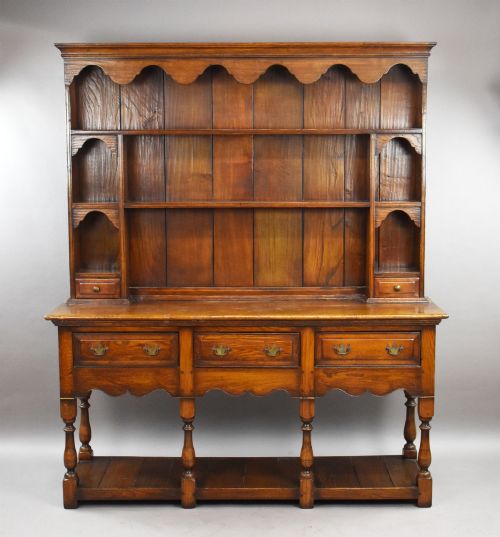
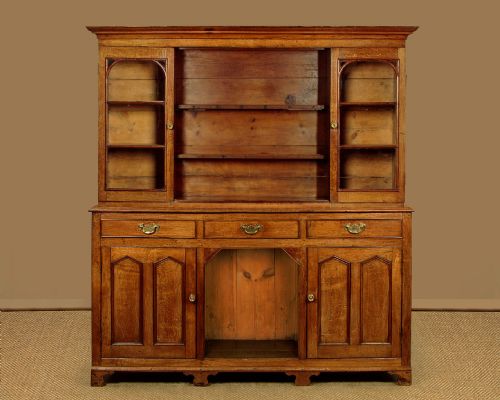
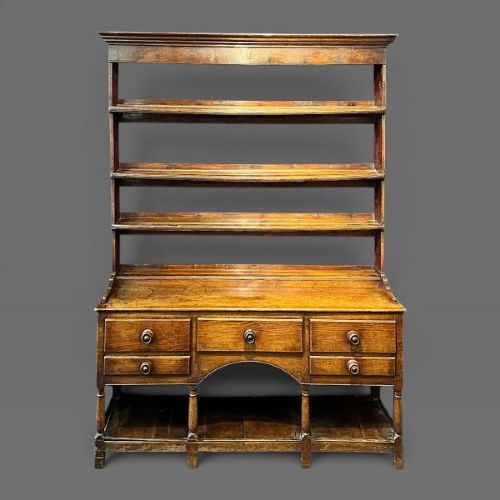
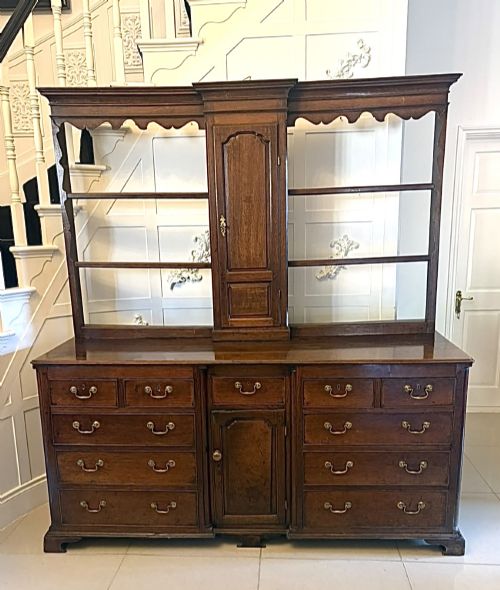
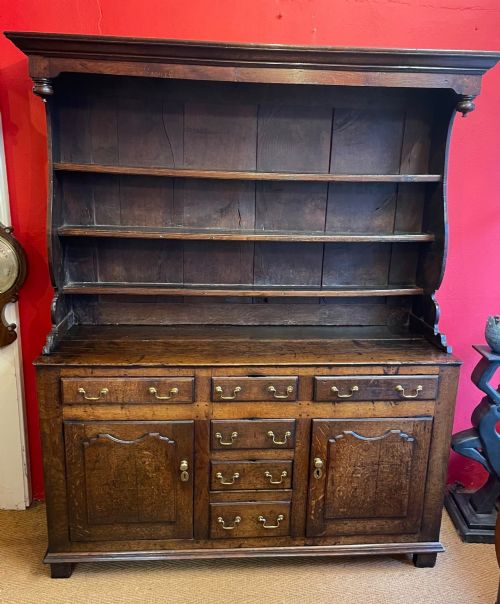
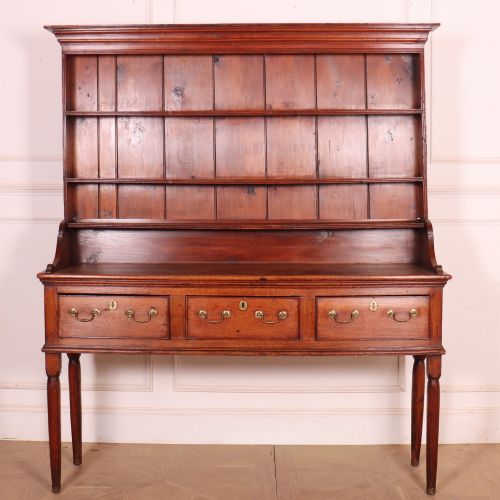
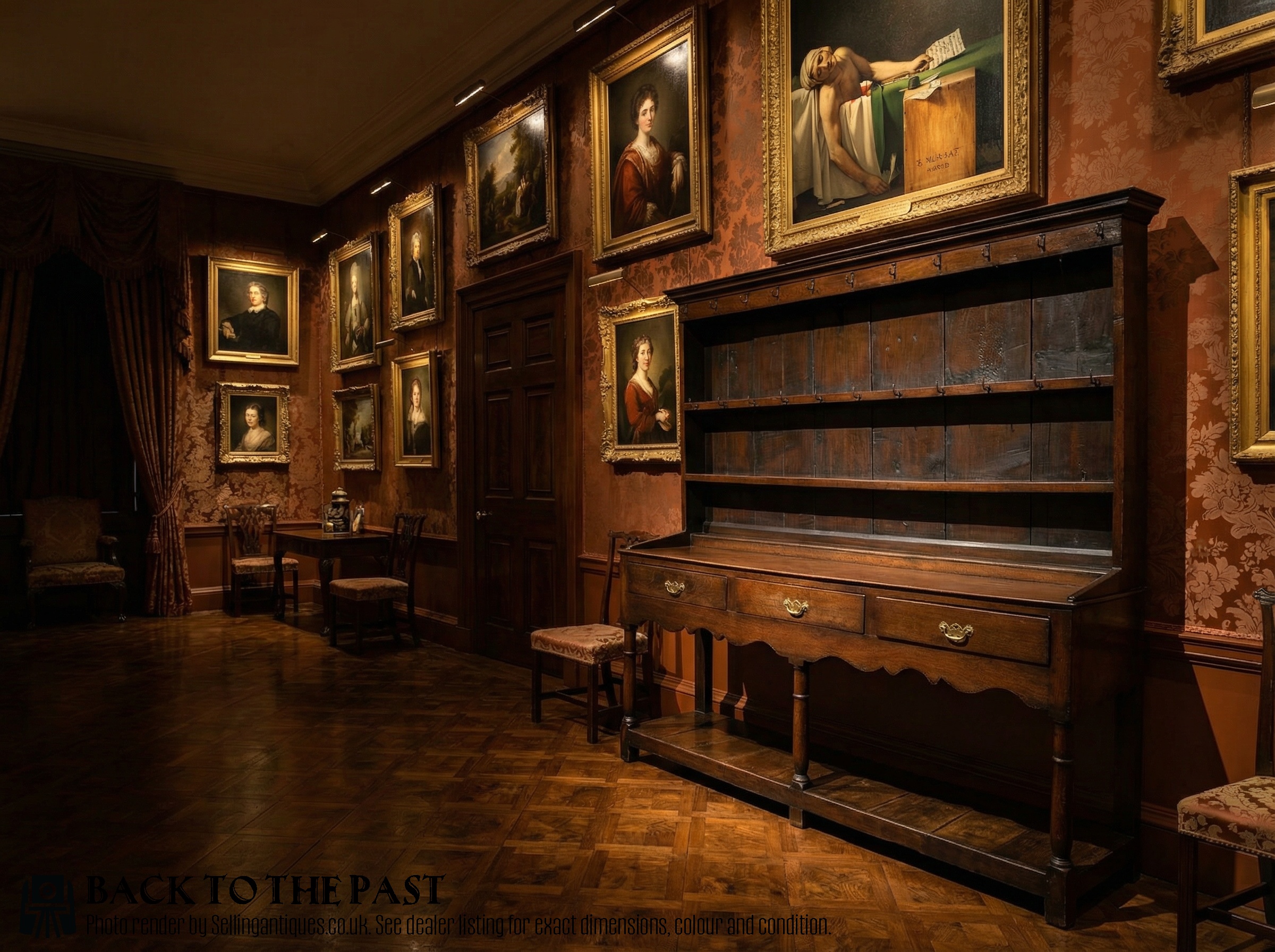
A two-part country storage piece: a base of drawers and cupboards with a shelved rack above, built for the farmhouse kitchen where plates, jugs and utensils were kept close to hand.

Antique Kitchen Dressers
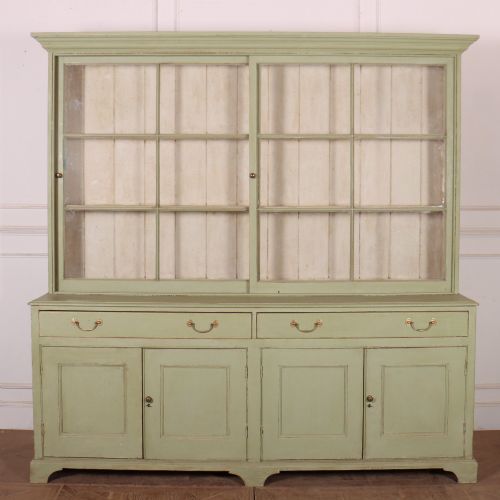
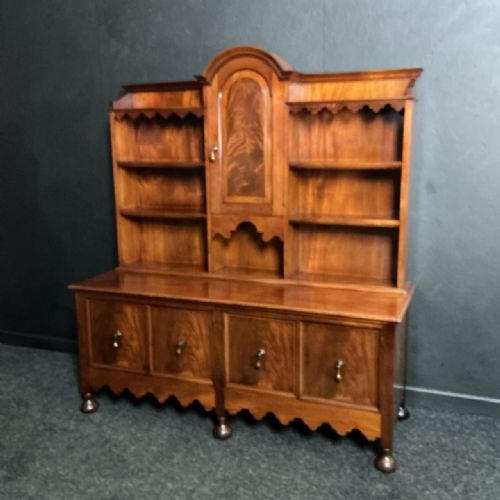
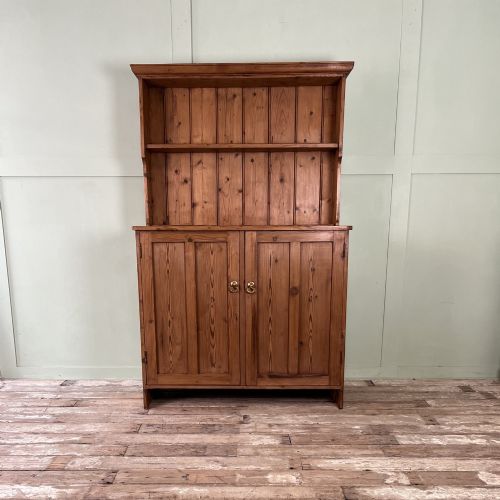
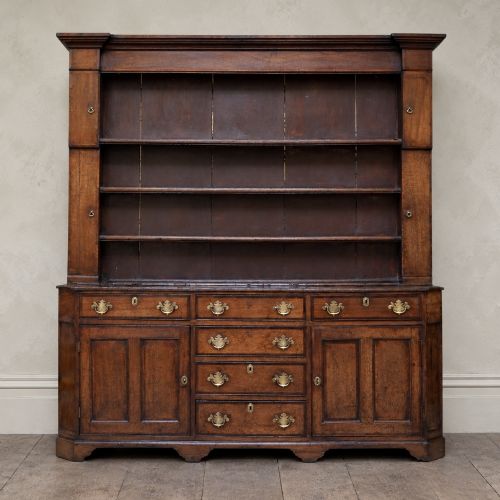
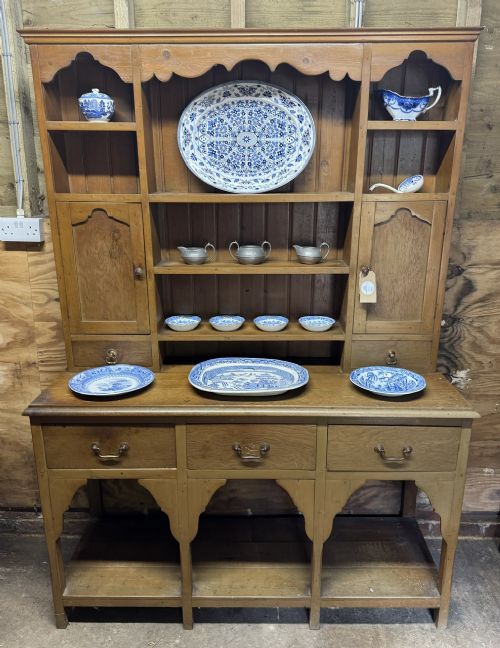
The form is a base of drawers and cupboards, sometimes open beneath on a low potboard, with a shelved rack standing on it or fixed above. Bases and racks also reach the market on their own, listed as "Dresser Base" or "part dresser", so a rack is not a given.
Oak dominates, on more than half of all titles listed on Sellingantiques, with pine a clear second and Welsh attribution on roughly a fifth. The piece you are most likely to meet is an 18th or 19th century oak dresser, frequently called Welsh; after that, a Victorian pine one.
The dresser grew out of British and Continental farmhouse and cottage kitchens as a combined store and display piece. By the 18th century the drawered base under open shelves was standard country joiners' work, and it went on being made in oak, pine and local fruitwoods into the 20th century.
Dating is mostly the dealer's shorthand. '19th Century' and '18th Century' are the two largest buckets, with Victorian, Georgian and Edwardian doing further approximate work, and titles sometimes disagree with the year field. A late tail of 1900 to 1930 pieces turns up in Jacobean-style, Georgian-style and Arts and Crafts form.
Where The Range Splits
Timber sorts the field first. Pine kitchen dressers dominate the cheapest run of the samples, while oak, elm, walnut, fruitwood and cherrywood cluster in the upper half. Rarer timbers surface once each: burr walnut, chestnut, satinbirch, pitch pine, Scots pine, a solid maple example.
Completeness matters as much as timber. Only about one dresser in eleven has its rack named in the title, and phrases like 'Retaining Its Original Rack' sit high in the range, while a bare base or a two-part piece can land at either end. Potboard bases are named on only 11 titles and mark out the upper end too.
Age and origin push in the same direction. Eighteenth-century attributions, including examples given as circa 1690, 1730 and 1750, hold the dearer half, as do specific regional origins: Snowdonia, Glamorgan, Carmarthenshire, Llanrwst, Talwrn, Shropshire, the West Country. Original paint, patina and carving lift a piece. Scale works at both ends, with monumental country-house bases and small Welsh oak dressers both reaching the top.
Antique Kitchen Dressers Retail Price Guide 2026
Typical UK retail prices for kitchen dressers, calculated from the Sellingantiques database of over a million retail prices indexed since 2003. This retail price guide relies exclusively on Sellingantiques data; no external sources or auction records are used, so the figures do not describe the wider market.
Oak names more than half the kitchen dresser titles on Sellingantiques and pine most of the rest. Cherrywood, chestnut, satinbirch and solid maple each turn up once.

The Antique Kitchen Dressers Glossary
- Rack
- The shelved upper section, standing on the base or fixed above it. Named in 27 titles, roughly one in eleven.
- Dresser base
- The lower half sold without its rack. 'Base' appears in nine titles, and 'two-part' or '2 part' in ten more, meaning base and rack were made as separate pieces.
- Potboard
- A low open shelf between the legs of the base, for pots. Only 11 titles name one.
- Plate rack
- An open-backed upper section with slats or grooves for standing plates. Listings also use 'plate back', 'open plate rack' and, once, 'belly rack' for a bowed or projecting shelf profile.
- Scrumble
- Original decorative graining worked over a softwood carcass, recorded once on a pine dresser. Stripped pine, by contrast, has had its old paint or finish taken back to bare wood.
- Vaisselier
- The French equivalent of the form, used on two Continental listings. Non-British dressers are the exception: a Danish painted one, a Hungarian two-piece, an Alpine painted pine, a Chinese hardwood, an American maple, one apiece.
Antique Kitchen Dressers: Frequently Asked Questions
How many kitchen dressers sell here each year?
Around 28 are listed a year on Sellingantiques, and 89 separate dealers have handled one. That works out at close to a dealer apiece, so the stock is spread thin rather than concentrated in a few hands.
The dated field across the whole archive runs from 1700 to 1930, with 70 listings carrying a clean year.
Why are so many dressers called Welsh?
Welsh appears on roughly a fifth of titles, and 'Welsh oak' on a smaller share again. The attribution is often specific rather than generic, with Snowdonia, Glamorgan, Carmarthenshire, Llanrwst, Talwrn, South Wales and North Wales all named as origins.
Those named regional origins concentrate in the dearer half of the range. The Welsh strand is also rising as a share of current stock.
What is the difference between oak and pine dressers?
Oak carries more than half of all titles, pine a little over a quarter. The oak pieces sit largely in the 18th and 19th centuries and hold the upper half of the range along with elm, walnut, fruitwood and cherrywood.
Pine dressers are commonly described as stripped, waxed or painted, and often as farmhouse or Victorian pine. They make up the bulk of the cheapest run in the samples.
Can you buy just the base of a dresser?
Yes. Bases come to market on their own as 'Dresser Base' or 'part dresser', and 'base' appears in nine titles.
A base without its rack sits lower in the range than a complete dresser, though the very largest examples buck that. One of the highest-placed samples is a monumental country-house dresser base.
Are there unusual kitchen dressers among the listings?
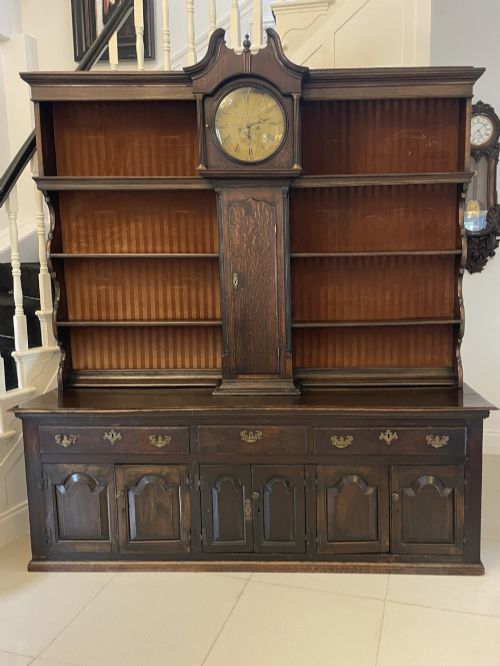
A handful of genuine one-offs turn up. The samples include a clock dresser, one with an integral longcase clock, a pine dresser with 13 spice drawers, and an oak dresser carved with Green Man heads.
Others are stranger still: a metal French field kitchen dresser with a drainer, and a Llanrwst 'bread and cheese' dresser.
Do 20th-century dressers appear alongside the antique ones?
They do, as a real minority strand. Jacobean Style, Georgian Style and Arts and Crafts oak and pine dressers dated 1900 to 1930 recur across several listings.
The dated field stops at 1930, so this late tail is the newest work in the category.