




Antique Potboard Dressers
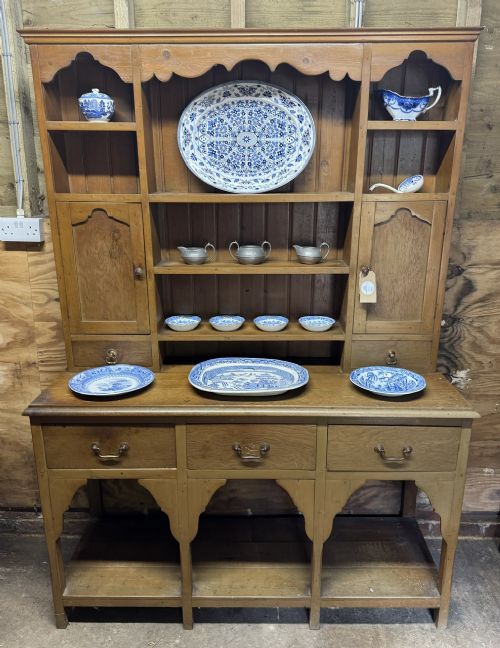
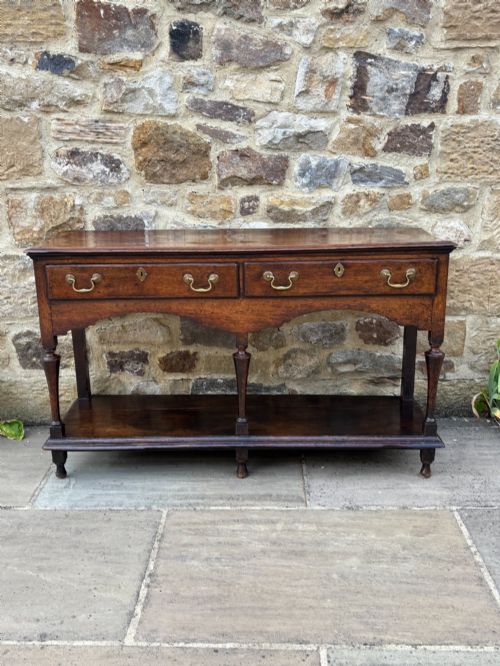
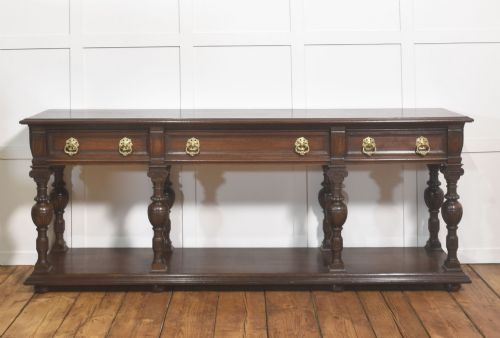
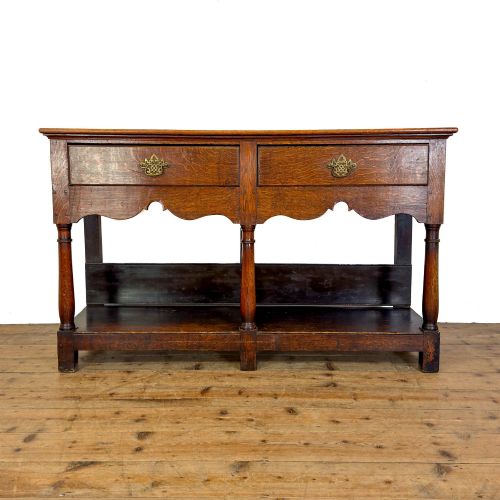
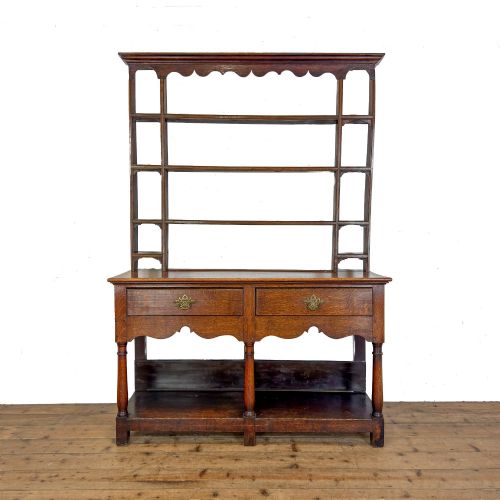
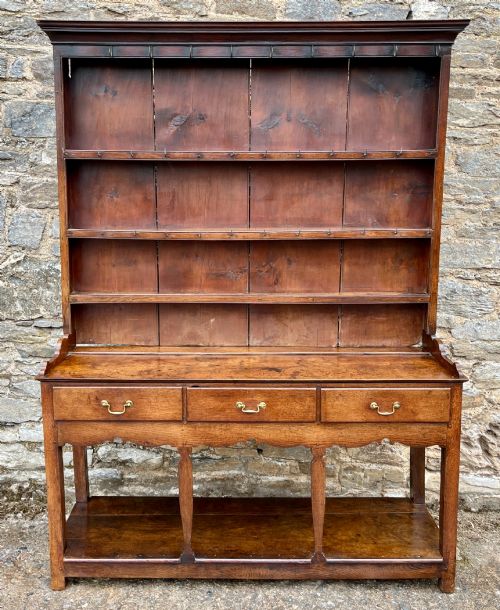
A country kitchen dresser standing on legs with a low open shelf, the potboard, running between them at floor level, where heavy pots and vessels once stood clear of the flags.
Antique Potboard Dressers
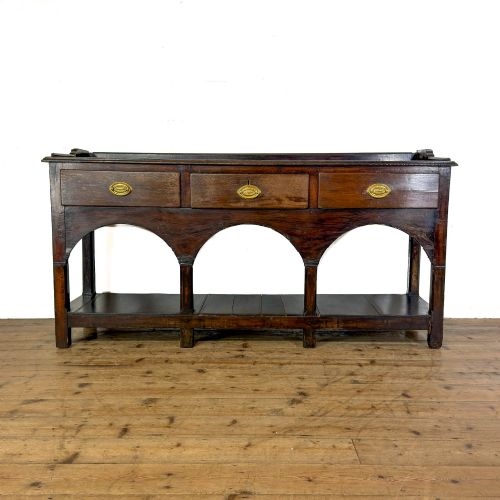
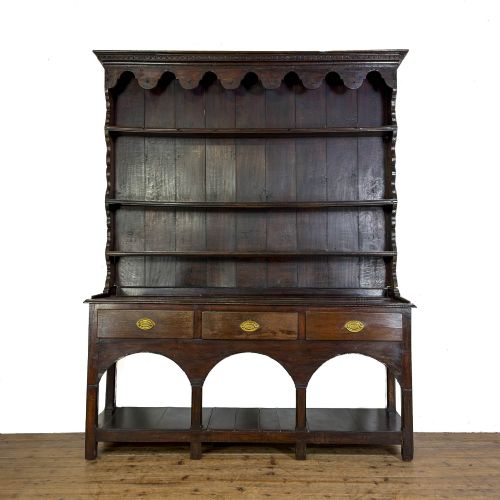
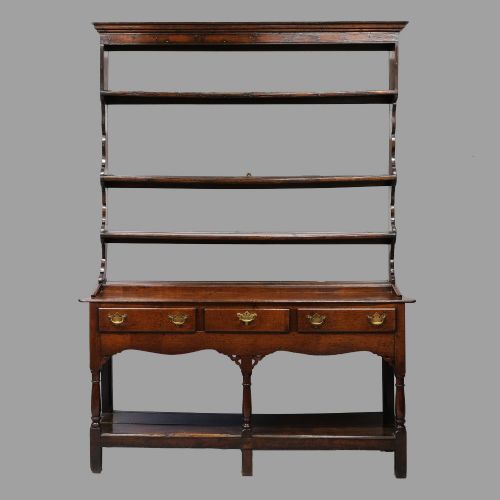
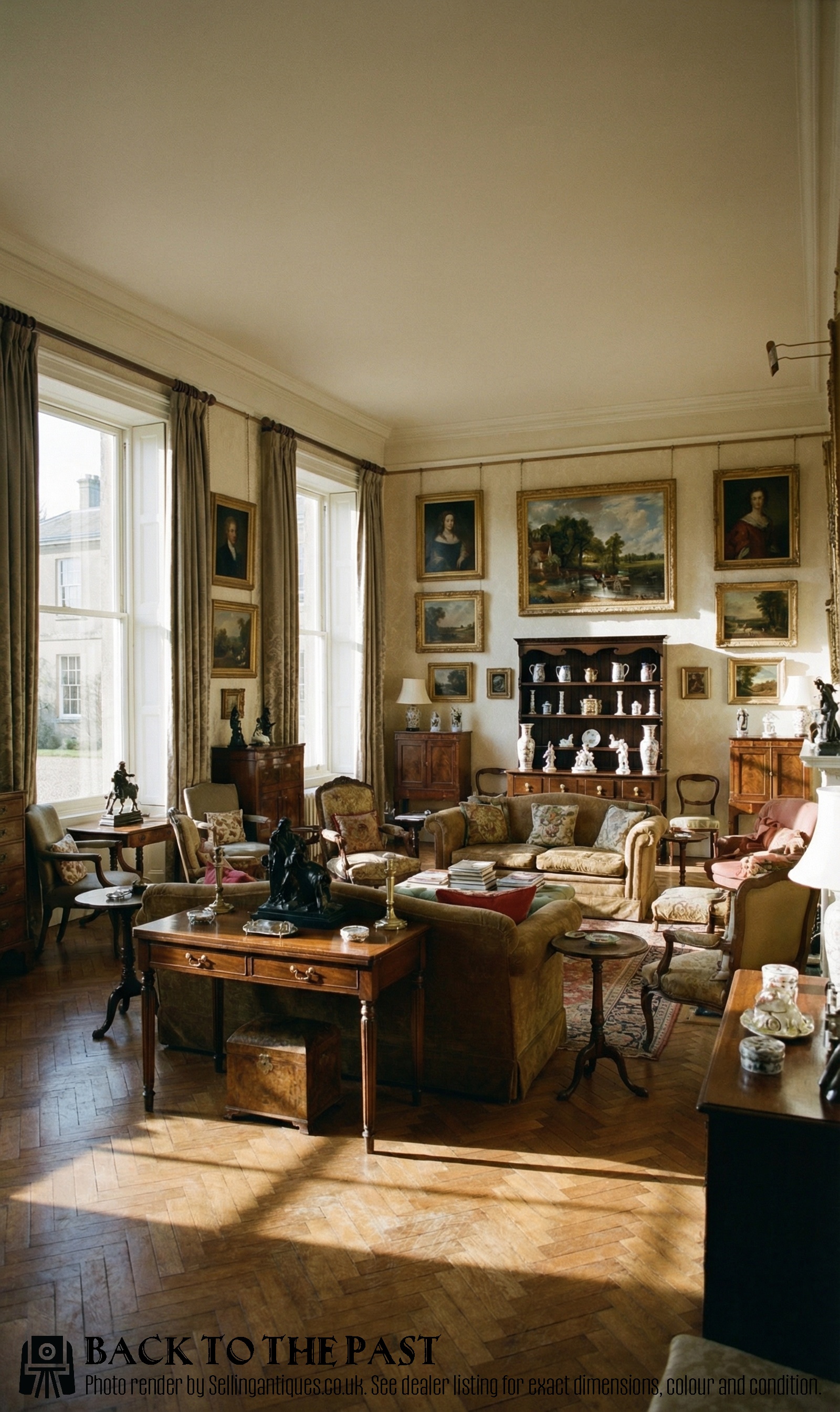
The base is the defining part: four legs, a low open shelf between them, and a row of two or three shallow frieze drawers under the top. Above sits a shelved rack for standing plates, built as a separate carcase rather than one piece with the base. The form came out of British and Welsh farmhouse kitchens, storage and display together, and belongs to vernacular joinery of the 17th to early 19th centuries.
Oak dominates on Sellingantiques, and Welsh origin is stated in nearly half the titles. Georgian turns up throughout. The period field is broad rather than precise: twenty-nine listings say only 18th century, nineteen say only Georgian, and just twenty-two of the hundred and five carry a clean year. The one you are most likely meeting is an 18th-century Welsh oak dresser described by century or reign.
They arrive in two states. The complete dresser with its rack is the largest single group, and phrases like 'retaining its original rack' get used because a rack can be a later marriage or absent altogether. Bases alone account for twenty-four titles, sold as dresser bases in their own right.
Around the edges sit English-attributed examples, a smaller group, and timbers other than oak about one time in ten: pine most often, then elm and ash, with a single burr walnut and elm dresser. Later entries are few, mostly revival or style pieces from the 1920s and 1930s.
Where The Range Splits
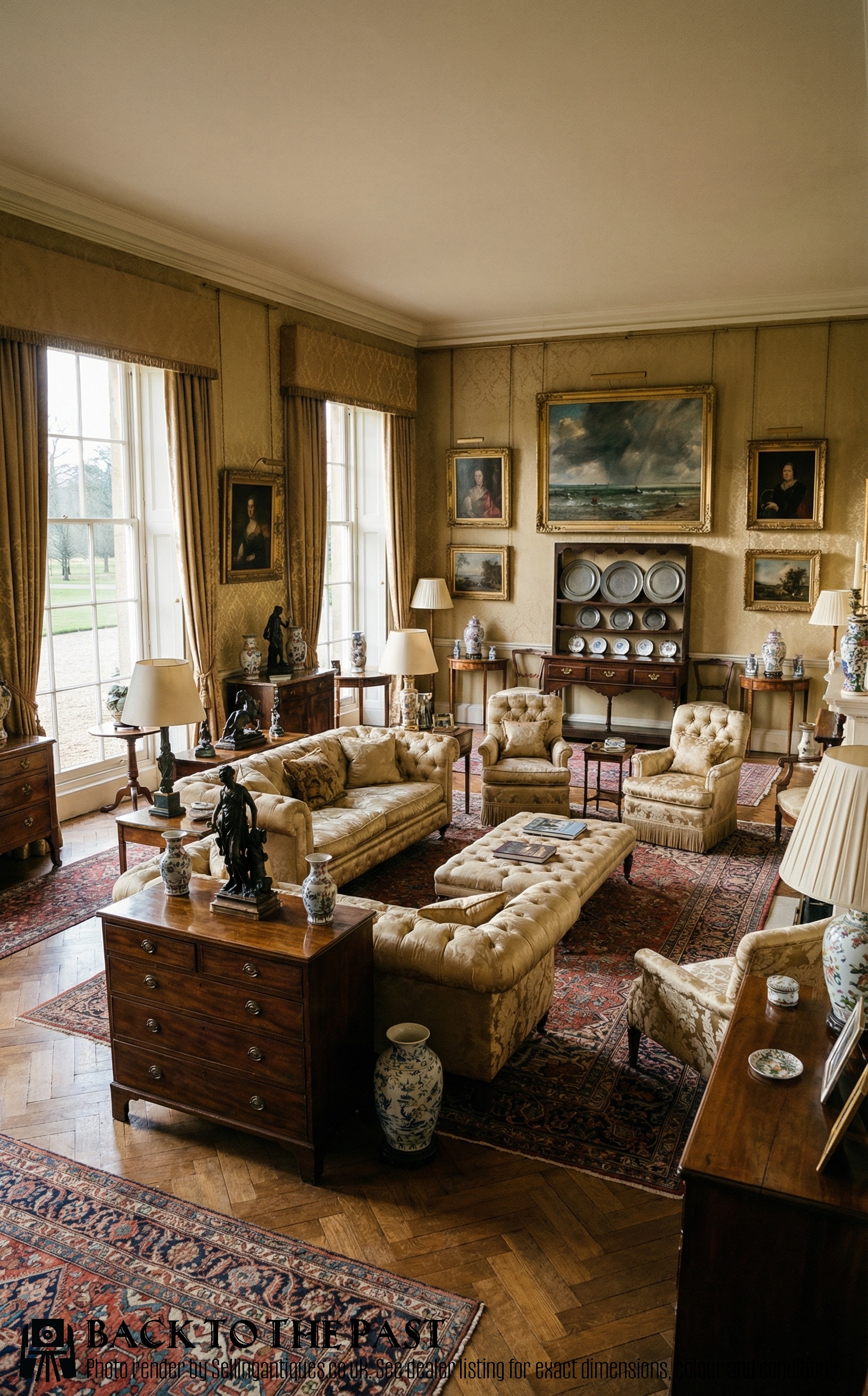
Early date does most of the sorting. Claims of c.1730, circa 1750, c.1760 and c.1770 sit high in the range, and the mass of the category falls in the second half of the 18th century and the opening decades of the 19th. The 1930 dresser and rack and the 1920s Georgian-style base sit at the bottom.
Smallness inverts what you might expect. Eighteen titles advertise 'small' or 'very small', and those cottage-scale pieces cluster in the upper half of the range rather than the lower. A dresser that fits a modern room does better than one that needs a farmhouse wall.
Completeness and place both count. A base offered with a rack the dealer says belongs to it stands above a base sold alone, and named regional attribution lifts a listing: Montgomeryshire, Carmarthenshire, Cardiganshire, Glamorgan, the Swansea Valley, Snowdonia and Mid/South Wales all turn up on the dearer listings rather than the plainest. Oak carries the middle and upper range; pine appears at both ends.
Antique Potboard Dressers Retail Price Guide 2026
Typical UK retail prices for potboard dressers, calculated from the Sellingantiques database of over a million retail prices indexed since 2003. This retail price guide relies exclusively on Sellingantiques data; no external sources or auction records are used, so the figures do not describe the wider market.
The oldest to pass through Sellingantiques is a Welsh potboard dresser of small proportions, circa 1730.
The Antique Potboard Dressers Glossary
- Potboard
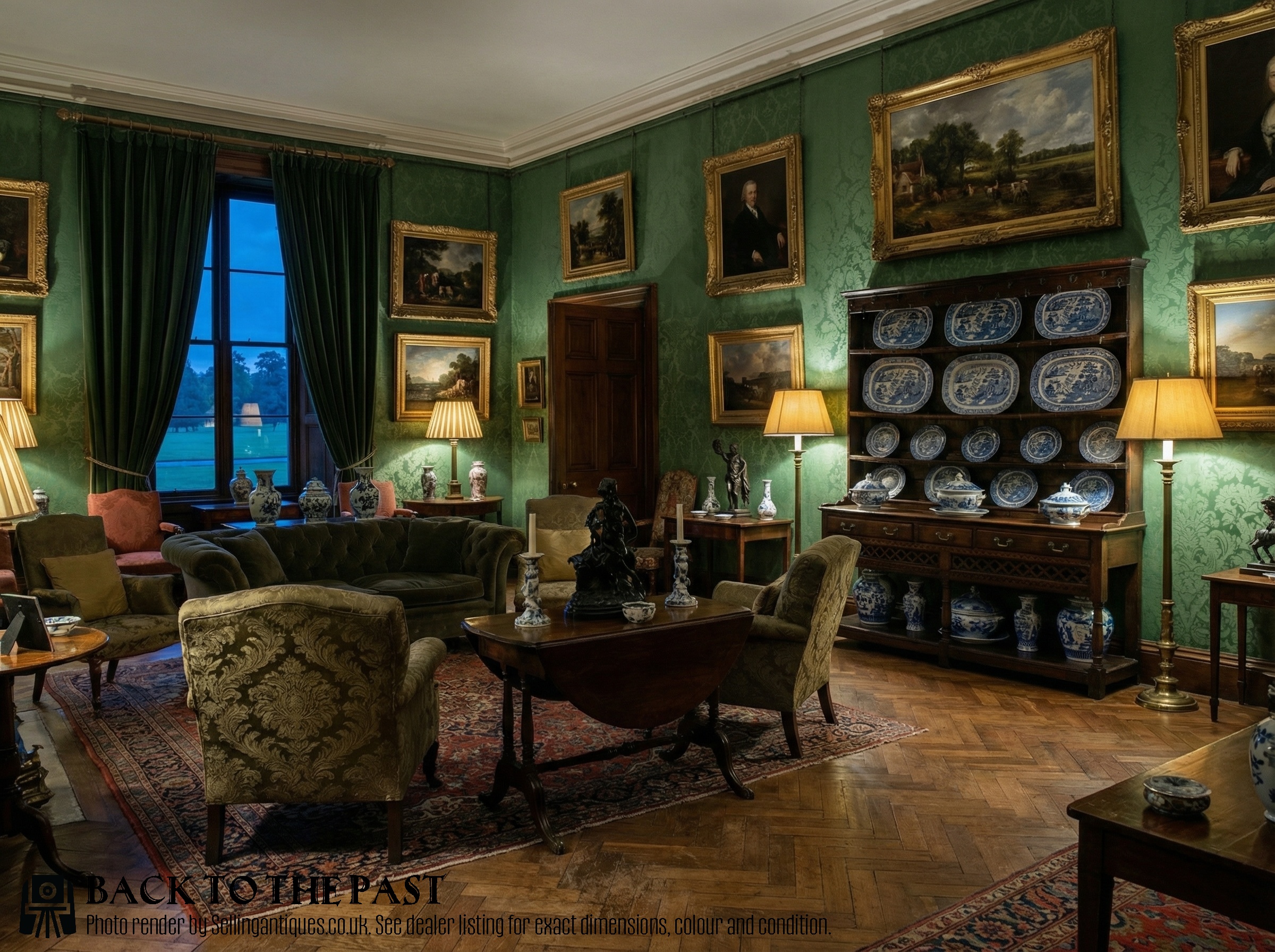
- The low open shelf between the base legs, at or near floor level, that names the form. Written variously as potboard, pot board or pot-board.
- Dresser base
- The lower half on its own, without a rack. Around a fifth of titles describe one.
- Rack
- The shelved upper structure for standing plates. 'Open rack' means no back boards or doors; some dealers call it a plate rack or plate back instead.
- Original rack
- A rack the dealer states belongs with that base rather than being a later marriage. Used as a selling point in the title.
- Two part
- Base and rack as separate carcases, which is the normal construction, and occasionally spelled out in a title.
- Native oak
- Locally grown oak, used in titles to signal regional timber rather than imported.
Antique Potboard Dressers: Frequently Asked Questions
How many come up for sale each year?
Forty-four dealers have listed potboard dressers on Sellingantiques, and around eleven come to market in a year.
That means you are choosing from a handful at a time rather than a wide shelf. The archive across all years runs to a hundred and five listings.
Why are so many described as Welsh?
Welsh origin is stated in nearly half of all titles, and 'Welsh oak' as a phrase in around a fifth. It reads as a statement of origin rather than a style label.
A handful go further and name a county or district: Montgomeryshire, Carmarthenshire, Cardiganshire, Glamorgan, the Swansea Valley, Snowdonia and Mid/South Wales each appear once or twice.
What does it mean when only the base is listed?
The rack is a separate carcase, so bases and racks part company over time. Twenty-four titles describe a base alone.
Some never had a rack fitted. Dressers offered complete often say so plainly, with wording like 'retaining its original rack'.
Are potboard dressers always oak?
Oak carries most titles, so it is the default expectation. Other timbers turn up roughly one time in ten.
Pine is the commonest alternative, then elm and ash. One burr walnut and elm dresser appears in the archive and nowhere else.
Why do listings give a century instead of a year?
Only twenty-two of the hundred and five listings carry a clean year. Twenty-nine say just '18th Century' and nineteen say just 'Georgian'.
Vernacular country furniture rarely dates itself, so dealers give a century or a reign. The declared span across the archive runs 1750 to 1930.
Do small examples sell for less?
No. Eighteen titles advertise 'small' or 'very small', and those cluster in the upper half of the range.
The earliest claim in the archive is a Welsh potboard dresser 'of Small Proportions, circa 1730', and it sits near the top.