

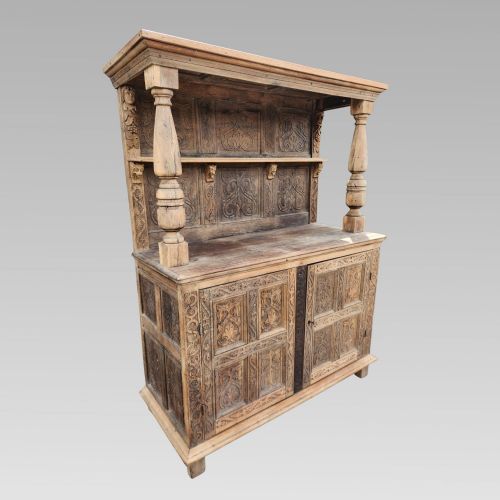


Antique French Dressers
A French country dresser is a two-part cupboard, shelved above and enclosed below, made to store food and stand pottery and pewter on show in the kitchen.
Antique French Dressers
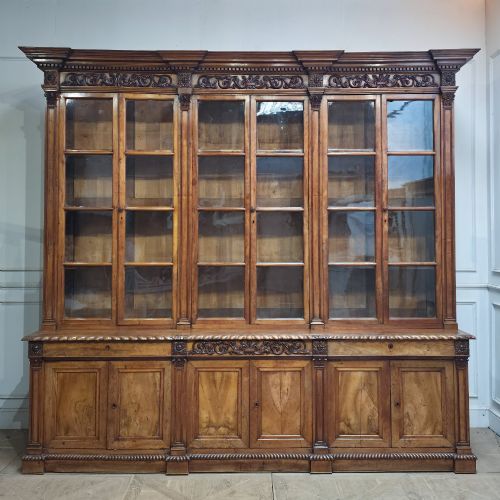
The form is a shelved upper structure sitting over a cupboard-and-drawer base, a fixture of European kitchens and living rooms from the 17th century onward. In France the regional version is called a vaisselier or buffet-vaisselier, and most surviving examples are country joinery worked in local timbers.
The dresser you're most likely to meet on Sellingantiques is a 19th-century French country piece in oak or pine, described as a kitchen, farmhouse or provincial dresser. "19th Century" is the largest period entry, oak runs through around a fifth of the titles, and words like rustic, primitive and farmhouse account for roughly a dozen of the forty-two listings sampled.
Alongside those sit 18th-century provincial dressers in hardwood, about one in five: joined oak, cherrywood and walnut, burr ash. Then a small steady strand of dresser bases sold without their tops, enfilades and buffet sideboards, and about five pieces where paint is the point, some original and some added later.
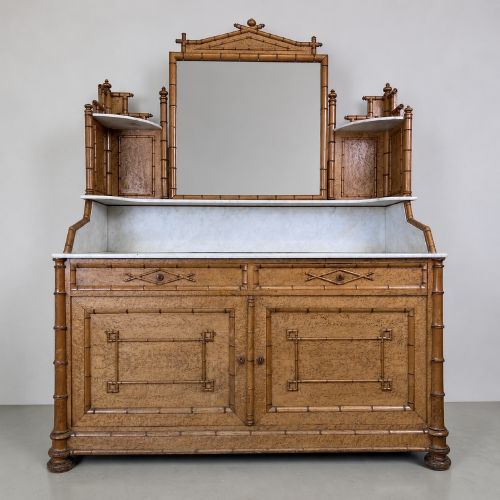
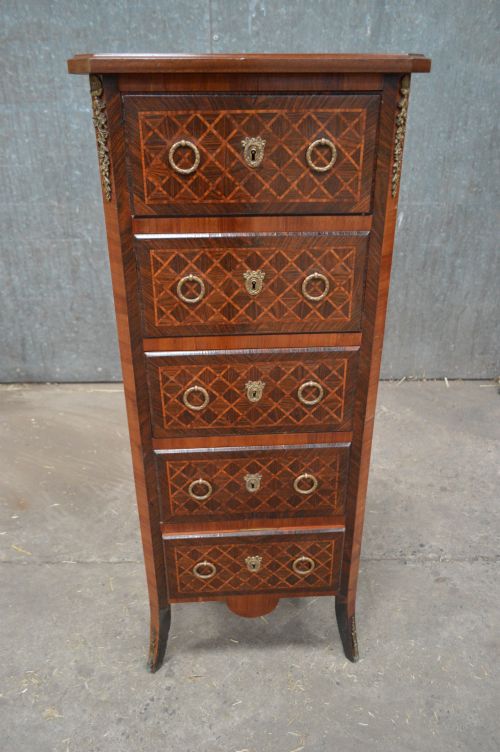
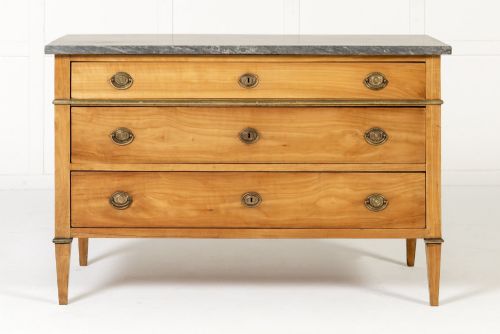
The heading also shelters nearby French case furniture. Three commodes, a wellington chest, a bureau plat, a marquetry credenza and a faux-bamboo marble washstand are filed as dressers because they're French case furniture, and that group makes up around a fifth of the sample. Dating is broad: only ten of the forty-two listings carry a clean year, so read period claims as a century rather than a decade.
The Range
Timber does most of the work. Pine sits at the bottom of the range, oak in the middle across nine titles, and the figured hardwoods at the upper end: walnut, burr walnut, burr ash, kingwood, cherrywood, bird's-eye maple. For so small a group the timber names are unusually varied.
Completeness counts next. A full two-part dresser with its shelved or glazed top stands above a base sold on its own, and bleached oak turns up in the archive as both, listed separately. Scale pushes the same way, with large and tall pieces at the top and a painted miniature at the foot.
Decoration and surface separate the rest. Carving, inlay, parquetry and marquetry all sit above the plain country examples, and titles draw a line between original paint and paint applied later, with the original finish holding the higher ground.
Antique French Dressers Retail Price Guide 2026
Typical UK retail prices for french dressers, calculated from the Sellingantiques database of over a million retail prices indexed since 2003. This retail price guide relies exclusively on Sellingantiques data; no external sources or auction records are used, so the figures do not describe the wider market.
French dressers have been listed on Sellingantiques since 2010.
The Antique French Dressers Glossary
- Vaisselier
- French term for a dresser, a shelved rack or cupboard top standing on a buffet base for displaying tableware. It appears in three different spellings across the titles.
- Buffet
- The enclosed cupboard base of a French dresser, or a standalone low cupboard sold in its own right.
- Dresser base
- The lower half offered without the shelved top. Sold as a piece of furniture in its own right rather than as half of something.
- Enfilade
- A long, low French sideboard on short legs with a run of cupboard doors. Two turn up in the sample, one of them painted.
- Provincial
- Made in the French regions rather than in Paris, and the usual trade word for country joinery.
- Joined
- Framed with mortise-and-tenon joints pegged together, the construction behind the oak provincial dresser dated c1771.
Antique French Dressers: Frequently Asked Questions
What is a vaisselier?
It's the French name for a dresser: a shelved top standing on a buffet base, used to display plates and pewter.
The word appears in the titles on Sellingantiques in three different spellings, sometimes paired with buffet as buffet-vaisselier. The pieces carrying it include oak, chestnut and provincial walnut examples.
Which timbers do these come in?
Oak leads, in around a fifth of the titles, with pine close behind on the farmhouse and country pieces.
Beyond those two the list is long for so small a group: chestnut, cherrywood, walnut, burr ash, burr walnut, fruitwood, kingwood and bird's-eye maple all appear across the forty-two titles sampled.
How accurate is the dating on these?
Broad. Ten of the forty-two listings give a clean year, and those run from 1800 to 1920. Everything else is a century or simply "Victorian".
"19th Century" is the single largest period entry with eighteen listings, and "18th Century" second with eight. The earliest specific date claimed in a title is c1771, on a joined oak provincial dresser.
Are dresser bases sold without the top?
Yes. Bleached oak examples have been listed both ways, as a base alone and as a full dresser.
Bases, enfilades and buffet sideboards form a small but steady strand of the category. The complete two-part dressers, particularly the glazed-top ones, cluster higher in the range.
Why are commodes listed as French dressers?
Because they're French case furniture, and the heading collects nearby forms rather than dressers in the strict sense.
Three commodes sit in the sample, one demi-lune and neo-classical, one marble-topped inlaid walnut. A wellington chest, a kingwood bureau plat, a burr walnut and marquetry credenza and a faux-bamboo marble washstand are filed here too, together making up about a fifth of the listings.
How often do these come up for sale?
Slowly. About four a year reach the market in this category.
Twenty-seven different dealers have listed one, so almost every example arrives from a different source. Oddities appear once and then not again: a painted miniature, a metal field kitchen dresser with drainer, a shop display dresser.