
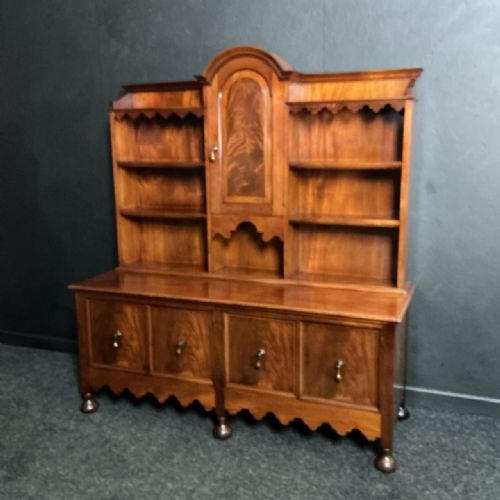
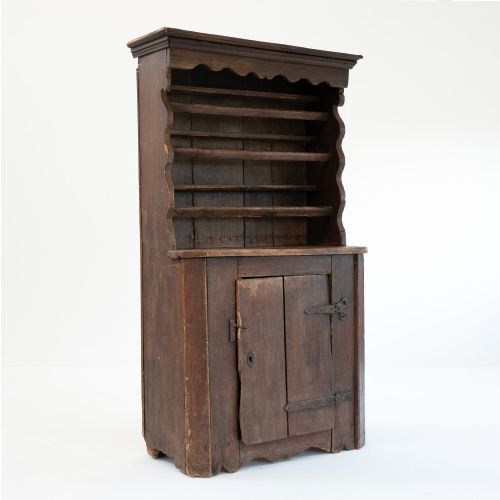
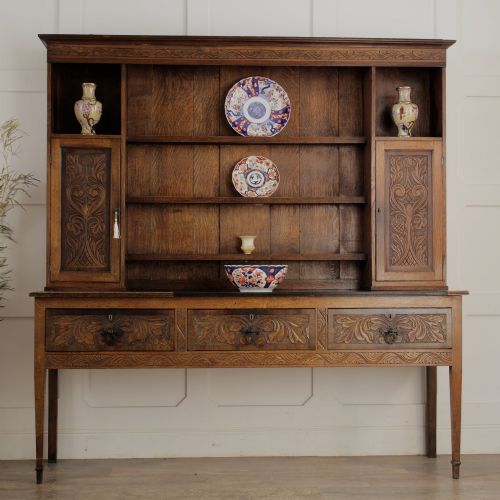
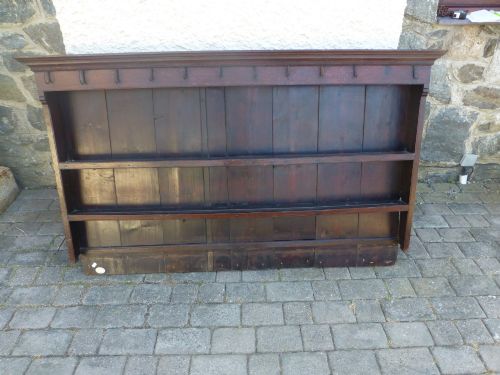
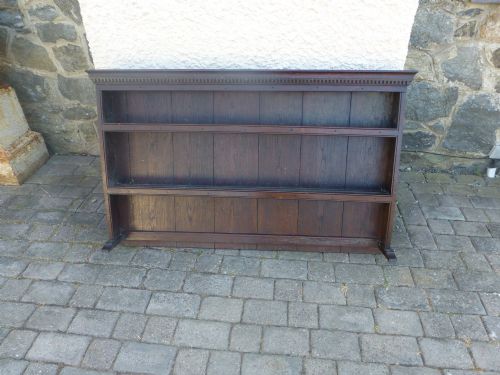
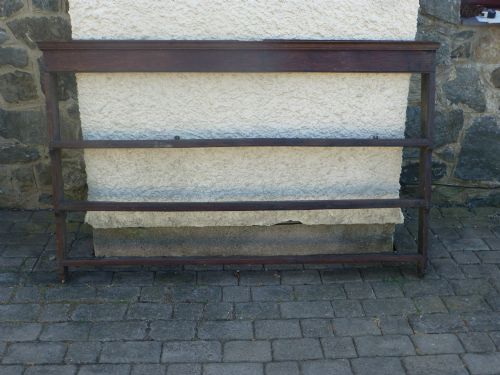
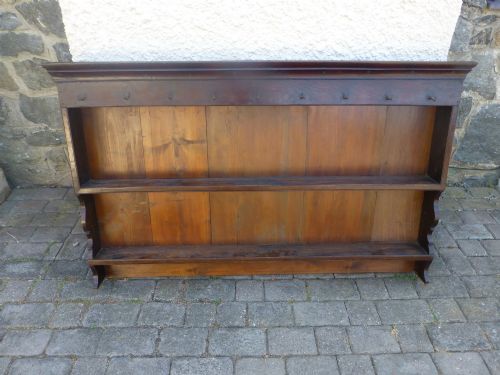
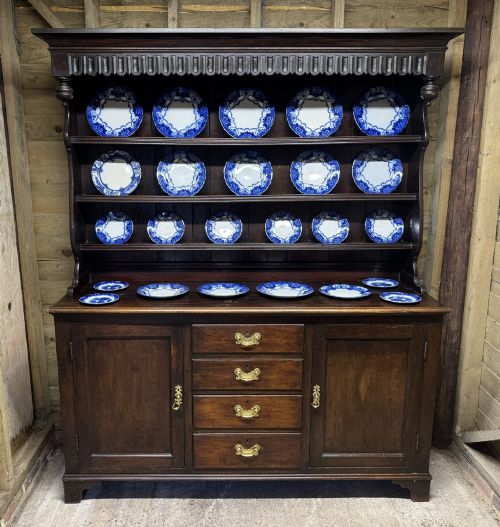
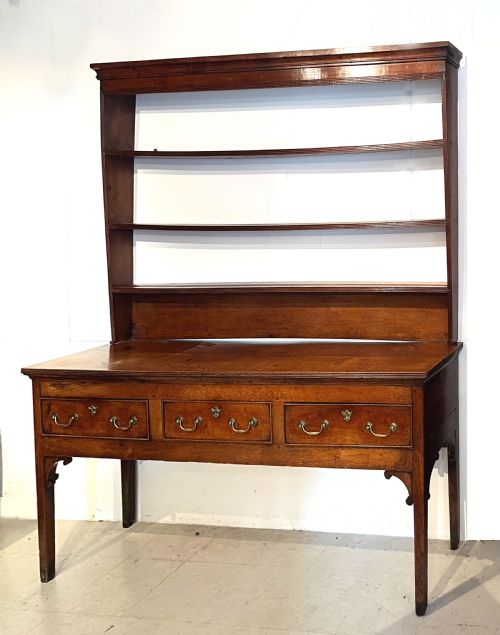

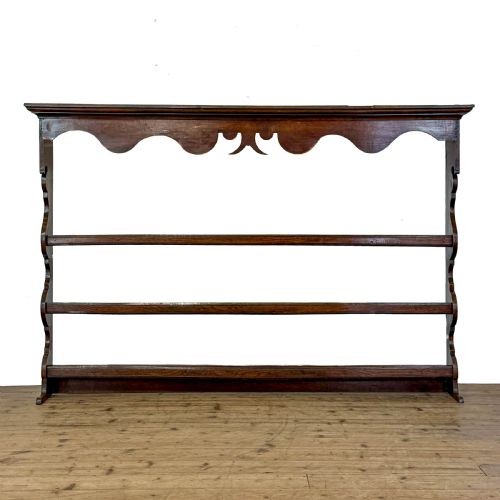
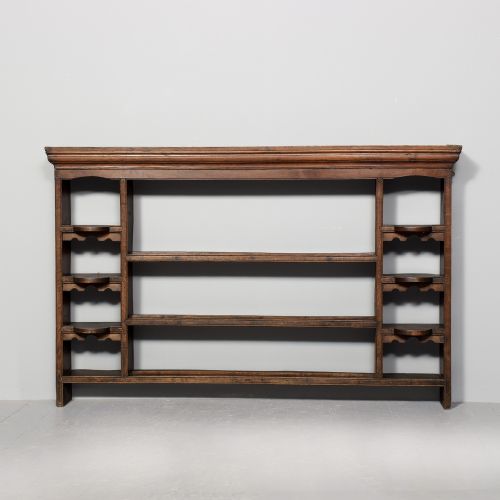
Wooden Plate Rack Dresser
These wooden plate rack dresser pieces combine practical display with solid timber storage, giving a kitchen authentic rustic utility.
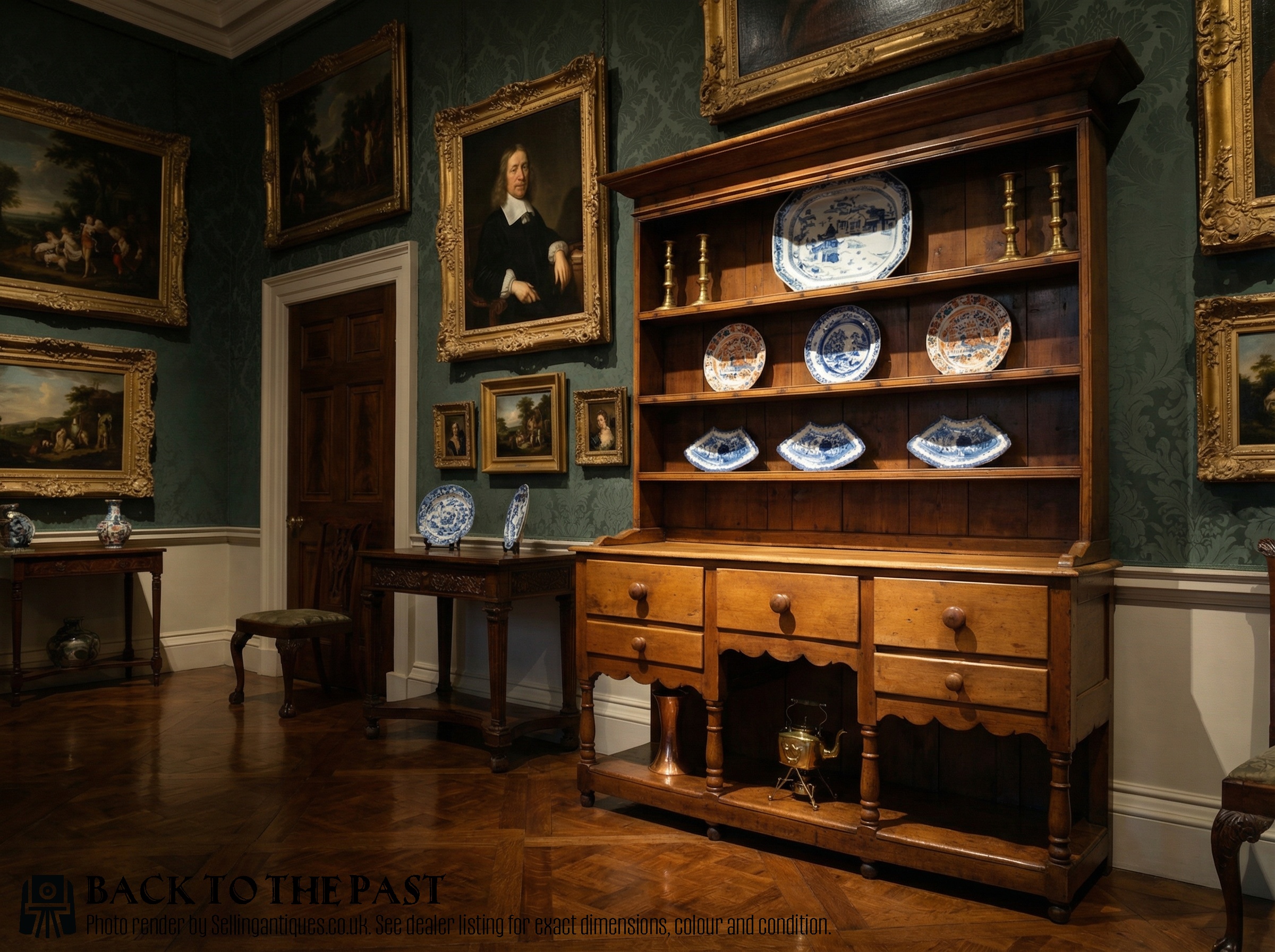
Wooden Plate Rack Dresser
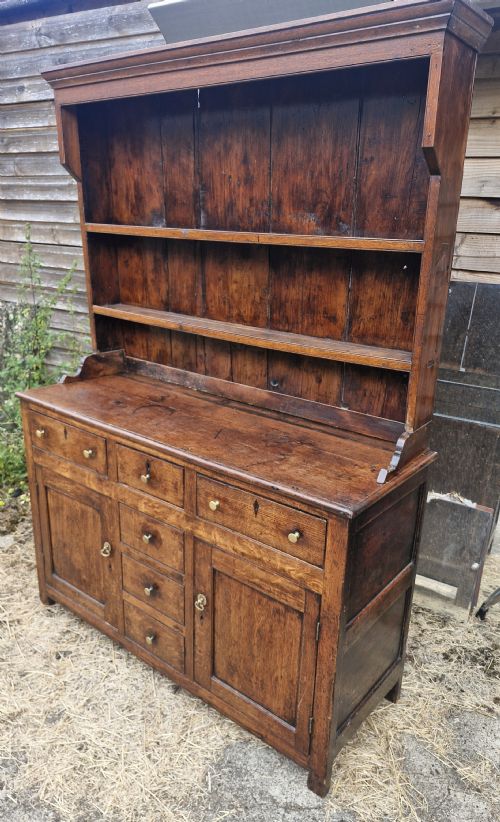
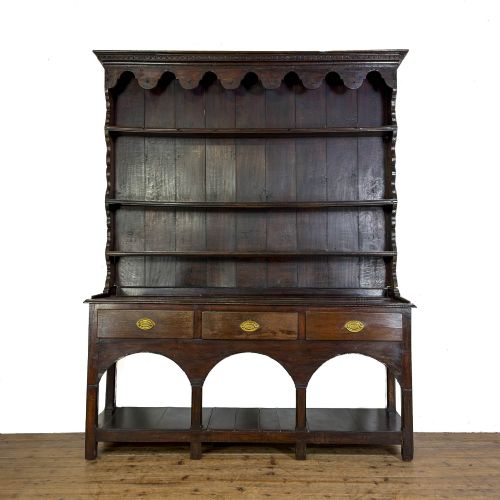
A wooden plate rack dresser brings together a lower storage base and an upper shelving structure designed specifically to hold ceramic plates upright. These pieces emerge chiefly from 18th-century, 19th-century, and Georgian periods, spanning English, Welsh, French, and Danish origins.
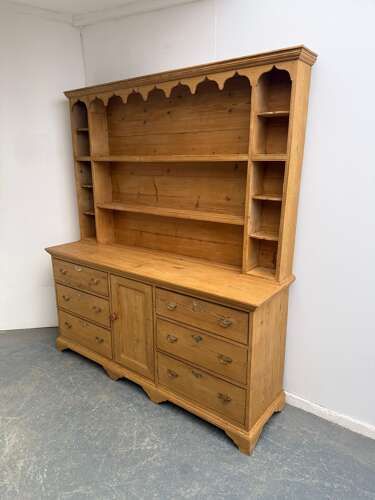
The versions most commonly found here feature sturdy oak or pine construction, often taking the form of traditional Welsh dressers or standalone wall racks. They serve as central furniture items for farmhouse and country-style kitchens.
Makers utilised local timbers to build both compact cottage pieces and large two-part configurations with open shelving or enclosed cupboards. Each example reflects the domestic storage needs of its respective period.

Materials and construction methods
Makers relied primarily on native hardwoods and softwoods like oak, pine, elm, and walnut, often pairing different timbers within a single piece. Structural joints utilised traditional pegging and hand-cut joinery to support the weight of heavy ceramic tableware.
Surface treatments range from waxed and honey-toned natural timber finishes to historic painted surfaces and applied carved details. Iron and brass hardware, such as hinges and knobs, complete the construction of doors and drawers.
Upper plate racks were built with grooved plate rails and vertical slats to keep dishes secure against the wall. Lower bases integrated pot boards, drawers, or panelled cupboards to balance the open display above.
Listings feature oak, pine, elm, and walnut pieces originating from Georgian, Victorian, and Edwardian periods.
Assessing quality in period dressers
Quality rests upon the integrity of the timber selection and the retention of original structural elements across the base and the upper rack. Pieces retaining their matching, original plate racks demonstrate superior architectural harmony compared to later married assemblies.
The refinement of hand-carved details, such as Corinthian columns or shaped friezes, distinguishes higher-status country pieces from utilitarian workshop output. Deeper patination and honest signs of historic domestic use elevate the visual depth of the wood.
The Wooden Plate Rack Dresser Glossary
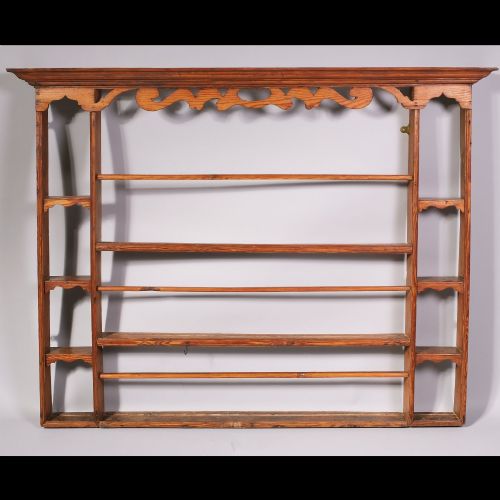
- Delft rack
- An open wall-mounted shelving unit designed to display tin-glazed earthenware plates upright against slats. These racks form the upper portion of many traditional kitchen dressers.
- Pot board
- A low slatted shelf positioned near the floor between the legs of an early dresser. This platform originally held pots and heavy kitchen utensils off the damp flagstone floor.
- Welsh dresser
- A traditional vernacular furniture form featuring a lower base of drawers and cupboards surmounted by an open plate rack. Oak and pine remain the primary timbers for these regional pieces.
- Married piece
- A combination where the upper plate rack and lower dresser base originated from different pieces or periods. Collectors look closely at timber grain and construction to identify these pairings.
- Patina
- The deep surface sheen and colour developed by wood over centuries through handling, waxing, and exposure to light. This quality distinguishes genuine period pieces from modern reproductions.
Wooden Plate Rack Dresser: Frequently Asked Questions
How do I date a wooden plate rack dresser?
Dating relies on examining construction techniques, timber species, and stylistic markers such as hardware and mouldings. Early 18th-century pieces often display hand-sawn boards and pegged joinery.
Later Victorian and Edwardian examples incorporate machine-sawn elements and different drawer construction methods. Comparing the wear on the plate rack to the base helps confirm if the components belong together.
Can these dressers support heavy modern plates?
Period plate racks were engineered to hold heavy ceramic and pewter tableware of past centuries safely. The grooved baseboards and sturdy vertical slats distribute weight effectively against the backboard.
Modern heavy stoneware plates fit securely into these historic channels without straining the structure. Care should simply be taken not to overload individual display slots.
Where should I place a dresser in my home?
Kitchens and dining rooms provide the most natural setting for these pieces, fulfilling their original domestic purpose of food preparation and tableware storage. Wall clearance and ceiling height must be measured carefully, especially for tall two-part dressers.
Securing the upper rack or tall base to the wall ensures stability in high-traffic living areas. Planners should avoid placing antique timber directly beside intense heat sources.
Are the plate racks removable?
Many traditional dressers are built as two-part pieces where the plate rack simply sits on top of the lower base counter. This modular construction aided transport through narrow cottage doorways during earlier centuries.
Other examples are integrated as single unified structures with fixed wall hanging points. Checking the joinery where the rack meets the base reveals how the pieces separate.