

Vintage Nesting Tables
Vintage nesting tables pack multiple surfaces into a single footprint, offering versatile display space without cluttering a room.
Understanding vintage nesting tables
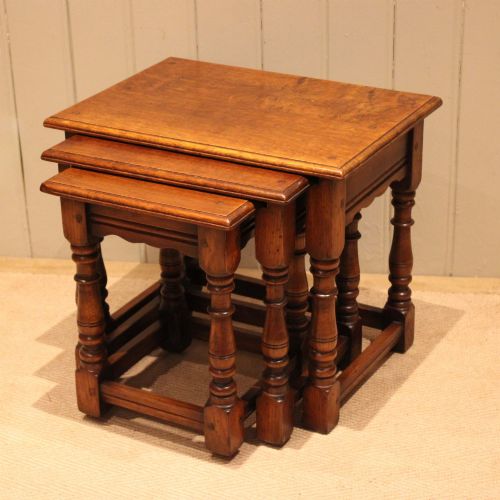
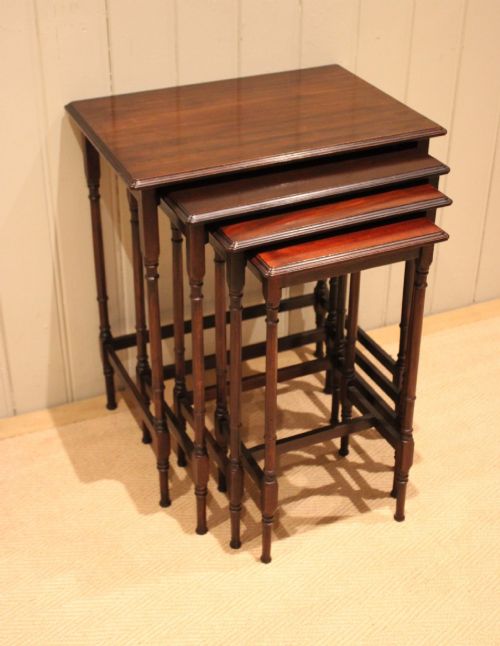
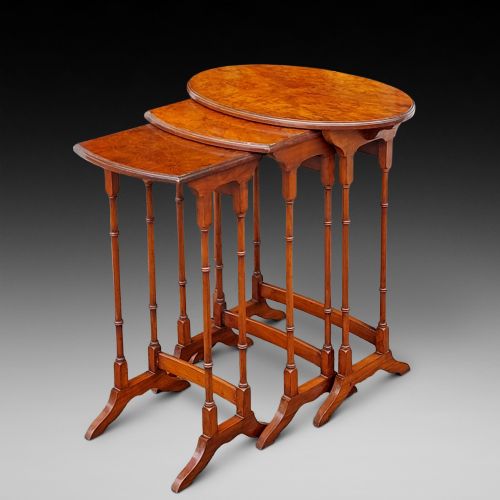
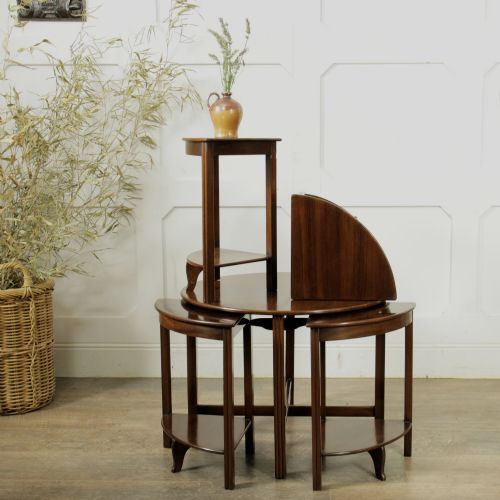
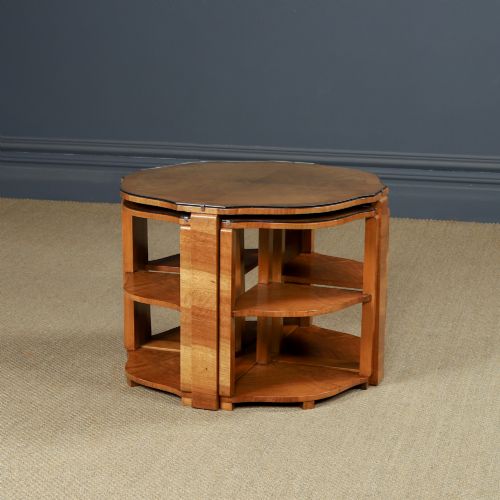
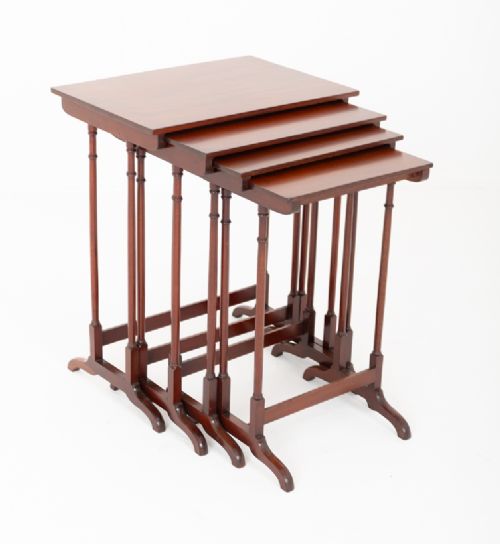
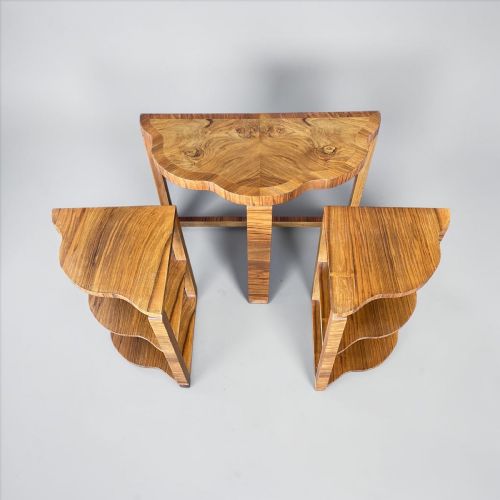
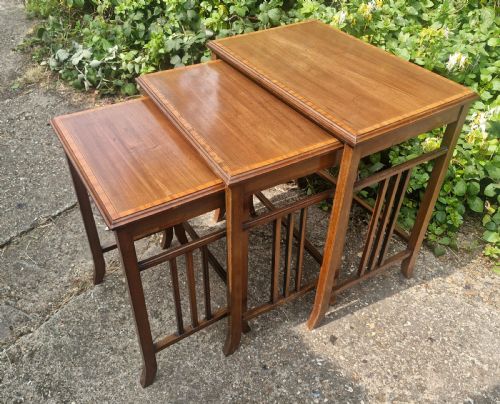
Vintage nesting tables comprise sets of graduated tables designed to slide neatly beneath one another when not in use. Collectors encounter forms ranging from Edwardian sets to Art Deco designs.
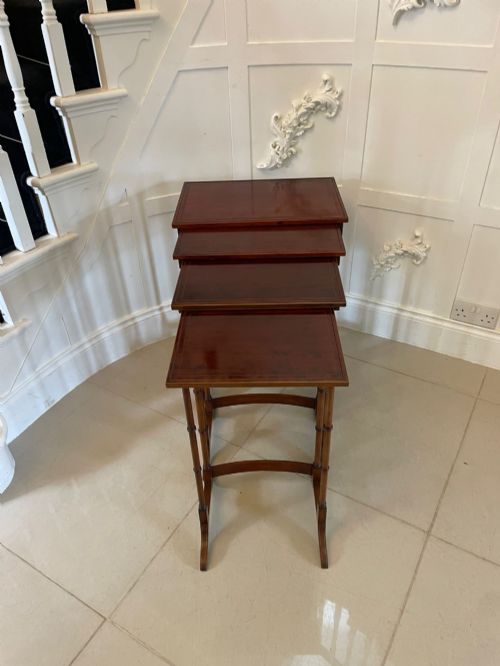
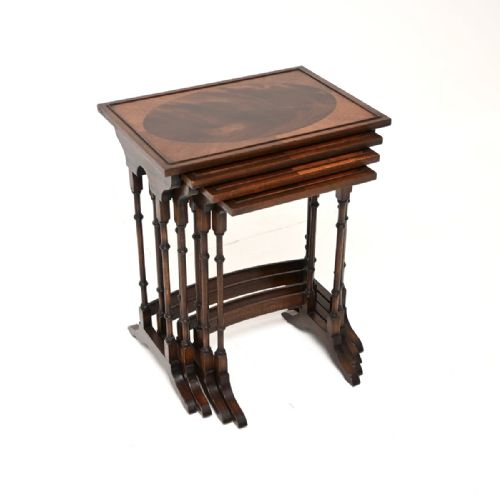
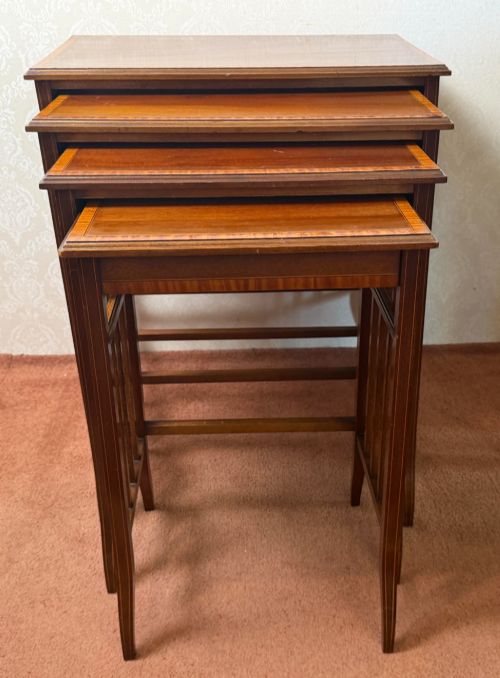
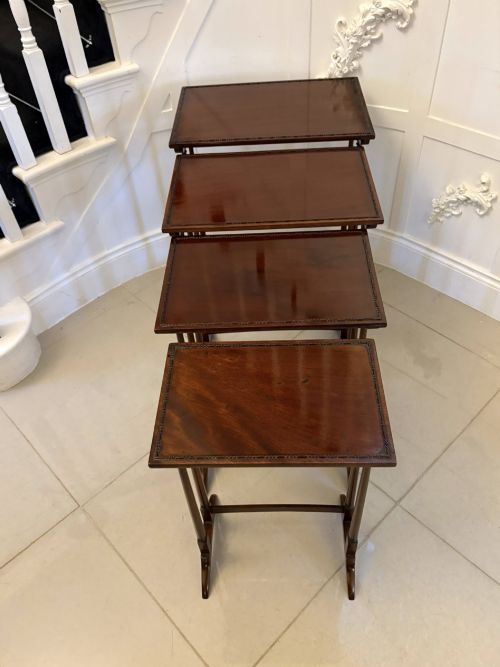
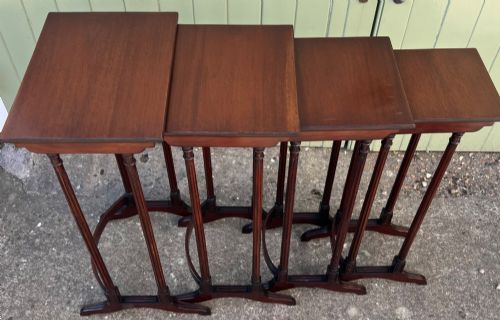
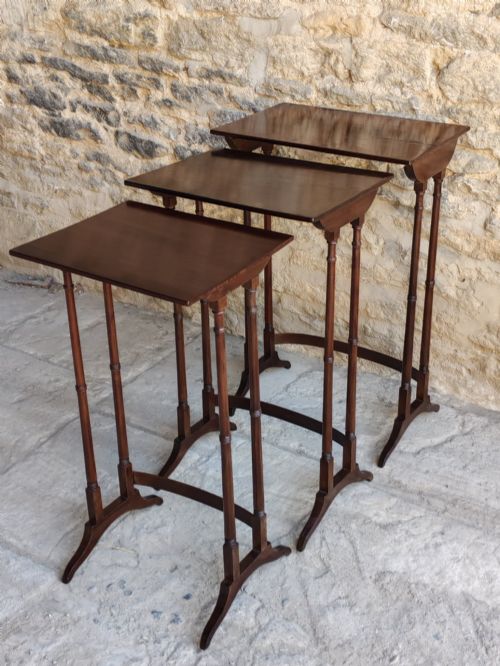
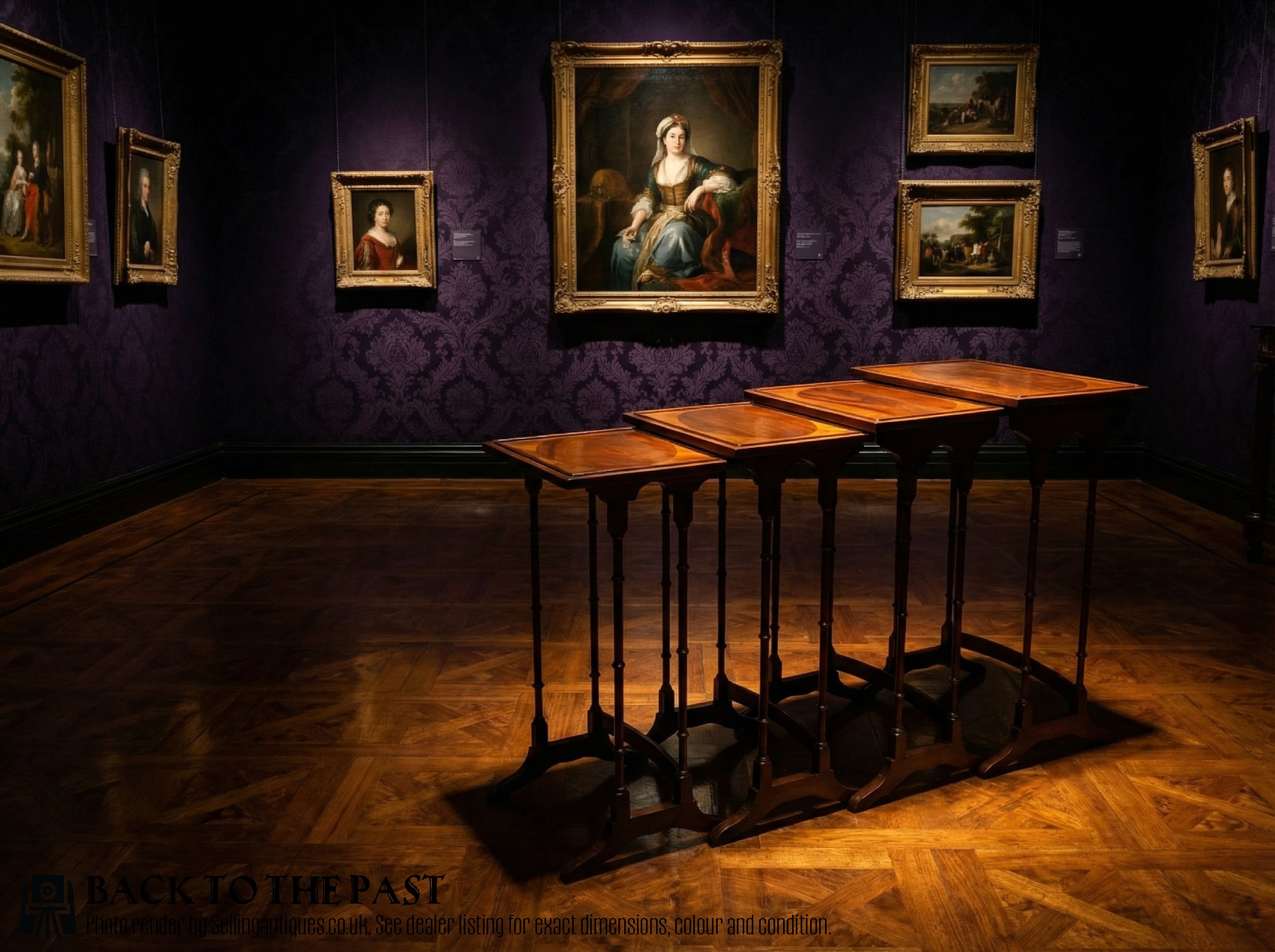
The evidence shows configurations of three or four tables, frequently described as quartetto sets. These pieces originate from periods spanning the nineteenth century through the mid twentieth century.
Common regional interpretations and stylistic influences include French style and Regency, alongside standard Edwardian and Art Deco aesthetics. Buyers find these items functioning as flexible occasional furniture in sitting rooms and studies.
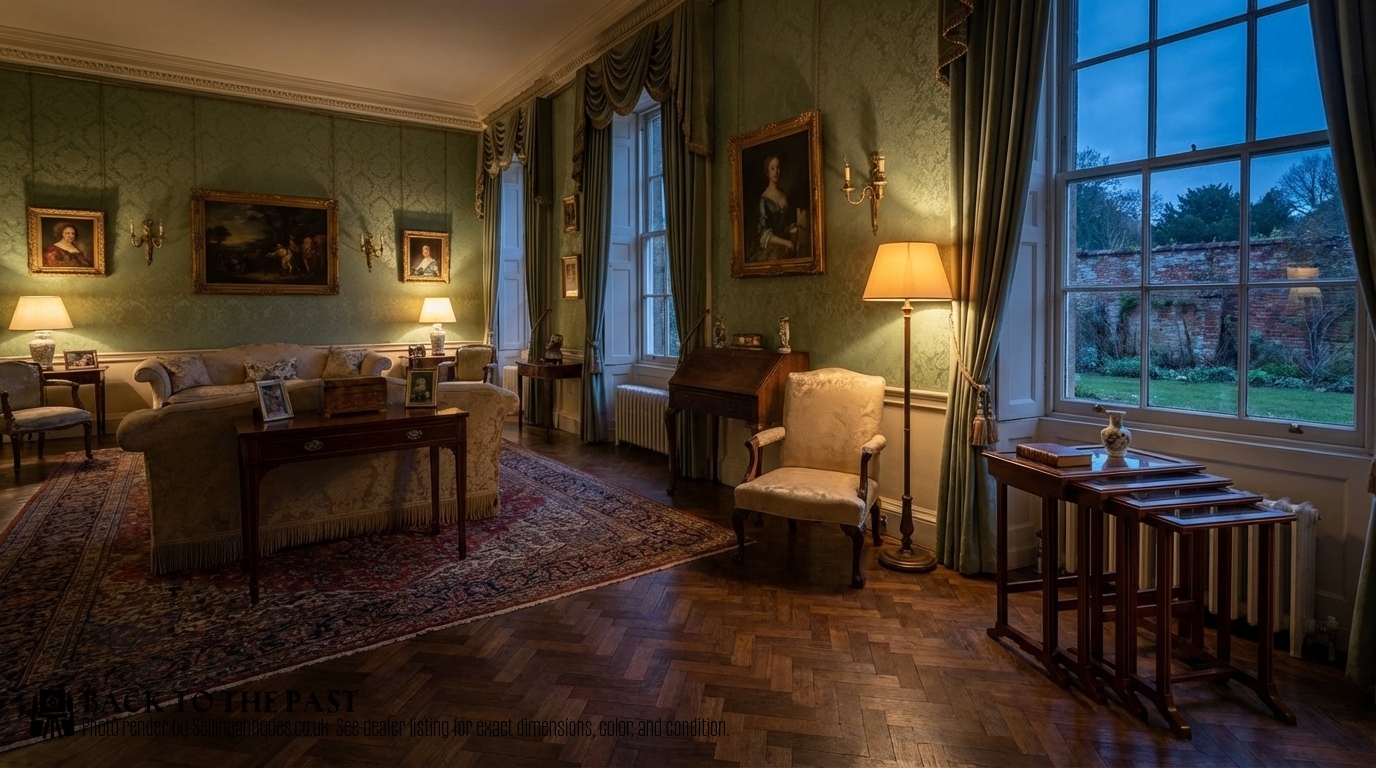
Materials and construction
Cabinet makers utilised a variety of traditional timbers, predominantly mahogany, walnut, and burr walnut, alongside satinwood and general timber. Selected examples incorporate brass details and glass surfaces.
Surface ornamentation relies heavily on fine inlay work, characteristic of Edwardian pieces and French style variants. The construction prioritises structural stability so that smaller tables slide smoothly within the frame of the largest.
Retail Price Guide 2026
Typical UK retail prices for vintage nesting tables, calculated from the Sellingantiques database of over a million retail prices indexed since 2003. This retail price guide relies exclusively on Sellingantiques data; no external sources or auction records are used, so the figures do not describe the wider market.
Sets of four tables require an elaborate game of architectural Tetris just to slide them back home.
Assessing quality and craftsmanship
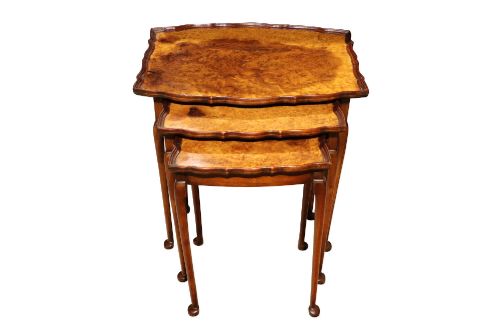
Quality separates ordinary utility pieces from finer examples through the precision of the woodwork and the choice of surface veneers. Burr walnut and detailed brass inlay indicate higher workmanship.
The integrity of the set depends on how well the graduating tables fit together and whether the timber retains its original finish and colour without excessive warping.
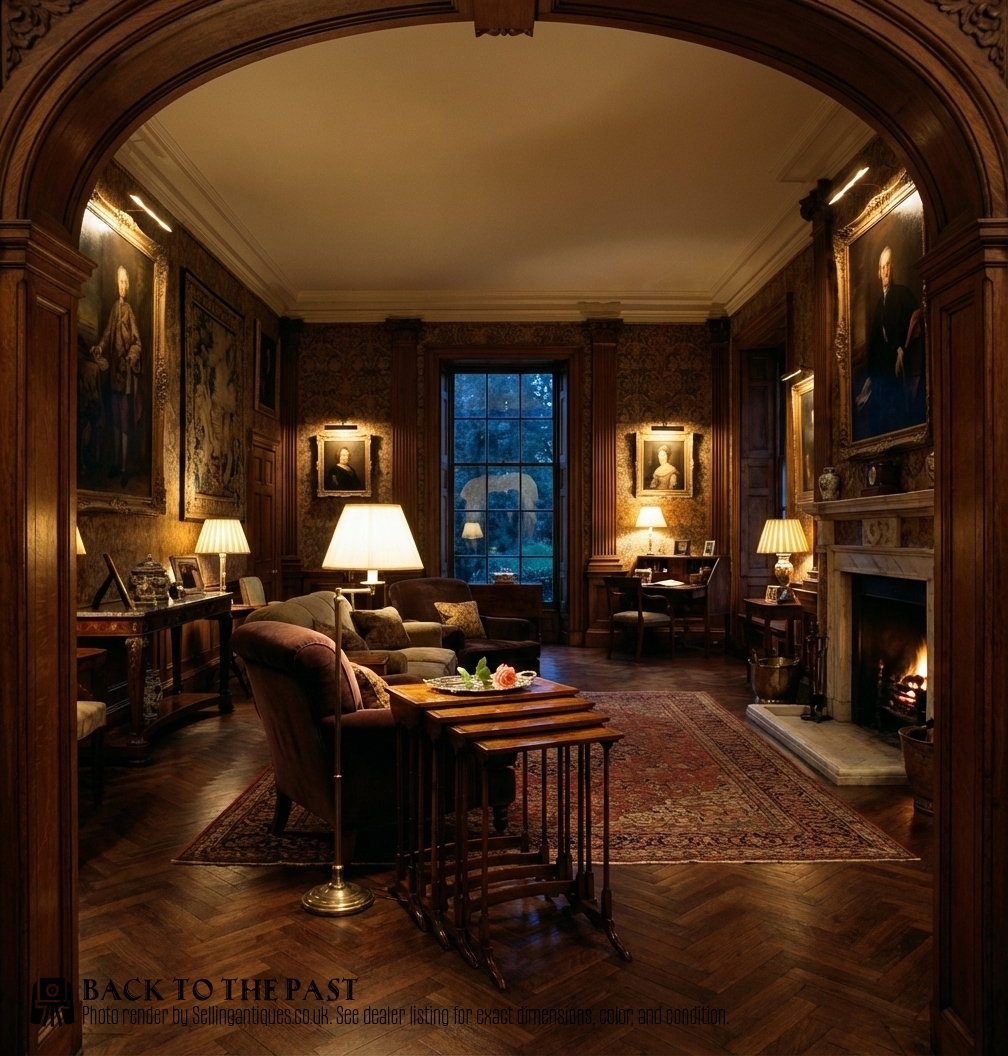
Heal's
The Vintage Nesting Tables Glossary
- Quartetto tables
- A set of four graduating tables designed to nest together. This term appears frequently in nineteenth and early twentieth century listings.
- Nesting tables
- A set of multiple small tables that fit inside one another to save space. They provide flexible surface area for entertaining.
- Inlay
- A technique where contrasting materials are inserted into the wood surface to form decorative patterns. Mahogany pieces often feature lighter wood stringing.
- Veneer
- A thin layer of superior wood applied to a base timber surface. Burr walnut veneer creates highly figured patterns on table tops.
Frequently Asked Questions
How were nesting tables used?
These tables served as portable tea or coffee surfaces in nineteenth and twentieth century drawing rooms. Servants or hosts could easily pull out individual tables as needed for guests.
When tea was finished, the smaller tables slid back into the main frame to clear floor space. This made them practical for smaller parlours and sitting rooms.
What periods do these tables come from?
The available pieces span the nineteenth century through the Edwardian era and into the Art Deco period of the nineteen thirties and forties. Edwardian examples often feature mahogany and delicate inlay.
Later sets from the interwar years adopt geometric lines and different veneer choices like burr walnut. Each era brings distinct decorative characteristics to the form.
What does quartetto mean?
A quartetto set consists of four individual tables that graduate in size to nest beneath the largest one. This term distinguishes four piece sets from standard three piece nests.
Maker descriptions often use this specific label for matched nineteenth and early twentieth century nesting sets. They represent a more substantial configuration than smaller nests.
How do I care for timber nesting tables?
Keep wooden surfaces away from direct sunlight and heat sources to prevent the veneers from drying out or cracking. Regular dusting with a soft dry cloth maintains the polished finish.
Avoid placing damp glasses directly on the timber. Use coasters to protect the polish and inlay work on the table tops.