

Vintage Marble Side Cabinet
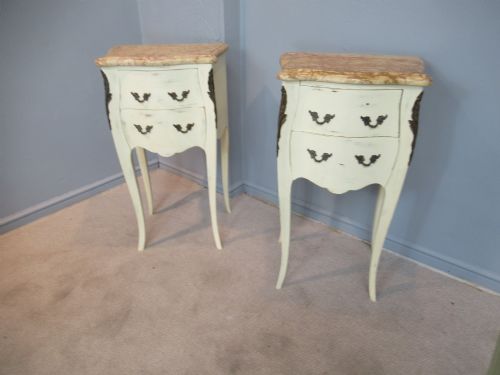
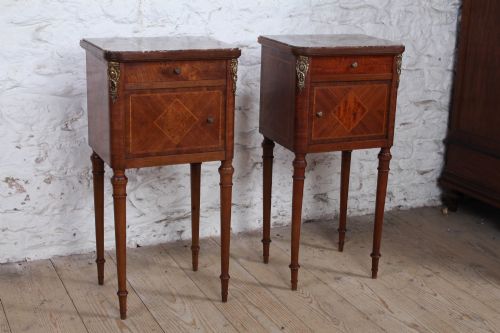
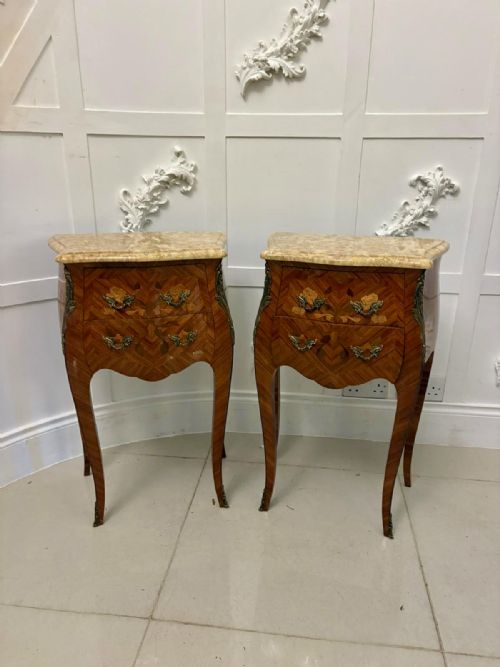
These pieces known as a vintage marble side cabinet bring stone tops and timber frames together for practical bedside or lamp placement.
Vintage Marble Side Cabinet
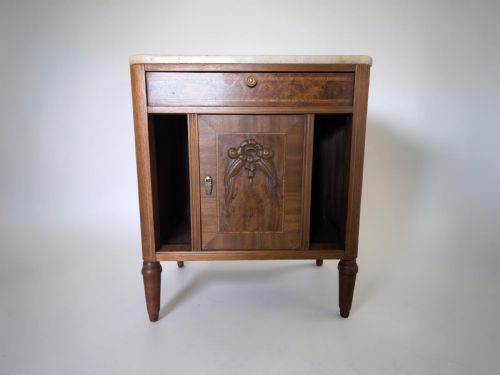
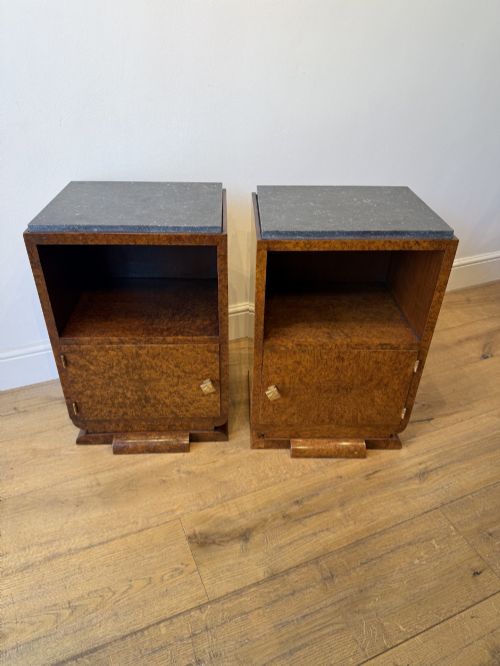
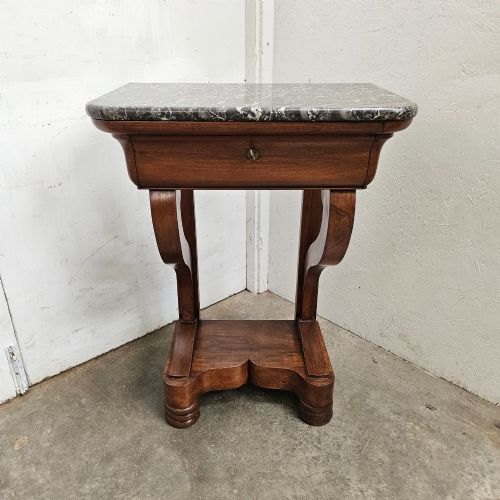
A vintage marble side cabinet encompasses bedside cabinets, lamp tables, commodes, and washstands originating predominantly from French and continental workshops. These forms date across the nineteenth and twentieth centuries, spanning Edwardian, Art Deco, and revival styles such as Louis XV and Louis XVI.
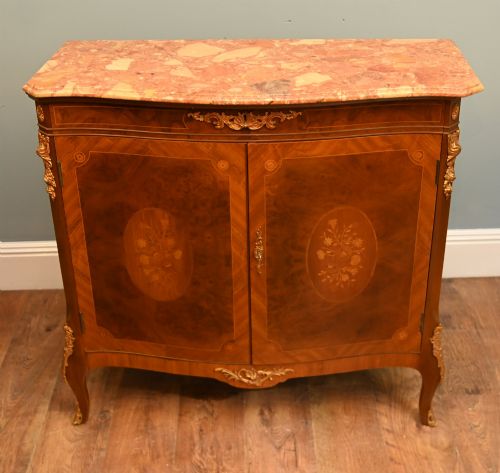
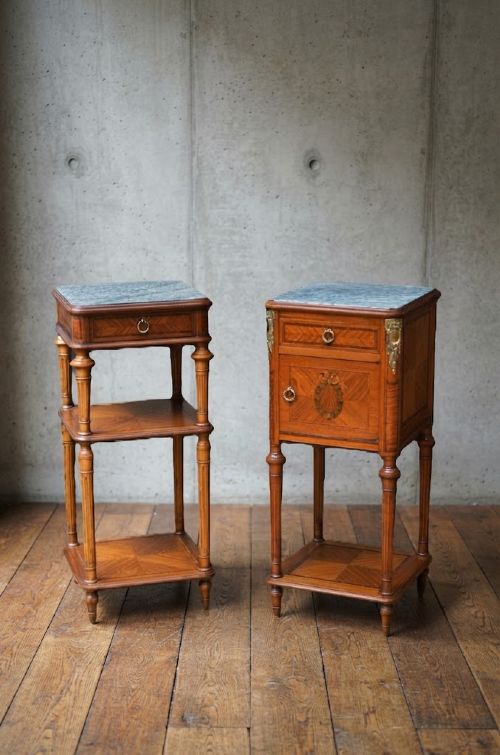
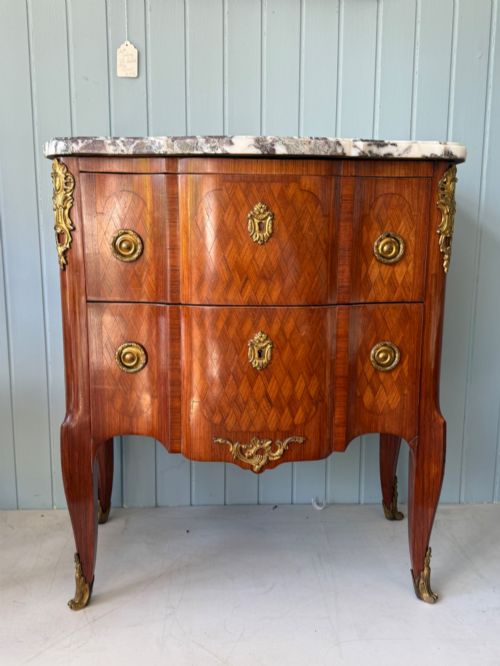
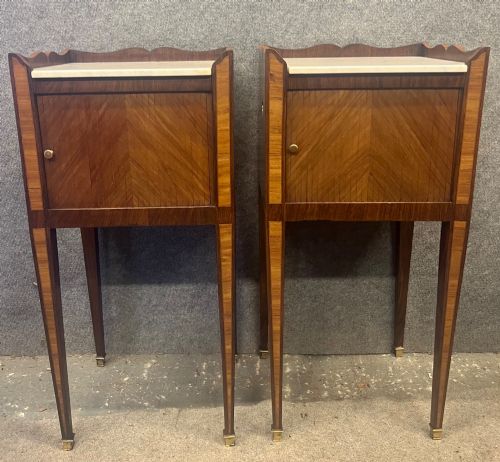
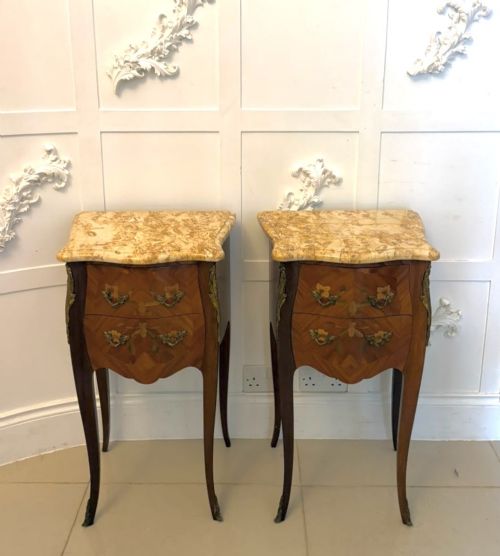
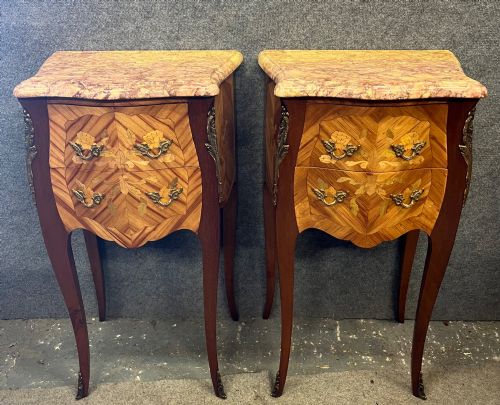
Bedside cabinets and bedside tables dominate the selection, frequently encountered in matched pairs utilising compact proportions. Larger commodes and console tables also appear, providing stone surfaces supported by timber cabinetry.
The aesthetic leans heavily toward French cabinet-making traditions, incorporating serpentine fronts, demi-lune shapes, and rectilinear structures designed for domestic utility.
Materials and Construction
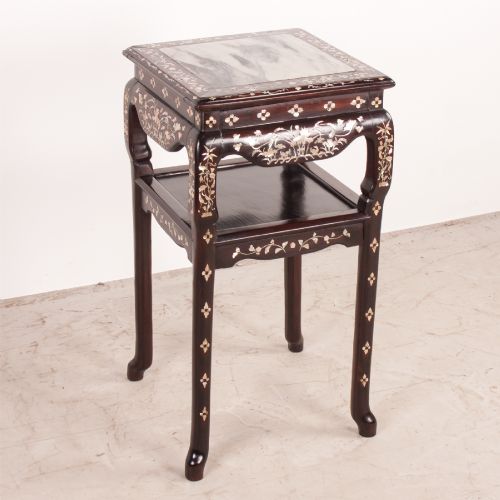
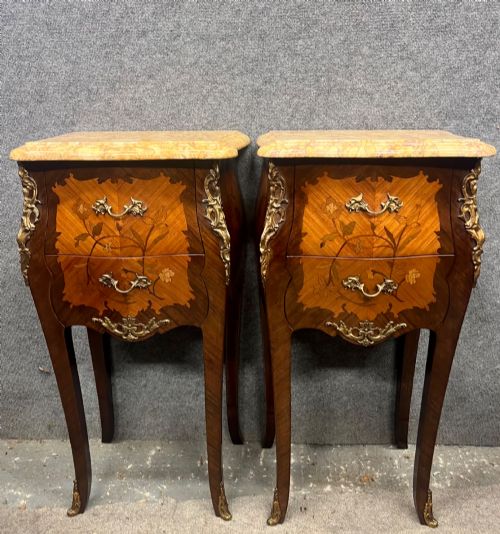
Cabinet makers constructed the primary carcasses from solid timbers including walnut, mahogany, satinwood, and kingwood, often applying veneers such as burr walnut, fruitwood, and floral marquetry. Parquetry and mother of pearl inlay frequently decorate the exterior surfaces.
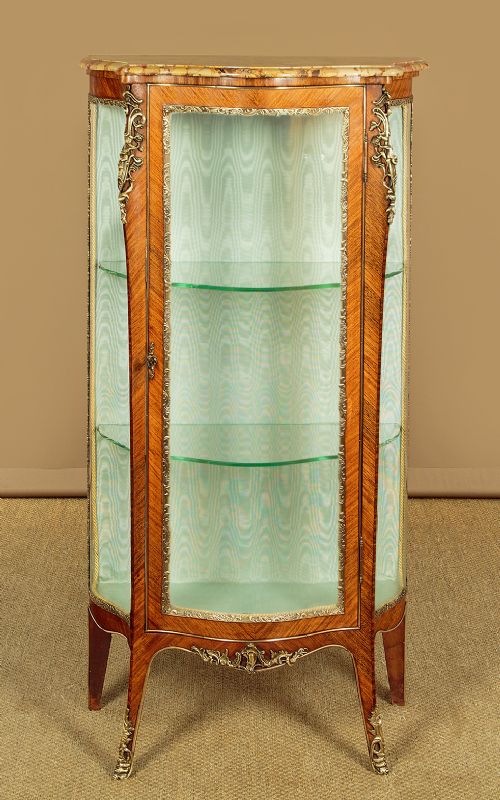
Tops consist of fitted marble, including grey and fossil varieties, shaped to follow the contours of the timber base. Cast or mounted ormolu and brass hardware accent key areas like corners, handles, and feet.
Several bedside cabinets double as music cabinets, proving that nineteenth-century evenings involved both slumber and sheet music organisation.
Craftsmanship and Proportion
Quality separates through the precision of the marquetry work and the integration of the marble top to the timber base. Superior examples demonstrate seamless matching in pairs, refined ormolu mounts, and careful selection of figured wood veneers.
Construction methods dictate longevity, observable in the tightness of drawer joints, the stability of inlaid patterns, and the weight and polish of the stone surface.
François Linke
The Vintage Marble Side Cabinet Glossary
- Marquetry
- Decorative veneer patterns assembled from thin pieces of wood, shell, or ivory to form pictorial or geometric designs on furniture surfaces. This technique requires considerable skill to align individual wood grains.
- Ormolu
- Gilded bronze mounted onto furniture as decorative handles, feet, or corner guards. It provides metallic contrast against dark timber veneers.
- Commode
- A low chest of drawers or cabinet originating in France. These pieces typically feature decorative hardware and prominent stone tops.
- Demi-lune
- A half-moon shape applied to the top and body of tables and cabinets. It allows furniture to sit flush against a wall while maintaining a curved front profile.
- Vernis Martin
- A type of European lacquer finish developed to imitate Japanese lacquerwork. It adds glossy colour and protection to decorative cabinets.
Vintage Marble Side Cabinet: Frequently Asked Questions
What rooms suit these cabinets?
These cabinets function effectively beside beds or next to seating areas as lamp tables. Their stone surfaces resist moisture and heat from small objects.
Compact forms fit easily into smaller domestic spaces while providing enclosed storage behind doors or within drawers.
How do I clean the marble?
Maintenance requires mild soap and warm water applied with a soft cloth. Avoid acidic cleaners that etch the polished stone surface.
Dry the marble thoroughly after wiping to preserve the natural finish.
Are these pieces sold in pairs?
Many bedside cabinets and lamp tables appear as matched pairs originating from the same period. Single pieces also feature among the wider selection.
Pairs offer symmetrical placement options for bedroom interiors.
How do I identify the period?
Dating relies on stylistic markers such as Art Deco geometric lines or Louis XV revival curves, alongside construction techniques. Timber choices and hardware styles further clarify the era of manufacture.
Earlier nineteenth-century pieces often display heavier proportions compared to lighter Edwardian or 1930s designs.