


Antique Marble Basin Table
An antique marble basin table brings solid timber framing and cool stone tops together to anchor a period washroom with practical utility.
Antique Marble Basin Table
An antique marble basin table is fundamentally a washstand built to hold ceramic bowls and pitchers for daily washing before modern plumbing arrived in bedrooms. These pieces emerge across the Victorian and Edwardian eras, spanning from the late nineteenth century into the opening years of the twentieth.
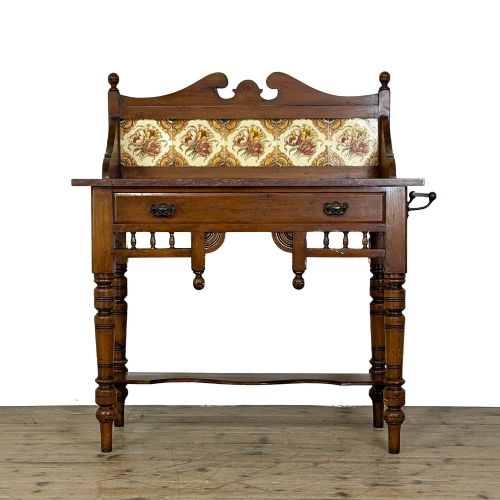
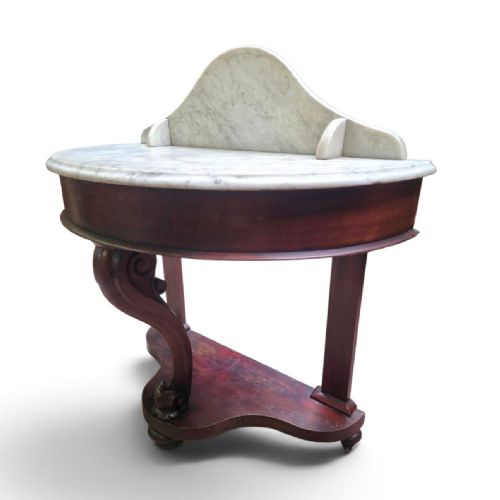
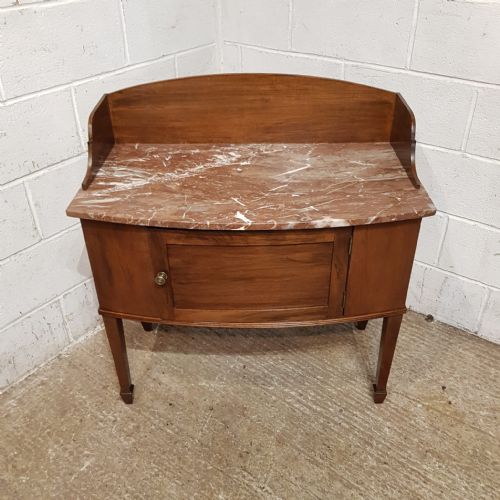
The versions most commonly met on this page combine timber frames in mahogany, satinbirch, or painted pine with heavy stone surfaces designed to resist water splashes. Washstands take various structural forms, including bow-fronted designs and simpler rectangular tables that suit smaller chambers.
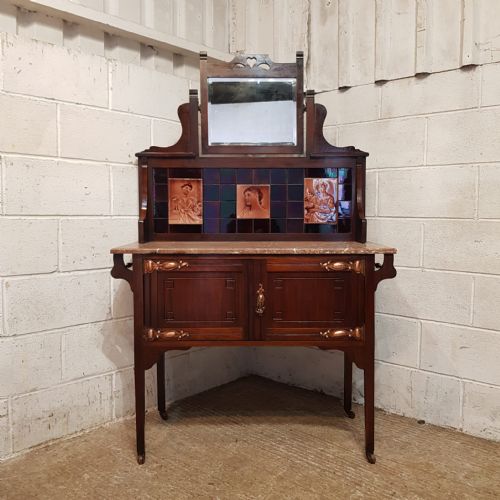
Makers of the period often incorporated ceramic tiles into the backsplashes to protect bedroom walls from daily use. These tables survive as functional furniture that easily adapts to modern bathrooms or hallways as distinctive console surfaces.
How they were made
Makers constructed the primary frames of these washstands using dense hardwoods like mahogany and satinbirch, alongside cheaper softwood alternatives such as pine finished with painted faux grain effects. These timber structures required sturdy joinery to support the substantial weight of thick stone slabs laid across the top.
Surfaces feature fitted slabs of marble, chosen for its resistance to moisture and ease of cleaning during daily ablutions. Additional fittings in brass, copper, and glass often accompanied the main structure, serving as towel rails, handles, or matching accessory vessels.
Splashes of old soapy water recorded centuries ago left marble with memories.
What varies in quality
The selection of timber dictates much of the initial quality, distinguishing finely figured mahogany and satinbirch from utility pine frames. Higher quality examples display thoughtful decorative treatments, such as bow fronts or integrated Art Nouveau styling, rather than plain functional box construction.
The integrity and figuring of the marble top also separate standard utilitarian pieces from more ambitious commissions. Original painted finishes and intact decorative ceramic tiles preserve the historical character that collectors value above stripped or heavily altered surfaces.
The Antique Marble Basin Table Glossary
- Washstand
- A piece of bedroom furniture designed to hold a basin, jug, and washing accessories. These tables predate plumbed bathrooms and often feature protective stone tops.
- Bow front
- A convex curved cabinet or table front that swells outward. This shape softens the corners of heavy wooden furniture in a bedroom.
- Satinbirch
- A pale, lustrous timber with a fine grain often used for decorative veneer and solid furniture during the late nineteenth century. It provides a lighter alternative to dark mahogany.
- Faux marble
- A painted surface finish designed to imitate the veining and appearance of real stone. Artisans applied this technique to pine to achieve an expensive look at a lower cost.
Antique Marble Basin Table: Frequently Asked Questions
Where did they put them?
These washstands stood in bedrooms and dressing rooms before the widespread installation of indoor plumbing and running water. They held the necessary ceramic basins and pitchers for morning and evening washing.
Today, many owners repurpose them as hallway console tables or vanity units in modern bathrooms. Their water-resistant stone tops make them well suited for contemporary washrooms.
How do I clean the marble?
Cleaning antique marble requires mild, pH-neutral soap and warm water applied with a soft cloth. Avoid harsh acidic cleaners or abrasive scouring pads that can etch the polished stone surface.
Dry the slab thoroughly after washing to prevent water spotting. Regular gentle care preserves the natural sheen developed over decades of use.
Are the marble tops fixed?
Most marble tops on these tables rest loose upon the wooden frame rather than being permanently glued or screwed down. This allowed makers to lift the heavy stone off for easier transport up narrow staircases.
Because they sit unattached, take care when moving the table by lifting the timber base separately from the stone slab. Two people are usually required to lift the heavy marble safely.
How do I date a washstand?
Dating relies on observing the prevailing styles, construction methods, and timber choices recorded across different decades. Victorian pieces often showcase dark mahogany and robust proportions, while later Edwardian examples tend to feature lighter woods or distinct Art Nouveau decorative flourishes.
Examining secondary timbers inside drawers and the backing boards provides further clues about the manufacturing period. Subtle shifts in hardware and tile designs help narrow down the decade of production.