
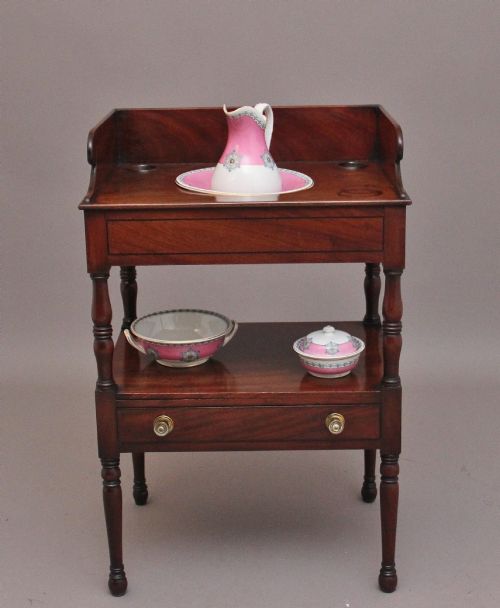
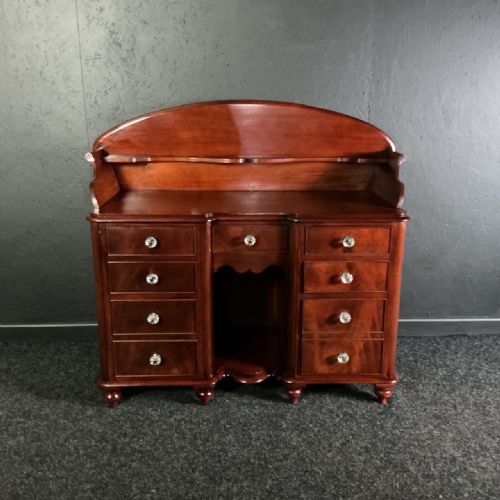


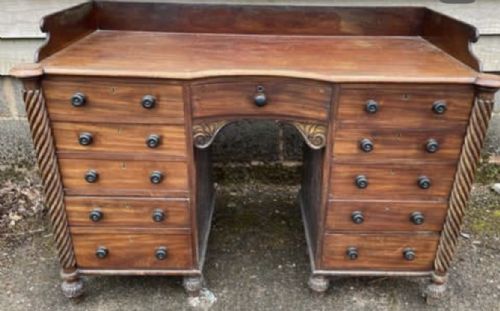
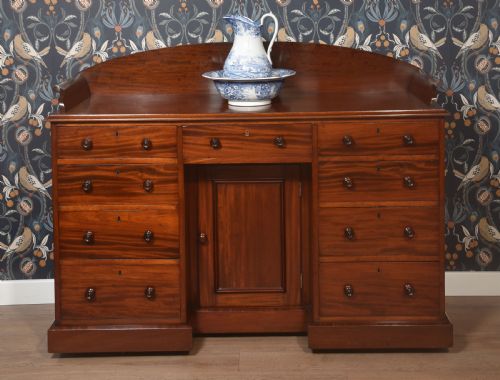


Carved Mahogany Washstand
A carved mahogany washstand brings solid timber, marble tops, and functional nineteenth-century elegance straight into a modern bedroom.
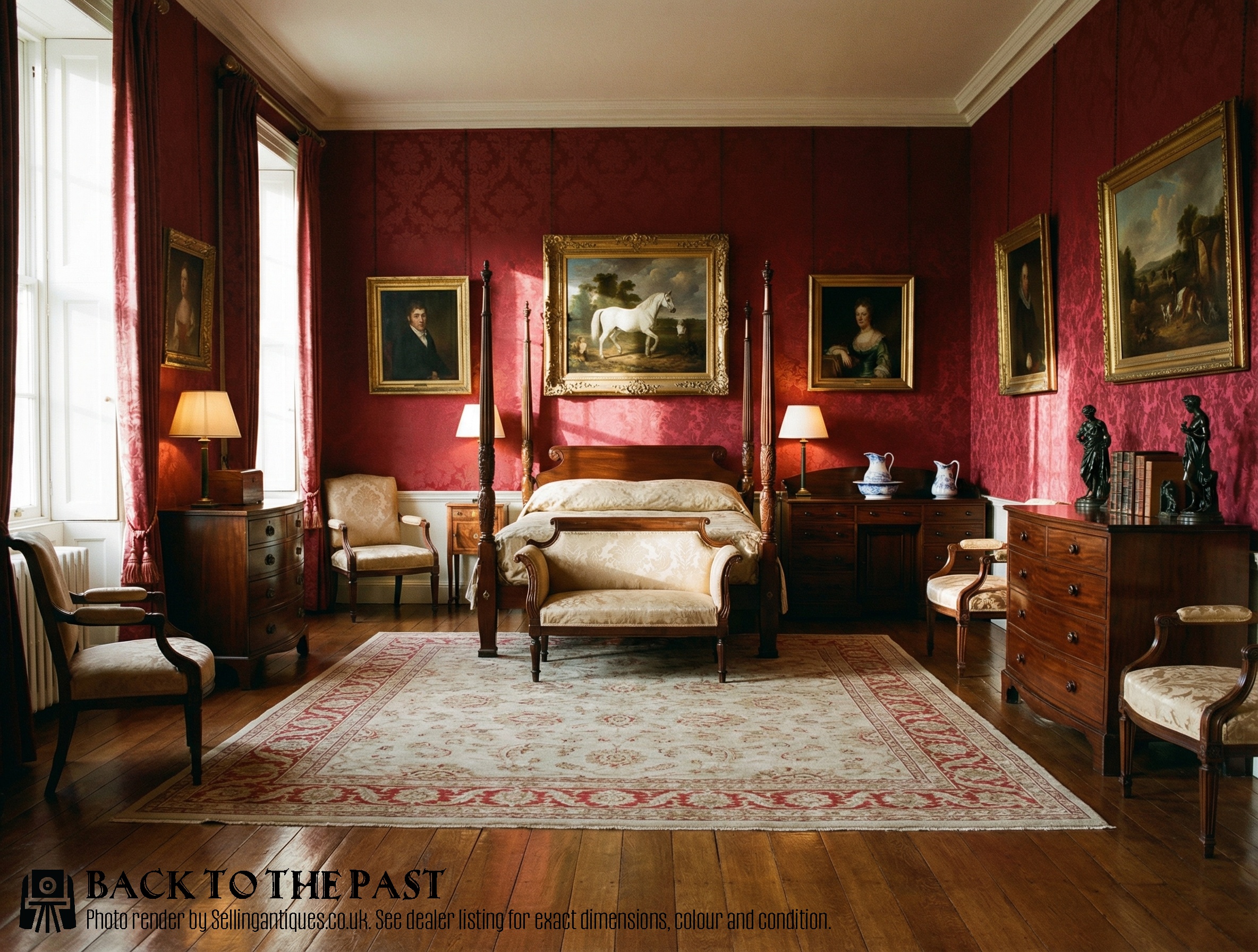
Carved Mahogany Washstand
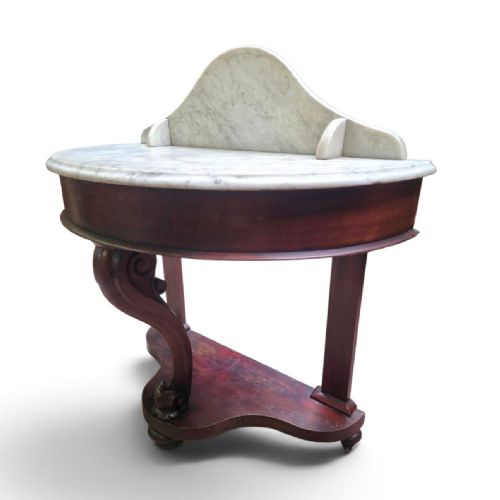
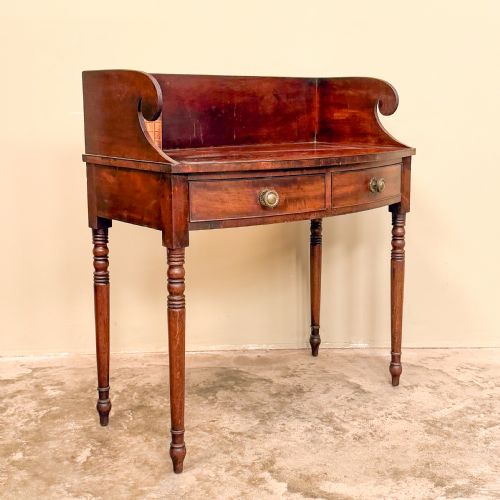
A carved mahogany washstand is a practical piece of bedroom furniture designed for washing and grooming before modern plumbing arrived. These items appear across nineteenth-century periods, including Regency, William IV, Victorian, and Edwardian eras, reflecting changing domestic habits. Pieces often dual as dressing tables, bedside tables, or side tables, demonstrating the versatile nature of historical furniture.
Buyers on this page most frequently encounter Victorian and nineteenth-century examples alongside Edwardian and French-influenced variants. Forms range from concave-front knee-hole designs to classical architectural shapes and simpler side tables. Most variations incorporate rich timber frames, sometimes paired with stone surfaces or ceramic fittings.
How they were made
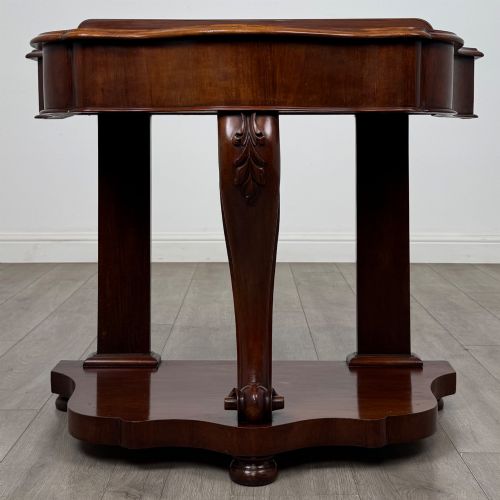
Craftsmen built these pieces primarily using solid and veneered mahogany, often supported by secondary woods such as pine for internal framing. The construction frequently incorporates decorative carving to signify style periods like French Rococo Revival or William IV.
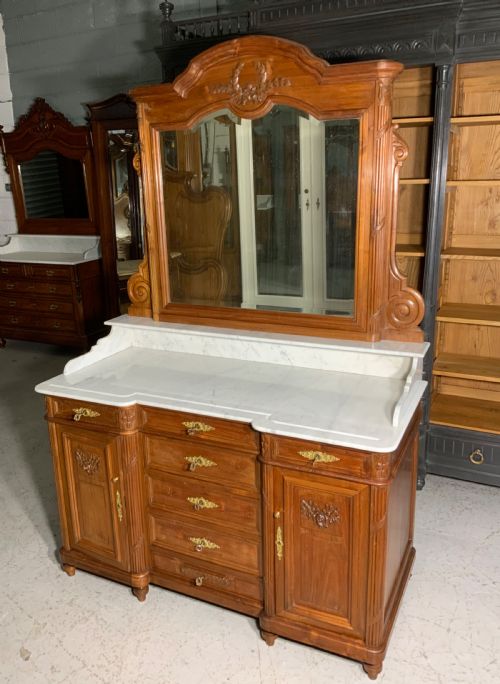
Many iterations integrate heavy slabs of marble or rouge marble for splashbacks and top surfaces, designed to withstand water exposure during daily use. Brass hardware, glass components, and ceramic elements complete the functional hardware and fittings across the different eras.
Listings feature pieces spanning the Regency, Victorian, and Edwardian periods, utilising mahogany, marble, brass, glass, and ceramic.
What varies in quality
Quality in a carved mahogany washstand depends heavily on the crispness of the timber carving and the selection of the mahogany grain. Finer examples display superior joinery, substantial structural weight, and integrated architectural details rather than plain, utilitarian construction.
The choice of accompanying materials dictates the upper tier of the range, particularly the thickness and figuring of rouge marble or white marble tops. Original brass mounts and intact ceramic or glass elements also separate standard utility pieces from higher-status furniture.
The Carved Mahogany Washstand Glossary
- Mahogany
- A durable, reddish-brown tropical hardwood prized for its stability and deep grain patterns. It served as the primary timber for high-end case furniture throughout the nineteenth century.
- Rouge marble
- A striking red-toned limestone with white and grey veining used for decorative slab tops. It adds colour and a smooth, water-resistant surface to washstands.
- Regency
- An English design period spanning the early nineteenth century characterised by classical restraint and neat architectural lines. Pieces from this era often feature concave fronts and restrained classical carving.
- William IV
- A transitional furniture style from the 1830s known for heavy, robust proportions and classical architectural forms. Items from this time display substantial timber framing and dignified presence.
- Rococo Revival
- A nineteenth-century style mimicking mid-eighteenth-century French designs with exuberant, asymmetrical carving and curved contours. It brings decorative flourish to late Victorian bedroom furniture.
Carved Mahogany Washstand: Frequently Asked Questions
What is a carved mahogany washstand?
A carved mahogany washstand is a piece of nineteenth-century bedroom furniture designed to hold basins, ewers, and washing accessories. These items feature solid timber frames, decorative carving, and often stone tops to protect the wood from water.
Over time, many of these pieces lost their original washing bowls and jugs, leading owners to use them as decorative side tables, dressing tables, or hallway consoles.
How do I date a washstand?
Dating relies on identifying stylistic markers, timber characteristics, and secondary woods like pine. Regency and William IV pieces show heavier classical architecture, while Victorian examples often embrace Rococo Revival curves or simpler turned legs.
Edwardian and later nineteenth-century items introduce lighter frames, frequently paired with marble tops and simpler overall silhouettes.
Are marble tops original?
Marble tops and rouge marble surfaces are common on nineteenth-century and Edwardian washstands because stone provided a waterproof shelf for basins and ewers. Original tops match the exact dimensions and edge profiles of the timber frame beneath.
When examining a piece, look for consistent wear patterns between the marble slab and the supporting mahogany structure to confirm period authenticity.
Can I use one as a bathroom vanity?
Many buyers repurpose these stands as modern bathroom vanities by adapting the internal cabinetry to hold modern plumbing and basins. The solid mahogany and marble surfaces lend themselves well to contemporary bathroom settings.
Careful modification ensures the historic timber remains protected from direct, pooling water while retaining the aesthetic character of the original furniture.
Did they come with mirrors?
Some washstands and dressing table hybrids included integrated mirror frames or matching splashbacks, particularly in Victorian and Edwardian iterations. These additions allowed the furniture to serve a dual grooming function in the bedroom.
Surviving pieces frequently show where pivoting mirror brackets or high marble backs were originally mounted into the timber top.