

Vintage Mahogany Vitrine
A vintage mahogany vitrine protects precious possessions behind glass while introducing rich timber grain and classic revival styles to a room.
Vintage Mahogany Vitrine
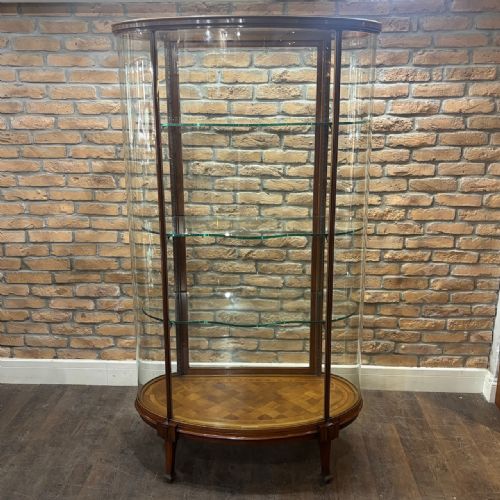
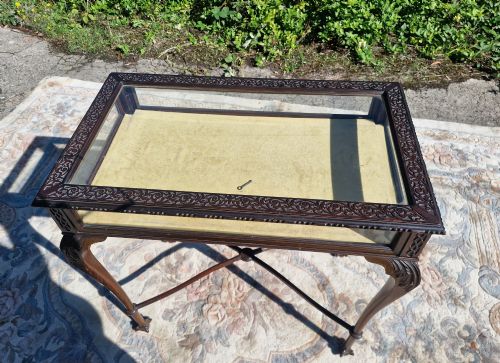
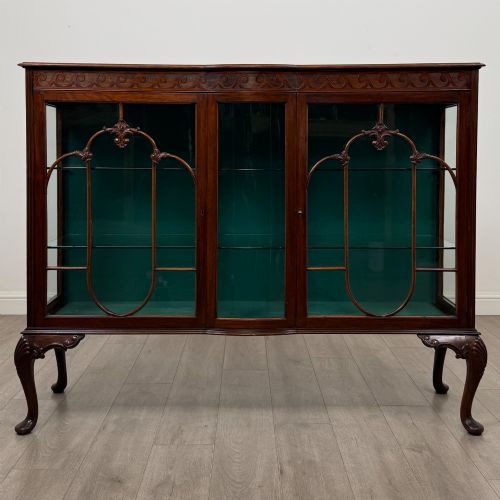
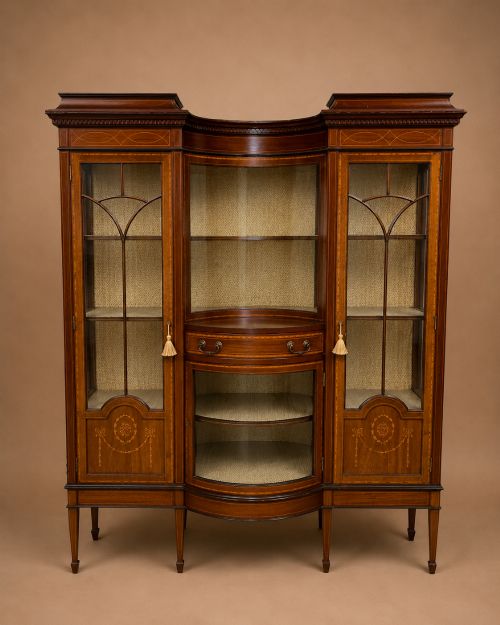
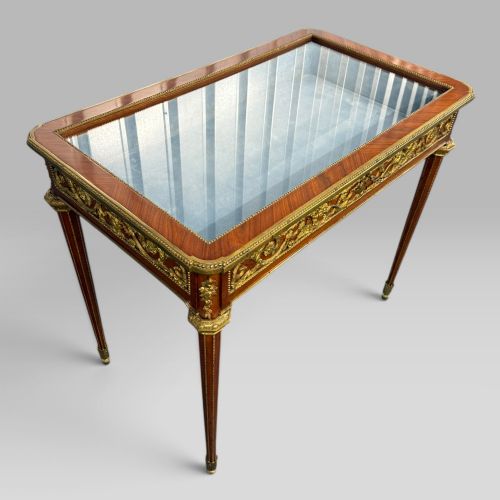
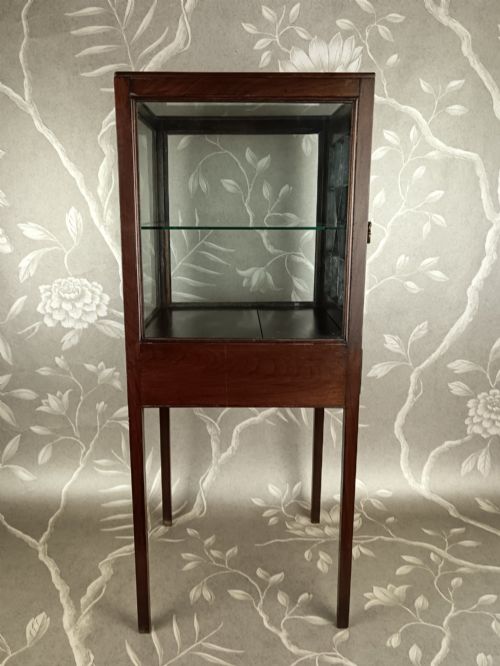
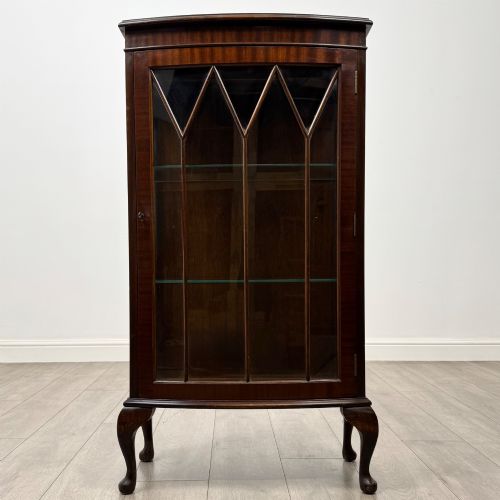
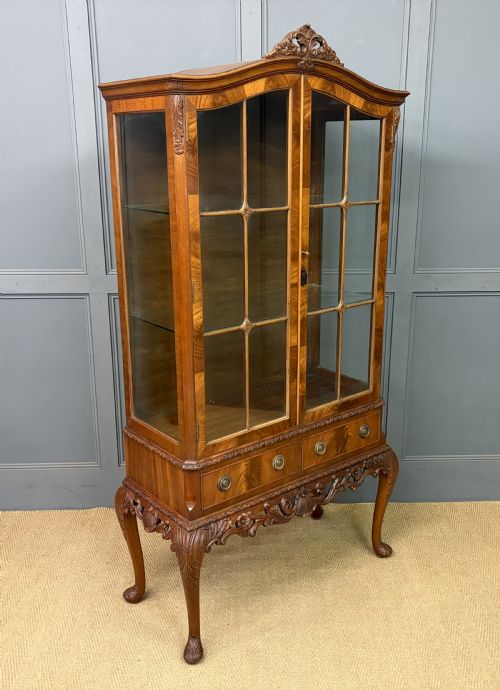
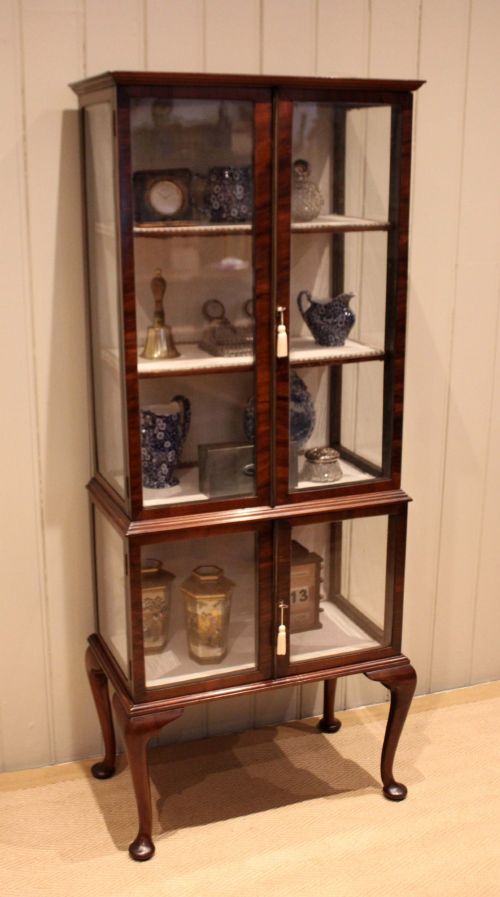
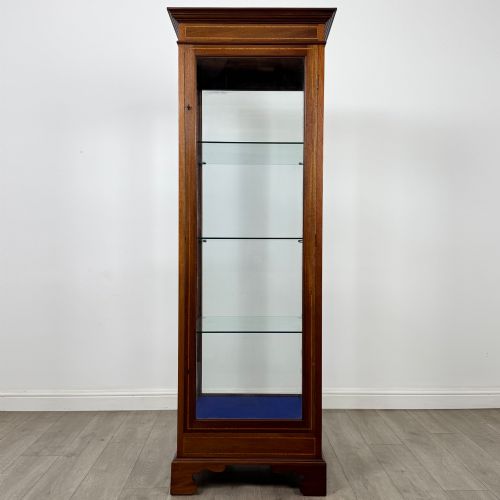
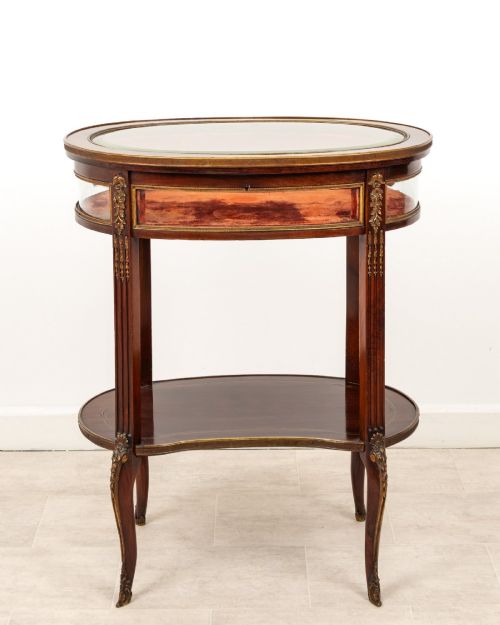
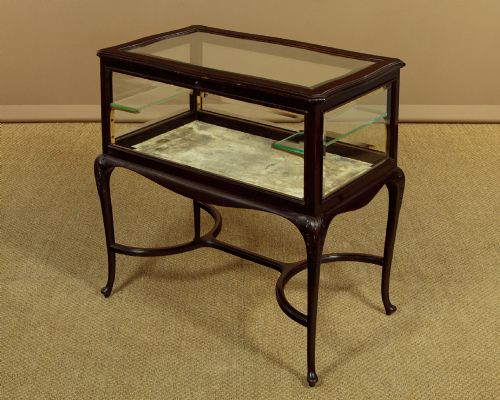
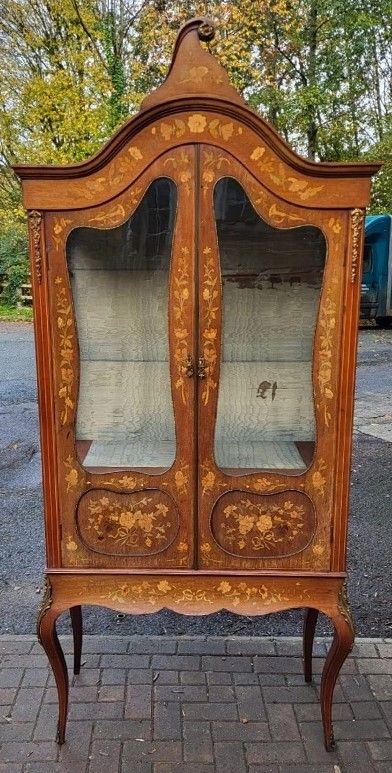
A vintage mahogany vitrine serves primarily to display porcelain, silver, and curiosities while keeping dust at bay. These glazed display pieces take various forms, from tall freestanding cabinets and bow-fronted shop cases to low bijouterie tables with glass tops.
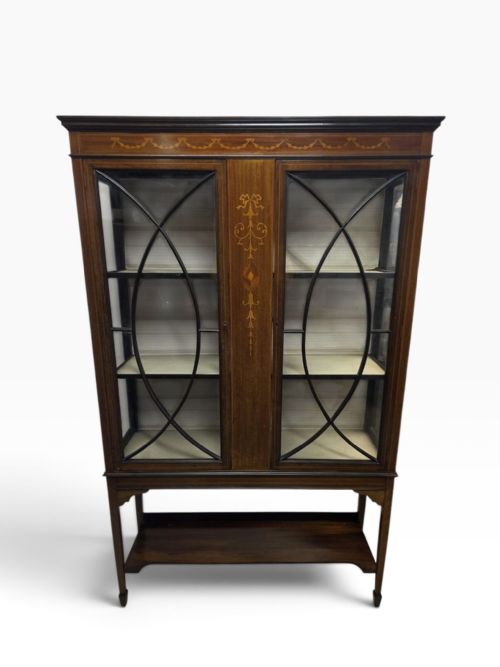
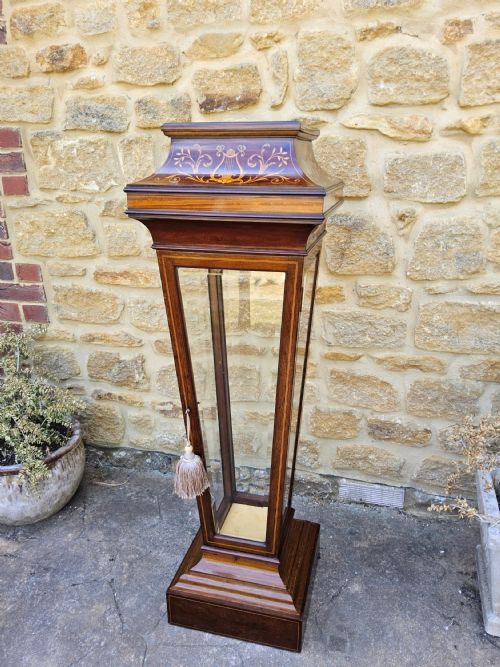
Edwardian examples dominate the selection, frequently decorated with delicate satinwood inlay or floral marquetry. Revival aesthetics also feature strongly, drawing inspiration from Chippendale, Sheraton, and Louis XVI designs across the late nineteenth and early twentieth centuries.
How they were made
Makers built these cabinets using solid and veneered mahogany, often incorporating contrasting satinwood inlay and fine brass hardware. Interiors frequently relied on mirrored backs and adjustable glass shelves to reflect light through the displayed objects.
Some French-influenced and revival pieces utilised ormolu mounts, velvet linings, and complex floral marquetry. Glazing techniques ranged from simple rectangular panes to curved bow ends and intricate astragal bars.
Listings feature Edwardian, 19th Century, and 1920s periods, incorporating materials such as mahogany, glass, brass, satinwood, and velvet.
What varies in quality
The standard of timber selection and inlay precision sets finer examples apart from simpler utilitarian display cases. Subtle details such as finely carved astragal mouldings, well-fitted doors, and balanced proportions reveal the hand of superior cabinet makers.
Interior elements also distinguish the grade of a piece, with mirrored backs, silk or velvet linings, and adjustable glass shelving indicating higher production values. The crispness of marquetry and the weight of brass mounts signal the level of craftsmanship involved.
F Sage And Co·Maple And Co
The Vintage Mahogany Vitrine Glossary
- Vitrine
- A glass-fronted cabinet or display case designed specifically for showcasing fine objects and curiosities. These pieces often feature glazed sides to maximise light exposure.
- Bijouterie table
- A low display table with a glass top and glazed sides, originally used for showing small jewellery and personal trinkets. They frequently stand on slender legs.
- Satinwood inlay
- A contrasting light-coloured wood used to create decorative geometric or floral patterns within the darker mahogany surface. This technique requires exceptional precision.
- Astragal bar
- A narrow wooden or brass moulding that holds individual panes of glass within a door frame. They form decorative geometric patterns across the front of cabinets.
- Marquetry
- Elaborate decorative veneer work arranged in pictorial or floral patterns using various tinted woods. It provides surface ornamentation on Edwardian and revival furniture.
Vintage Mahogany Vitrine: Frequently Asked Questions
What is a vintage mahogany vitrine?
A vintage mahogany vitrine is a glazed display cabinet built to exhibit delicate ornaments, ceramics, and collectables. These pieces combine rich mahogany timber with transparent glass panels.
They appear primarily in Edwardian and revival styles, functioning both as practical storage and decorative furniture. The form ranges from tall standing cabinets to low tabletop display cases.
How do you date a vintage vitrine?
Dating relies on examining the timber, construction methods, and stylistic revival influences present in the cabinet. Edwardian examples often display light satinwood inlay and delicate marquetry.
Heavier proportions and specific revival motifs like Chippendale or Louis XVI styling offer further clues to the manufacturing decade. Hardware, glass clarity, and mirror backing techniques also help narrow the period.
Where should I place a vitrine?
A vitrine sits best in a drawing room, dining room, or hallway where natural light can enter the glass panels. Placing it away from direct sunlight protects both the mahogany timber and interior fabrics.
Ensure the floor remains level so the glass doors hang straight and close securely. Freestanding tall cabinets benefit from secure placement against sturdy walls.
How do I care for mahogany?
Maintenance involves dusting the timber regularly with a soft, dry cloth and avoiding silicone-based polishes. Keep the cabinet away from extreme temperature shifts and radiators to prevent wood splitting.
Glass panels and internal mirrors clean easily with standard glass cleaner applied sparingly to a cloth. Checking the stability of hinges and adjustable shelf supports preserves the structure over time.