

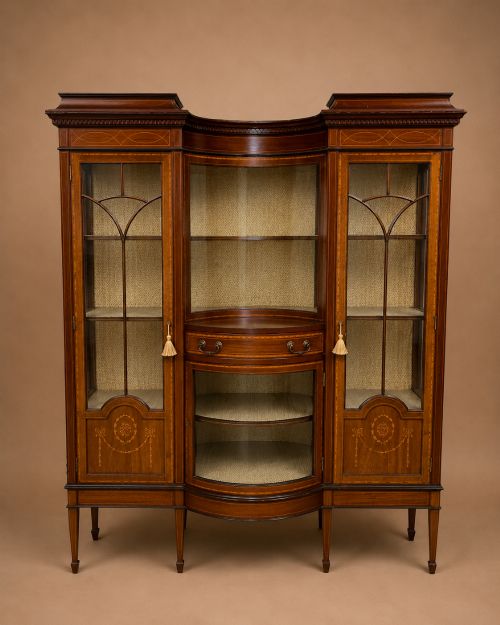
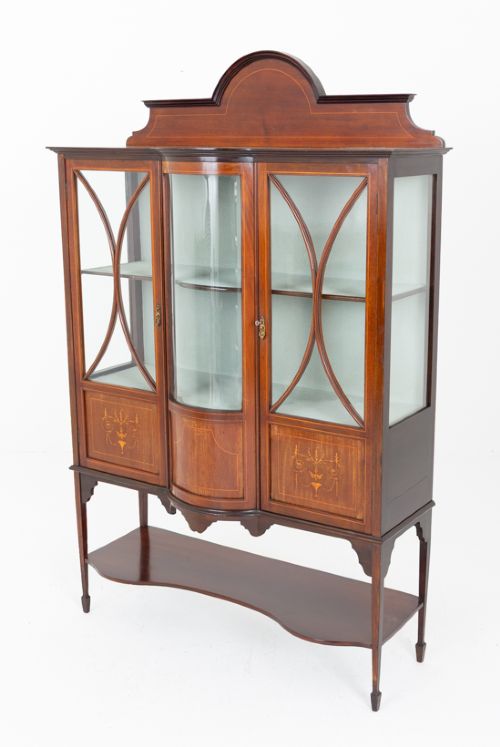
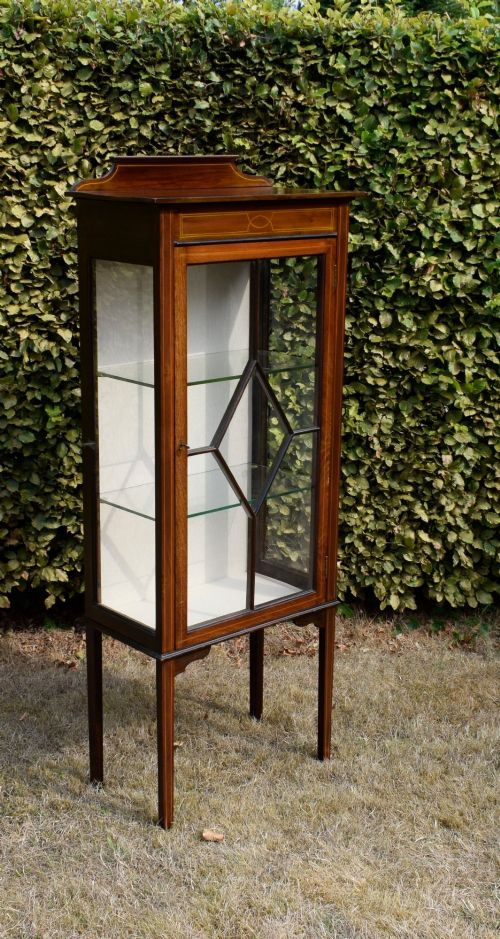
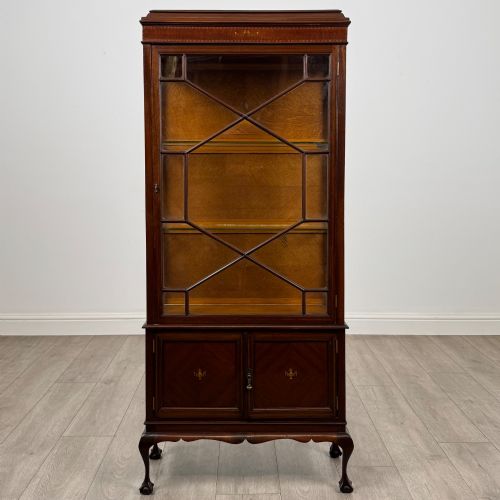
Inlaid Mahogany Display Case
An inlaid mahogany display case brings warmth and proportion to a room while holding collections behind glass.
Inlaid Mahogany Display Case
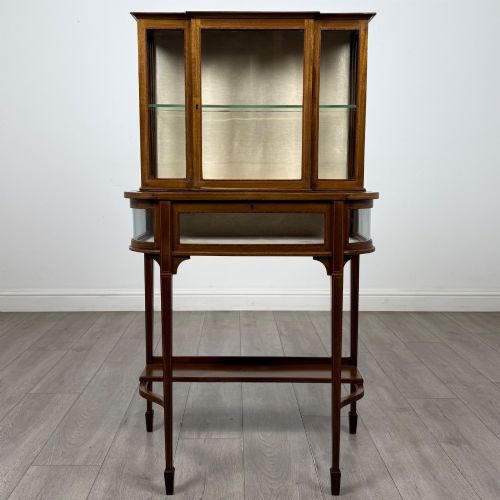
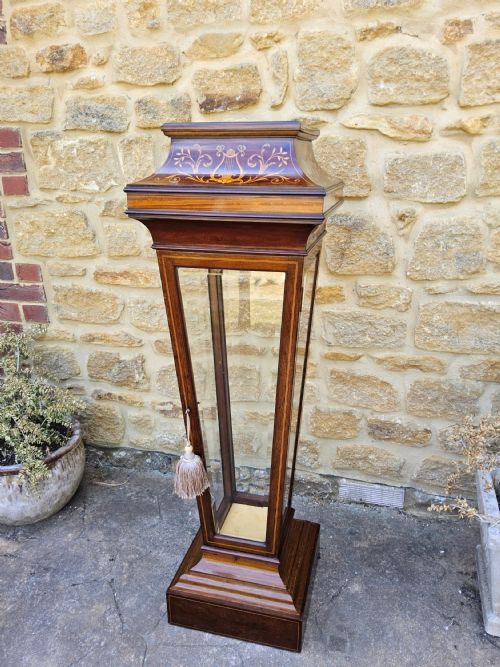
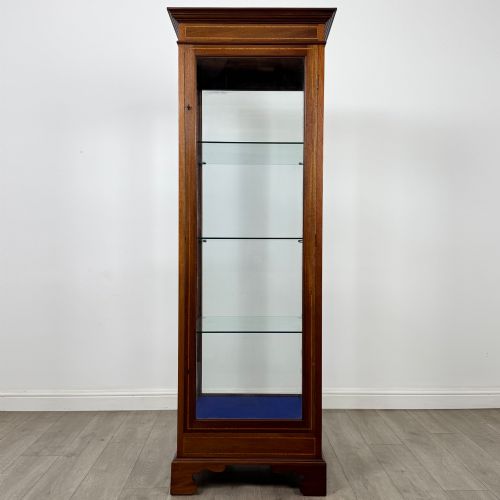
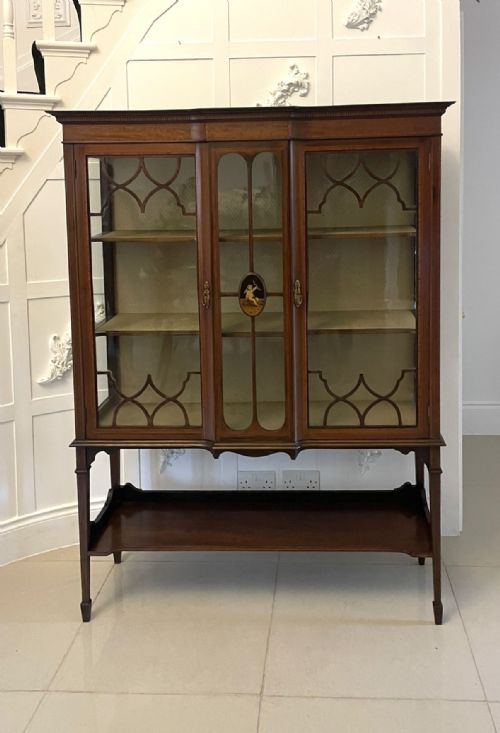
An inlaid mahogany display case most commonly appears from the Edwardian period and the early twentieth century, alongside examples stretching back into the eighteenth and nineteenth centuries. These pieces take various architectural forms, from freestanding vitrines and slender pedestal cabinets to wall-mounted corner units and low display tables designed to protect smaller objects.
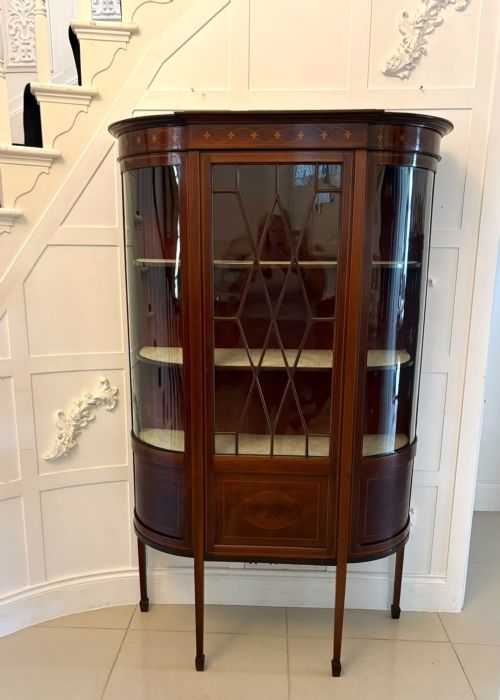
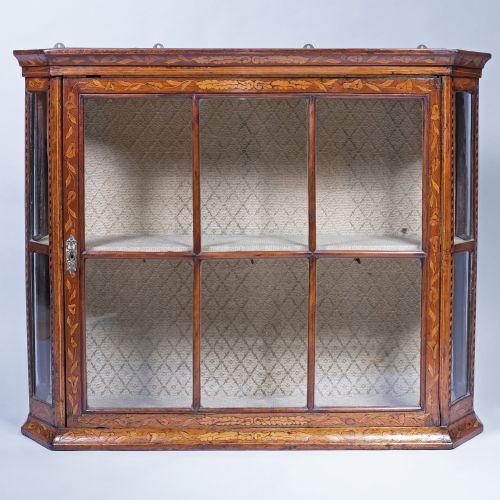
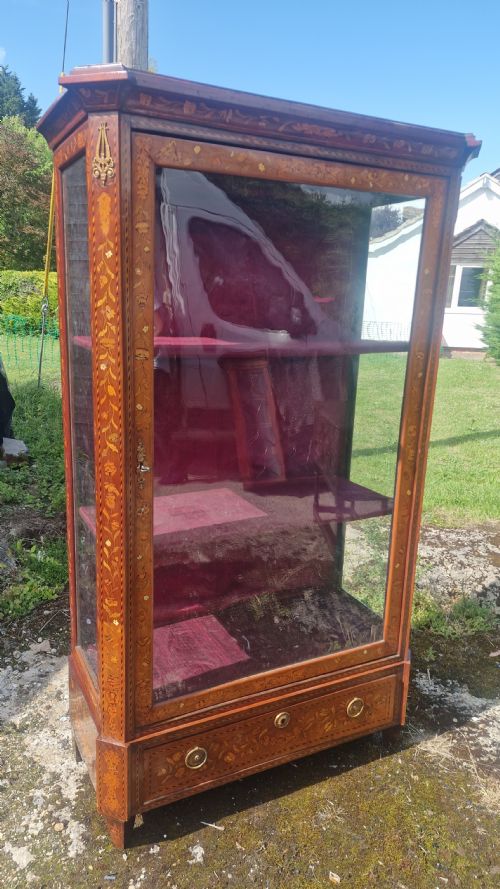
Edwardian interpretations frequently channel the Sheraton revival style, adopting symmetrical lines and delicate proportions suitable for drawing rooms. Earlier Georgian pieces tend to exhibit heavier timber construction and restrained corner placement, whereas later nineteenth-century iterations incorporate Dutch marquetry or simpler glazed doors.
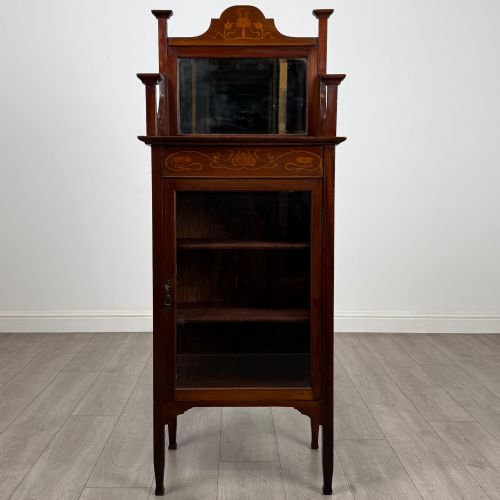
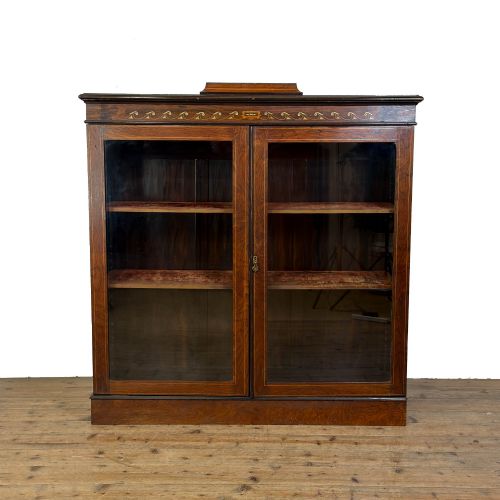
Buyers will encounter tall bookcases with display functions as well as compact wall cabinets, reflecting how differently homes utilised glass storage across the Georgian and Edwardian eras. The prevalence of Edwardian furniture on this page means most pieces rely on lighter framing and precise satinwood stringing rather than heavy Victorian mass.
Materials and Construction
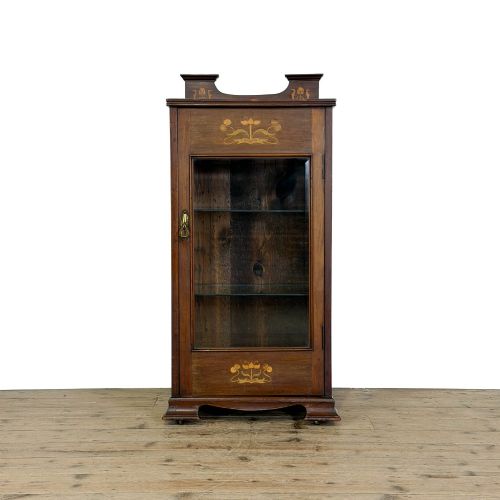
The primary carcass relies upon rich mahogany timber, frequently selected for straight grain or flame patterns, combined with secondary woods for internal framing and shelving. Craftsmen embellished these surfaces with contrasting wood inlay, predominantly satinwood, utilising fine stringing and floral marquetry motifs to define panel borders and cornices.
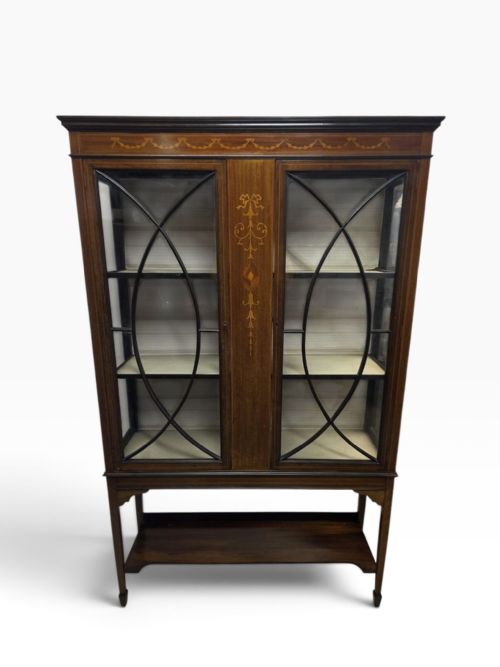
Glass panels form the primary barrier on doors and sides, held securely by wooden astragals that create geometric or arched panes. Brass hardware, including hinges, key escutcheons and small drop handles, completes the structural assembly alongside internal fabric or velvet linings within select display compartments.
Listings feature various forms of inlaid mahogany display cases, ranging from Edwardian pedestal vitrines and tall bookcases to Georgian wall corner cabinets.
Distinctions in Standard
The sophistication of the wood inlay separates standard production from superior cabinet work, with crisp, tightly fitted satinwood banding indicating greater workshop skill. The precision of the glass framing and the clarity of the original glazed panels likewise dictate the refinement of the piece.
Proportion and structural integrity define the higher tiers of surviving cabinetry, where internal adjustable shelving and unwarped doors demonstrate enduring utility. Maker attribution, when present through stamps or paper labels, elevates historical interest alongside the intricacy of marquetry and crossbanding.
EDWARDS and ROBERTS·Maple and Co
The Inlaid Mahogany Display Case Glossary
- Marquetry
- Elaborate decorative veneer patterns applied to furniture surfaces to create pictorial or geometric designs. Craftsmen cut contrasting wood veneers together to achieve tight, seamless joints.
- Vitrine
- A glass-fronted cabinet or display case designed specifically for showing porcelain, curiosities or fine ornaments. These pieces usually feature glass on multiple sides to maximise interior illumination.
- Astragal
- A small wooden moulding forming the grid or framework that holds individual panes of glass within a door. Fine astragals lighten the visual weight of large glazed areas.
- Satinwood
- A pale, lustrous exotic timber utilised extensively for contrasting inlay and banding on darker mahogany furniture. Its bright yellow-gold tone provides sharp visual definition.
- Sheraton Revival
- A late nineteenth and early twentieth century design movement that reinterpreted the neoclassical furniture forms popularized by Thomas Sheraton. It favours light proportions, satinwood inlay and classical symmetry.
Inlaid Mahogany Display Case: Frequently Asked Questions
What is an inlaid mahogany display case used for?
These cabinets were originally manufactured to protect and exhibit valued ceramics, glassware and delicate ornaments away from household dust and handling.
Today, they serve the same practical function in domestic interiors while introducing historical warmth and refined woodwork to a room.
How do I tell Edwardian pieces apart from Georgian ones?
Edwardian examples, particularly those from the Sheraton revival, tend to feature lighter timber frames, delicate satinwood stringing and bright mahogany tones.
Georgian cabinets typically display heavier proportions, deeper wood patination, and functional architectural cornices built for robust longevity.
Where should I place a corner display cabinet?
Wall-mounted or freestanding corner units make efficient use of unused junctions in dining rooms or drawing rooms without dominating floor space.
Their triangular footprint allows them to tuck neatly into room perimeters while drawing the eye upward through glazed display doors.
What is a bijouterie table?
A bijouterie table is a low display case with a glazed top designed specifically for holding small personal treasures, medals or jewellery at a comfortable viewing height.
These pieces often feature hinged lids lined with velvet or fabric to showcase items horizontally rather than vertically on shelves.