
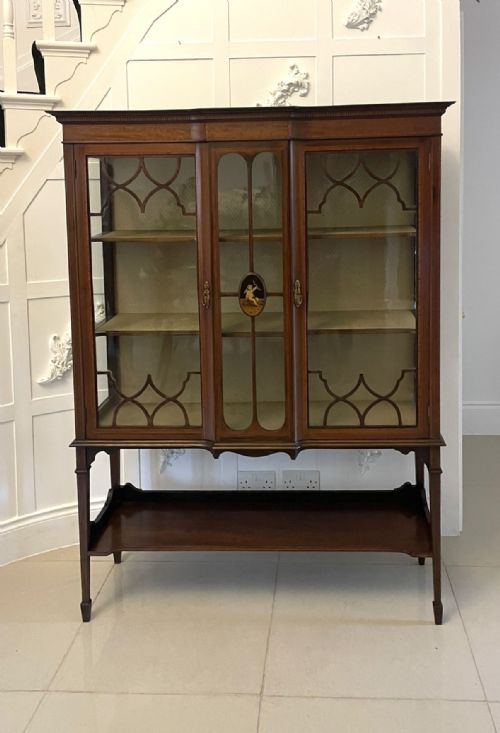
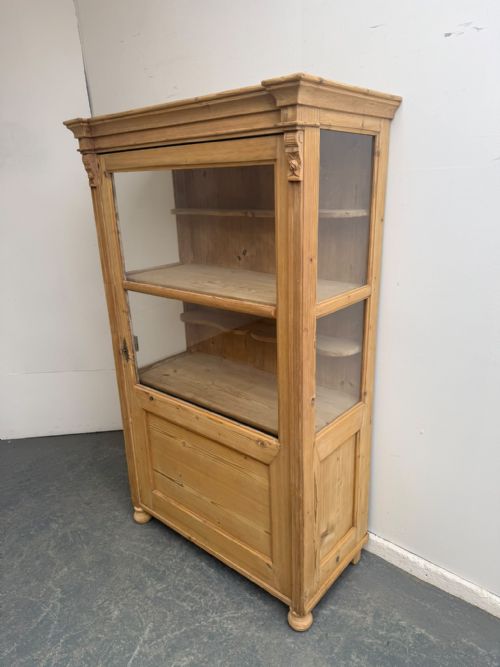
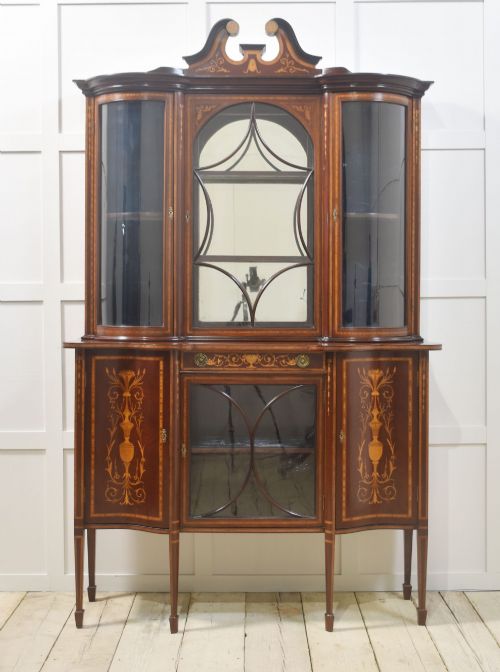
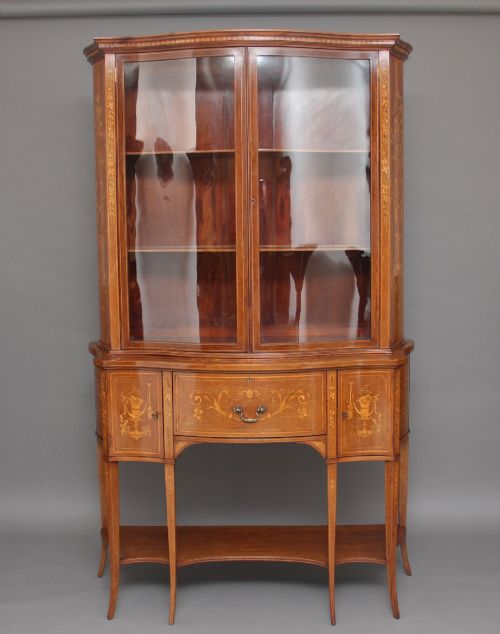
Standing Glass Display Case
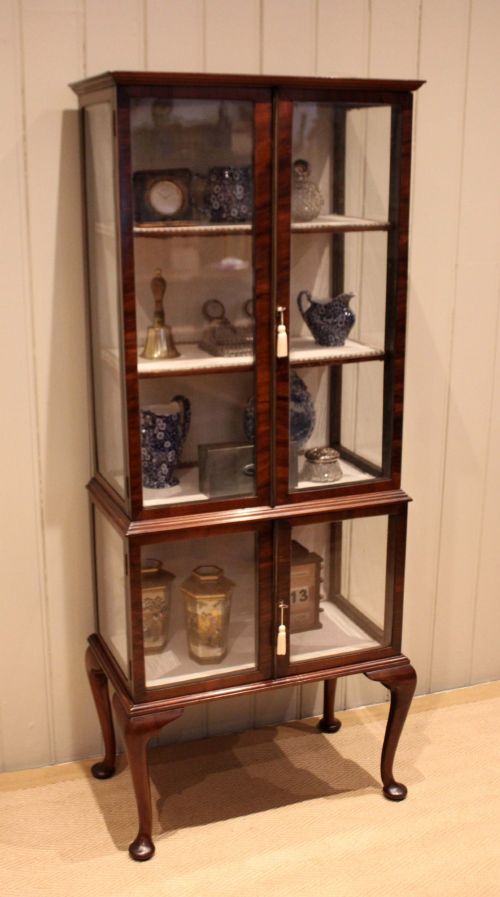
A standing glass display case holds porcelain and silver behind glazed panels, bringing light and order to any room.
Standing Glass Display Case
A standing glass display case provides a tall, glazed enclosure to exhibit collected items while keeping dust at bay. These pieces stand upright on floors, lifting precious objects to eye level within framed wooden structures.
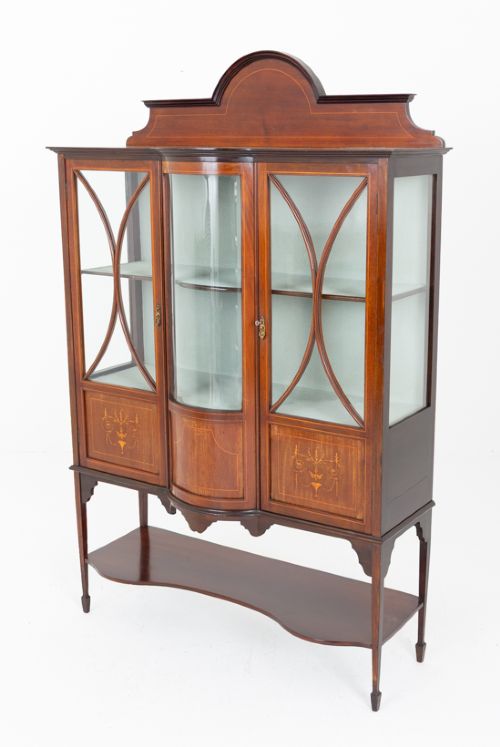
Most examples found here date from the Edwardian period and the late nineteenth century, leaning heavily on mahogany, walnut and satinwood. Cabinet makers of those decades favoured classical revivals, producing proportions suited to period and modern interiors alike.
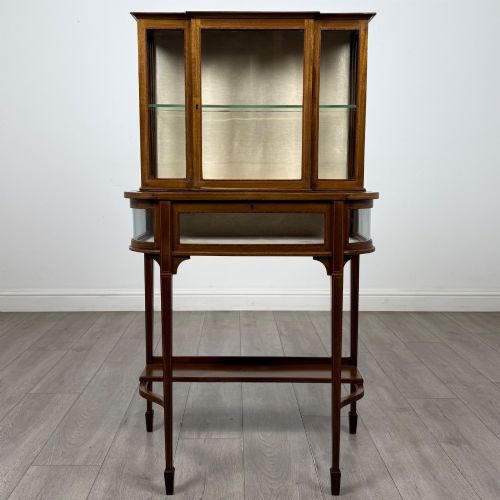
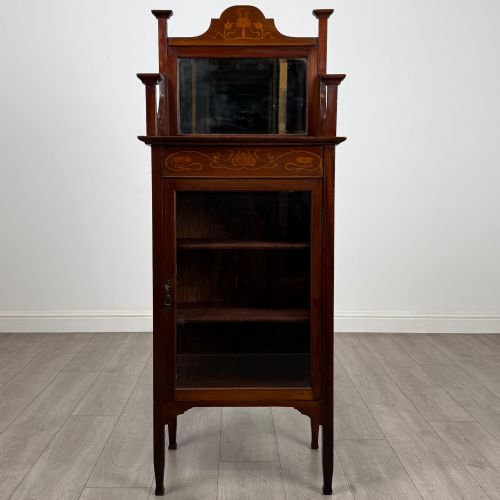
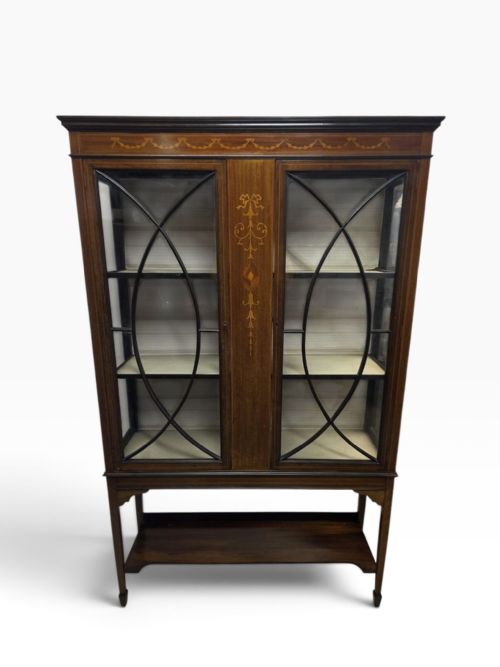
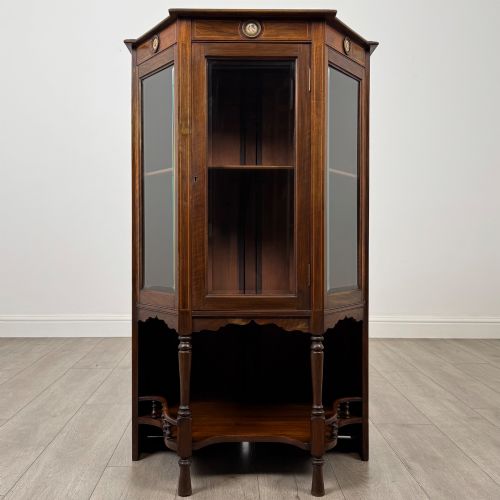
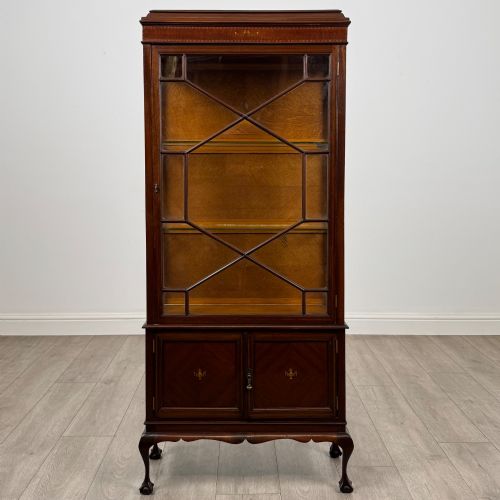
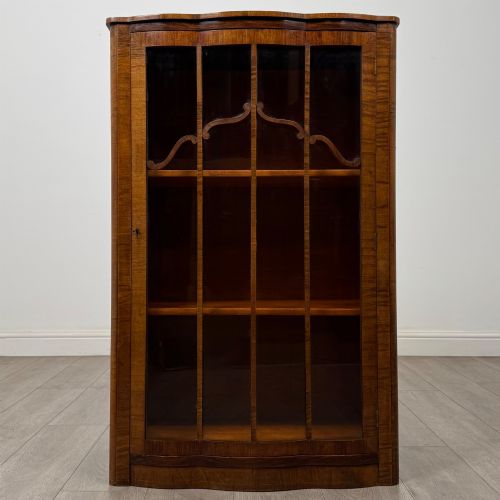
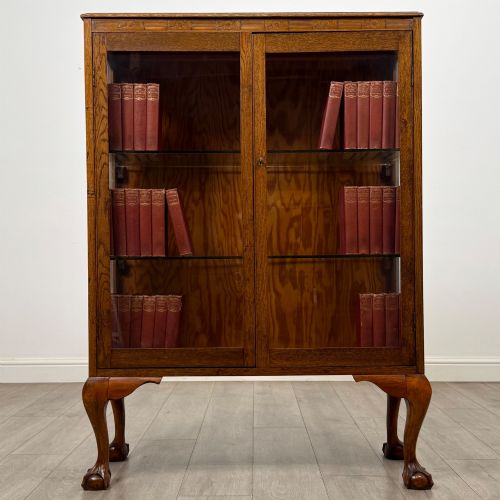
Formations vary from slender corner cabinets and flat-fronted display cases to low bijouterie tables and tall bookcases fitted with glass doors. The common thread is transparency, designed to display contents from multiple angles.
Materials and Construction
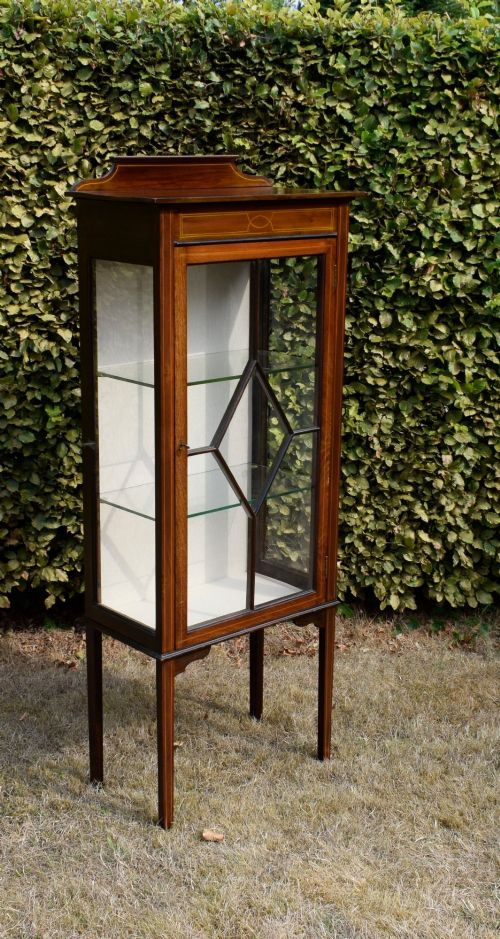
Timbers like mahogany, walnut and oak form the structural carcasses, often accented with satinwood inlay or delicate stringing. Carpenters joined these hardwoods using traditional housing and mortise joints to support heavy glass doors.
Glazing relies on timber frame bars holding individual panes of glass, occasionally curved as seen in specialised vitrines. Brass hardware secures the doors, while fabric linings sometimes cushion the interior shelves where delicate objects rest.
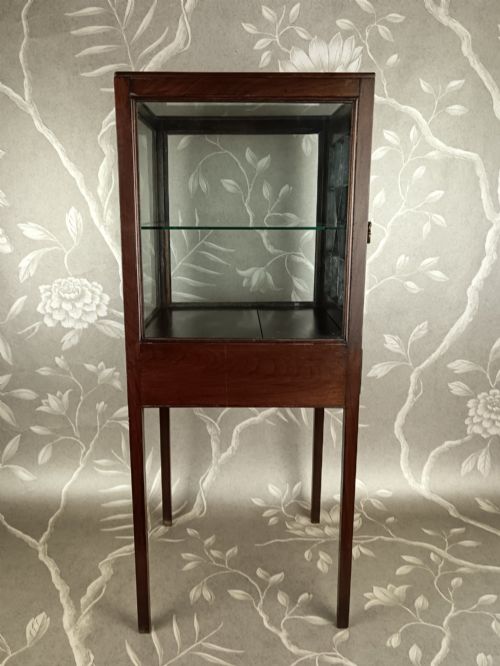
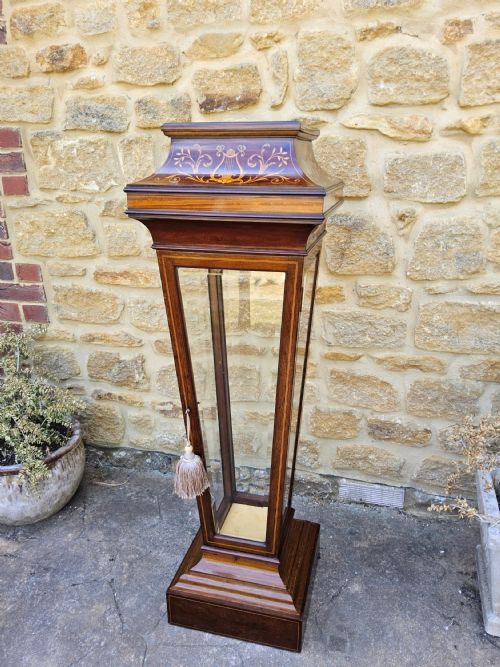
Glazed display cases on this page encompass floor bookcases, corner cabinets, bijouterie tables and dedicated vitrines.
Judging Quality
Quality rests on the crispness of the timber inlay, the grain selection in figured walnut or mahogany veneers, and the joinery of the door frames. Superior pieces exhibit tight mitres and well-balanced proportions that feel harmonious from every angle.
The choice of glass and internal fittings also separates standard utility cabinets from finer examples. Uniform timber thickness and intact brass hinges indicate a higher standard of workshop production.
The Standing Glass Display Case Glossary
- Vitrine
- A glass-fronted display cabinet designed specifically for showing porcelain and small ornaments. These tall cases use glass on multiple sides to maximise internal illumination.
- Bijouterie table
- A specialised display case featuring a glazed top and shallow compartment for small valuables such as medals or jewellery. They stand on slender legs at a height convenient for looking straight down inside.
- Satinwood inlay
- A decorative technique where contrasting light timber is let into the primary mahogany or walnut surface. This creates fine geometric lines and floral motifs across the cabinet facade.
- Sheraton Revival
- A design style popular around nineteen hundred that reinterprets eighteenth-century neoclassical furniture. These pieces feature balanced proportions, tapered legs and restrained stringing.
- Corner cabinet
- A triangular display case shaped to fit neatly into the angle of a room. They make efficient use of difficult spaces while providing shelved storage behind glass doors.
Standing Glass Display Case: Frequently Asked Questions
What fits inside a standing glass display case?
These cabinets suit porcelain collections, glassware, silver and small curiosities that benefit from protection against dust. The enclosed wooden and glass structure keeps delicate items secure while remaining fully visible.
Heavier items belong on the lower wooden shelves, leaving the upper glass-backed tiers for lighter decorative pieces.
How do I date a display cabinet?
Dating relies on timber choices, construction methods and stylistic revival traits. Edwardian pieces often display satinwood inlay and light mahogany frames, whereas nineteenth-century versions utilise heavier walnut and denser carcase construction.
Examining the backboards and drawer linings provides additional clues regarding the workshop era.
Where should I place a display case?
A standing display case requires stable floor space away from direct sunlight to protect interior fabrics and wooden finishes. Positioning them perpendicular to windows allows natural light to filter through the glazed sides.
Ensure the room has consistent humidity levels to prevent timber shrinkage and protect glass door alignment.
Are corner display cabinets practical?
Corner cabinets utilise awkward room angles effectively, turning dead space into functional exhibition areas. Their triangular footprint projects less into the main floor area than flat-fronted alternatives.
They offer surprisingly deep shelf capacity while maintaining a compact visual presence in smaller sitting rooms.