



Bow Top Cabinet
Bow top cabinet items bring curved fronts and compact storage into a room, offering genuine period character for practical modern living.
Bow Top Cabinet
A bow top cabinet or curved front piece delivers distinctive rounded proportions, and buyers searching for a bow top cabinet frequently encounter bedside cupboards, commodes, and display cabinets across this selection. These items span periods from the eighteenth century through the Victorian era and into twentieth-century iterations, showing varied domestic and display uses.
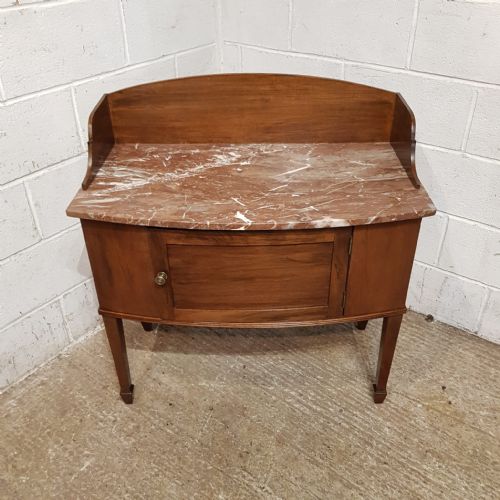
Forms range from George III mahogany bedside cupboards and Georgian corner wash stands to Louis XV kingwood commodes and Italian marquetry side cabinets. Countertop display units and wash stands with marble tops also appear regularly, demonstrating the broad scope of curved cabinetry historically produced.
How they were made
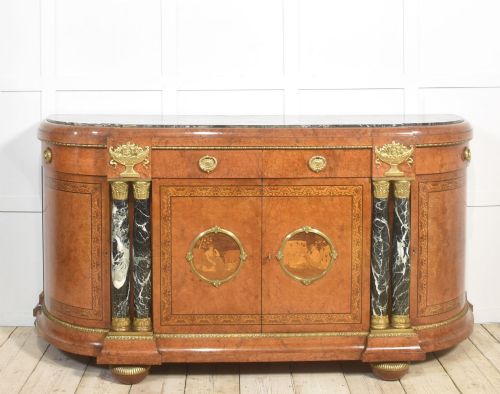
Construction relies heavily on mahogany, burr walnut, and kingwood timbers, frequently shaped into curved profiles by skilled cabinet makers. Marquetry inlay and parcel gilt details enhance many of the surfaces, showing precise decorative techniques.
Marble tops, ormolu mounts, brass hardware, and glass panels integrate into the designs, particularly on pieces intended for display or washing purposes. Gilded wood and nickel elements further accent the structural woodwork across various periods.
Bow Top Cabinet Retail Price Guide 2026
Typical asking prices for bow top cabinet among the pieces listed under this phrase on Sellingantiques today, from the lower quarter to the upper quarter. They describe what is for sale here now, not the wider market.
Periods represented span from the eighteenth century through Victorian times into the twentieth century.
What varies in quality
Quality rests in the precision of the curved woodwork and the integrity of the timber figuring, where select burr walnut or finely matched mahogany elevations lift a piece above standard utility. The execution of marquetry inlay and the correct integration of marble tops or brass mounts dictate the overall refinement.
Finer examples maintain original hardware and structural stability within their curved frames, whereas simpler iterations rely on straightforward joinery. The harmony between the bowed timber front and the secondary woods reveals the original maker's intent.
The Bow Top Cabinet Glossary
- Bow front
- A convex curved cabinet front that projects outward in a smooth arc. This shape softens room lines and maximises internal storage capacity.
- Marquetry
- Decorative veneer patterns arranged in pictorial or geometric designs using various coloured woods. Craftsmen cut these pieces precisely to fit flush across cabinet doors and drawer fronts.
- Ormolu
- Gilded bronze mounts applied to furniture edges and feet for decorative contrast. This technique was widely favoured on continental commodes and side cabinets.
- Commode
- A low French chest of drawers or cabinet designed for domestic rooms. These pieces often feature shaped marble tops and elaborate wood veneers.
Bow Top Cabinet: Frequently Asked Questions
Where were bow front cabinets used?
These cabinets served primarily in bedrooms, drawing rooms, and specialised display spaces depending on their specific form. Bedside cupboards and wash stands functioned in private quarters, while commodes and display cabinets suited reception rooms.
Countertop and tabletop versions found placement in shops or parlours for showcasing small luxury goods. Their curved profiles allowed them to fit neatly into corners or narrow wall spaces.
How do I identify a Georgian piece?
Georgian pieces typically display solid mahogany construction, restrained brass hardware, and clean architectural lines beneath the curved front. Eighteenth-century examples rely on timber quality and subtle proportions rather than heavy ornamentation.
Looking at the secondary woods inside drawers and backboards helps confirm the period of manufacture. Construction methods like hand-cut dovetails indicate older workshop origins.
Can I use a wash stand today?
Wash stands with marble tops adapt readily as modern bedside tables, bathroom storage units, or hallway accent surfaces. The stone top resists moisture well, making it practical for contemporary utility.
Fold-down tops and internal compartments provide clever concealed storage for modern items. Their compact footprints suit smaller rooms needing characterful storage.