

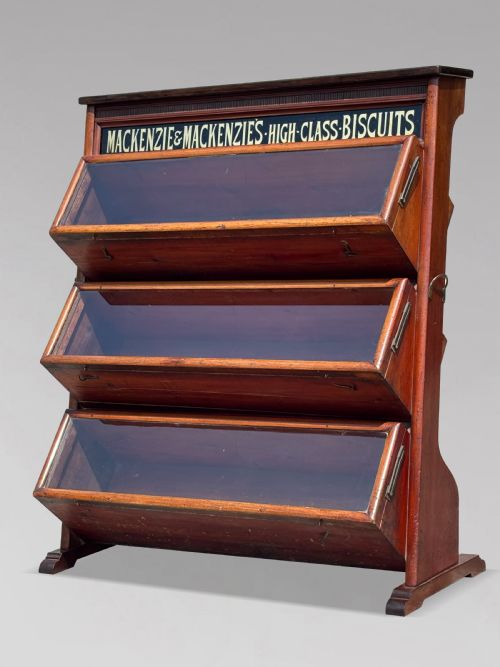
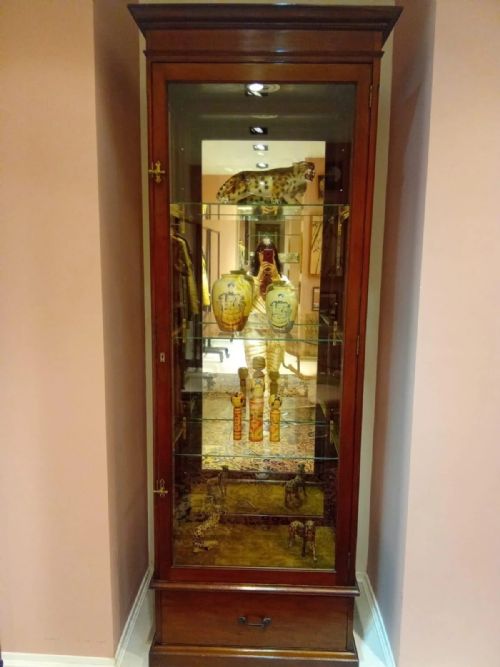


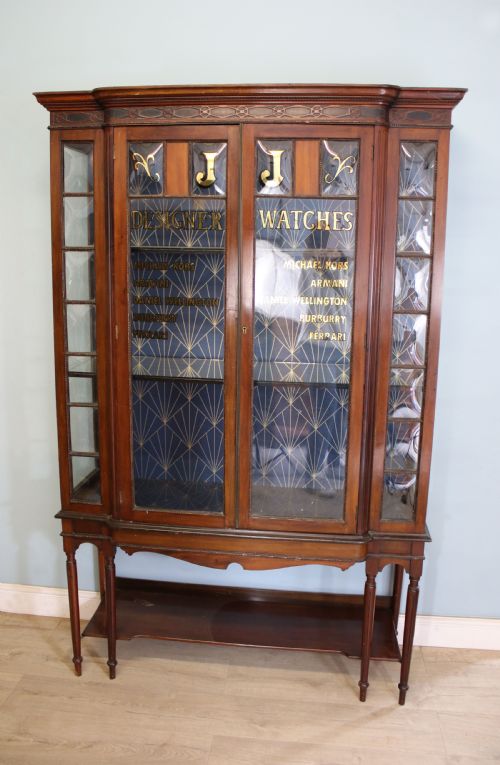

Mahogany Shop Fitting Cabinet
These mahogany shop fitting cabinet pieces bring commercial utility into domestic interiors, offering glazed visibility and sturdy timber construction for collectors of retail antiques.
Mahogany Shop Fitting Cabinet
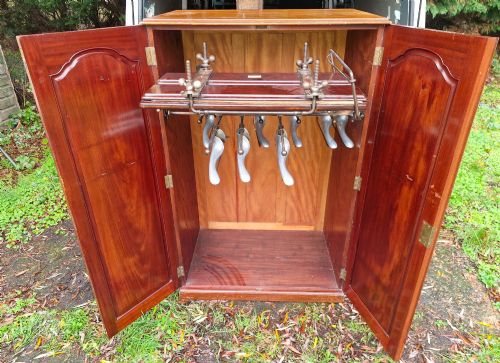
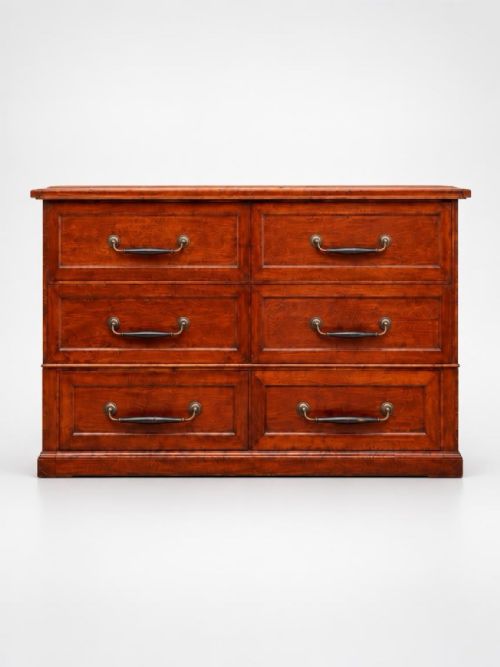
A mahogany shop fitting cabinet serves as a functional showcase originating from commercial retail environments of the Victorian, Edwardian, and 1920s eras. Buyers searching this phrase encounter display counters, haberdashery units, apothecary banks of drawers, and tabletop showcases designed to display goods behind glass.
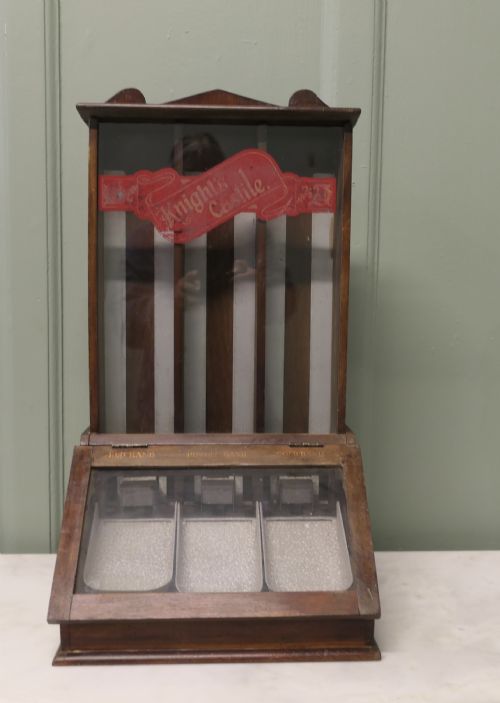
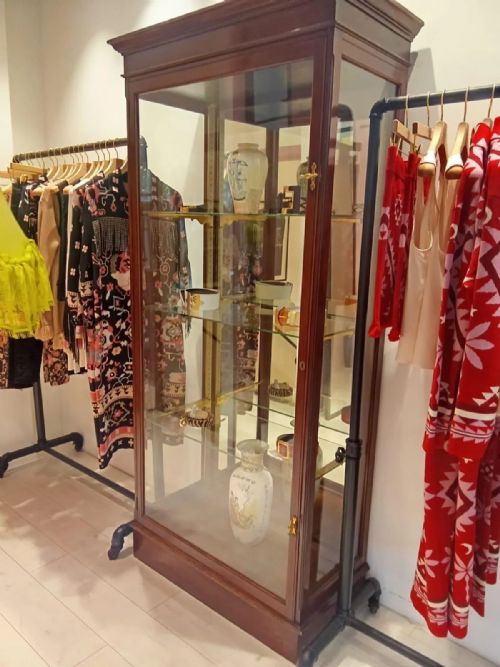
The pieces on this page span the late nineteenth century through to the 1930s, reflecting commercial expansion, advertising requirements, and high street merchandising methods. Common forms include tall glazed bookcases, serving counters, and specialised confectionary or drapery display cases.
Origins range from large department stores to provincial chemists and confectioners, utilising durable timbers to withstand daily public trade. These sturdy carcasses translate readily into domestic settings for the organisation of collections or books.
Quality and Distinction
Quality in a mahogany shop fitting cabinet rests upon the integrity of the original timber framing, the clarity and proportion of the glass panels, and the retention of working brass ironmongery. Finer examples display sophisticated joinery, such as bow fronts or specialised interior mirrors that enhance light reflection.
The presence of original manufacturer signatures, advertising panels, or retained adjustable shelving elevates a piece from standard commercial utility to a distinguished example of period retail craftsmanship. Alterations to feet, glass, or backboards distinguish factory-original items from heavily adapted stock.
Mahogany Shop Fitting Cabinet Retail Price Guide 2026
Typical asking prices for mahogany shop fitting cabinet among the pieces listed under this phrase on Sellingantiques today, from the lower quarter to the upper quarter. They describe what is for sale here now, not the wider market.
Several cabinets retain hand-painted chocolate advertisements and gunsmith lettering, reminding us that shop fittings once had to sell the wares all by themselves.
John Stow Ltd of Bradford·E. Pollard & Co. Ltd.·Jenners of Edinburgh
The Mahogany Shop Fitting Cabinet Glossary
- Haberdashery cabinet
- A multi-drawer storage unit originally used in drapers' shops to organise small sewing items, ribbons, and cottons. These often feature glazed drop-front or pull-out drawer configurations.
- Vitrine
- A glass-sided display cabinet designed for the exhibition of delicate objects, ornaments, or jewellery. In retail contexts, these formed tabletop or counter-standing showcases.
- Shop counter
- A long horizontal retail fixture featuring a solid working top for serving customers and a glazed or panelled customer-facing display side. They frequently incorporate internal shelving or banks of drawers.
- Apothecary
- A style of medical retail storage characterised by numerous small drawers and compartments intended for herbs, powders, and medicines. These pieces utilise dense hardwoods to secure contents.
Mahogany Shop Fitting Cabinet: Frequently Asked Questions
How were mahogany shop fitting cabinets used?
Traders utilised these cabinets to protect merchandise from dust and handling while presenting goods clearly to customers. Retailers placed them on counters or arranged them along shop walls for display.
In domestic settings, the shelving and glass doors adapt well for storing books, ceramics, or collections while keeping items visible and secure.
How do I date a shop display cabinet?
Dating relies on architectural styles, construction methods, and materials matching the Victorian, Edwardian, or 1920s commercial periods. Advertising typography and maker plates provide reliable chronological markers.
Hardware styles, such as brass pulls and hinges, also offer physical evidence of the decade of manufacture.
Are the glass shelves usually adjustable?
Many display cabinets feature adjustable glass shelving supported by metal ratchets or wooden brackets. This flexibility allowed shopkeepers to alter internal heights according to the goods sold.
Original glass shelves often exhibit slight variations in thickness and bubbles typical of period manufacture.
Can these cabinets be used in a home?
These pieces integrate easily into modern domestic rooms due to their narrow counter profiles and tall display formats. They serve effectively as bookcases, sideboards, or kitchen display units.
The durable timber and glass construction provides practical storage with a distinct historical aesthetic.