
Curio Cabinet
A curio cabinet houses miniature treasures and prized collections behind glass, bringing order and visibility to the small objects you love.
Curio Cabinet
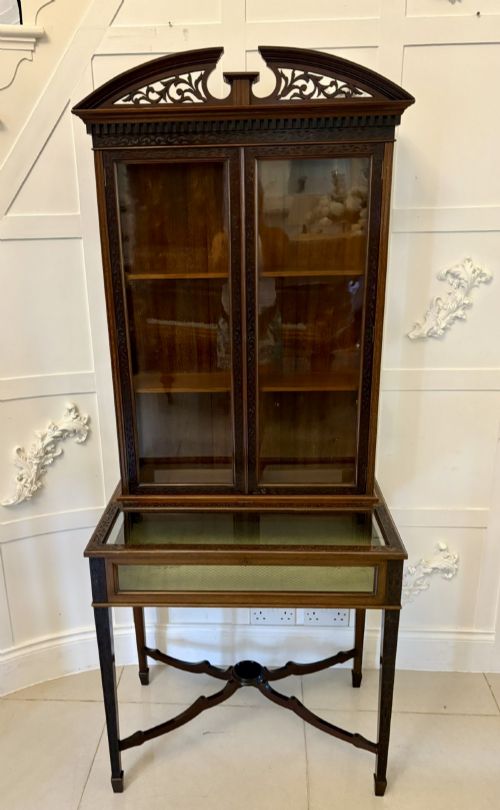
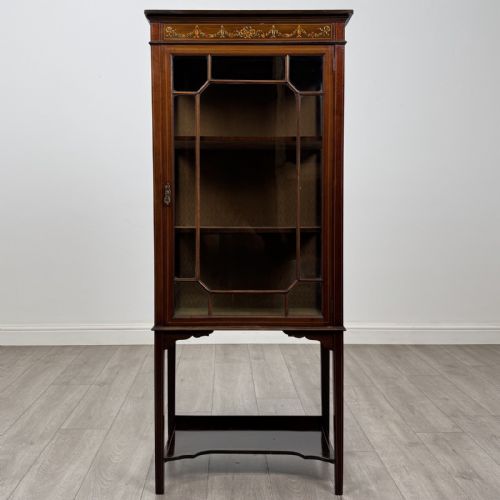
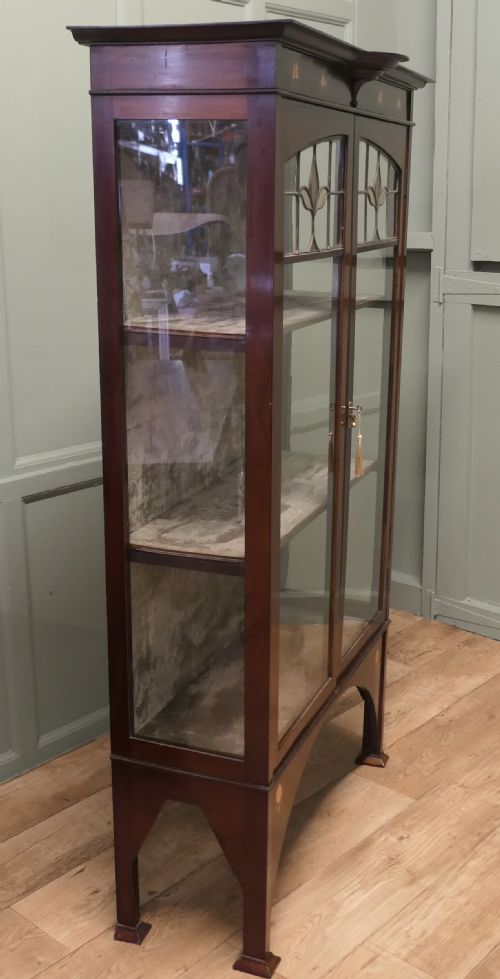
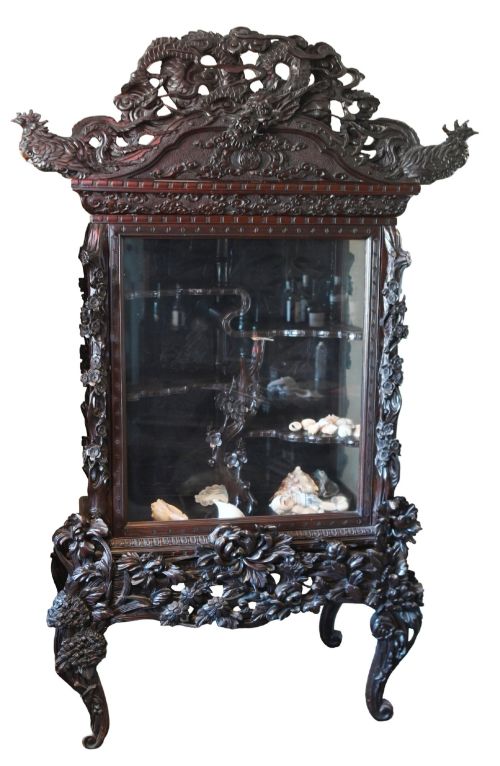
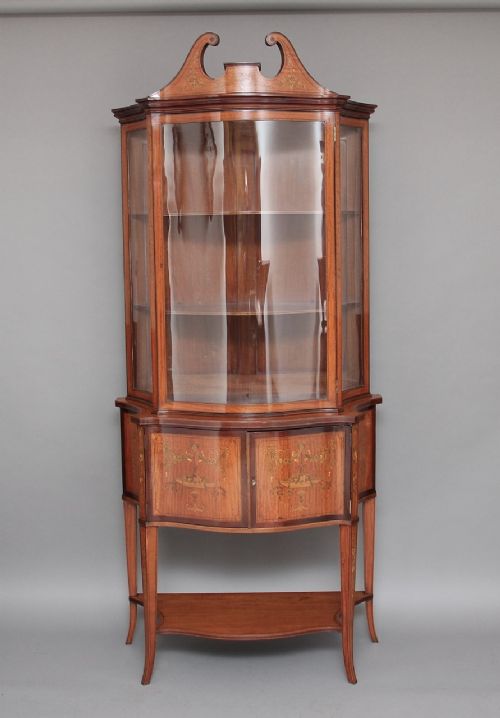
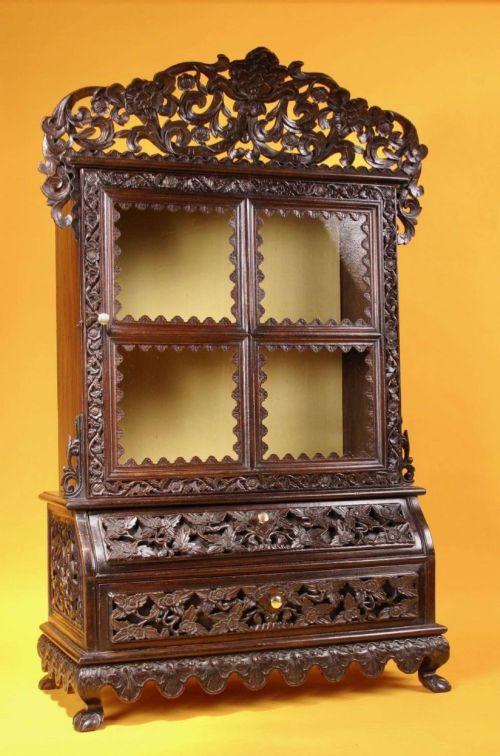
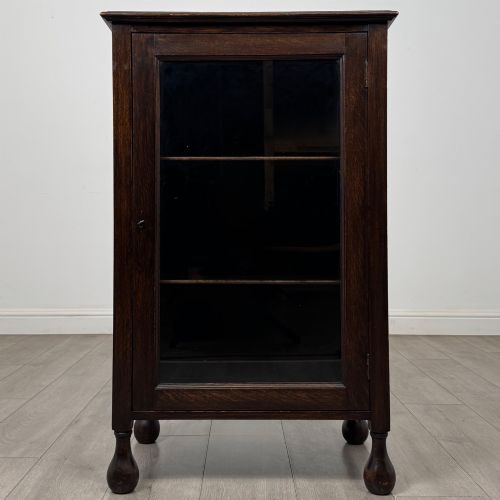
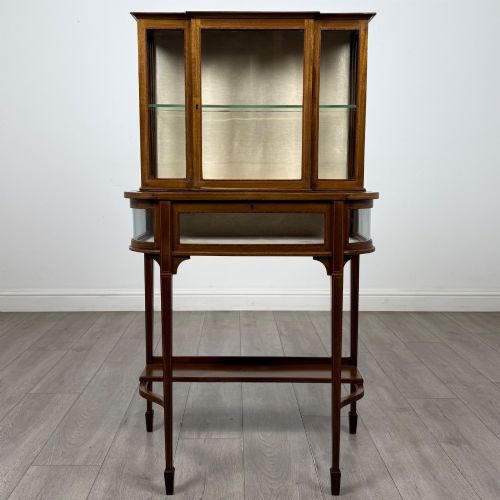
A curio cabinet serves to display small ornaments, porcelain, and curiosities safely within domestic spaces. The pieces appearing here span tall upright display cases, wall-mounted cabinets, and low bijouterie tables with glass tops.
Edwardian and Victorian iterations dominate the selection, constructed mostly from mahogany, walnut, and satinwood. Alongside these British pieces, various continental vitrines and Japanese shodonas enrich the selection.
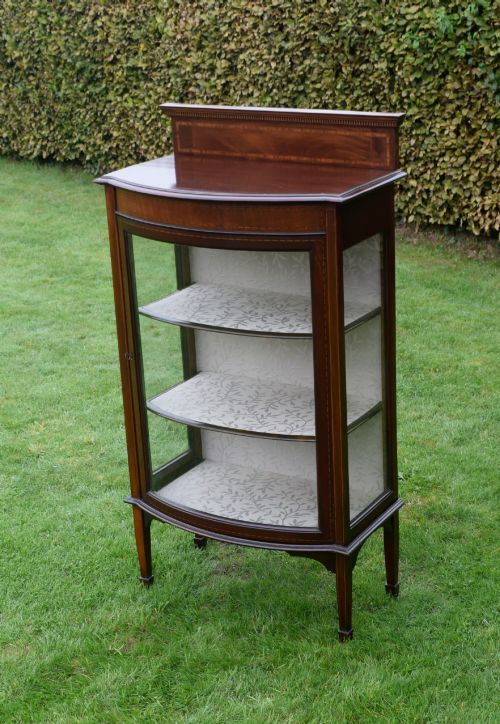
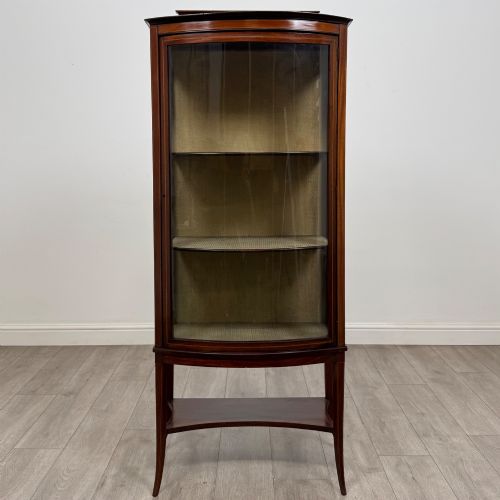
Enclosed shelving protects delicate items from dust while granting clear sightlines from multiple angles. Buyers encounter formats ranging from bowfront cupboards to serpentine tables designed specifically for tabletop viewings.
Materials and Construction
Cabinetmakers utilised dense timbers like mahogany, walnut, and kingwood as foundational structures, often applying intricate marquetry or satinwood inlay across flat surfaces. Glass panes fitted into timber doors or framing provide the primary viewing area.
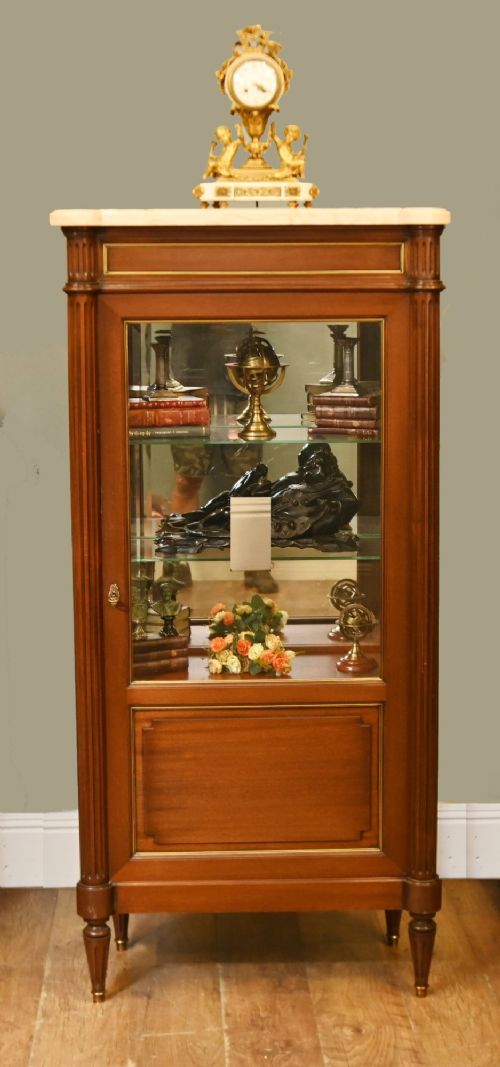
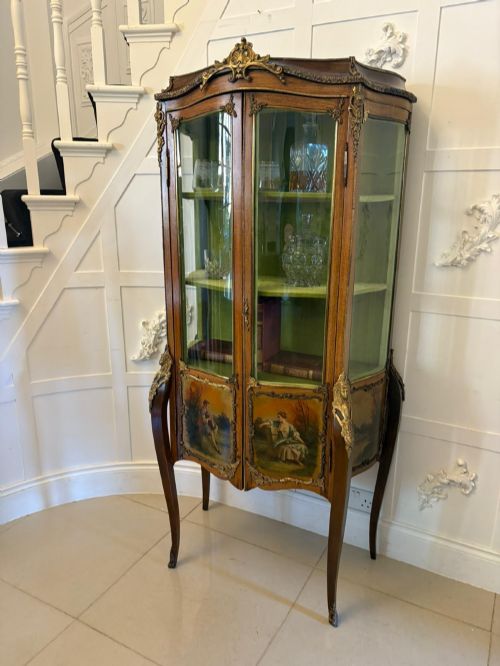
Metal mounts in ormolu, brass, and gilt-bronze accent the corners, lock plates, and legs of French and English vitrines. Lacquer work and hand-painted Vernis Martin panels appear on specialised decorative pieces originating from diverse traditions.
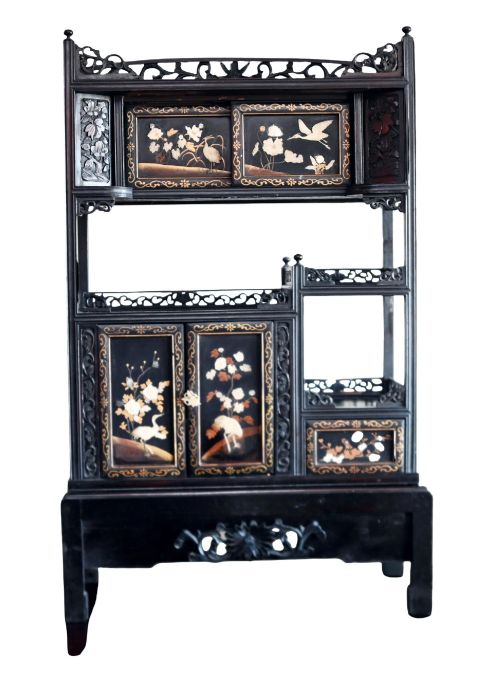
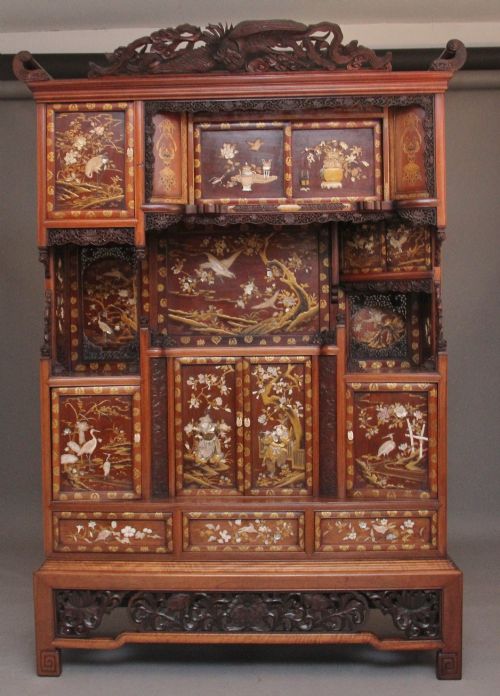
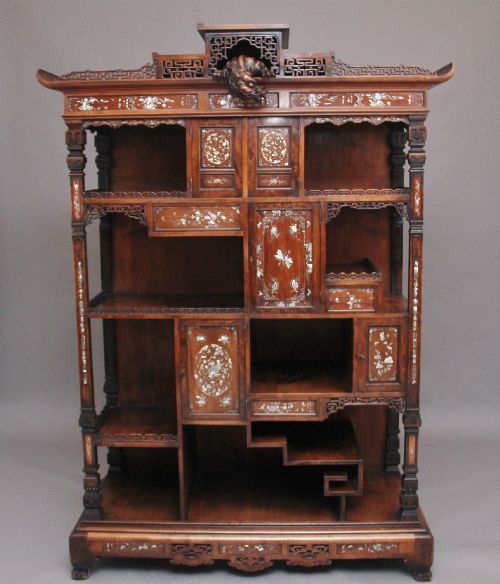
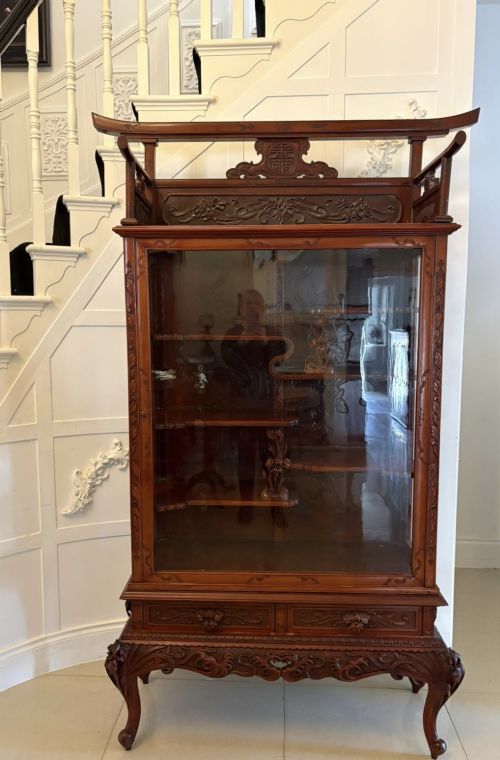
The selection includes Japanese Meiji period shodonas alongside French and English vitrines.
Judging Quality
Quality rests upon the crispness of the timber joinery, the subtlety of any marquetry inlay, and the integration of cast metal mounts. Superior examples display careful grain selection and balanced proportions that harmonize with the glazed areas.
Finer cabinets incorporate curved glass panels, hand-carved decorative motifs, and original interior fabric linings that complement the exterior wood. Lesser pieces rely on stamped veneers and simpler pine carcasses with basic hardware.
Andrew Bell·H. J. Hatfield & Sons·Edwards & Roberts
The Curio Cabinet Glossary
- Vitrine
- A glass-fronted cabinet designed for displaying fine porcelain, curiosities, and decorative objects. These cases often feature glazed side panels to maximise light penetration.
- Bijouterie table
- A specialised low display table with a glazed top and hinged lid used for holding jewellery and medals. They sit at chair height for close examination.
- Shodona
- A Japanese multi-tiered display cabinet featuring asymmetrical shelving for ornaments. These pieces arrived in Western interiors during the late nineteenth century.
- Vernis Martin
- A simulated Japanese lacquer technique developed in France during the eighteenth century. Artisans applied multiple layers of translucent varnish over painted scenes.
- Ormolu
- Gilded bronze mounts applied to furniture edges and feet for decorative effect. The technique involves a mercury amalgam process on historical pieces.
Curio Cabinet: Frequently Asked Questions
What goes inside a curio cabinet?
These cabinets house small collections, including porcelain figurines, ivories, medals, and natural curiosities. Owners arrange items by height and material to create balanced visual compositions.
Enclosed shelving keeps delicate items secure from accidental knocks while maintaining clear visibility from across the room.
How do I clean the glass?
Use a soft microfiber cloth and a mild glass cleaner sprayed onto the cloth rather than directly onto the cabinet. This prevents moisture from seeping into fragile timber frames or antique veneers.
Take care around gilt mounts and inlaid stringing to avoid moisture damage to old adhesives and polishes.
Where should I place my cabinet?
Position the piece away from direct sunlight to protect interior fabrics and prevent timber warping. Interior LED strip lighting can be added discreetly to illuminate dark corners.
Ensure the floor surface is level so the doors hang true and latch correctly without binding.
How do I identify Edwardian pieces?
Edwardian cabinets often feature lighter mahogany or satinwood timbers with delicate inlaid stringing and spade feet. The overall aesthetic leans towards refined restraint compared to heavier Victorian designs.
Glazing bars on these cabinets tend to be slender and geometric, reflecting the architectural preferences of the early twentieth century.