





Curved Top Display Cabinet
These curved top display cabinet pieces bring elegance to interiors, showcasing prized possessions behind glass.
Curved Top Display Cabinet
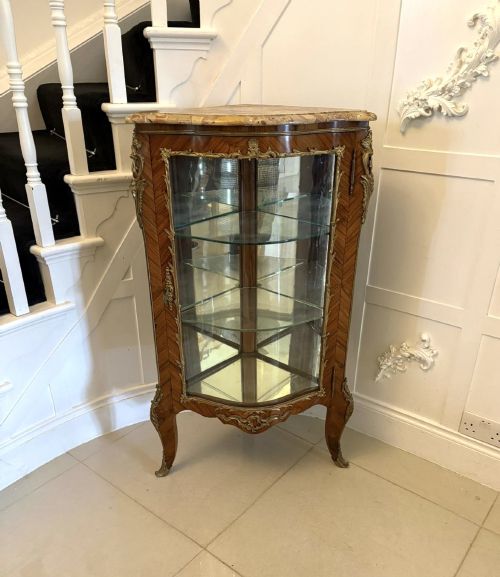
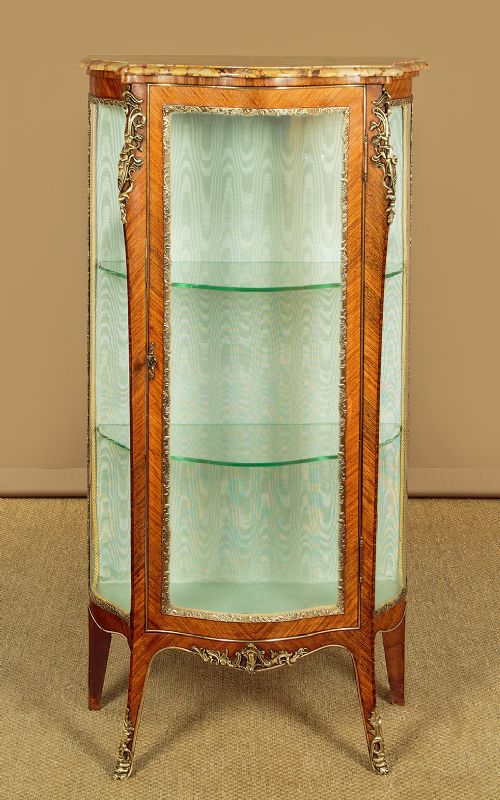
A curved top display cabinet serves as a sophisticated vessel for showcasing collections, ranging from delicate porcelain to prized books and curiosities. When exploring a curved top display cabinet, buyers encounter forms such as vitrines, credenzas, bookcases, and corner cabinets originating from various periods.
The selection encompasses pieces spanning the eighteenth century through to the early twentieth century, with nineteenth-century examples appearing frequently. Makers and workshops from French revival movements and English traditions shape the stylistic diversity of the available inventory.
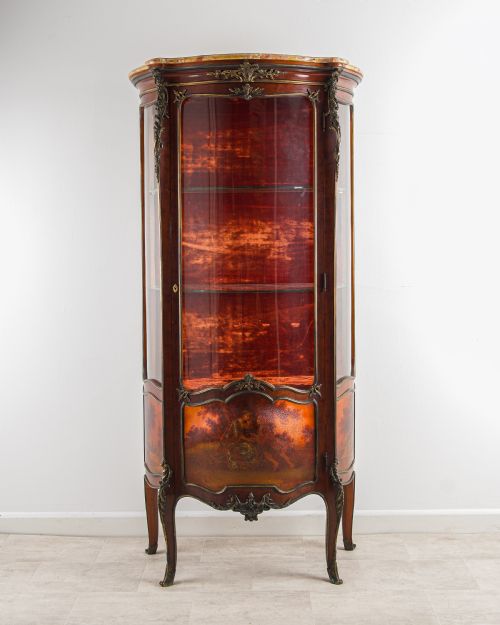
Cabinets manifest in distinct structural silhouettes, including serpentine fronts, bow ends, and bombe shapes. These configurations dictate how the furniture occupies a room and frames the objects stored within.
Assessing craftsmanship
Quality reveals itself in the precision of the timber joints and the crispness of the cast bronze or ormolu mounts. Finer examples display harmonious proportions where decorative elements complement the underlying cabinet structure rather than overwhelm it.
The treatment of secondary materials, such as hand-painted panels or vernis martin decoration, distinguishes standard production from exceptional artistry. Superior pieces maintain integrity in the glasswork and stability in the curved architectural sections.
Curved Top Display Cabinet Retail Price Guide 2026
Typical asking prices for curved top display cabinet among the pieces listed under this phrase on Sellingantiques today, from the lower quarter to the upper quarter. They describe what is for sale here now, not the wider market.
Listings feature pieces spanning from the eighteenth century through to the 1930s, constructed in walnut, mahogany, and kingwood.
François Linke
The Curved Top Display Cabinet Glossary
- Ormolu
- Gilded bronze ornamentation applied to furniture mounts. This technique adds metallic brilliance and decorative relief to the wooden frame.
- Vitrine
- A glass-fronted cabinet designed specifically for display. These pieces protect objects while offering maximum visual access.
- Marquetry
- Inlaid wood patterns creating pictorial or geometric designs on the surface. Artisans use contrasting veneers to achieve visual depth.
- Serpentine
- A wave-like curved shape featuring a convex centre flanked by concave sides. This contour softens the geometric rigidity of rectangular furniture.
- Vernis Martin
- A simulated Japanese lacquer technique developed in eighteenth-century France. It produces a glossy, translucent finish often decorated with painted scenes.
Curved Top Display Cabinet: Frequently Asked Questions
What is a curved top display cabinet used for?
These cabinets were traditionally manufactured to exhibit valuable china, glassware, and small collector's items safely behind glass.
Today, owners utilise them in living spaces and libraries to display treasured objects while protecting them from dust.
How do I identify French revival styles?
French revival pieces often incorporate characteristic elements such as curved serpentine lines, painted panels, and elaborate gilt bronze mounts.
Examining the specific timber veneers, such as kingwood or satinwood, helps distinguish Louis XV and Louis XVI stylistic influences.
Where should I place a corner cabinet?
Corner cabinets are designed to fit snugly into room intersections, making efficient use of awkward or unutilised architectural spaces.
They draw the eye towards neglected areas of a room while providing functional display surface area.
What maintenance do marble top cabinets require?
Marble surfaces need simple dusting and occasional cleaning with pH-neutral solutions to prevent staining from acidic liquids.
Avoiding harsh abrasives preserves the polished finish of the stone and protects adjacent wood veneers.