

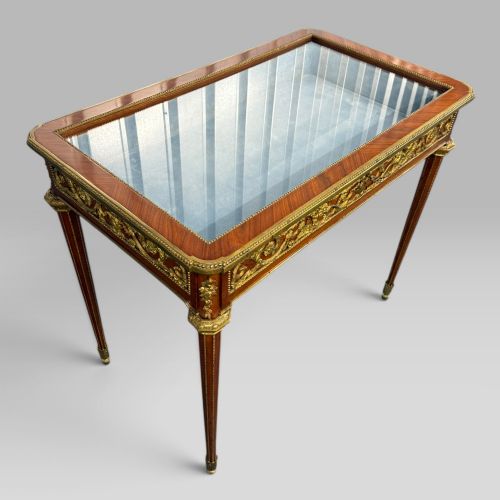
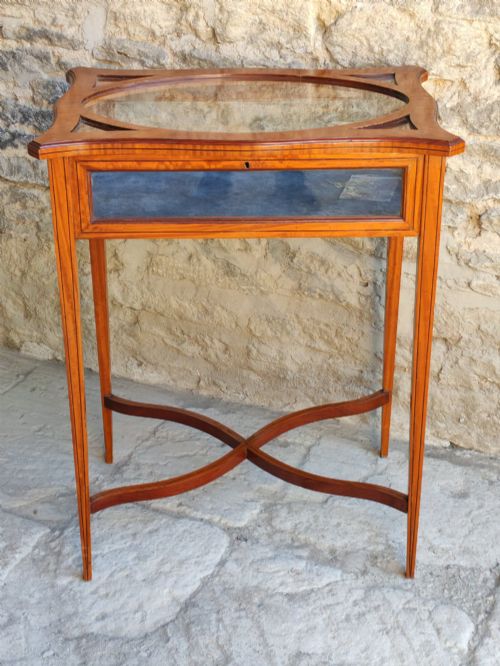

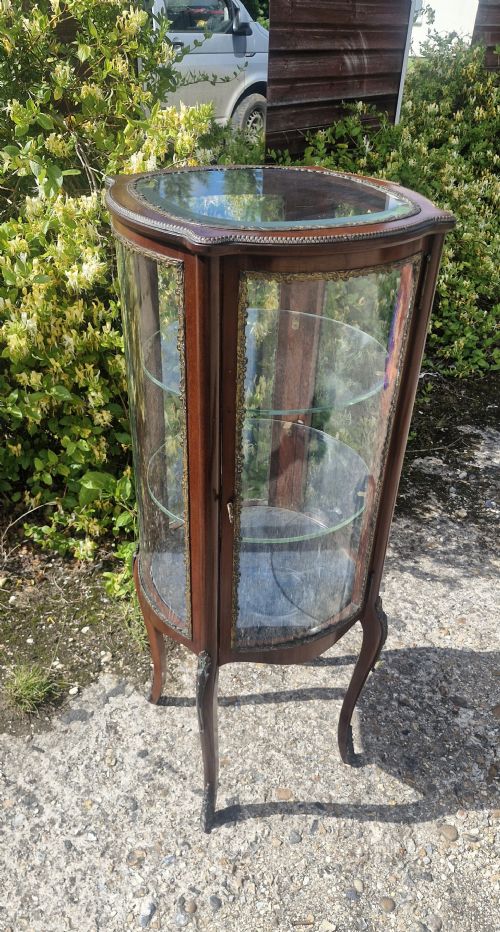


Jewellery Display Cabinet
A jewellery display cabinet brings the intimacy of the collector's study into the light, protecting precious ornaments beneath glass.
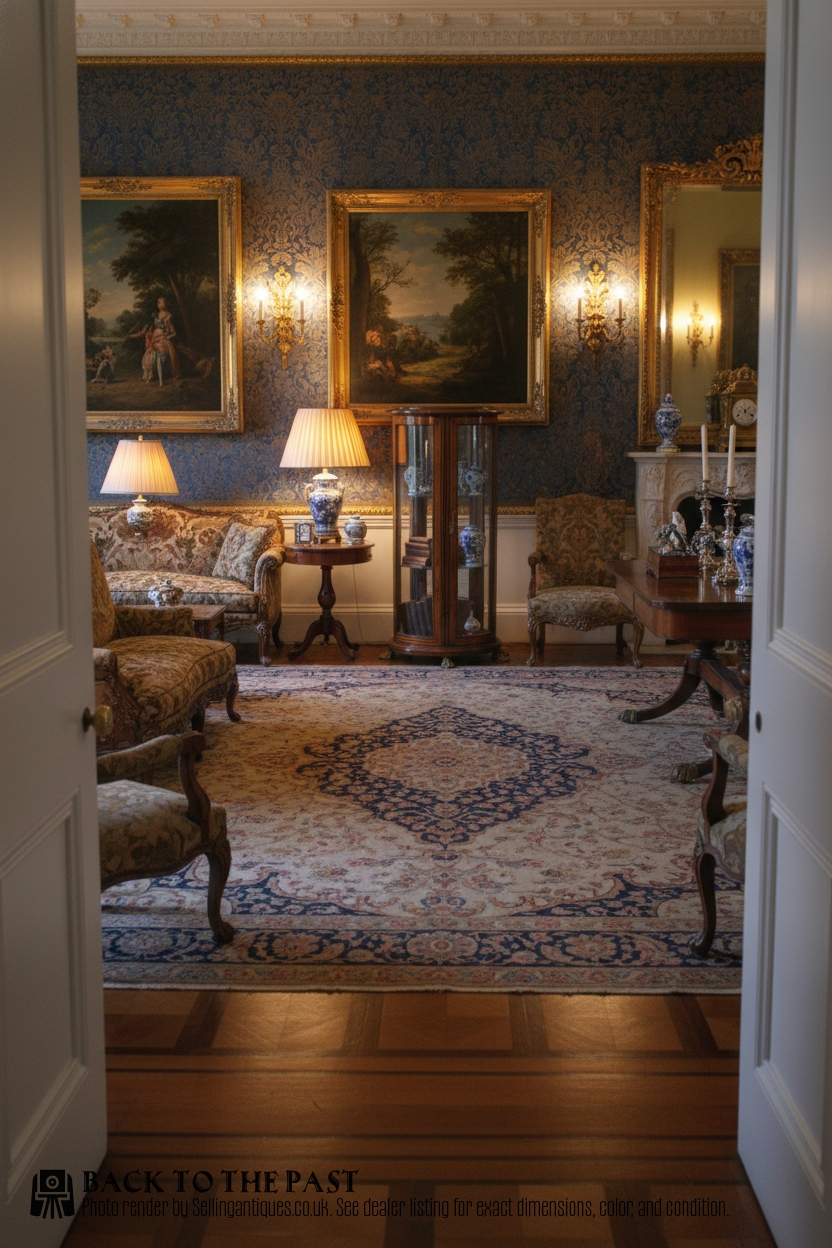
Jewellery Display Cabinet
A jewellery display cabinet encompasses glazed vitrines, table forms and countertop cases designed to showcase precious ornaments and personal collections. These pieces emerge predominantly from the Victorian and Edwardian eras, alongside later twentieth-century interpretations.
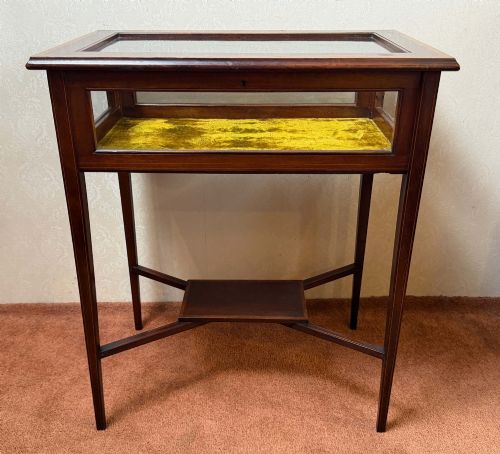
The format ranges from low-standing bijouterie tables with glazed tops to upright countertop cabinets and wall-hanging showcases. On this page, the Edwardian mahogany table and the Victorian countertop case appear most frequently, reflecting popular domestic and commercial forms of the period.
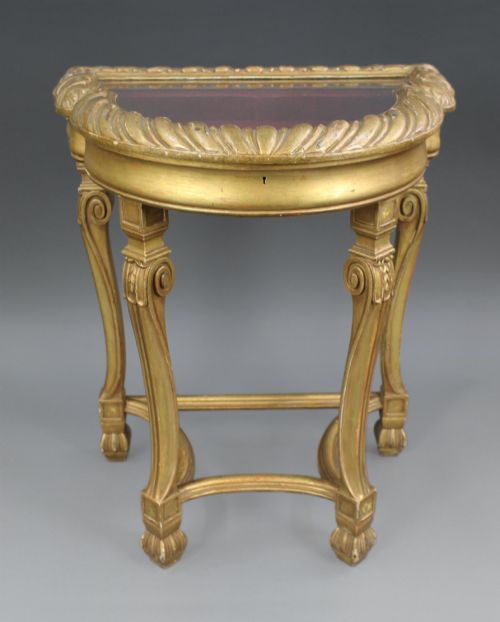
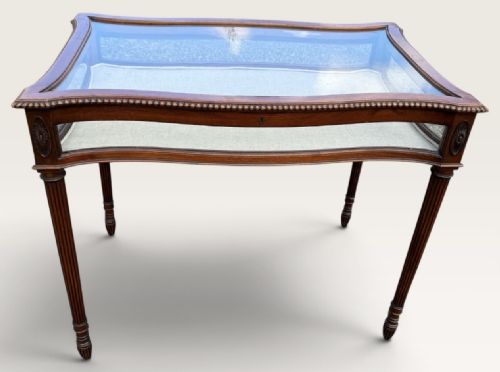
Makers and designers from the past utilised various geometric forms, including serpentine, oval, kidney and octagonal shapes. Such variations allowed owners to place these display pieces within drawing rooms or retail shops alike.
Materials and construction methods
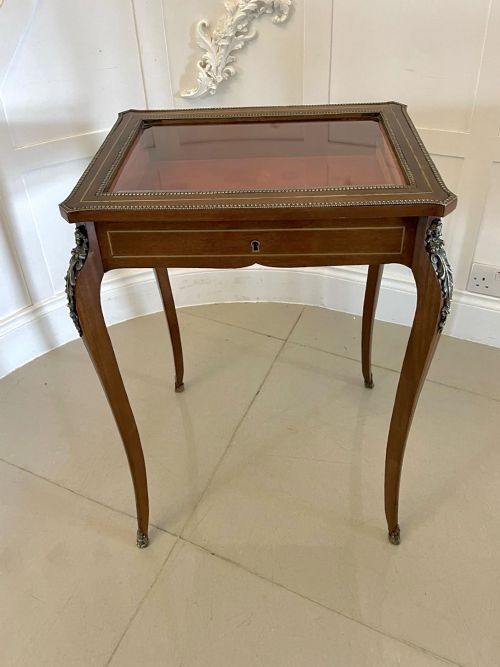
Makers constructed the primary frames of mahogany, satinwood, oak, kingwood or ebonised timber, often applying marquetry or crossbanding for surface ornament. Brass, ormolu and gilt-bronze mounts frequently accent the corners, borders and legs of these vitrines.
Glass panels enclose the display areas, permitting light to enter from multiple angles while protecting contents from dust. Interiors commonly feature linings of velvet or other fabrics to cushion delicate items placed within the case.
Jewellery Display Cabinet Retail Price Guide 2026
Typical asking prices for jewellery display cabinet among the pieces listed under this phrase on Sellingantiques today, from the lower quarter to the upper quarter. They describe what is for sale here now, not the wider market.
Listings span multiple decades from the nineteenth century through the 1930s, highlighting mahogany as the predominant timber alongside glass, brass and velvet.
Distinctions in craftsmanship and design
Quality reveals itself in the crispness of the timber inlay, the weight and detail of the brass or ormolu mounts, and the structural integrity of the glazed framing. Finer examples display precise joinery and sophisticated timber selections such as burr walnut or figured mahogany.
The proportion and silhouette dictate the standing of a piece, with serpentine and kidney-shaped tables demanding greater skill from the cabinetmaker than standard rectangular forms. Original fabric linings and well-fitted glass further elevate the standing of an antique display case.
François Linke·Edwards and Roberts·Asprey
The Jewellery Display Cabinet Glossary
- Bijouterie table
- A low display table with a glazed top and often a fabric-lined interior specifically designed for holding small trinkets and jewellery.
- Vitrine
- A glass-fronted cabinet or case used for displaying fine objects, porcelain or ornaments.
- Ormolu
- Gilded bronze ornamentation applied to the mounts, feet or borders of furniture, frequently seen on French-influenced pieces.
- Crossbanding
- A strip of veneer applied across the grain of the primary wood to form a decorative border around tabletops and cabinet doors.
- Marquetry
- Elaborate decorative patterns formed by the insertion of different coloured veneers into a wood foundation.
Jewellery Display Cabinet: Frequently Asked Questions
What is a bijouterie table?
A bijouterie table is a low display piece featuring a glazed hinged lid over a shallow, fabric-lined compartment. It was traditionally used in drawing rooms to exhibit small personal treasures, rings and medals.
These tables lift the contents to eye level for seated guests while keeping them secure beneath glass.
Where were countertop display cabinets used?
Countertop display cabinets were primarily utilised in Victorian and Edwardian retail shops, including jewellers and watchmakers. They sat upon counters to give customers a clear view of merchandise while preventing handling.
Today, these countertop units serve a similar function in domestic settings for displaying collections.
How do I care for fabric linings?
Original velvet or fabric linings require gentle care, avoiding harsh cleaning agents and excessive moisture. Vacuuming with a soft brush attachment helps remove dust without damaging fragile historic textiles.
Direct sunlight should also be avoided to prevent the fading of coloured fabrics inside the glass.
How can I tell Victorian from Edwardian cabinets?
Victorian display cabinets often feature heavier timber frames, darker mahogany tones, and more ornate carved ornamentation. They reflect a period of robust craftsmanship and formal interior decoration.
Edwardian pieces tend to be lighter in appearance, frequently incorporating satinwood inlay, marquetry, and slender tapered legs influenced by earlier French revival styles.