
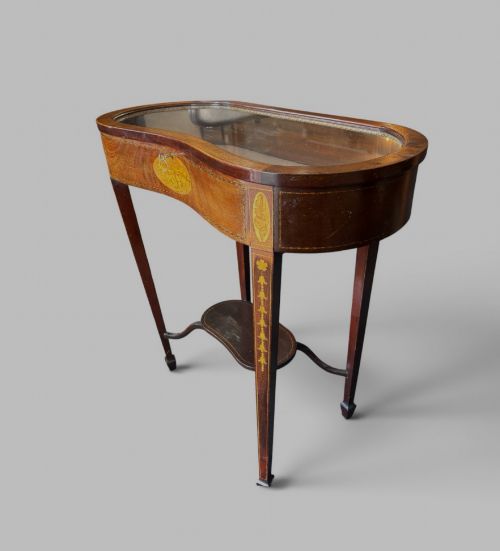
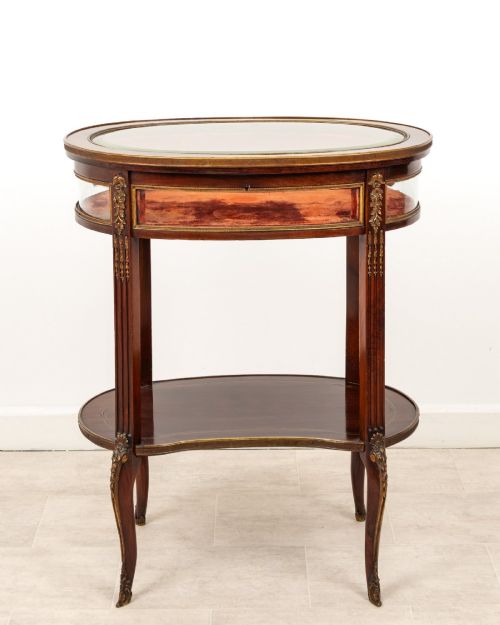


Glass Top Vitrine Table
A glass top vitrine table frames small treasures under clear glass, offering a disciplined stage for collections within domestic rooms.
Glass Top Vitrine Table
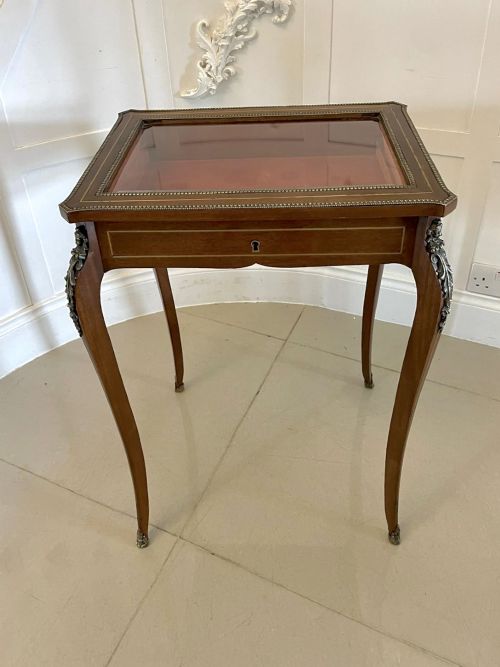
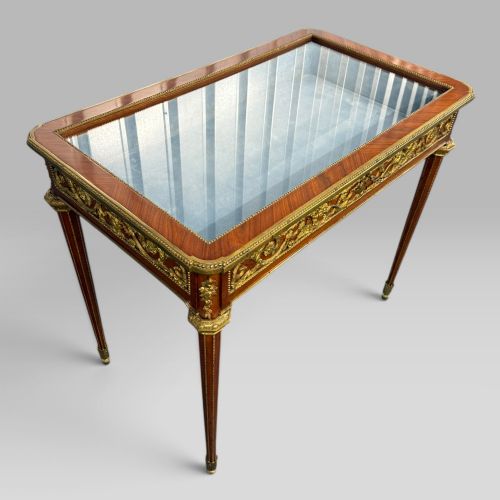
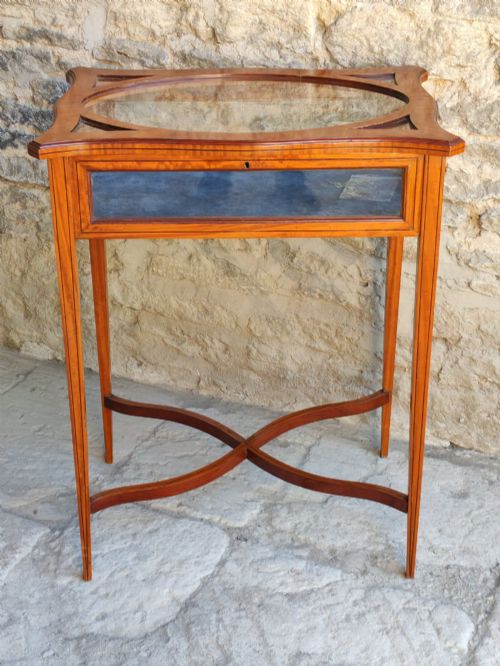
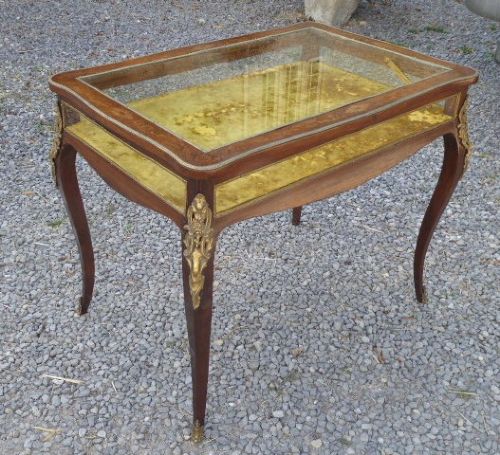
The glass top vitrine table serves as both furniture and display case, designed to showcase personal ornaments, jewellery and curiosities beneath a glazed surface. When searching for a glass top vitrine table, buyers encounter forms primarily spanning the Victorian and Edwardian eras, alongside continental revival styles.
Common shapes include rectangular, oval, kidney and octagonal formats, constructed as freestanding tables or counter units. These pieces range from restrained English mahogany examples to elaborate French designs outfitted with glazed display compartments.
Interior surfaces frequently feature velvet or fabric linings, intended to cushion displayed items. The height of these tables places the contents at a comfortable level for standing inspection.
Materials and construction
Makers utilised solid timbers and veneers such as mahogany, satinwood, kingwood and rosewood to build the structural frames of these display tables. Inlaid banding, marquetry and satinwood details often decorate the exterior surfaces.
Metal components, including brass and ormolu mounts, cast decorative accents around the glazed display areas and legs. Glass panels enclose the top and sides, held in place by wooden rebates or brass framing.
Two surviving examples carry later sign-written details referencing Breitling watches.
Judging the execution
Quality rests upon the crispness of cabinetmaking, from the tight mitres of the frame to the precision of inlaid details and veneers. Superior examples integrate cast bronze or ormolu mounts that fit flush against the timber body.
The weight and clarity of the glass, together with the smoothness of hinged lids and lined compartments, distinguish standard production from finer workshop output.
François Linke·Quincy Showcase Works
The Glass Top Vitrine Table Glossary
- Bijouterie table
- A specialised display table featuring a glass top and glazed sides designed for small valuable objects. The term derives from the French word for jewellery.
- Ormolu
- Gilded bronze mounts applied to furniture frames for decorative effect. This technique appears frequently on French revival pieces.
- Marquetry
- Decorative wood veneers arranged in pictorial or geometric patterns on the surface of the table. Craftsmen cut contrasting timbers to form these designs.
- Kidney shape
- An asymmetric curved table top silhouette popular in Edwardian and Victorian display furniture. This contour allows closer access to the central display area.
Glass Top Vitrine Table: Frequently Asked Questions
What fits inside a display table?
Owners typically place small items such as pocket watches, medals, coins and delicate textiles beneath the glass top. The fabric-lined interior protects these objects from sliding during inspection.
Deeper cabinets accommodate varied collections, while shallow tables suit flat items and jewellery.
Where should I place this table?
These tables function well in reception rooms, libraries or hallways where natural or overhead light illuminates the glazed display compartment. Positioning the piece away from direct sunlight protects both the wood and the interior fabric lining.
Sufficient clearance around the table allows access to hinged lids and makes viewing comfortable.
How do I distinguish Edwardian from Victorian pieces?
Victorian examples often feature heavier rosewood or mahogany structures with prominent brass mounts and dark velvet linings. Edwardian versions tend to display lighter mahogany frames, delicate satinwood inlay and refined proportions.
Revival influences also help indicate the period, with French Louis styles appearing across both eras.
Are the glass panels original?
Many surviving tables retain their original float or sheet glass, though replacements occur due to accidental damage over time. Close inspection of the glass edges and the surrounding rebate reveals whether the panel matches the age of the frame.
Original glass frequently shows minor surface irregularities consistent with period manufacturing methods.