





Antique Museum Display Case
An antique museum display case offers a striking architectural frame for valued objects, combining generous glass visibility with substantial timber construction.
Antique Museum Display Case
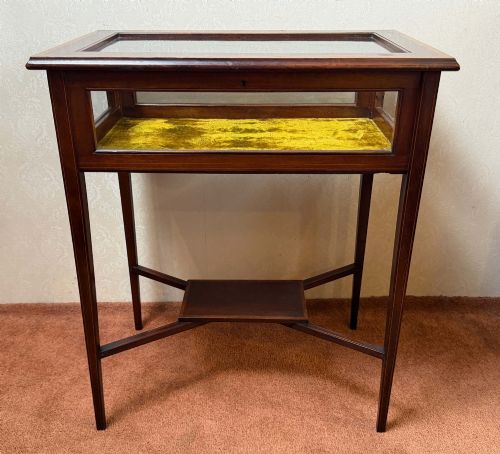
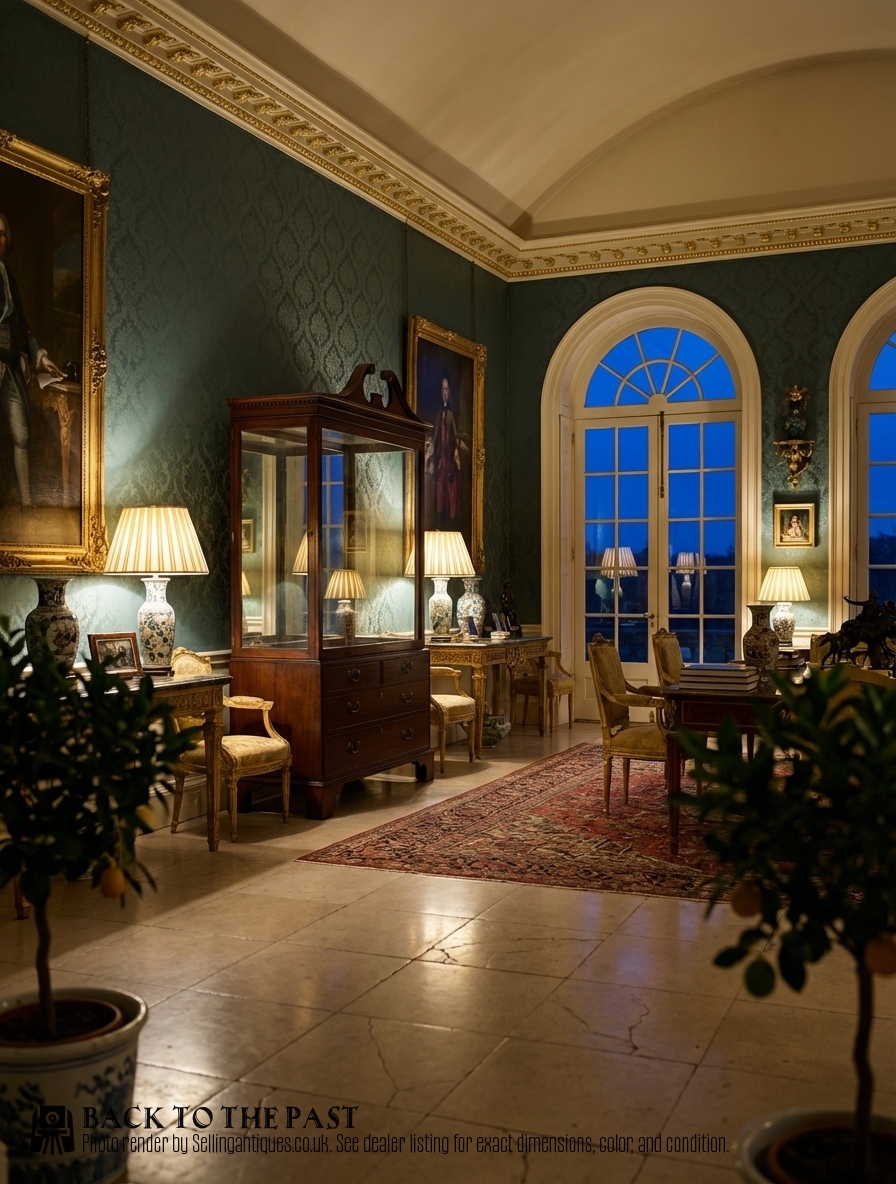
When you search for an antique museum display case, you encounter substantial freestanding vitrines, tabletop glazed boxes, and expansive commercial counters designed to present delicate objects clearly. These pieces originate from domestic and institutional settings across the eighteenth, nineteenth, and early twentieth centuries, encompassing Georgian, Victorian, Edwardian, and Art Deco aesthetics.
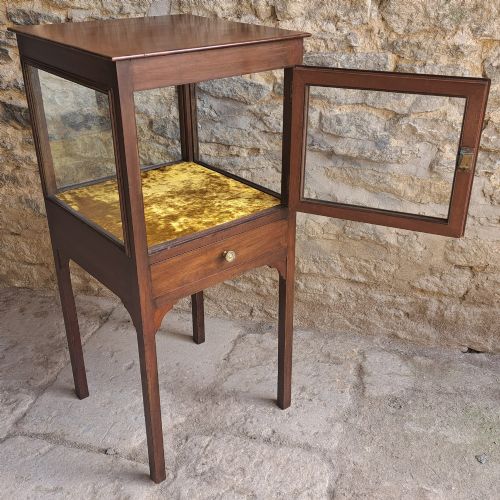
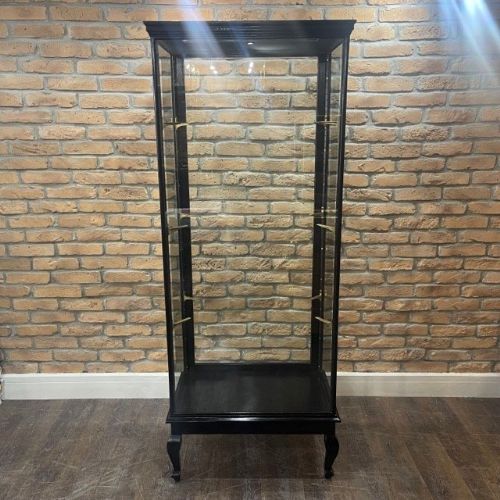
The selection ranges from large oak and bronze museum showcases built around nineteen ten to compact mahogany tabletop cases from the late eighteenth century and ebonised tower cabinets from the nineteen twenties. You also find specialised shop counters and specialised cabinets featuring velvet linings or fabric interiors intended to cushion delicate artefacts.
Makers and commercial furnishers of the period constructed these cases for rigorous daily inspection, utilising tall vertical proportions and large glass panes to maximise internal light. Whether styled in simple vernacular forms or complex Adam revival motifs, each piece serves to elevate its contents while protecting them from dust.
How they were made
Makers constructed these display cases primarily using dense hardwoods such as mahogany, oak, walnut, pitch pine, and cedar, often pairing them with ebonised finishes or delicate gold leaf detailing. Structural integrity relied on deep timber frames designed to support wide expanses of heavy window glass without warping.
Metal components played a structural and decorative role, with cast bronze and brass forming slender framing bars, hinges, and locking mechanisms that kept the viewing area unobstructed. Interior surfaces frequently incorporated fitted bases lined with velvet or woven fabric to cushion displayed items.
Joinery techniques combined robust mortise and tenon construction for the structural carcass with fine glazing bars to secure the glass panels tightly. Cabinetmakers balanced weight and visibility, ensuring heavy timber bases remained stable beneath towering glazed enclosures.
Antique Museum Display Case Retail Price Guide 2026
Typical asking prices for museum display case among the pieces listed under this phrase on Sellingantiques today, from the lower quarter to the upper quarter. They describe what is for sale here now, not the wider market.
Some nineteenth-century display cases still carry the faint aroma of cedar and old velvet from forgotten natural history collections.
What varies in quality
The calibre of an antique museum display case rests heavily on the ambition of its timber framing and the clarity of its glazing. Superior examples employ finely figured mahogany, walnut, or quarter-sawn oak, matched with substantial cast bronze or brass metalwork that provides structural rigidity without bulk.
Refinement in proportion and joinery distinguishes workshop pieces from standard commercial counters, seen in seamless mitred joints, tightly fitted doors, and well-balanced tower profiles. The presence of original fabric or velvet linings and specialised maker branding adds archival weight to the piece.
F. Sage & Co·Siegel·Quincy Showcase Works·E. Pollard & Co. Ltd·Edmonds
The Antique Museum Display Case Glossary
- Vitrine
- A glass-fronted cabinet or case specifically designed for displaying fine objects or curiosities. These pieces rely on large glazed panels to provide all-around visibility.
- Showcase
- A commercial or institutional display enclosure built with extensive glass areas. They frequently incorporate timber bases and lockable doors for secure public viewing.
- Ebonised
- Timber treated with a finish that darkens the grain to resemble ebony. This technique was popular in nineteenth-century and Art Deco cabinet making.
- Pedestal
- A supporting base or column elevating a cabinet. Twin pedestal variants balance weight across two distinct structural supports.
- Collector's cabinet
- A specialised storage piece containing shallow internal drawers or trays. They are designed for organising coins, medals, or natural history specimens.
Antique Museum Display Case: Frequently Asked Questions
What is an antique museum display case?
An antique museum display case is a glazed timber or metal enclosure built to exhibit artefacts safely. These cabinets originate from institutional and commercial settings of the nineteenth and early twentieth centuries.
They combine large glass viewing areas with sturdy timber frames in mahogany, oak, or walnut. Their primary purpose is to protect delicate objects while offering clear visual access from multiple angles.
How were display cases used originally?
Original usage involved housing natural history specimens, retail merchandise, or private collections of curiosities. Museums and high-end shops utilised them to keep valuable items secure yet fully visible to the public.
Tabletop versions and low counters allowed customers or visitors to inspect small items closely from above. Taller tower cabinets maximised floor space while presenting items at eye level.
How do I style a display case at home?
Integrating a display case into a modern interior involves treating the cabinet itself as a primary focal point. Grouping objects by material or colour inside the glass helps maintain a clean visual arrangement.
Taking advantage of the existing velvet or fabric linings ensures your collection stands out against a complementary backdrop. Positioning the cabinet away from direct sunlight protects both the timber and the contents.
How do I tell Victorian cases from Art Deco ones?
Victorian display cases generally feature richer timber grains, carved ornamentation, and traditional architectural moulding. They often showcase deep mahogany or walnut framing with heavier structural proportions.
Art Deco and nineteen-twenties pieces lean toward cleaner geometric lines, ebonised surfaces, and streamlined metal mounts. These later cases emphasise stark verticality, particularly in tower configurations.