
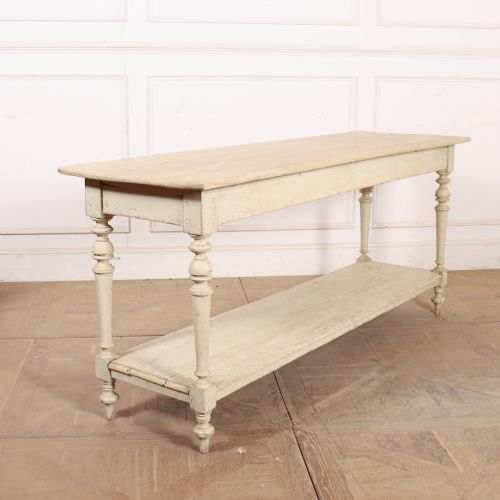
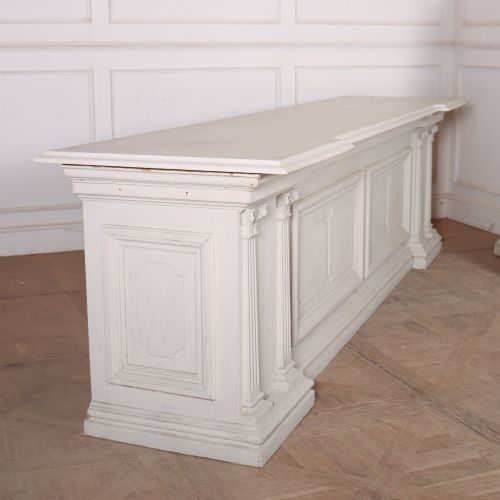


Shop Counter Display Table
A shop counter display table brings commercial history indoors, offering glass and timber showcases built to exhibit goods.
Shop Counter Display Table
A shop counter display table encompasses sturdy commercial furniture designed for retail spaces, ranging from glazed tabletop cabinets to substantial drapers' tables. When exploring a shop counter display table, buyers encounter forms intended to present merchandise clearly to customers.
Origins vary across British, French, Italian, Hungarian, and American workshops, reflecting diverse regional commercial aesthetics. Oak, mahogany, pine, and painted softwood dominate the forms, frequently paired with glass and brass fittings.
Construction and materials
Makers utilised dense timbers such as mahogany, oak, and pine to construct the foundational frames capable of withstanding heavy daily retail use. Painted softwood and bleached finishes appear across French and continental pieces.
Glass panels and tabletop display cases incorporated brass and cast iron hardware to secure hinged doors and shelving. Structural integrity relied on robust joinery suited to commercial environments.
Current listings feature pieces spanning the Victorian era through the nineteen-thirties, utilising mahogany, oak, pine, glass, and brass.
Assessing build and character
Quality rests in the balance between robust structural framing and refined glazing techniques, distinguishing utilitarian shop fittings from finer display furniture. Superior examples maintain original glass panes and substantial timber integrity.
Surface finish dictates much of the character, distinguishing factory-bleached or painted pine from rich polished mahogany. Original brass hardware and intact tabletop display compartments elevate the presence of individual pieces.
Quincy Showcase Works Illinois
The Shop Counter Display Table Glossary
- Drapers table
- A long timber table traditionally utilised in fabric and drapery shops for measuring and displaying textiles. These sturdy pieces often feature lower undertiers for additional storage.
- Haberdashery
- Pertaining to small articles of trade such as buttons, threads, and ribbons. Haberdashery counters typically incorporate numerous small drawers or glass display compartments.
- Bow end
- A curved cabinet or counter end designed to soften rigid interior angles. This shaping enhances visibility and allows smoother customer movement around the shop floor.
- Tabletop display cabinet
- A glazed enclosure designed to sit upon an existing counter surface. These portable cases protected small collectibles and jewellery from handling while maintaining visibility.
- Shop fitting
- Fixtures and furniture custom-built or adapted for commercial retail interiors. These elements prioritise durability and functional display efficiency.
Shop Counter Display Table: Frequently Asked Questions
What is a shop counter display table?
A shop counter display table is a piece of commercial retail furniture built to showcase goods to customers. These items combine timber frames with glass cases or open surfaces.
Origins trace back to nineteenth and early twentieth-century shops where merchants needed practical ways to exhibit wares while protecting delicate items.
How were drapers tables used?
Drapers tables served as central work surfaces in textile shops for folding, measuring, and displaying fabrics. Their long proportions provided ample workspace for merchants.
Lower shelves often held bolts of cloth or boxes of haberdashery supplies, keeping inventory organised within easy reach.
Where can I use a counter display cabinet?
Counter display cabinets suit modern domestic interiors as statement storage for collections, ceramics, or books. Their glass panels allow items to remain visible while protected from dust.
Placed in living rooms or kitchens, they introduce functional historic character and practical surface display space.
How do I date a shop display counter?
Dating relies on observing construction materials, joinery techniques, and prevailing commercial styles across Victorian and twentieth-century eras. Mahogany and heavy brass hardware often signal earlier Victorian origins.
Later pieces from the nineteen-thirties adopt streamlined commercial shapes and lighter pine or bleached oak treatments.