


Commercial Glass Showcase Cabinet
A commercial glass showcase cabinet brings genuine retail history into a domestic interior, offering deep glazing and sturdy timber frames built for daily trade.
Commercial Glass Showcase Cabinet
When you search for a commercial glass showcase cabinet, you encounter sturdy fixtures built for retail trade, ranging from modest tabletop displays to large shop counters and freestanding vitrines. These units originate from periods spanning the late nineteenth century through the 1930s, including Victorian, Edwardian, and Art Deco eras.
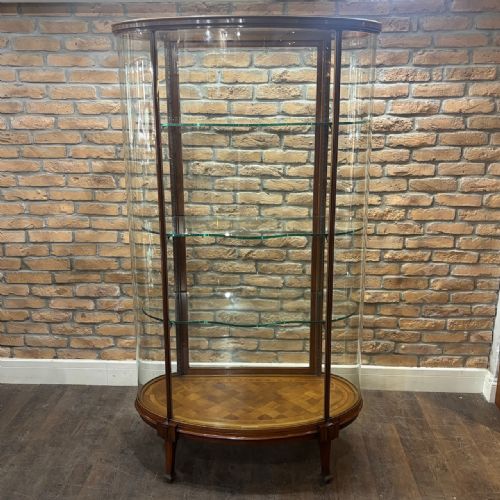
You are most likely to meet mahogany or oak framing paired with extensive glass panels, often designed with bow ends, pentagonal shapes, or tiered shelving to maximise visibility for confectionery, tobacco, and haberdashery goods. Many pieces retain original trade sign-writing or branding from makers such as Fry's, Cadbury, and Rowntree's.
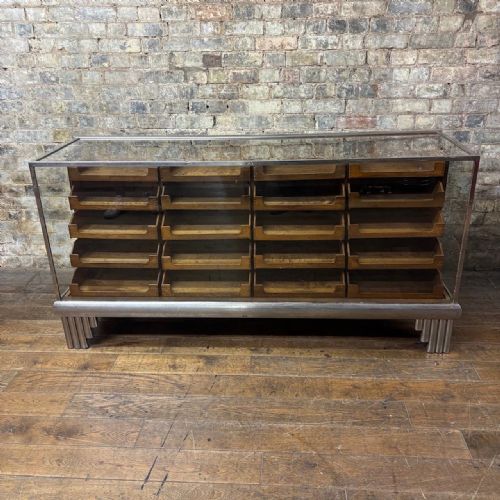
The selection includes specialised shop serving counters and glazed wall cabinets that served department stores, tea rooms, and chemists. Their robust construction reflects heavy commercial use, making them practical for modern collectors who wish to display curated objects at home.
Materials and construction
Makers relied on dense hardwoods like mahogany and oak for structural frames, providing the load-bearing strength necessary to support heavy glass panels and daily customer traffic. Brass, bronze, chrome, and aluminium hardware appeared as hinges, handles, and framing elements, shifting from traditional brass to sleeker metal finishes by the 1930s.
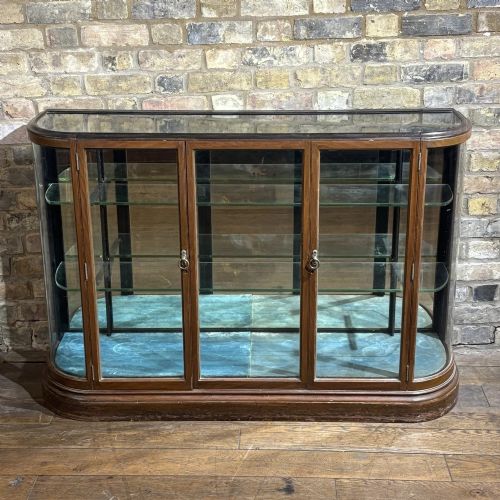
Glazing defined the form, using large expanses of clear glass supported by mirrored interiors and fabric or velvet linings to enhance light reflection. Joinery techniques prioritised rigidity and clear sightlines, ensuring merchandise remained fully visible from multiple angles across the shop floor.
Keep an eye out for cabinets once filled with sweet-shop chocolates, complete with surviving cocoa brand sign-writing.
Distinctions in quality
The distinction between standard utility shop fittings and superior displays lies in the ambition of the design and the choice of materials, such as figured mahogany or specialised bronze framing. Pieces commissioned from notable shopfitters display finer joinery details, curved bow ends, and integrated mirror work that elevate them beyond basic commercial utility.
Original surviving elements, including period glass, maker plates, and authentic hand sign-written advertising, elevate the standing of a cabinet. The integration of design movements, such as Art Deco legs or polished metal frames, marks the difference between mass production and high-end retail architecture.
F. Sage & Co·Dudley & Co·E. Pollard & Co Ltd·Quincy Showcase Works
The Commercial Glass Showcase Cabinet Glossary
- Bow end
- A curved glass or timber termination on a cabinet or counter that softens the rectangular profile. This shape allowed customers better viewing angles from adjacent aisles.
- Haberdashery counter
- A long retail display unit traditionally fitted with multiple drawers or glass compartments for small dry goods. These pieces are prized today for domestic storage and display.
- Vitrine
- An all-glass or heavily glazed cabinet designed specifically for the display of fine objects. In a commercial context, these units stood on counters or directly on the shop floor.
- Sign-written
- Lettering applied by hand directly onto glass or timber surfaces for retail advertising. Surviving examples often promote period confectionery or tobacco brands.
Commercial Glass Showcase Cabinet: Frequently Asked Questions
What were commercial glass showcase cabinets used for?
Retailers utilised these cabinets to protect and display high-value merchandise, confectionery, and dry goods while keeping them clearly visible to customers.
They stood on counters or formed the main serving islands in shops, chemists, and department stores.
How do I date a shop display cabinet?
Dating relies on combining timber choices, hardware styles, and structural forms seen across different eras. Victorian and Edwardian pieces favour heavy mahogany with brass fittings, while 1930s examples introduce chrome, aluminium, and Art Deco geometry.
Maker plaques and original painted trade signage also provide clear chronological markers.
Can I use a shop counter in a home?
These counters integrate well into domestic spaces as kitchen islands, sideboards, or living room display units. Their deep glazing and sturdy timber frames offer practical storage while keeping collections visible and dust-free.
Their commercial depth requires measuring floor space carefully before placement.
What is brand sign-writing on a cabinet?
Many display units feature hand-painted advertising lettering on the glass or timber frame promoting period makers like Fry's, Cadbury, or Rowntree's. Retailers added these inscriptions to advertise specific goods directly at the point of sale.
Today, original sign-writing adds significant historical interest to a piece.